
Medication Adherence: Why Sticking to Your Prescription Matters and How to Get It Right
When you take your medicine exactly as your doctor says, you’re practicing medication adherence, the consistent and correct use of prescribed drugs according to dosage, timing, and duration. Also known as prescription compliance, it’s not just a health habit—it’s a life-saving behavior that reduces hospital visits, prevents complications, and cuts long-term costs. But here’s the truth: nearly half of people don’t take their meds the way they’re supposed to. It’s not laziness. It’s confusion, cost, side effects, or just forgetting. And when you skip doses or stop early, you’re not just wasting money—you’re risking your health.
Medication safety, the practice of using drugs in a way that minimizes harm and maximizes effectiveness depends entirely on adherence. Take your blood pressure pill only when you feel dizzy? That’s not how it works. Those pills work in the background, day after day. Miss a few, and your risk of stroke or heart attack goes up. Same with antibiotics—stopping early doesn’t just make your infection come back, it creates superbugs. And with generic drugs, FDA-approved copies of brand-name medications that cost less but work the same way, people sometimes think they’re "weaker" or "less real." They’re not. But if you don’t take them regularly, even the best generic won’t help.
Why do people struggle? Cost is huge. A $50 copay for a monthly pill adds up fast. Side effects like dizziness or nausea make people quit. Some don’t understand why they need it—especially if they feel fine. Others just forget. The solution isn’t more pills. It’s better systems. Pill organizers. Phone alarms. Pharmacist check-ins. Talking to your doctor about cheaper options. Even using a medication list, a simple written or digital record of all your drugs, doses, and reasons for taking them can cut errors in half.
What you’ll find here isn’t theory. It’s real fixes from real people and real clinics. You’ll see how pharmacist-led care cuts costs without cutting safety. How social media helps patients understand their meds without jargon. How storing insulin right on a trip keeps it working. How expired pills can hurt you. How a multilingual medication card can save your life overseas. How spacing probiotics with antibiotics keeps your gut healthy. How black box warnings tell you what to watch for. And how simple habits—like checking your medicine cabinet once a year—prevent disasters before they happen.
This isn’t about guilt. It’s about clarity. You don’t need to be perfect. You just need to know what works, why it matters, and how to make it fit into your life—not the other way around.
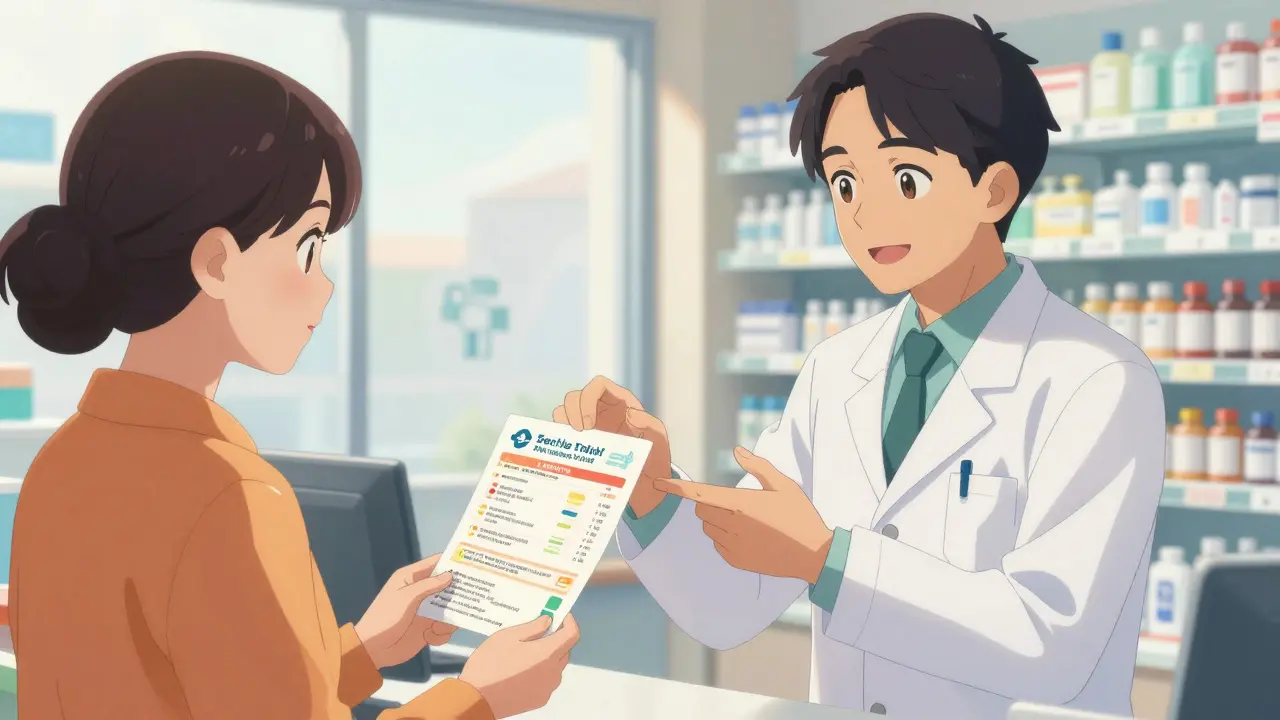
What Patient Education Materials to Ask Your Pharmacist for
Learn exactly what patient education materials to ask your pharmacist for-written handouts, live demonstrations, personalized schedules, and cost alternatives-to improve medication safety and adherence.
Behavioral Economics: Why Patients Choose Certain Drugs Over Others
Behavioral economics explains why patients often choose expensive drugs over cheaper alternatives, not due to logic, but because of psychological biases like loss aversion, confirmation bias, and social influence. Learn how small nudges can dramatically improve medication adherence.