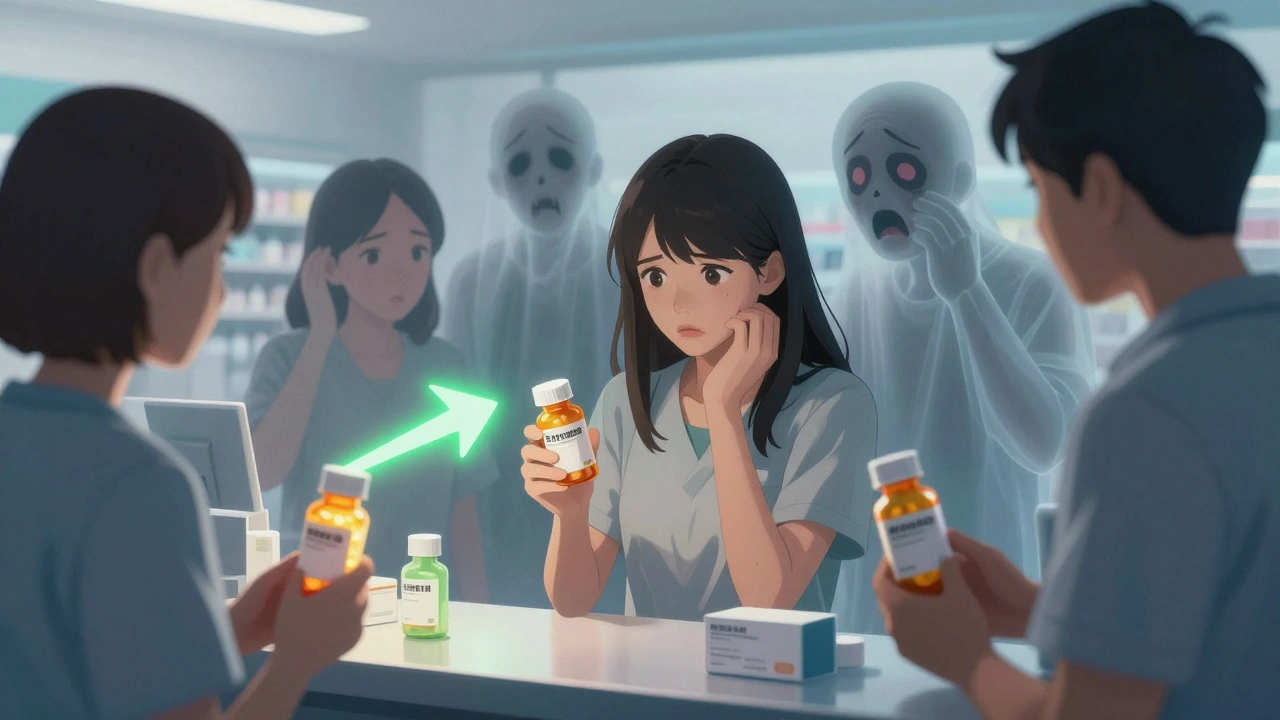
Why do patients stick with expensive drugs when cheaper ones work just as well?
It’s not about money. It’s not about knowledge. And it’s definitely not about logic.
Every year, over half of patients don’t take their medications as prescribed. Some skip doses. Some stop entirely. Others stick with brand-name drugs that cost three times more than generics-even when their doctor says the generic is identical. Why? Because human beings don’t make health decisions like robots. We make them like people: scared, tired, confused, and influenced by invisible forces we don’t even notice.
This is where behavioral economics comes in. It’s not a new drug or a fancy app. It’s a way of understanding the real reasons people choose (or refuse) medications. And it’s changing how doctors, pharmacies, and drug companies think about patient care.
The myth of the rational patient
For decades, health policy assumed patients were rational actors. If a drug was cheaper and just as effective, they’d switch. Simple math. But real life doesn’t work that way.
A 2022 study found that 68% of patients kept their current medication-even when an equally effective alternative cost 30% less. Why? Because switching felt risky. Even if the science said it was safe, their gut said: “What if this new one doesn’t work? What if I feel worse?”
This is called loss aversion. People hate losing something they already have more than they like gaining something new-even if the gain is bigger. In medicine, that means patients cling to their current pills because giving them up feels like a loss of control, safety, or routine.
And it’s not just about cost. Confirmation bias plays a big role too. Patients often believe more expensive drugs are better. A 2022 study showed that prescription drug prices rose 47% faster than general inflation since 2010-not because the drugs got better, but because patients kept paying more, convinced price equals power.
How small changes make big differences
Behavioral economics doesn’t try to change people’s minds. It changes the environment around their choices. These tiny tweaks are called “nudges.” And they work.
One powerful nudge? Defaults. In hospitals, when doctors’ electronic order systems automatically suggest a lower-cost generic instead of the brand name, appropriate substitutions jumped by 37.8%. Patients didn’t have to do anything. The system just made the better choice the easiest one.
Another? Framing. When vaccine campaigns said “95% effective,” uptake rose by 18.4 percentage points compared to saying “5% ineffective.” Same fact. Different emotional impact. People respond to hope, not fear.
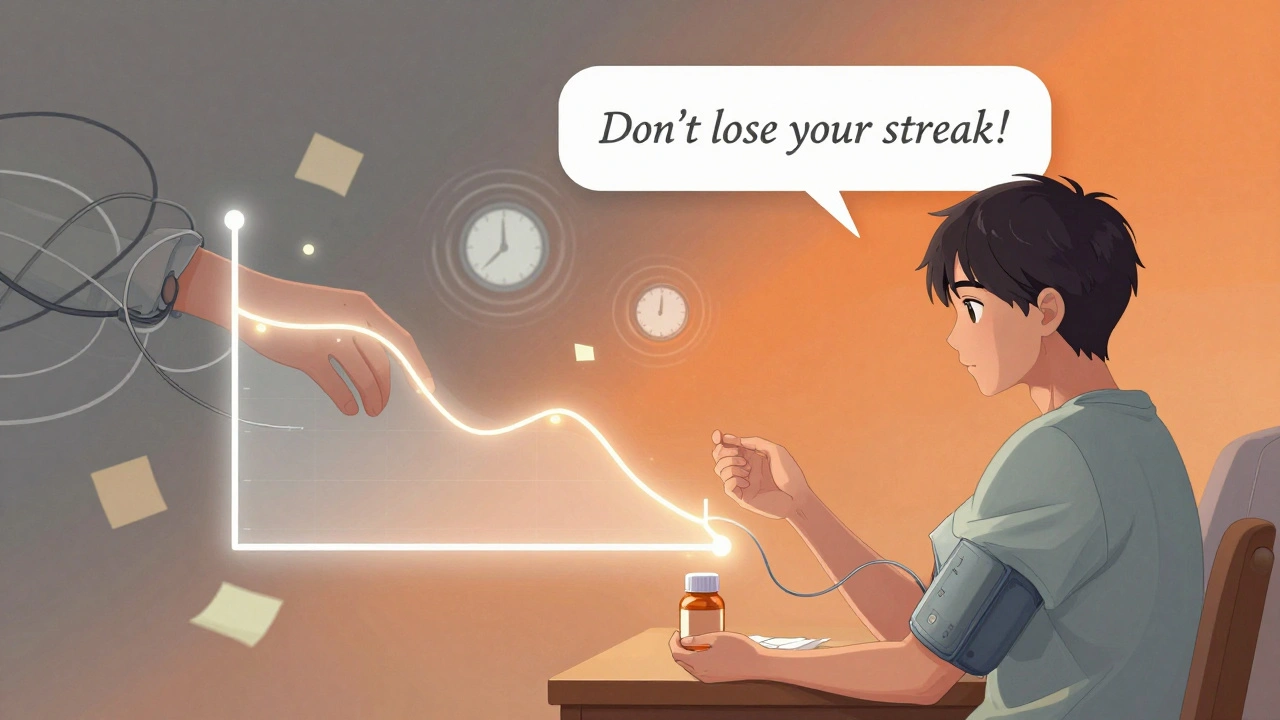
Even simple text messages can help. A 2021 study tested two reminders: “Take your medication” and “Don’t lose your streak!” The second one-using loss aversion-boosted adherence by 19.7%. People didn’t want to break a chain of success. That’s psychology, not pharmacology.
Why complexity kills adherence
Patients taking one medication? Adherence rate: about 75%.
Patients taking five? Adherence rate: drops to 45%.
Each extra pill reduces adherence by 8.3%. Why? Cognitive overload. When your brain is juggling multiple drugs, different times of day, side effects, refill schedules-it gets tired. And when it’s tired, it defaults to the easiest option: skipping a dose.
This isn’t laziness. It’s human biology. The brain doesn’t like decisions when they’re complicated. That’s why smart pill bottles that light up when it’s time to take a pill, or apps that send alarms, help. They reduce the mental load.
And it’s worse for people with asymptomatic conditions. If you don’t feel sick, why take a pill? Diabetes and high blood pressure are perfect examples. Patients feel fine-so they stop. Behavioral economics fights this by making the invisible visible. A study showed patients with hypertension who saw daily graphs of their blood pressure trends improved adherence by 31%.
What actually works (and what doesn’t)
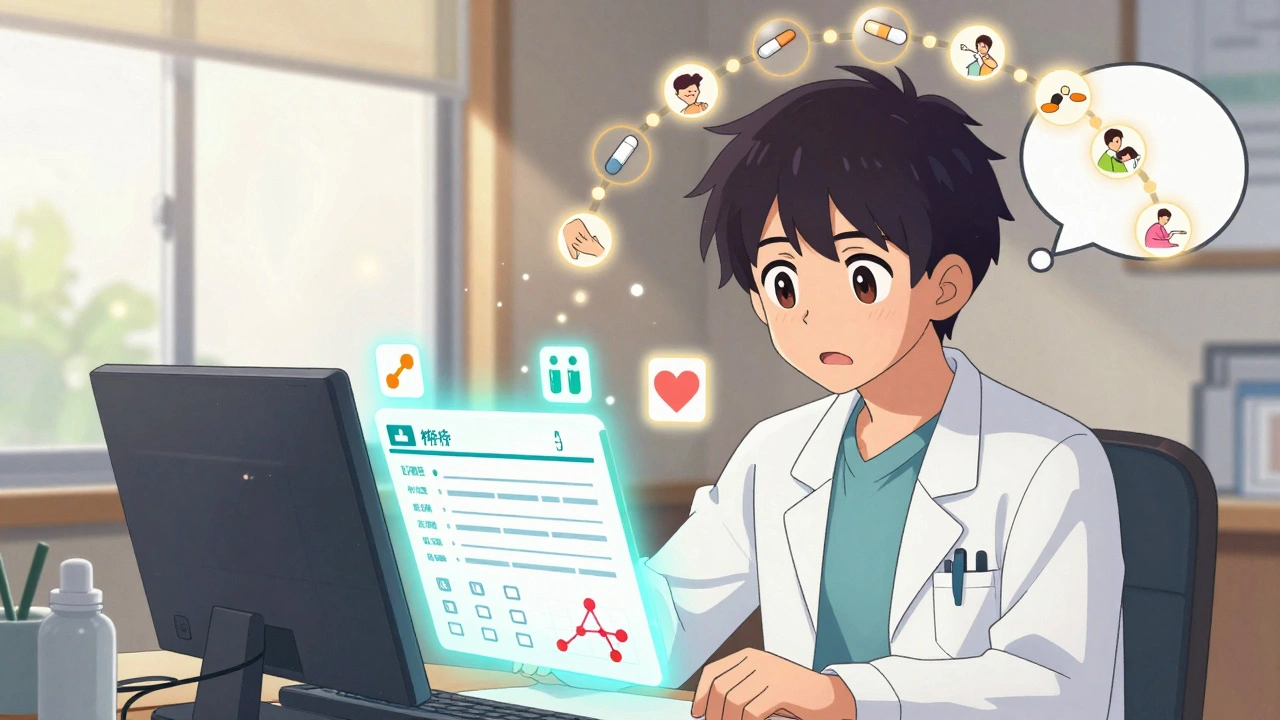
Traditional patient education-handouts, videos, lectures-improves adherence by just 5-8%. That’s barely a blip.
Behavioral interventions? They boost adherence by 14-28%.
Here’s what the data says works best:
- Defaults (automatically selecting the best option): +28.6% improvement
- Loss aversion (rebates for taking meds, losing rewards if you don’t): +23.8% improvement
- Social norms (showing patients how others are doing): +21.4% improvement
- Framing (positive language): +17.2% improvement
But here’s the catch: these don’t work everywhere. In cancer care, where treatment options are limited and side effects are brutal, nudges barely move the needle. Patients aren’t choosing between generics-they’re choosing between survival and suffering. In those cases, empathy matters more than economics.
And mental health? Depression and anxiety cut the effectiveness of behavioral interventions by over 30%. When your brain is already overwhelmed, even simple nudges feel like too much. That’s why personalized approaches are the future.
The hidden cost of non-adherence
Skipping pills isn’t just bad for patients. It’s a financial disaster.
Medication non-adherence costs the U.S. healthcare system $289 billion a year. That’s more than cancer care. More than heart disease. More than diabetes combined.
And it leads to 125,000 preventable deaths annually. People aren’t dying because they can’t afford meds. They’re dying because they forgot, got scared, didn’t understand, or just didn’t feel like it today.
Pharmaceutical companies are noticing. McKinsey found that drugmakers using behavioral economics in patient support programs saw 17.3% higher persistence and 22.8% fewer discontinuations. That’s not just ethics-it’s business.
Insurance companies are catching on too. In 2023, Medicare Part D started requiring plans to include at least two evidence-based behavioral interventions for high-risk patients. No more just sending reminders. Now they have to use proven psychological tools.
The future: smarter, not harder
The next wave? Personalization.
Machine learning is now being trained to predict which patients will respond to which nudge. Will a rebate work? Maybe. Will a social comparison chart help? Maybe not. But if the system knows your age, your diagnosis, your past behavior, and even your phone usage patterns-it can tailor the message.
Early pilot studies show this boosts effectiveness by 42.3%. Imagine getting a text that says: “Hey, you’ve been doing great with your statins. Your neighbor Maria took hers today too. Want to keep your streak going?” That’s not spam. That’s smart design.
And it’s not just pills. New digital therapeutics are being built into apps that track mood, sleep, and activity-and adjust nudges in real time. If you skip a dose and your phone notices you’ve been sleeping more and moving less, it might send a different message than if you’re active but just forgot.
Even biosimilars-cheaper versions of expensive biologic drugs-are seeing 29.4% higher adoption when paired with behavioral nudges. That’s huge for lowering costs across the system.
What’s holding us back?
It’s not the science. It’s the system.
Only 38.4% of community hospitals have staff trained in behavioral economics. Academic centers? 87.2%. That gap means patients in small towns get less effective care.
Integration with electronic health records is a nightmare. 78.3% of clinics say their systems don’t talk to behavioral tools. And training staff? It takes 12.7 hours per clinician. Most don’t have the time.
And then there’s the ethics question. Some doctors worry nudging patients is manipulative. But as Harvard’s Dr. Aaron Kesselheim points out: “You’re not forcing anyone. You’re just making the right choice easier. People can still say no.”
That’s the key. Behavioral economics doesn’t take away freedom. It reduces friction.
What patients and providers can do today
You don’t need a big budget or fancy tech to start using behavioral economics.
For patients:
- Ask your doctor: “Is there a simpler way to take this?” Fewer pills, once-a-day doses, or patches can make a huge difference.
- Try a pill organizer with alarms. Even a basic one helps.
- Think about your reasons for taking-or skipping-meds. Is it fear? Confusion? Cost? Name it. That’s the first step to fixing it.
For providers:
- Make the default option the best one. Set your EHR to suggest generics first.
- Use positive language. Say “This will help you feel better” instead of “If you don’t take this, you could have a heart attack.”
- Try a simple social nudge: “Most patients like you take their meds on time.”
- Check for polypharmacy. Can any meds be combined or dropped?
Small changes. Big results.
Final thought: It’s not about willpower
Patients aren’t failing because they’re lazy or irresponsible. They’re failing because the system is designed for perfect, rational people-and no one is perfect.
Behavioral economics doesn’t blame the patient. It fixes the system.
The goal isn’t to make people smarter. It’s to make the right choice easier.
Why do patients keep taking expensive drugs when generics are available?
Patients often stick with brand-name drugs due to psychological biases like confirmation bias (believing higher price = better quality) and loss aversion (fearing change might make them feel worse). Even when studies prove generics are equally effective, emotional comfort and fear of the unknown outweigh cost savings. Studies show 68% of patients won’t switch, even when alternatives cost 30% less.
How effective are behavioral nudges compared to patient education?
Traditional patient education improves medication adherence by only 5-8%. Behavioral nudges-like defaults, loss aversion, and social norms-boost adherence by 14-28%. For example, using rebate systems tied to adherence increased statin persistence by 23.8%, while simply changing default options in electronic prescribing systems increased appropriate substitutions by 37.8%.
Can behavioral economics help with chronic conditions like diabetes?
Yes. Diabetes has one of the highest adoption rates of behavioral interventions-47.8% of programs use them-because regular dosing creates clear opportunities for nudges. Text reminders framed as “Don’t lose your streak!” improved adherence by 19.7%. Visual feedback tools, like daily blood pressure graphs, also help patients see the impact of their actions, making abstract health goals feel real.
Do behavioral interventions work for people with depression or anxiety?
They’re less effective. Depression and anxiety reduce the success of behavioral interventions by about 31.4%. When cognitive resources are already strained, even simple nudges can feel overwhelming. For these patients, simpler systems-like auto-refills, pill dispensers, or caregiver support-are more helpful than complex behavioral programs.
Is using behavioral economics in healthcare ethical?
Yes, when designed transparently. Behavioral nudges don’t force choices-they make better ones easier. Patients can still refuse. As experts like Dr. Aaron Kesselheim note, these tools preserve autonomy while reducing harmful defaults. The goal isn’t control; it’s reducing barriers to care. When used ethically, they’re more humane than blaming patients for non-adherence.
What’s the biggest barrier to using behavioral economics in clinics?
Integration with existing systems. 78.3% of clinics report their electronic health records don’t work well with behavioral tools. Staff training takes 12.7 hours per provider, and many hospitals lack dedicated staff. Smaller clinics often can’t afford the tech or time needed, creating a gap in care between academic centers and community hospitals.

pallavi khushwani
December 5, 2025 AT 20:38It’s not about willpower. It’s about design.
Kay Jolie
December 7, 2025 AT 18:17Dan Cole
December 8, 2025 AT 01:31Billy Schimmel
December 8, 2025 AT 08:56Shayne Smith
December 8, 2025 AT 16:25Katie O'Connell
December 10, 2025 AT 02:20Clare Fox
December 10, 2025 AT 03:18Akash Takyar
December 11, 2025 AT 04:10Arjun Deva
December 11, 2025 AT 23:42Inna Borovik
December 12, 2025 AT 01:39Jackie Petersen
December 12, 2025 AT 20:51Annie Gardiner
December 14, 2025 AT 14:07