Behavioral Economics in Healthcare: How People Really Make Medication Decisions
When you choose a cheaper generic pill over a brand-name one—not because you understand the science, but because you’re tired of paying too much—you’re not being irrational. You’re acting on behavioral economics, the study of how psychological, social, and emotional factors influence financial and health decisions. Also known as psychological economics, it explains why people ignore doctor’s advice, forget to refill prescriptions, or panic over a $5 copay but ignore a $500 risk.
Behavioral economics isn’t about logic. It’s about how people actually behave. For example, the loss aversion, the tendency to feel the pain of losing something more strongly than the pleasure of gaining something equal explains why patients avoid meds with side effects—even when the benefit is clear. They don’t think, "This reduces my stroke risk by 30%." They think, "I feel weird after taking this." The same principle drives why people stockpile free samples but never refill a $10 prescription. Your brain treats $10 like a loss, even if it’s a tiny fraction of your monthly cost.
Then there’s anchoring, how the first price you see sets your expectation for what’s fair. A $200 brand-name drug feels expensive until you see a $500 version next to it. Suddenly, $200 seems like a deal. That’s why pharmacies put high-priced options at the front. It’s not about the drug—it’s about perception. And when social media shows people sharing "cheap generic hacks," that’s social proof, the idea that if others are doing it, it must be safe or smart—even if the post is from someone who doesn’t know what their medication does.
These patterns show up everywhere in men’s health. Why do so many skip blood pressure meds? Because the symptom isn’t there today. Why do people buy supplements instead of prescribed drugs? Because the supplement feels like "natural control," not a chemical fix. Why do some ignore boxed warnings? Because they don’t see themselves as the "rare" case. Behavioral economics doesn’t judge these choices—it explains them.
The posts here aren’t just about drugs or dosing. They’re about the hidden forces behind why men take—or don’t take—those drugs. You’ll find how pharmacist-led care cuts costs by understanding patient habits, why social media changes how people trust generics, and how simple tools like multilingual medication lists work because they reduce cognitive load. You’ll see how inventory systems for pharmacies use behavioral insights to prevent stockouts, and why time-restricted eating sticks for some but not others. None of it is about willpower. It’s about design, framing, and the brain’s shortcuts.
Understanding behavioral economics doesn’t make you a better patient. It makes you a smarter one. You’ll start seeing why you skip pills, why you panic over a $5 copay, and why you trust a TikTok video more than a pamphlet. And once you see it, you can change it—without needing more willpower, just better systems. Below, you’ll find real-world examples of how these invisible forces shape health choices every day.
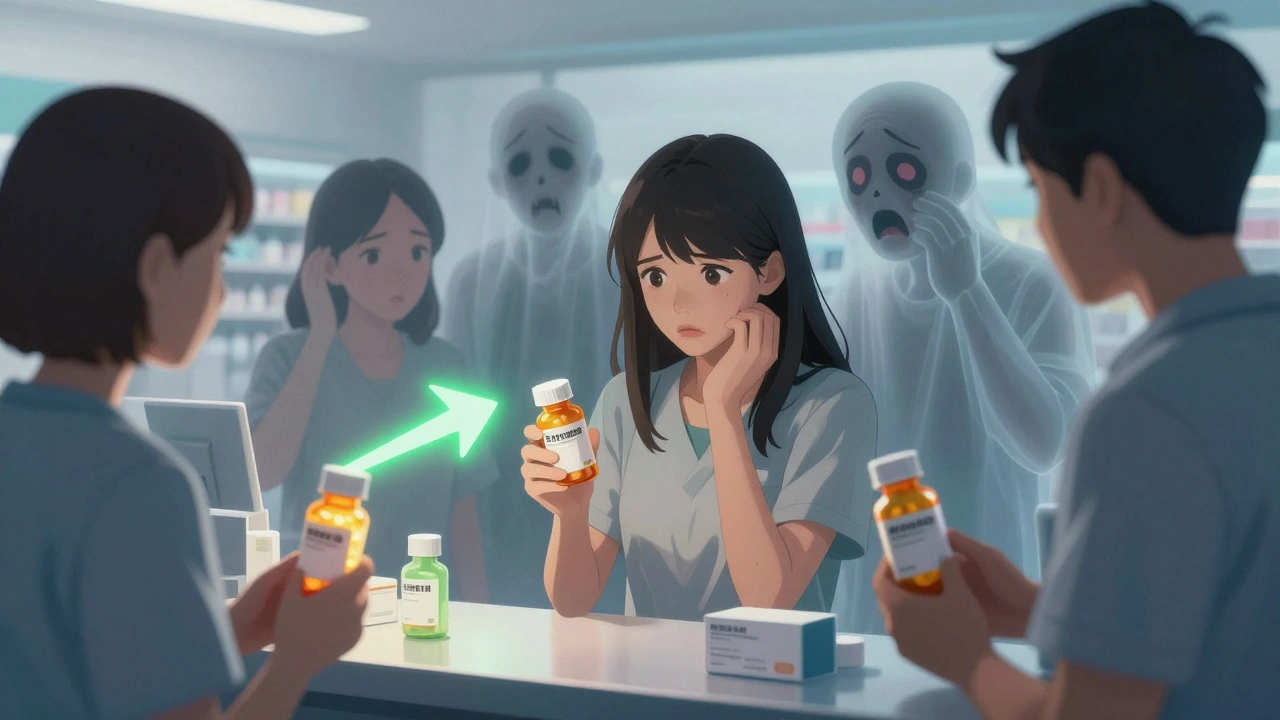
Behavioral Economics: Why Patients Choose Certain Drugs Over Others
Behavioral economics explains why patients often choose expensive drugs over cheaper alternatives, not due to logic, but because of psychological biases like loss aversion, confirmation bias, and social influence. Learn how small nudges can dramatically improve medication adherence.
Categories
- Health and Medicine (141)
- Health and Wellness (41)
- Womens Health (6)
- Mental Health (5)
- Mens Health (5)
- Nutrition and Supplements (4)