AST: What It Is, Why It Matters, and How It Relates to Your Liver Health
When your doctor orders a blood test and sees AST, aspartate aminotransferase, a liver enzyme that leaks into the blood when liver cells are damaged. Also known as SGOT, it's one of the first clues doctors look at to check if your liver is under stress. It’s not a disease itself—but it’s a signal. Think of it like a car’s check engine light. It doesn’t tell you what’s broken, but it tells you something’s wrong and you need to look closer.
AST doesn’t work alone. It’s usually checked with ALT, alanine aminotransferase, another liver enzyme more specific to liver damage. When both are high, it points strongly to liver trouble—maybe from alcohol, fatty liver, hepatitis, or even certain meds. But if AST is higher than ALT, that can hint at other issues like heart problems or muscle damage. That’s why you can’t just look at one number. You need the full picture. Your liver doesn’t scream when it’s hurt. It whispers. And AST is one of those whispers you can’t ignore.
People often panic when they see an elevated AST, but it’s not always serious. A single high reading could come from a tough workout, a night of heavy drinking, or even a recent illness. What matters is the trend. If your AST keeps climbing over months, that’s a red flag. If it drops after you cut back on alcohol or lose weight, that’s progress. Many of the posts here focus on how medications, supplements, and lifestyle changes affect liver enzymes—including statins, antibiotics, and weight loss drugs like semaglutide. You’ll find real-world examples of how AST levels shift with treatment, how to monitor them safely, and when to ask for more tests.
It’s not just about the number. It’s about what’s behind it. Is it NAFLD? Is it a side effect of your blood pressure meds? Could your muscle pain be tied to your liver? The posts below dig into those connections—how liver health ties into heart disease, how antibiotics can raise enzymes, why some people need to avoid certain drugs if their AST is off. You’ll see how doctors use AST alongside other markers like bilirubin and GGT to make decisions. And you’ll learn what to do next—whether that’s changing your diet, adjusting your meds, or just waiting to retest.
You don’t need to be a doctor to understand what AST means for you. You just need to know what questions to ask. And that’s what this collection is for. Whether you’re managing fatty liver, taking long-term meds, or just saw an odd lab result, the articles here give you the real talk—no fluff, no jargon, just what you need to know to protect your liver and your health.
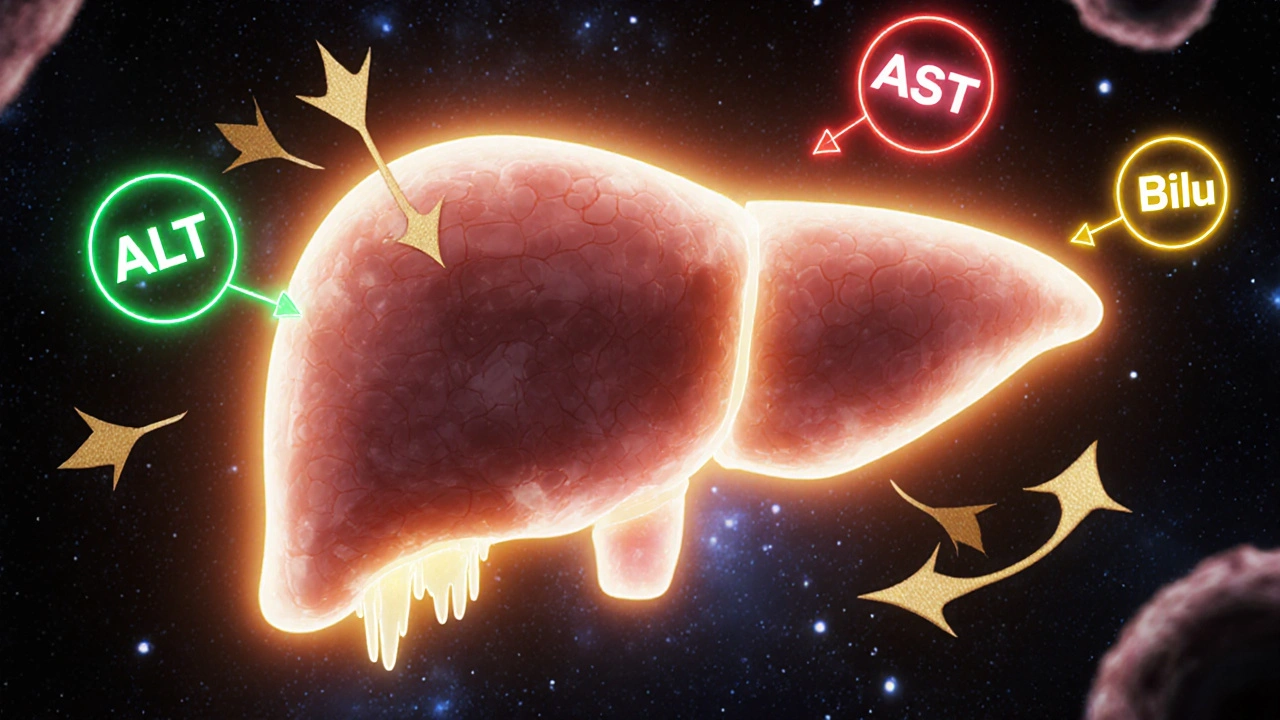
Liver Function Tests Explained: ALT, AST, Bilirubin, and What They Really Mean
Understand what ALT, AST, and bilirubin really mean in liver function tests. Learn how to interpret patterns, avoid common mistakes, and know when to act - not panic - based on your results.