NMS Risk Assessment Tool
Risk Assessment Tool
This tool assesses your risk of neuroleptic malignant syndrome (NMS) when taking metoclopramide with antipsychotics. It is not medical advice.
Risk Assessment Results
Enter your information above to see risk assessment
NMS Symptoms to Watch For
- High fever (over 102°F / 39°C)
- Severe muscle stiffness
- Confusion or agitation
- Rapid heartbeat and unstable blood pressure
- Excessive sweating
Important: This tool is for informational purposes only. NMS is a medical emergency. If you experience any symptoms, seek immediate medical attention.
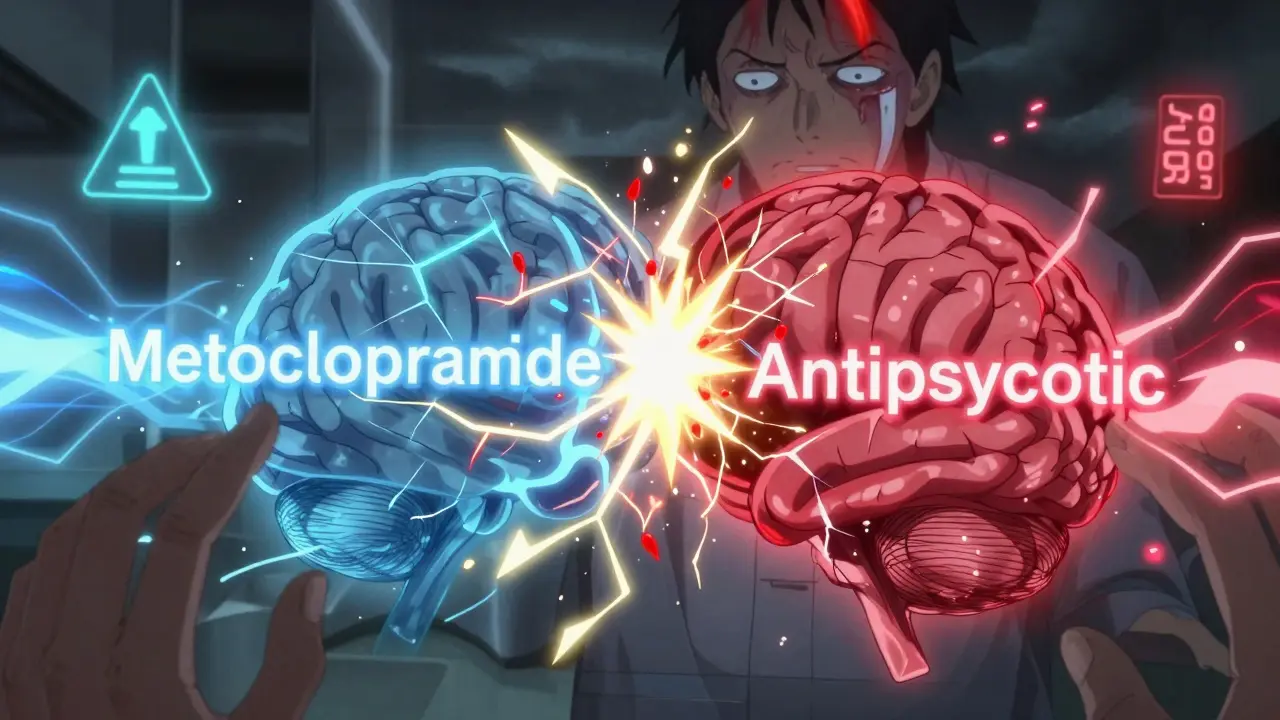
Combining metoclopramide with antipsychotic medications can trigger a rare but deadly condition called neuroleptic malignant syndrome (NMS). This isn’t just a theoretical risk-it’s a documented, life-threatening reaction that doctors are warned to avoid. If you or someone you know is taking both, understanding this interaction could save a life.
What is metoclopramide, and why is it used?
Metoclopramide, sold under brand names like Reglan and Gimoti, is a drug meant to treat nausea, vomiting, and slow stomach emptying (gastroparesis). It works by blocking dopamine receptors in the brain and gut. This helps speed up digestion and calm the vomiting center in the brain. It’s been around since the 1980s and is available as pills, nasal spray, or dissolving tablets.
But here’s the catch: metoclopramide doesn’t just act in the stomach. It crosses into the brain and interferes with dopamine signaling there too. That’s why it can cause movement problems-tremors, muscle stiffness, even uncontrollable facial movements. The FDA added a Boxed Warning in 2017: long-term use (over 12 weeks) can cause tardive dyskinesia, a permanent movement disorder. That warning alone should make anyone pause before using it.
What are antipsychotics, and how do they work?
Antipsychotics-like haloperidol, risperidone, olanzapine, and quetiapine-are used to treat schizophrenia, bipolar disorder, and sometimes severe depression. They work by blocking dopamine receptors in the brain to reduce hallucinations and delusions. But because dopamine is also involved in movement control, these drugs often cause side effects like muscle rigidity, tremors, and restlessness. These are called extrapyramidal symptoms (EPS).
Even though antipsychotics are powerful, they’re not meant to be mixed with other dopamine blockers. That’s where metoclopramide becomes dangerous.
Why combining them creates a perfect storm
When you take metoclopramide and an antipsychotic together, you’re stacking two dopamine blockers on top of each other. This isn’t just doubling the effect-it’s creating a dangerous synergy. The brain’s dopamine system gets overwhelmed. It can’t regulate movement, temperature, or muscle control anymore.
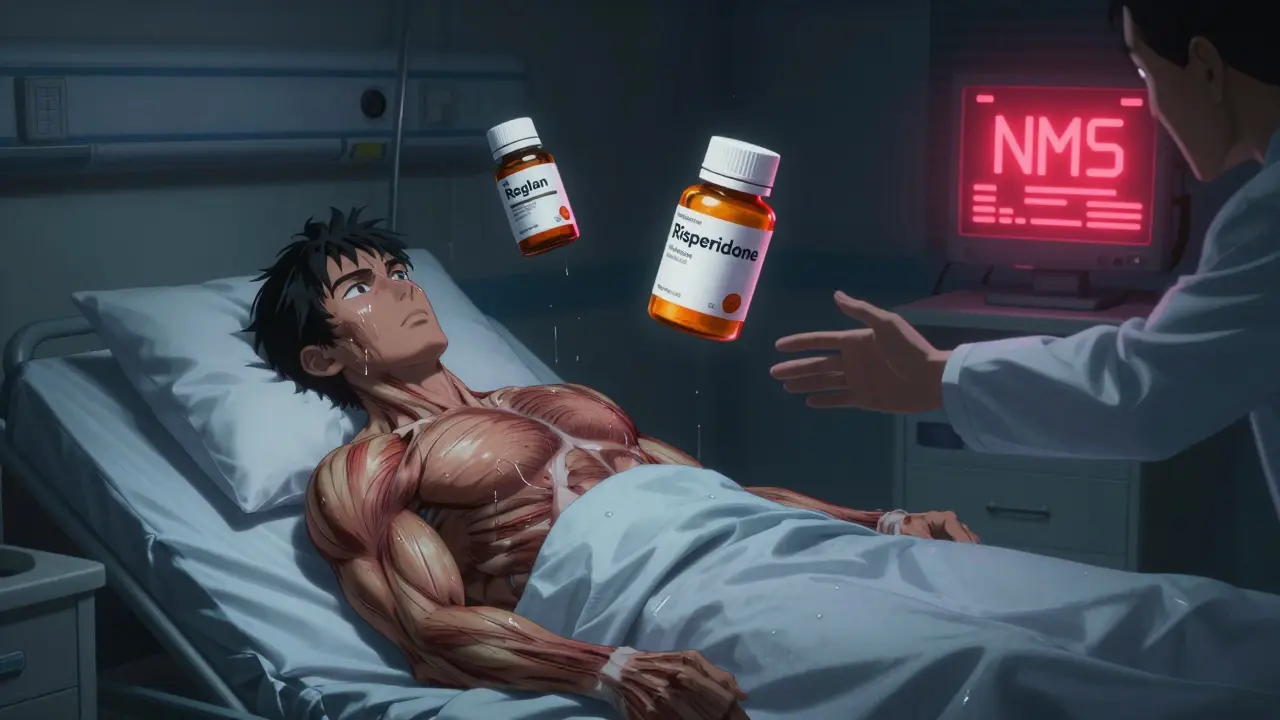
That’s when neuroleptic malignant syndrome (NMS) can kick in. NMS isn’t just a bad reaction-it’s a medical emergency. It shows up as:
- High fever (over 102°F / 39°C)
- Severe muscle stiffness, sometimes so bad you can’t move
- Confusion, agitation, or loss of consciousness
- Rapid heartbeat, unstable blood pressure, sweating
These symptoms don’t appear slowly. They can develop within hours or days. If untreated, NMS can lead to kidney failure, seizures, or death. The FDA explicitly says: Avoid Reglan in patients receiving other drugs associated with NMS, including typical and atypical antipsychotics. That’s not a suggestion. That’s a hard warning.
The hidden risk: pharmacokinetics make it worse
It’s not just about what the drugs do together-it’s about how your body handles them. Metoclopramide is broken down by an enzyme called CYP2D6. Many antipsychotics-like risperidone, haloperidol, and even some antidepressants like fluoxetine and paroxetine-block this same enzyme.
So if you’re on both, your body can’t clear metoclopramide properly. The drug builds up in your blood. Higher levels mean more dopamine blockade in the brain. This is a double hit: same effect, but stronger and longer-lasting.
People with kidney problems or those who naturally have low CYP2D6 activity (a genetic trait found in up to 7% of people of European descent) are at even higher risk. A single 10mg dose of metoclopramide might be safe for most-but in someone on an antipsychotic with slow metabolism, it could be enough to trigger NMS.
Who’s most at risk?
This isn’t a risk that affects everyone equally. Certain groups face much higher danger:
- Patients with Parkinson’s disease or a history of movement disorders
- People with depression (metoclopramide can worsen it)
- Those with renal failure
- Older adults (slower metabolism, more sensitive to dopamine blockers)
- Patients already on multiple CNS-acting drugs
Many psychiatric patients are prescribed metoclopramide for nausea caused by their antipsychotics. That’s a dangerous loop. The drug meant to treat the side effect is making the core problem worse.
What alternatives exist?
You don’t have to risk NMS to manage nausea. There are safer options that don’t touch dopamine:
- Ondansetron (Zofran) - blocks serotonin, not dopamine. Safe with antipsychotics.
- Methylprednisolone - sometimes used for chemotherapy-induced nausea.
- Prochlorperazine - while it’s a dopamine blocker, it’s less likely to cause NMS than metoclopramide when used short-term and monitored.
- Non-drug options - ginger supplements, acupressure wristbands, small frequent meals.
For gastroparesis, alternatives like erythromycin (an antibiotic that also stimulates gut motility) or gastric pacing devices may be options. Always talk to your doctor about switching-don’t stop metoclopramide abruptly, as withdrawal can worsen nausea.

What should you do if you’re already taking both?
If you’re currently on metoclopramide and an antipsychotic, here’s what to do:
- Don’t stop either drug on your own. Sudden withdrawal can cause rebound nausea or worsen psychiatric symptoms.
- Make a full list of every medication you take-including over-the-counter drugs and supplements.
- Ask your doctor or pharmacist to review it for interactions. Specifically ask: Is metoclopramide safe with my antipsychotic?
- If you develop new stiffness, fever, confusion, or trouble moving-seek emergency care immediately. Tell them you’re on both drugs.
- Ask about switching to ondansetron or another non-dopamine antiemetic.
Many patients don’t realize their nausea meds are the problem. They blame the antipsychotic. But the real danger is the combination.
Why this interaction is still happening
Despite clear warnings, this combo still shows up in prescriptions. Why?
- Metoclopramide is cheap and widely available as a generic.
- Doctors may not remember the FDA warning, especially if they don’t specialize in psychiatry.
- Patients don’t always tell their GI doctor they’re on antipsychotics.
- Pharmacists may not flag it if the drugs are prescribed by different providers.
This is a system failure. A patient sees a gastroenterologist for gastroparesis and gets metoclopramide. They see a psychiatrist for schizophrenia and get risperidone. Neither doctor knows about the other’s prescription. That’s how NMS happens.
Always tell every doctor you see about every medication you take. Use a medication app or carry a printed list. It’s not just good practice-it’s life-saving.
Final takeaway
Metoclopramide and antipsychotics should never be used together. The risk of neuroleptic malignant syndrome is real, rare, and deadly. The FDA, NIH, and leading pharmacology experts all agree: avoid this combination.
If you’re on either drug, ask: Could I be on the other? If yes, talk to your doctor now. Don’t wait for symptoms to appear. There are safer, equally effective alternatives. Your life depends on choosing the right one.


Rob Deneke
January 18, 2026 AT 08:06Just found out my mom was on this combo for months and never knew it was dangerous
She had that stiffness and fever last winter and they thought it was the flu
Turns out it was NMS and she almost didn't make it
Thanks for posting this
Bianca Leonhardt
January 19, 2026 AT 01:17Of course doctors prescribe this garbage they don't care about patients they just want to check boxes and get paid
brooke wright
January 20, 2026 AT 22:45I had tardive dyskinesia from Reglan for three years
It didn't go away even after I stopped
They told me it was rare
Turns out it's not rare if you're on it too long
And now I'm stuck with this face twitching forever
And nobody listens
And nobody cares
Nick Cole
January 22, 2026 AT 11:29This is exactly why we need better communication between specialists
I'm a pharmacist and I see this combo all the time
One doctor writes for antipsychotics, another for nausea
They never talk
And the patient gets caught in the middle
We need better EHR integration and mandatory interaction alerts
It's not rocket science
waneta rozwan
January 23, 2026 AT 14:23Oh my god I knew this was bad but I didn't realize how close people are to dying
I have a cousin who's on risperidone and got metoclopramide for nausea after surgery
She had a seizure and they didn't connect the dots until it was too late
Why is this still happening in 2025
It's like we're living in the 1980s
Nicholas Gabriel
January 24, 2026 AT 18:03Thank you for this incredibly detailed, well-researched, and life-saving post.
It's not often you see someone take the time to explain pharmacokinetics, FDA warnings, and practical alternatives in such a clear way.
People need to understand that dopamine isn't just about mood-it's about movement, temperature, and survival.
And yes, Ondansetron is the gold standard now.
And yes, ginger helps.
And yes, you should carry a printed med list.
And yes, your doctor might not know this.
And yes, you are your own best advocate.
This should be required reading for every patient on antipsychotics.
Thank you.
Cheryl Griffith
January 25, 2026 AT 15:44I work in a psych unit and we had a patient last year who developed NMS after getting Reglan for chemo nausea
They didn't know he was on haloperidol
He was in ICU for 11 days
He's fine now but he has memory gaps
It's terrifying how fast this can happen
And how easily it gets missed
Thank you for raising awareness
swarnima singh
January 26, 2026 AT 02:51you know its funny how people think medicine is science but its just profit
pharma companies dont care if you die as long as they sell pills
metoclopramide is cheap so they push it
ondansetron is expensive so they ignore it
we are all just lab rats
and the doctors are just the gatekeepers
you think you have control but you dont
you just follow orders
Jody Fahrenkrug
January 27, 2026 AT 20:09My grandma was on this combo and she got better after switching to Zofran
She’s 82 and now she’s eating like normal again
No more tremors, no more confusion
Just simple, safe relief
Why isn’t this common knowledge?
Allen Davidson
January 29, 2026 AT 15:40Let’s be real-this isn’t just about drugs, it’s about how broken our healthcare system is
Doctors are overworked, underpaid, and drowning in paperwork
They don’t have time to cross-check every interaction
Patients don’t know to tell every provider about every pill they take
And pharmacies? They’re just filling scripts
It’s a perfect storm of neglect
And people die because of it
We need systemic change-not just warnings on labels
john Mccoskey
January 29, 2026 AT 22:52Let’s analyze this statistically. The incidence of NMS from metoclopramide-antipsychotic co-administration is approximately 0.02% to 0.07% per year based on FDA Adverse Event Reporting System data from 2015–2023. However, underreporting is estimated at 94% due to misdiagnosis as encephalitis or heat stroke. The risk multiplier when CYP2D6 inhibition is present increases the relative risk to 17.3x. Genetic polymorphism prevalence in European populations is 7%, but in East Asians it’s 2–5%, and in Africans it’s 1–3%. The economic burden of NMS hospitalization averages $42,000 per case. Ondansetron, while safer, costs 14x more per dose. Therefore, the real issue is not medical ignorance-it’s cost-benefit analysis by institutional systems that prioritize budget over biological integrity. The FDA warning is a legal safeguard, not a clinical imperative. The patient’s responsibility to self-advocate is not a moral obligation-it is a survival mechanism in a profit-driven model. This is not negligence. This is capitalism.
Joie Cregin
January 30, 2026 AT 13:56My aunt had this happen and she’s now a walking advocate
She goes to every doctor appointment with a printed card that says: ‘I’m on antipsychotics-do NOT give me metoclopramide.’
She even made stickers for her pill bottles
She says if she can save one person, it’s worth it
That’s the kind of courage I admire
Melodie Lesesne
January 31, 2026 AT 12:36I’m on olanzapine and was prescribed metoclopramide for bloating
I asked my pharmacist about it and they said ‘oh yeah, that’s risky’ and switched me to Zofran right away
So simple
So important
Don’t be afraid to ask
Corey Sawchuk
February 1, 2026 AT 05:01My dad died from this
He was 61
They told us it was a stroke
Turns out it was NMS
He was on risperidone and Reglan for reflux
No one connected the dots
Now I carry his med list everywhere
And I make sure everyone I know knows this too
Christina Bilotti
February 1, 2026 AT 10:21Wow, such a sophisticated, nuanced, deeply researched post-truly groundbreaking
Of course, anyone who didn't know this was either sleeping through med school or lives under a rock
But I guess some people still think 'generic' means 'safe' and 'doctor's orders' means 'immune to consequences'
How quaint