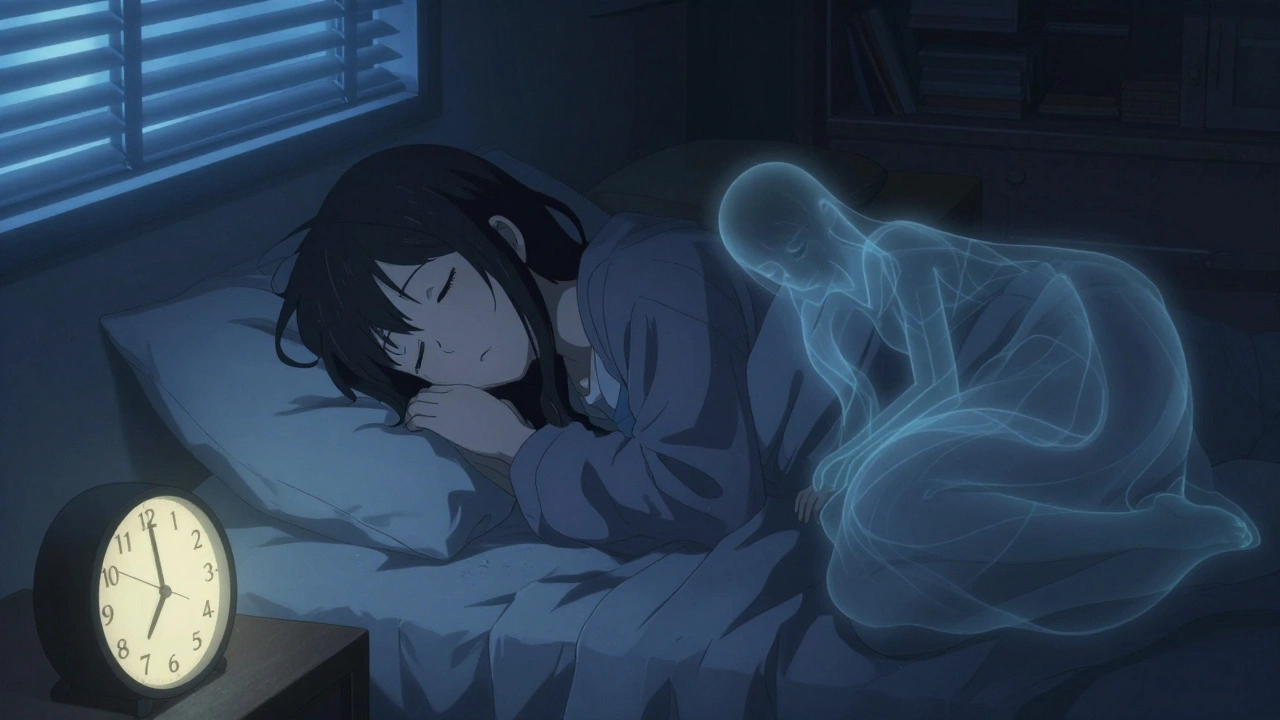
If you’ve been lying awake for hours night after night, only to drag yourself through the day exhausted, you’re not broken-you’re stuck in a cycle. Sleep Restriction Therapy (SRT) isn’t about sleeping more. It’s about sleeping better by doing less. That’s right: you sleep less-on purpose-to fix your sleep. It sounds backwards, but it’s one of the most effective ways to break chronic insomnia, and it’s backed by decades of research and real-world results.
Why Your Bed Feels Like a Prison
Most people with insomnia spend too much time in bed awake. You might be in bed for eight hours, but only sleeping five. Your brain starts associating your bed with frustration, worry, and alertness-not rest. That’s the core problem SRT targets. Instead of trying to force sleep, SRT rebuilds the connection between your bed and deep, restful sleep by limiting your time in bed to match what you’re actually sleeping.Think of it like resetting a muscle. If you’ve been lifting light weights for months but want to build strength, you don’t keep doing the same thing-you increase the load. SRT does the same for sleep: it increases your sleep pressure by reducing time in bed. This forces your body to consolidate sleep into fewer, deeper hours.
How Sleep Restriction Therapy Actually Works
SRT follows a clear, step-by-step process. It’s not guesswork. Here’s how it’s done:- Track your sleep for a week. Write down exactly when you get into bed, when you fall asleep, when you wake up, and any awakenings during the night. Use a simple notebook or app. Don’t guess-be accurate.
- Calculate your average total sleep time. Add up your total sleep over seven nights and divide by seven. If you slept 5, 5.5, 4.5, 6, 5, 5.5, and 6 hours, your average is about 5.4 hours.
- Set your initial time-in-bed limit. That average becomes your new bedtime window. If you average 5.4 hours, you get 5.5 hours in bed. That means if you need to wake up at 6 a.m., you can only get into bed at 12:30 a.m.
- Stick to a fixed wake-up time. No matter how little you slept, you get up at the same time every day-even on weekends. This is non-negotiable.
- Don’t nap. Even 10 minutes can undo progress. Your sleep pressure needs to build up.
It’s hard at first. You’ll feel tired. That’s normal. But within days, your body starts adapting. You fall asleep faster. You wake up less. Your sleep efficiency-the percentage of time in bed actually spent asleep-starts climbing.
When to Increase Your Time in Bed
You don’t stay restricted forever. SRT is a reset, not a permanent restriction. You only increase your time in bed when your sleep efficiency hits 85-90% for three nights in a row. That means if you’re in bed for 5.5 hours and sleep 4.7 hours, your efficiency is 85%. You’re ready to add 15-30 minutes.Go from 5.5 to 6 hours. Then track again. Wait for efficiency to hit 85-90% again before adding more. Most people reach 7-8 hours of time in bed within 6-8 weeks. The goal isn’t to sleep more-it’s to sleep deeply and consistently within a tighter window.
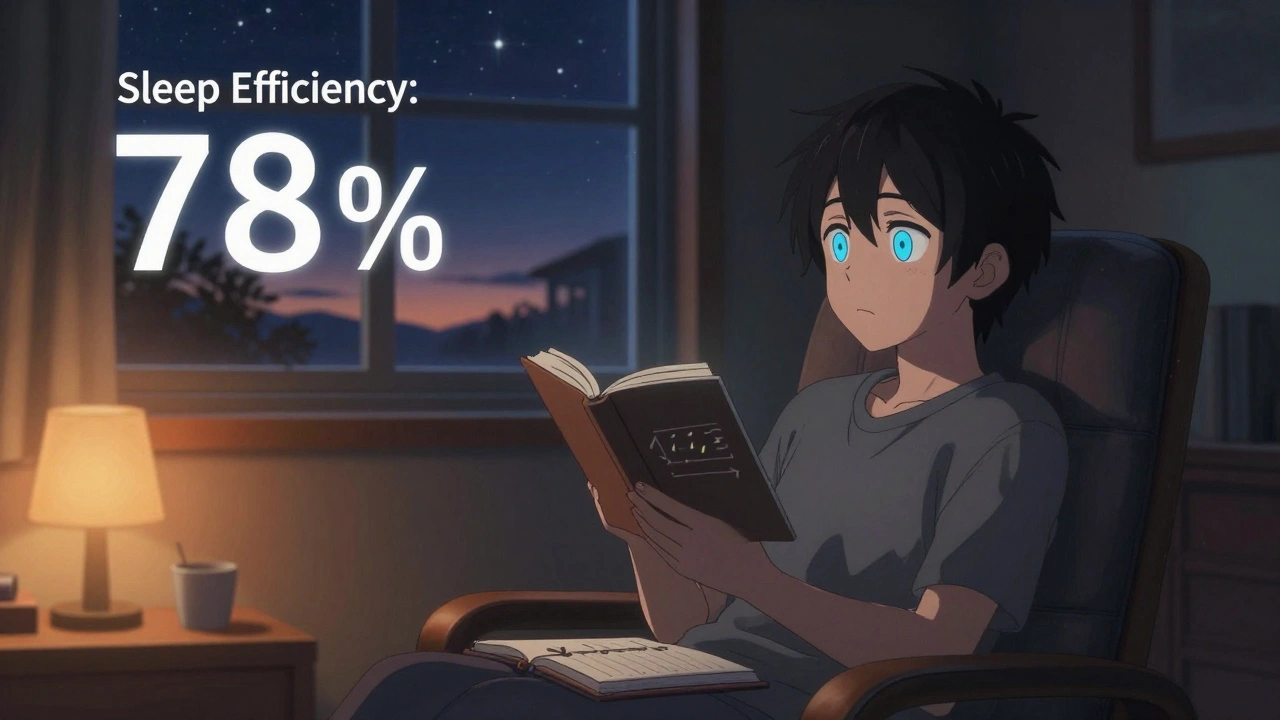
SRT vs. Other Treatments: What Actually Works
Medication might help you fall asleep faster, but it doesn’t fix the root problem. Benzodiazepines and sleep pills have a 60-70% short-term success rate, but nearly half of users experience rebound insomnia when they stop. Melatonin? It might shave off 12-18 minutes from sleep onset, but it doesn’t improve sleep quality or reduce nighttime awakenings.SRT, as part of CBT-I (Cognitive Behavioral Therapy for Insomnia), outperforms all of them. A 2023 meta-analysis showed SRT improves sleep efficiency by 47% more than sleep hygiene alone. In one study, postmenopausal women on SRT saw a 22.7% improvement in sleep efficiency-nearly 8% better than those on sleep meds. And the results stick. At six months, 78% of SRT users still had better sleep. Only 32% of medication users did.
And it’s not just numbers. People on Reddit’s r/Insomnia thread report falling asleep in 15 minutes instead of two hours. Others describe waking up once, maybe twice, instead of five times. They’re not just sleeping-they’re sleeping like they used to before insomnia took over.
The Hard Parts-And How to Get Through Them
SRT isn’t easy. The first week or two is brutal. You’ll be tired. You might feel irritable. You might want to nap. You might want to get into bed earlier because you’re exhausted. Don’t. That’s the trap.Here’s what actually helps people stick with it:
- Write it down. People who keep accurate sleep diaries are 76% more likely to succeed.
- Wake up at the same time every day. This is the anchor. If you sleep in on weekends, you sabotage your progress. 89% of success stories mention strict wake times.
- Use stimulus control. Get out of bed if you’re awake for more than 20 minutes. Go to another room, sit in a chair, read under dim light, and only return when you’re sleepy. This re-teaches your brain: bed = sleep.
- Don’t check the clock. Watching the minutes tick by increases anxiety. Turn your clock away.
One study found that 22% of people quit SRT because daytime sleepiness affected their work. If you’re a shift worker or have a job that demands alertness, talk to a clinician first. SRT isn’t for everyone-but for most, the trade-off is worth it.
Who Should Avoid SRT
SRT is powerful, but it’s not a one-size-fits-all fix. It’s not recommended if you:- Have untreated sleep apnea or restless legs syndrome
- Suffer from severe depression or bipolar disorder without psychiatric support
- Have a job where drowsiness puts others at risk (e.g., truck driver, surgeon)
- Are already on sleep medication and haven’t consulted a doctor about tapering
People with anxiety often struggle with SRT because the idea of sleep deprivation feels terrifying. That’s why combining SRT with cognitive therapy-challenging thoughts like “I’ll die if I don’t sleep”-is critical. Studies show pairing SRT with cognitive therapy boosts success rates by over 30%.
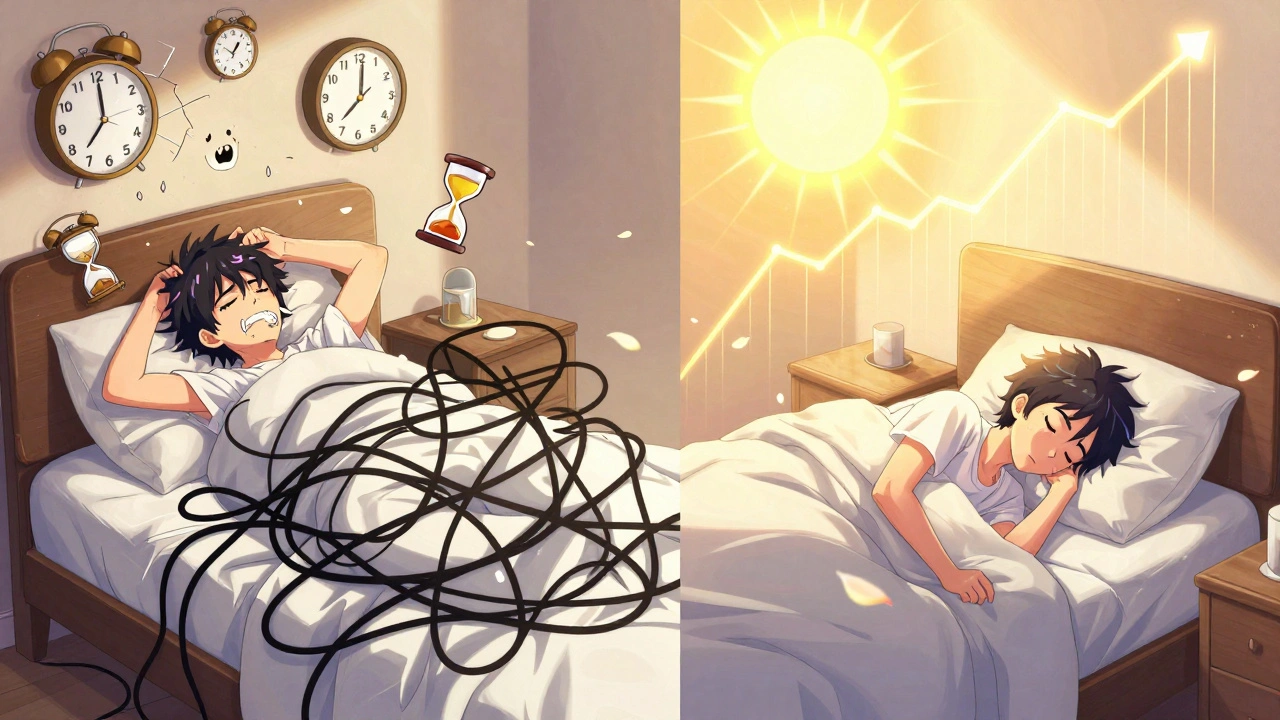
Where to Get Help
You don’t have to do this alone. There are more than 1,200 certified CBT-I clinicians in the U.S. alone. In Australia, programs through hospitals or private sleep clinics often include SRT as part of standard care.If in-person care isn’t accessible, digital platforms like Sleepio, CBT-i Coach (free from the VA), and Somryst (FDA-cleared in 2023) deliver SRT with structured guidance. A 2023 VA evaluation found 72% user satisfaction with CBT-i Coach. Apps like these cost $50-$300-far less than years of sleep meds or doctor visits.
Insurance coverage is still spotty. Only 12 U.S. states require insurers to cover CBT-I. But more employers are stepping in-37% of Fortune 500 companies now offer CBT-I through wellness programs. Ask your HR department.
What Happens After You Succeed
Once you reach 7-8 hours of time in bed and your sleep efficiency stays above 85%, you’ve reset your system. You’re not done-you’re healed. Your brain now associates your bed with sleep again. You don’t need to restrict forever. You can relax the schedule slightly. Maybe you sleep in 30 minutes on Sundays. Maybe you nap once a week.But keep your wake-up time fixed. That’s the key to staying well. The people who relapse are the ones who let their wake-up time drift. Consistency isn’t just part of SRT-it’s the foundation of lifelong sleep health.
Unlike pills that wear off, SRT’s effects grow stronger over time. A 2023 review in the Journal of Clinical Sleep Medicine found that six months after finishing SRT, most people slept better than they did before insomnia even started. That’s not a placebo. That’s a reset.
How long does Sleep Restriction Therapy take to work?
Most people start seeing improvements in sleep efficiency within 1-2 weeks. Significant changes-like falling asleep faster and waking less often-typically appear by week 3-4. Full results, including reaching 7-8 hours of time in bed, usually take 6-8 weeks. Some people finish in as little as 4 weeks; others take up to 3 months, depending on their starting sleep efficiency and consistency.
Can I nap during Sleep Restriction Therapy?
No. Napping-even a 10-minute power nap-reduces your sleep pressure and makes it harder for your body to consolidate sleep at night. SRT works by building up a strong drive to sleep. Napping breaks that cycle. If you’re extremely tired, try sitting quietly with your eyes closed instead. Don’t lie down. Don’t close the curtains. Stay alert until your scheduled bedtime.
What if I can’t fall asleep within my time-in-bed window?
That’s okay. The goal isn’t to fall asleep instantly-it’s to build a strong association between bed and sleep. If you’re awake for more than 20 minutes, get out of bed. Go to another room, sit in a dimly lit chair, and do something quiet-read a book, listen to calm music. Don’t check your phone. Return to bed only when you feel sleepy. Repeat as needed. This is called Stimulus Control, and it’s paired with SRT for best results.
Is Sleep Restriction Therapy dangerous?
It’s safe for most people when done correctly, but it causes temporary sleep deprivation during the first 1-2 weeks. This can affect focus, mood, and reaction time. Avoid driving, operating heavy machinery, or making critical decisions during this phase. If you have a medical condition like epilepsy, heart disease, or severe mental illness, consult a doctor before starting. SRT is not recommended for people with untreated sleep apnea or shift workers with irregular schedules without professional guidance.
Will I gain weight from lack of sleep during SRT?
Temporary sleep deprivation can slightly increase hunger hormones like ghrelin, but this effect fades as your sleep efficiency improves. Most people don’t gain weight during SRT because they’re not sleeping more-they’re sleeping better. The fatigue is real, but it’s short-term. Focus on eating balanced meals and staying hydrated. Avoid sugary snacks to manage energy. Once your sleep consolidates, your appetite regulation returns to normal.
Can I use SRT if I’m on sleep medication?
Yes-but only under medical supervision. Stopping sleep meds abruptly can cause rebound insomnia or withdrawal symptoms. Work with your doctor to gradually reduce your dose while starting SRT. Many people successfully transition off medication within 6-12 weeks of starting SRT. The goal is to replace dependence on pills with dependence on your body’s natural sleep rhythm.
What if I miss a day or cheat on my schedule?
It’s not the end. One slip-up won’t ruin everything, but it will delay progress. If you get into bed early on a weekend, you’ll likely feel more tired the next day and may struggle to fall asleep that night. The key is to get back on track immediately. Don’t try to “make up” sleep by sleeping in. Stick to your wake-up time. Resume your restricted schedule the next night. Consistency over perfection is what matters.
How do I know if SRT is working?
Track your sleep efficiency: divide total sleep time by time in bed, then multiply by 100. If it climbs above 85% for three nights in a row, you’re ready to increase your time in bed. Other signs: falling asleep faster, waking fewer times, feeling more alert during the day (after the initial fatigue phase), and less anxiety about sleep. You’ll start to feel like sleep is something you do naturally-not something you have to force.



James Kerr
December 2, 2025 AT 02:05Francine Phillips
December 3, 2025 AT 03:50Chloe Madison
December 4, 2025 AT 17:01Vincent Soldja
December 5, 2025 AT 03:19Makenzie Keely
December 5, 2025 AT 16:42Katherine Gianelli
December 7, 2025 AT 07:31Joykrishna Banerjee
December 8, 2025 AT 03:01Myson Jones
December 9, 2025 AT 04:42parth pandya
December 11, 2025 AT 00:56Albert Essel
December 11, 2025 AT 21:11Charles Moore
December 13, 2025 AT 06:20Gavin Boyne
December 13, 2025 AT 21:31Rashi Taliyan
December 14, 2025 AT 03:14Kara Bysterbusch
December 14, 2025 AT 21:41