
When a life-saving drug runs out, who gets it? This isn’t science fiction. In 2023, hospitals across the U.S. faced severe shortages of carboplatin and cisplatin-two essential chemotherapy drugs. Oncologists had to choose between patients with identical diagnoses, no clear guidelines, and no time to waste. One patient lived. Another didn’t. And neither knew why.
Why Medication Rationing Happens
Drug shortages aren’t rare anymore. In 2023, the FDA tracked 319 active shortages-up from just 61 in 2005. The biggest culprits? Generic injectable drugs, especially those used in cancer care, ICU settings, and emergency medicine. These aren’t luxury pills. They’re the difference between life and death. Most shortages come from a broken supply chain. Just three companies make 80% of generic injectables. If one factory shuts down-due to quality issues, raw material delays, or natural disasters-hospitals scramble. The 2023 cisplatin shortage affected 70% of U.S. cancer centers. In rural areas, it was worse. Some clinics ran out completely. Patients were sent home. Others were put on hold. Hospitals spend an average of $218,000 a year just managing these shortages-buying expensive alternatives, rerouting shipments, or paying premium prices. But money doesn’t solve the real problem: when there’s not enough to go around, someone has to decide who gets it.What Ethical Rationing Looks Like
Rationing isn’t about picking favorites. It’s about using clear, fair rules so no one is left to guess who lives or dies. The most trusted framework comes from bioethicists Daniel and Sabin: Accountability for Reasonableness. It has four rules:- Publicity: Everyone knows how decisions are made.
- Relevance: Choices are based on medical evidence-not luck, connections, or who shouts loudest.
- Appeals: Patients or families can challenge a decision.
- Enforcement: There’s oversight to make sure rules are followed.
How Decisions Are Made
When a shortage hits, committees don’t flip coins. They use specific criteria. The American Journal of Bioethics outlines five key factors:- Urgency: Who will die without it now?
- Chance of benefit: Who’s most likely to respond?
- Duration of benefit: Who will live longer with the drug?
- Years of life saved: Prioritizing younger patients isn’t always cruel-it’s about maximizing life years.
- Instrumental value: Should a frontline nurse get priority? Some frameworks say yes, if they’re critical to saving others.
- Tier 1: Curative intent, no alternative treatment.
- Tier 2: Palliative intent, but survival benefit expected.
- Tier 3: No meaningful benefit, or alternatives exist.

What Happens When There’s No Plan
Too often, there’s no committee. No rules. Just a doctor in a quiet room, staring at two charts. That’s bedside rationing. And it’s common. A 2022 study found 52% of rationing decisions were made by individual clinicians-with no oversight. The results? Chaos.- Doctors report higher burnout-27% more than those with formal systems.
- Patients are rarely told they’re being rationed. Only 36% knew.
- Disparities grow. People without insurance, minorities, and those in rural areas are more likely to be left out.
- Departments hoard drugs. A cancer unit might stash extra cisplatin, leaving the ER with none.
Why Transparency Matters
People don’t hate rationing. They hate not knowing why. When families understand the rules, even if their loved one doesn’t get the drug, they feel respected. When decisions are hidden, trust shatters. A 2021 Patient Advocate Foundation study recorded 127 formal complaints from families who found out too late-after treatment failed-that their loved one was denied due to shortage. Transparency isn’t just ethical. It’s practical. Hospitals with clear communication protocols saw 41% lower clinician distress scores. Families filed fewer lawsuits. Staff slept better.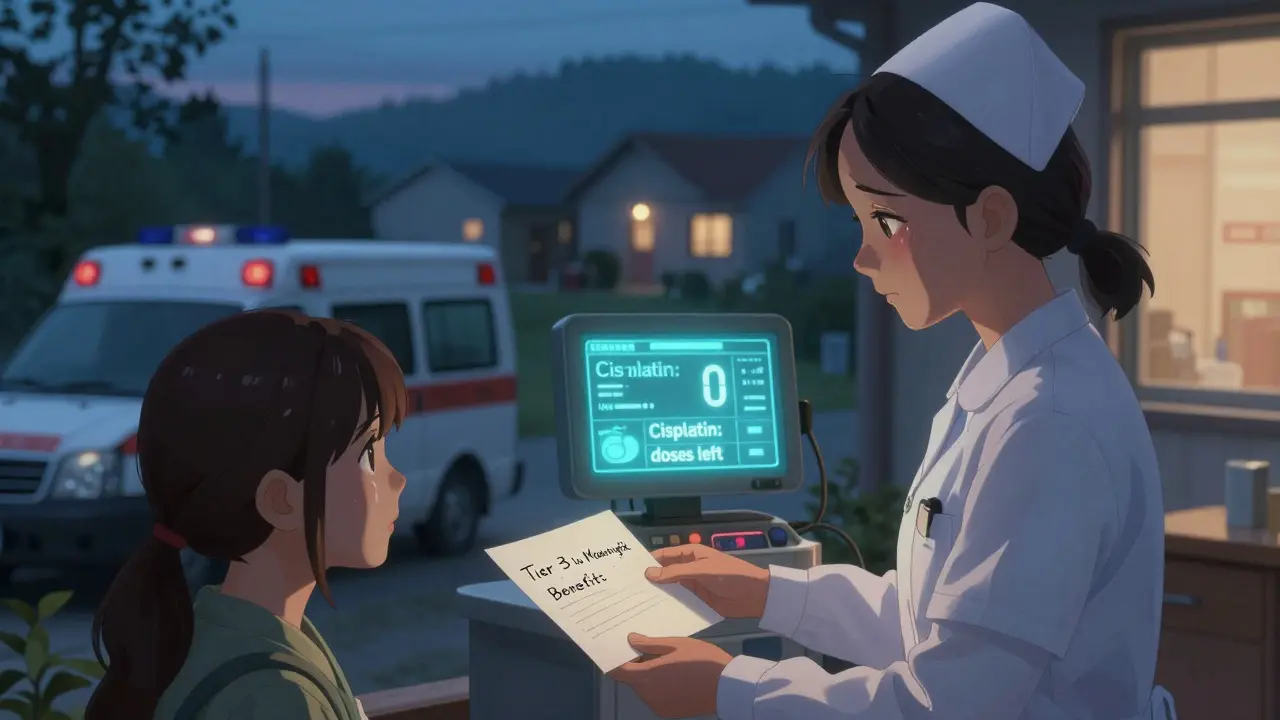
What’s Being Done to Fix It
Change is slow, but it’s coming. - The FDA launched a Drug Shortage Task Force in 2023 with plans for an AI-powered early warning system by 2025. It will predict shortages before they happen. - ASCO released a free online decision tool in May 2023 to help oncologists apply ethical criteria in real time. - The National Academy of Medicine is drafting standardized allocation metrics-expected in mid-2024. - The American Society for Bioethics and Humanities is launching certification for hospital rationing committees in 15 states as of January 2024. And there’s a quiet revolution happening in some hospitals. One in Minnesota now tracks every dose of carboplatin in real time. Every allocation is documented in the electronic record with a dropdown: “Justification: Curative intent, no alternative.” Every patient is told, in writing, why they’re getting-or not getting-the drug. It’s not perfect. But it’s honest.What You Can Do
If you or someone you love is facing cancer treatment, ask:- “Is there a shortage of this drug?”
- “Does the hospital have a formal plan for rationing?”
- “Can I see the criteria used to decide who gets it?”
- “Will I be told if I’m not getting the drug?”
What’s Next
Drug shortages aren’t going away. The FDA predicts 25-30% annual increases through 2027. Manufacturing is too concentrated. Global supply chains are too fragile. We’ll face more of these crises. The question isn’t whether rationing will happen again. It’s whether we’ll be ready. The next time a drug runs out, will we let fear and panic decide? Or will we use reason, fairness, and courage to make the hard choices-and make them together?Is medication rationing legal?
Yes, but only when done ethically and transparently. There’s no federal law that says doctors must ration drugs. But there’s also no law allowing arbitrary decisions. Courts have upheld rationing policies when they follow clear, evidence-based criteria and include appeals processes. The key is consistency-not discretion.
Do patients ever get priority based on who they are?
Ethical frameworks explicitly forbid using factors like wealth, social status, or insurance. But in practice, disparities still happen. Patients with better access to specialists, or those treated at academic hospitals, are more likely to get drugs. That’s why equity metrics are now being added to new guidelines. The goal is to correct these gaps, not ignore them.
Can I request a different drug if mine is in short supply?
You can ask, but not all alternatives work the same. For example, carboplatin and cisplatin are both platinum-based chemo drugs, but cisplatin is often more effective for certain cancers. Switching might mean lower survival rates. Doctors must weigh benefit vs. risk. If an alternative exists and is equally effective, it may be used. But if it’s not, rationing becomes unavoidable.
Why don’t hospitals just order more?
Many drugs are made by just one or two manufacturers. If a factory shuts down, there’s no backup. Generic drugs have tiny profit margins, so companies don’t keep extra stock. Even if hospitals wanted to stockpile, they can’t-these drugs expire. Some last only 12-24 months. Ordering extra means risking waste.
Are there any drugs that are never rationed?
No drug is immune. Even insulin, epinephrine, and antibiotics have faced shortages. But some are more protected. Drugs used in emergencies-like naloxone for overdoses or epinephrine for anaphylaxis-are often prioritized by regulators. But even those aren’t guaranteed. The system is fragile. That’s why preparedness matters.




Swapneel Mehta
December 20, 2025 AT 18:46This is one of those topics that doesn’t get talked about enough. I’ve seen my uncle go through chemo, and the fear wasn’t just the cancer-it was wondering if the next dose would even show up. The tiered system in Minnesota sounds brutal but fair. At least everyone knows the rules. That’s more than most hospitals offer.
Cameron Hoover
December 22, 2025 AT 12:26I work in a rural ER. We ran out of epinephrine last winter. Not chemo-just epinephrine. We had to call three states to find a vial. One patient coded. We got the drug 11 minutes later. He lived. But what if we hadn’t? This isn’t abstract. It’s Tuesday in a town with one pharmacy and no backup.
Stacey Smith
December 23, 2025 AT 08:35Why are we letting corporations decide who lives? Three companies control 80% of generic injectables? That’s not a supply chain issue-that’s corporate greed. Fix the system. Break up the monopolies. Stop pretending this is just about logistics.
Sandy Crux
December 24, 2025 AT 02:01While the article presents a superficially compelling framework-‘Accountability for Reasonableness’-it fails to interrogate the deeper epistemological crisis at play: the reification of bioethical heuristics as neutral, when in fact they are culturally embedded, historically contingent, and inevitably hierarchical. The ‘tiered system’ is merely a technocratic veneer over a fundamentally unjust distributional logic that privileges utilitarianism over dignity. Where, pray tell, is the phenomenology of suffering in these algorithms?
Hannah Taylor
December 24, 2025 AT 19:11you know what’s really going on? the gov’t and big pharma are letting this happen on purpose so they can push those new ‘gene therapies’ that cost $2M per treatment. they want you to think the old drugs are running out so you’ll beg for the new ones. and guess what? the new ones aren’t even proven. they’re just fancy labels on the same old scam.
Jason Silva
December 25, 2025 AT 15:05Bro. This is wild. 😳 I just read that 52% of decisions are made by one doctor alone. That’s like letting a random guy pick who gets a kidney. We need to stop this. Like, NOW. 🚨 I’ve seen doctors cry after choosing. They’re not monsters-they’re broken by the system. We need to fund committees. We need to train them. We need to make this a law. 🤝
mukesh matav
December 26, 2025 AT 22:50I respect the effort to create guidelines, but I worry about how this plays out in places without internet or specialists. In rural India, families often don’t even know what drug their relative is getting, let alone why they’re being denied. Maybe the real issue isn’t just hospitals-it’s the entire global health infrastructure.
Peggy Adams
December 28, 2025 AT 13:33so like... we’re just supposed to trust that some committee will make the ‘right’ call? what if they’re biased? what if they’re just tired? i don’t trust institutions. they’ve failed us too many times. just let people buy the drugs if they can. let the market decide. it’s not perfect but at least it’s not some bureaucrat deciding who dies.