Pioglitazone Risk Assessment Tool
Assess Your Pioglitazone Safety Risk
Answer these questions based on your medical history and current condition to evaluate your risk level for heart failure, edema, and bladder cancer while taking pioglitazone.
Heart Failure Risk Factors
Edema & Bladder Cancer Risk
When you're managing type 2 diabetes, finding a medication that lowers blood sugar without causing new problems is tough. Pioglitazone - sold under the brand name ACTOS - was once a go-to option. It works well. It doesn't cause low blood sugar. It improves insulin sensitivity. But over the last 15 years, serious safety concerns have reshaped how doctors use it. Today, it's not a first choice. And for good reason: pioglitazone carries real risks of heart failure, swelling, and even bladder cancer.
Why Pioglitazone Makes Your Body Hold Onto Fluid
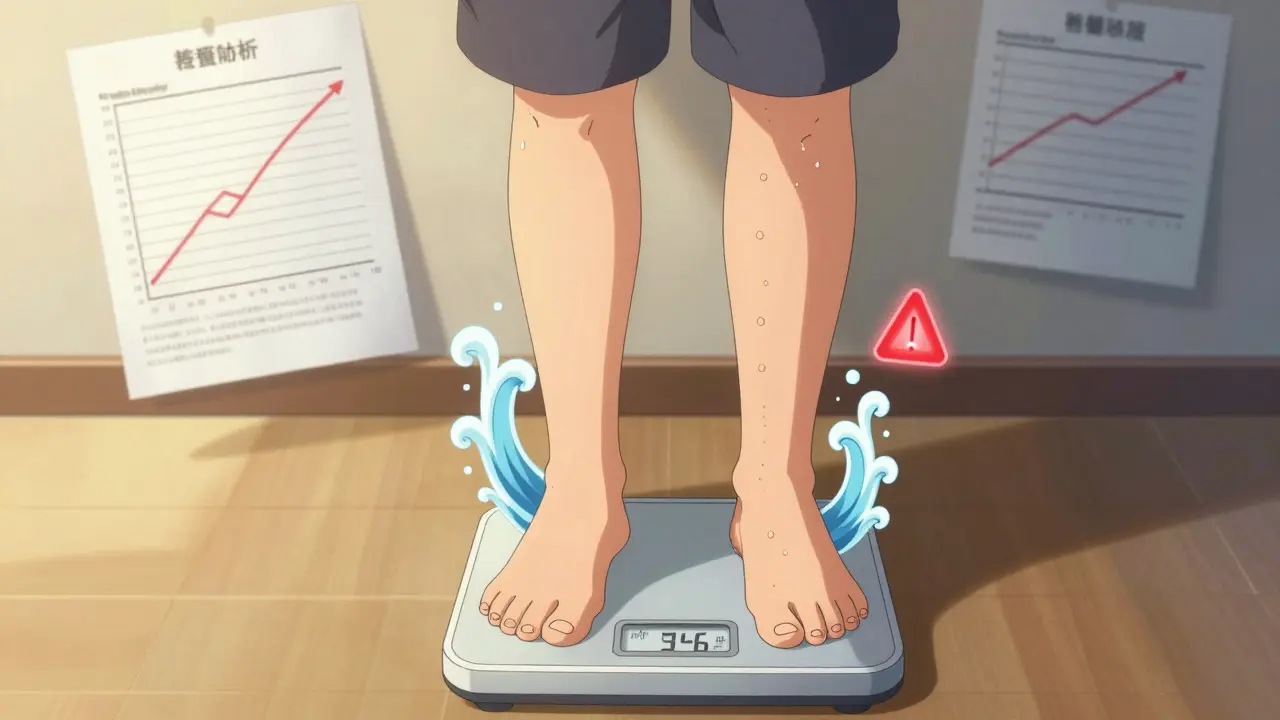
Pioglitazone doesn't just lower blood sugar. It changes how your body handles water. Almost every person who takes it retains some extra fluid. That's not a side effect you can ignore - it's built into how the drug works. Studies show it increases plasma volume by 6-7%, which sounds small until you feel your socks digging into your ankles or need to buy bigger shoes. In the PROactive trial, which tracked over 5,000 people with diabetes and heart disease, 27% of those on pioglitazone developed noticeable swelling (edema), compared to just 16% on placebo. That’s a 70% higher chance. And it wasn’t just mild puffiness. Over 20% of patients had swelling severe enough to affect daily life - walking, standing, even sleeping. The fluid doesn’t always show up in your legs. Some people gain weight fast - 8 to 10 pounds in a month - not from eating more, but from water stuck in their tissues. Here’s the catch: diuretics (water pills) rarely fix it. If you’re on furosemide or spironolactone and still swelling up, it’s probably the pioglitazone. The only reliable fix? Stopping the drug. Within days, the fluid drains away. That’s why doctors tell you to weigh yourself every week when you start this medication. A sudden 5-pound jump in a week? That’s not fat. That’s fluid. And it’s a red flag.The Heart Failure Risk Is Real - And Often Preventable
Fluid retention doesn’t just make you uncomfortable. It can overload your heart. That’s why pioglitazone has a black box warning from the FDA - the strongest safety alert they give. It’s absolutely contraindicated if you already have moderate to severe heart failure (NYHA Class III or IV). But even if you don’t have heart failure yet, pioglitazone can push you toward it. A 2023 meta-analysis of over 16,000 patients found that those on pioglitazone had a 41% higher risk of developing serious heart failure compared to those on other diabetes drugs. That’s not a small increase. It means for every 100 people taking pioglitazone, about 2-3 more will end up hospitalized for heart failure than if they’d taken metformin or an SGLT2 inhibitor. What makes this risk worse? If you’re older, have high blood pressure, kidney disease, or a history of heart problems. One study showed patients with an NT-proBNP level above 125 pg/mL - a blood marker for heart strain - had a much higher chance of heart failure after starting pioglitazone. That’s why top guidelines now say: don’t start it if you’ve been hospitalized for heart failure in the past year. Don’t start it if your heart’s already showing signs of stress. But here’s the thing: if you’re carefully monitored, the risk drops. A 2022 study found that patients who had monthly weight checks and symptom reviews had 37% fewer heart failure hospitalizations. That’s not magic. It’s just paying attention. If you gain 3 pounds in a week, feel short of breath climbing stairs, or can’t lie flat without coughing - call your doctor. Don’t wait.Bladder Cancer: A Long-Term Concern That Changed Prescribing
The biggest shock came in 2011. After 10 years of data from the PROactive study, researchers noticed something troubling: people taking pioglitazone had a slightly higher rate of bladder cancer. The hazard ratio was 1.2 - meaning a 20% increase. That might not sound scary, but when you’re talking about a drug taken daily for years, even a small increase adds up. The FDA updated the label in 2011 and again in 2016, adding a warning. Since then, doctors avoid pioglitazone in anyone with a history of bladder cancer. And if you’re on it long-term - say, more than a year - you need to watch for symptoms: blood in urine, frequent urination, pain when peeing. These aren’t normal aging issues. They’re signs that need immediate testing. Some studies have questioned how strong the link really is. But the evidence is consistent enough that the European Medicines Agency still restricts pioglitazone to second-line use. And in the U.S., most endocrinologists won’t prescribe it to men over 60 or women with a family history of bladder cancer. It’s not a blanket ban - but it’s a careful weighing of risks.
How Pioglitazone Compares to Other Diabetes Drugs
It’s not fair to judge pioglitazone in isolation. You have to compare it to what’s available now. Back in 2005, it was one of the few drugs that improved insulin sensitivity without causing low blood sugar. Today? You have better options. - Metformin: Still the first-line drug. No heart failure risk. No weight gain. Cheap. Proven to reduce heart attacks. - SGLT2 inhibitors (like empagliflozin, dapagliflozin): These don’t just lower blood sugar - they protect your heart. They reduce heart failure hospitalizations by 30% or more. And they cause weight loss, not gain. - GLP-1 agonists (like semaglutide, liraglutide): Also reduce heart failure risk. Help with weight loss. Lower A1C better than pioglitazone. Pioglitazone’s only real advantage? It works well in people who don’t respond to other drugs. And it’s one of the few that shows benefit for non-alcoholic fatty liver disease (NASH). In the PIVENS trial, 53% of patients on pioglitazone had improved liver fat levels - compared to just 24% on placebo. But for most people with type 2 diabetes, the risks outweigh the benefits. The American Diabetes Association says thiazolidinediones like pioglitazone should be used with caution - and only after other options fail.Who Should Still Take Pioglitazone?
You might be wondering: if it’s so risky, why is it still on the market? Because for a small group, it’s still useful. - People with severe insulin resistance who haven’t responded to metformin or GLP-1 drugs. - Patients with NASH or non-alcoholic steatohepatitis - where pioglitazone is one of the few drugs with proven liver benefits. - Those who can’t afford newer, expensive medications and need a low-cost option with proven glucose-lowering power. Even then, it’s not a free pass. You need:- A clean bill of heart health - no history of heart failure, no signs of fluid overload
- No personal or family history of bladder cancer
- Monthly weight checks for the first 3 months
- Regular urine tests if you’ve been on it over a year

What to Do If You’re Already on Pioglitazone
If you’re taking this drug right now, here’s what to do:- Check your weight every morning, same time, same scale. A 3-pound gain in a week? Call your doctor.
- Watch for swelling in ankles, feet, or belly. If your rings feel tight, that’s a sign.
- Notice if you’re winded walking up one flight of stairs - or if you need three pillows to sleep.
- Look at your urine. Any pink, red, or cola-colored tinge? Get it checked immediately.
- Ask your doctor: Is this still the best drug for me? Could I switch to something safer?
What’s Next for Pioglitazone?
Prescriptions for pioglitazone have dropped 72% since 2010. From 18.7 million a year to just 5.2 million in 2022. That’s not because it stopped working. It’s because better, safer options arrived. Newer drugs like MSDC-0602K - a next-generation thiazolidinedione - are showing promise in trials. They lower blood sugar without the same level of fluid retention. But they’re still experimental. For now, pioglitazone is a drug for very specific cases. It’s not a first-line choice. It’s not a safe choice for most. And it’s definitely not a drug you should take without understanding the risks. The truth is, diabetes treatment has moved on. We don’t just want to lower blood sugar anymore. We want to protect the heart, the kidneys, the liver - and avoid making things worse. Pioglitazone helped us get here. But it’s not the future.Can pioglitazone cause weight gain?
Yes, pioglitazone commonly causes weight gain - but it’s mostly from fluid retention, not fat. Studies show patients gain an average of 2-5 pounds in the first few months. Some gain 10 pounds or more. This is due to increased plasma volume and fluid buildup in tissues. The weight usually drops quickly after stopping the drug.
Is pioglitazone safe if I have heart disease?
If you have moderate to severe heart failure (NYHA Class III or IV), pioglitazone is strictly contraindicated. If you have mild heart disease or risk factors like high blood pressure or past heart attack, your doctor may still consider it - but only after careful evaluation and close monitoring. Most experts now prefer SGLT2 inhibitors or GLP-1 agonists for patients with heart disease because they reduce risk, not increase it.
Does pioglitazone increase the risk of bladder cancer?
Long-term use (more than one year) is linked to a slightly higher risk of bladder cancer - about a 20% increase based on large studies. This led the FDA to add a warning in 2011. Doctors avoid prescribing it to people with a history of bladder cancer or those over 60 with risk factors. If you’ve been on it for over a year, report any blood in urine, frequent urination, or pain when peeing right away.
Can diuretics fix pioglitazone-induced swelling?
Usually not. Unlike swelling from other causes, pioglitazone-related edema doesn’t respond well to water pills like furosemide. The fluid buildup is caused by changes in how your body handles water at the cellular level. The only reliable fix is stopping the drug - swelling typically resolves within days to weeks after discontinuation.
Are there safer alternatives to pioglitazone?
Yes. Metformin is still the first-line choice. For people needing more help, SGLT2 inhibitors (like empagliflozin) and GLP-1 receptor agonists (like semaglutide) are now preferred. They lower blood sugar, help with weight loss, and - importantly - reduce heart failure risk. Unlike pioglitazone, they protect your heart instead of straining it.




Juan Reibelo
January 24, 2026 AT 00:58Kat Peterson
January 24, 2026 AT 21:14Himanshu Singh
January 24, 2026 AT 22:38Jamie Hooper
January 25, 2026 AT 09:29Husain Atther
January 25, 2026 AT 20:17Helen Leite
January 27, 2026 AT 07:09Izzy Hadala
January 28, 2026 AT 08:57Marlon Mentolaroc
January 28, 2026 AT 14:39