Oral Thrush Prevention Checklist
Your Medication Profile
Current Habits
Your Prevention Plan
Thrush Risk Level
Low RiskBased on your current habits and medications
Prevention Steps
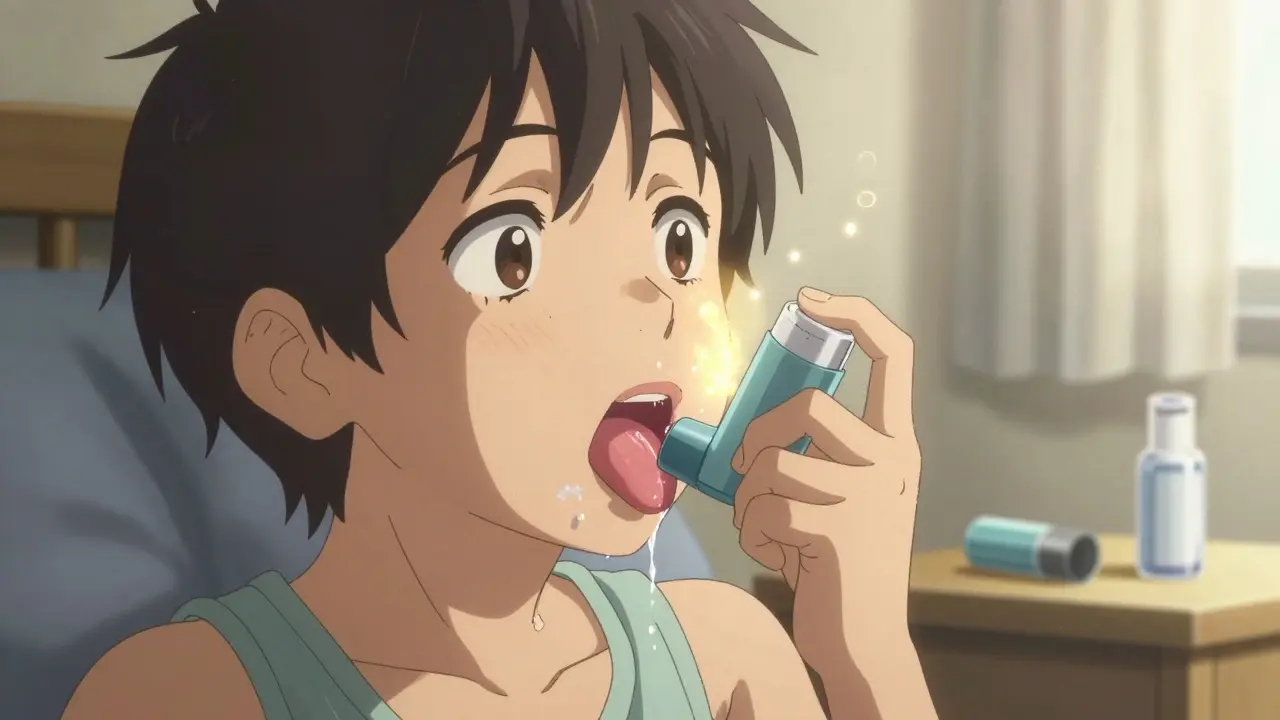
1. Rinse Immediately After Inhalers
After each puff, rinse with 10-15ml of water for 10-15 seconds. Don't swallow. Spitting helps remove 65% of residue according to NHS studies.
2. Use a Spacer
Reduces mouth deposits by up to 80%. This simple device attaches to your inhaler and delivers medication directly to lungs.
3. Maintain Oral Hygiene
Brush twice daily with soft bristles. Floss daily. Clean dentures nightly if you wear them.
More than 1 in 5 people using inhaled asthma medications develop oral thrush. It’s not rare. It’s not mysterious. It’s a direct side effect of the drugs they need to stay healthy. The white patches on your tongue, the burning sensation when you swallow, the metallic taste that won’t go away - these aren’t just annoyances. They’re signs your mouth’s natural balance has been knocked off track by medication. And if you’re on steroids, antibiotics, or immunosuppressants, you’re at risk.
Why Medications Cause Oral Thrush
Oral thrush isn’t caused by being unclean. It’s caused by imbalance. Your mouth normally hosts harmless fungi like Candida albicans - kept in check by good bacteria. But certain medications wipe out those protective bacteria or weaken your body’s defenses. That’s when Candida takes over.
Inhaled corticosteroids - the mainstay of asthma and COPD treatment - are the biggest culprit. They land directly in your mouth and throat. Even if you rinse afterward, some residue stays. That creates a perfect damp, sugary environment for fungus to grow. According to the NHS, 20% of people on these inhalers get thrush. That’s not a fluke. That’s the rule.
Antibiotics are another major trigger. Broad-spectrum ones like amoxicillin or doxycycline don’t just kill bad bacteria. They wipe out the good ones too. Without those defenders, Candida spreads unchecked. And if you’re on immunosuppressants after a transplant, or chemotherapy for cancer, your body can’t fight back at all. These aren’t side effects you can ignore. They’re signals your system is under stress.
How to Spot Oral Thrush Early
You don’t need a doctor to spot thrush. Look in the mirror. The classic sign? White, creamy patches that look like cottage cheese. They stick to your tongue, inner cheeks, gums, or roof of your mouth. If you scrape them off, you’ll see red, raw skin underneath - sometimes bleeding. That’s not normal plaque. That’s infection.
Other signs are harder to ignore: a constant cottonmouth feeling, pain when eating or swallowing, loss of taste, or a metallic, bitter taste that lingers. Some people describe it like having a bad sore throat that won’t go away. If you’re on any of the high-risk medications and notice these symptoms, don’t wait. Don’t assume it’s just a cold. Act fast.
First-Line Treatment: Nystatin Oral Suspension
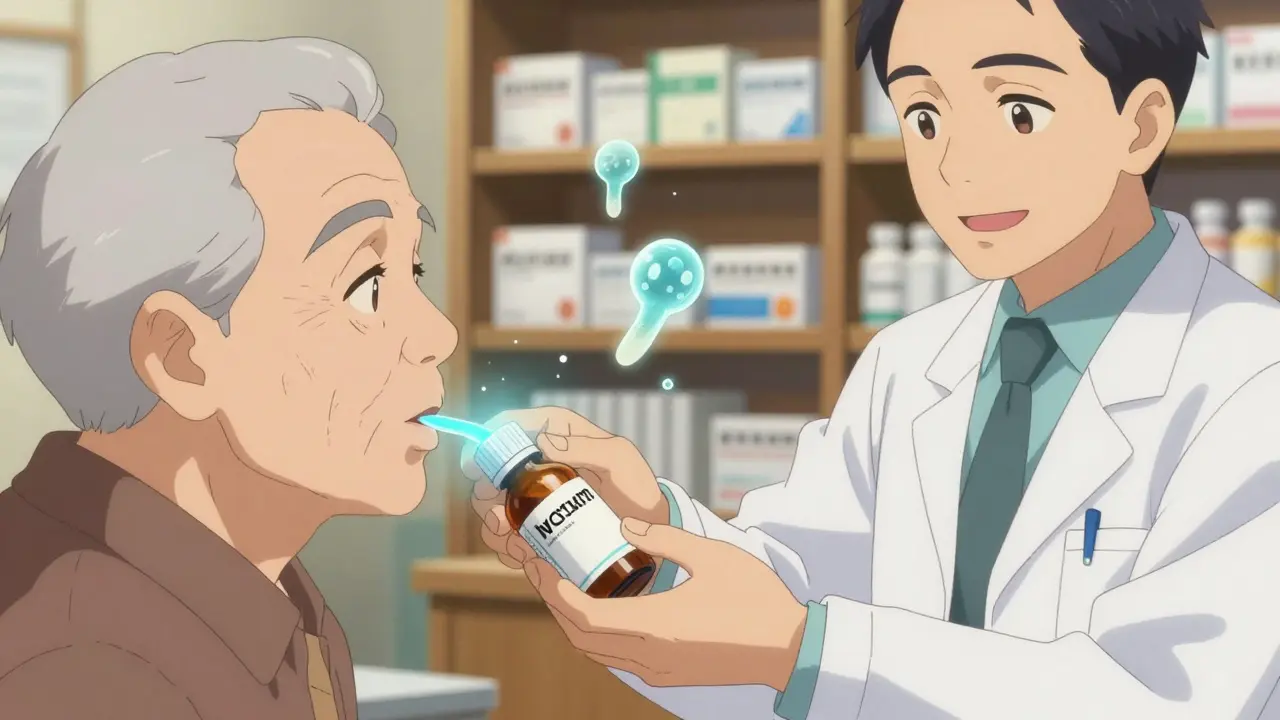
Nystatin is the go-to for most cases. It’s been around since the 1950s. It works locally - meaning it doesn’t enter your bloodstream. That makes it safe for kids, pregnant women, and people on multiple medications.
The standard dose is 4 to 6 milliliters swished in the mouth four times a day for 7 to 14 days. Sounds simple. But here’s where most people fail: they swallow it right away. That’s useless. Nystatin only works if it touches the fungus. You need to hold it in your mouth for at least two minutes. Swish it like mouthwash. Let it coat every sore spot. Then spit it out. Don’t rinse. Don’t eat or drink for 30 minutes after.
Memorial Sloan Kettering reports a 92% cure rate when used correctly. But WebMD’s data shows 42% of treatment failures come from patients not holding the liquid long enough. The taste? Chalky, bitter, unpleasant. That’s why so many stop early. But if you skip doses or rush the swishing, you’re not just wasting time - you’re risking recurrence.
When to Use Fluconazole Instead
If nystatin doesn’t work, or if you have severe thrush - especially if it’s spread to your esophagus - fluconazole is next. It’s a pill. One dose a day. No swishing. No timing. That’s why it’s preferred for busy adults or immunocompromised patients.
Fluconazole is absorbed into your bloodstream. That means it works faster and reaches deeper infections. The standard dose is 100 to 200 mg daily for 7 to 14 days. Mayo Clinic says 98% of the drug gets into your system. Cure rates hit 95%.
But it’s not harmless. Fluconazole can interact with 32 common drugs - including blood thinners like warfarin, seizure meds like phenytoin, and diabetes pills. It can also cause headaches, stomach pain, and, rarely, liver damage. The FDA has issued black box warnings for this. And resistance is rising. In 2010, only 3% of Candida strains were resistant to fluconazole. By 2022, that jumped to 12%. That’s why doctors don’t use it as a first step unless they have to.
Cost and Accessibility: What You’ll Pay
Cost matters. Nystatin oral suspension? Generic versions cost about $15.79 for a 30-day supply. Fluconazole? Around $23.49 for the same period. Brand-name Diflucan? Nearly $350. That’s why most prescriptions start with nystatin.
Insurance usually covers both. But if you’re paying out-of-pocket, nystatin wins. And for kids and seniors - who make up 87% of nystatin users - safety matters more than convenience. The European Medicines Agency confirms nystatin is safe for newborns. Fluconazole? Not so much. It’s avoided in early pregnancy and in people with liver problems.
Prevention: Stop It Before It Starts
Treating thrush is one thing. Preventing it is better.
If you use an inhaler, rinse your mouth with water right after every puff. Don’t just swish. Spit it out. The NHS found this simple step cuts thrush risk by 65%. Use a spacer device if you have one - it reduces mouth deposits by up to 80%.
Brush your teeth twice a day. Floss daily. Clean your dentures every night if you wear them. Keep your mouth dry. Sipping water helps. Avoid sugary snacks and drinks - Candida feeds on sugar.
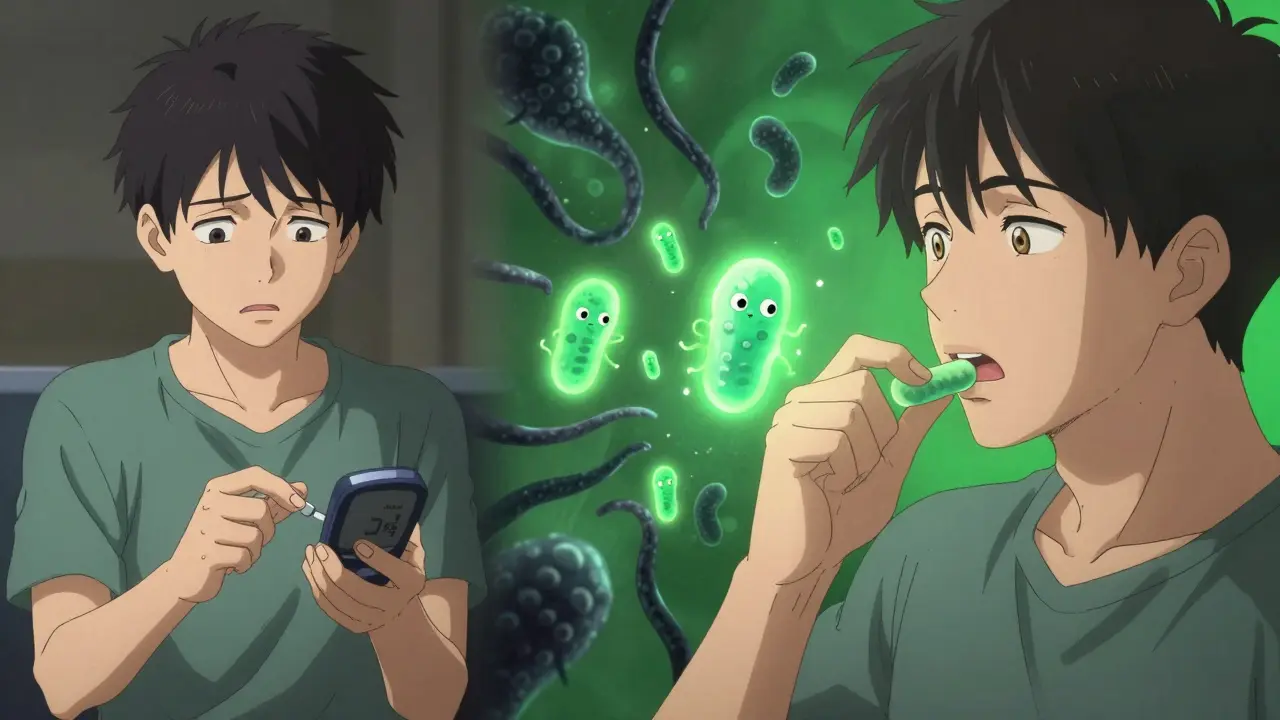
For people with diabetes, controlling blood sugar is critical. HbA1c above 7%? That’s a red flag. High glucose = fuel for fungus. The American Dental Association says keeping levels under 7% cuts thrush risk significantly.
And try xylitol. It’s a natural sweetener that doesn’t feed Candida. Chewing gum or mints with xylitol can reduce fungal growth by 40%, according to the Journal of Dental Research. It’s not magic. But it helps.
New Developments and What’s Coming
There’s good news on the horizon. In March 2023, the FDA approved a new nystatin tablet called Mycolog-II. It sticks to your mouth lining for up to four hours - no swishing needed. Early trials show 94% effectiveness. That’s a game-changer for people who can’t tolerate the taste or forget to swish.
Probiotics are also gaining ground. A 2023 study in Nature Microbiology found that taking Lactobacillus reuteri alongside antifungals reduced recurrence by 57%. You can find it in some supplements or fermented foods. Not a cure. But a smart add-on.
And while fluconazole resistance grows, new antifungals like isavuconazole are in Phase II trials. They’re designed to be safer and more targeted. The future isn’t about stronger drugs. It’s about smarter, gentler ones.
What to Do If It Comes Back
Recurrence is common - especially if you’re still on the medication that caused it. If thrush returns after treatment, don’t just restart the same drug. See your doctor. You might need a culture test to check for resistant strains. Candida auris, a dangerous, drug-resistant fungus, is now being tracked by the CDC. It’s rare, but it’s real.
Also, check your inhaler technique. Are you using a spacer? Are you rinsing properly? Are you using the lowest effective dose? Sometimes, switching to a different steroid inhaler helps. Or reducing the dose under medical supervision.
And if you’re on long-term antibiotics or immunosuppressants, ask your doctor about preventive antifungals. Some patients get low-dose nystatin or fluconazole weekly to stay ahead of outbreaks.
Can oral thrush go away on its own?
Sometimes, yes - especially if it’s mild and you stop the medication causing it. But if you’re still taking steroids, antibiotics, or immunosuppressants, it won’t go away on its own. Left untreated, thrush can spread to your esophagus or bloodstream, especially in people with weak immune systems. Don’t wait. Treat it.
Is nystatin safe for children and elderly patients?
Yes. Nystatin is one of the safest antifungals available. It’s not absorbed into the bloodstream, so it doesn’t affect the liver, kidneys, or other organs. The European Medicines Agency approves it for use from birth. It’s commonly prescribed for babies with thrush and older adults on multiple medications. The main issue is the taste - but for most, safety outweighs discomfort.
Can I use mouthwash to treat oral thrush?
Regular alcohol-based mouthwashes won’t help - and can make it worse. They kill good bacteria, leaving Candida with even less competition. Some antiseptic rinses like chlorhexidine may help temporarily, but they’re not a substitute for antifungals. Only use mouthwashes specifically prescribed for thrush. Stick to nystatin or fluconazole as directed.
Does fluconazole interact with birth control?
Fluconazole doesn’t directly reduce the effectiveness of hormonal birth control. But it can increase the levels of estrogen in your body, which might cause side effects like nausea or breast tenderness. It’s still best to use backup contraception during treatment if you’re concerned. Always check with your doctor or pharmacist about interactions with any medication you’re taking.
How long does it take for oral thrush to clear up?
With proper treatment, symptoms usually improve within 3 to 5 days. But you need to finish the full course - 7 to 14 days - even if you feel better. Stopping early lets surviving fungi come back stronger. If you don’t see improvement after 7 days, contact your doctor. You may need a different treatment or further testing.
Next Steps: What to Do Today
If you’re on an inhaler and haven’t rinsed after use - start today. Rinse with water. Spit. Don’t swallow. Do it every single time.
If you’ve had thrush before and are starting a new antibiotic - ask your doctor about preventive nystatin. It’s cheap. It’s safe. It’s easy.
If you’re struggling with nystatin’s taste - try chilling the suspension. It helps. Or ask your pharmacist if Mycolog-II (the new tablet) is available. It’s not everywhere yet, but it’s coming.
And if you’re diabetic - get your HbA1c checked. Keep it under 7%. That’s not just about thrush. It’s about your whole body.
Medications save lives. But they can also open the door to problems like oral thrush. The key isn’t avoiding treatment. It’s managing the side effects before they manage you.

erica yabut
January 2, 2026 AT 14:00Let’s be real - this isn’t just about rinsing your mouth. It’s about the quiet betrayal of modern medicine. We’ve outsourced our immune resilience to pharmaceutical convenience, then act shocked when Candida throws a tea party on our mucosal membranes. Nystatin? A 1950s Band-Aid on a 21st-century systemic failure. We’re treating symptoms while ignoring the root: a microbiome decimated by overprescription, over-sanitization, and the cult of chemical control. The real scandal? No one’s talking about probiotic restoration as first-line prophylaxis. Instead, we hand out chalky suspensions like candy and call it prevention. Pathetic.
Tiffany Channell
January 3, 2026 AT 20:1542% of treatment failures due to poor technique? That’s not patient error. That’s systemic incompetence. Doctors don’t teach this. Pharmacies don’t explain it. And insurance won’t cover the spacer. This isn’t a medical issue - it’s a negligence epidemic.
Joy F
January 4, 2026 AT 11:40Oral thrush is the universe’s way of whispering: ‘You’re overmedicated.’
It’s not a fungal infection - it’s a spiritual audit. Every puff of that inhaler is a surrender to the machine. Every antibiotic, a violation of your inner ecosystem. Fluconazole? That’s not medicine. That’s chemical warfare with collateral damage. And Mycolog-II? A bandage on a severed artery. We need to stop treating the symptom and start grieving the loss of natural immunity. The body knows how to heal. We just keep giving it more poison to swallow.
Shruti Badhwar
January 6, 2026 AT 07:13The data here is solid, but the real issue is access. In rural India, many patients never see a doctor before thrush becomes severe. Nystatin is available, but the instructions are rarely explained in local languages. Spacers? Unaffordable. Xylitol gum? A luxury. Prevention is not a technical problem - it’s a social justice issue. Education must be decentralized, culturally adapted, and free. We can’t expect patients to be experts when the system refuses to support them.
Tru Vista
January 6, 2026 AT 15:32Fluconazole resistance up to 12%? Bro that’s wild. Also nystatin tastes like chalky sadness. Mycolog-II sounds like a startup that got VC funding. Also why no mention of coconut oil pulling? Just sayin’.
Haley Parizo
January 7, 2026 AT 15:10People who rinse but still get thrush? They’re not following protocol. They’re lying to themselves. If you’re on steroids and still eating sugar, don’t blame the medication. Blame your choices. This isn’t medical negligence - it’s personal failure dressed up as victimhood. Stop looking for magic rinses and start taking responsibility.
Neela Sharma
January 9, 2026 AT 01:03Thrush is your body screaming for balance
Not more drugs
Not more rinses
But quiet
Rest
Food that doesn’t feed the fungus
And the courage to ask your doctor: what if we reduce the dose?
Not every pill is a hero
Some are just noise
Wren Hamley
January 9, 2026 AT 03:00Wait - so if you use a spacer + rinse, risk drops 65%? Then why do 80% of patients skip the spacer? Is it cost? Ignorance? Or just laziness? I’ve seen people use inhalers like cigarettes - no technique, no care. This isn’t a drug problem. It’s a behavioral one. We need public health campaigns with videos, not PDFs. And maybe make spacers free with every prescription.
Palesa Makuru
January 9, 2026 AT 09:23Ugh I’ve had this 3x since my transplant. They gave me fluconazole and I got liver enzymes through the roof. Nystatin? Tasted like regret. But here’s the thing - I started chewing xylitol gum after every meal. And guess what? No thrush in 8 months. It’s not sexy. It’s not a pill. But it works. Why isn’t this in every damn pamphlet? Why do we always go for the heavy artillery first?
Lori Jackson
January 10, 2026 AT 21:33Anyone else notice how every ‘new development’ is just a rebrand of the same old drugs? Mycolog-II? Sounds like a pharmaceutical marketing gimmick. And ‘probiotics help’? That’s not science - that’s wellness woo. If you need Lactobacillus reuteri to fix what a steroid broke, maybe the steroid shouldn’t be your first option. This whole system is built on treating symptoms while avoiding the real question: why are we overprescribing these drugs in the first place?
Ian Detrick
January 10, 2026 AT 23:35Just started using a spacer yesterday. Rinsed like they said. No thrush this week. I know it sounds dumb. But sometimes the fix is this simple. Stop overcomplicating it. Your body isn’t broken. You just gave it too much to handle. Less poison. More care. That’s the real prescription.