Drug Black Box Warning Checker
Check if Your Medication Has a Black Box Warning
Learn if your prescription medication has the FDA's strongest safety alert and what it means for your treatment.
Enter a medication name to check for black box warnings.
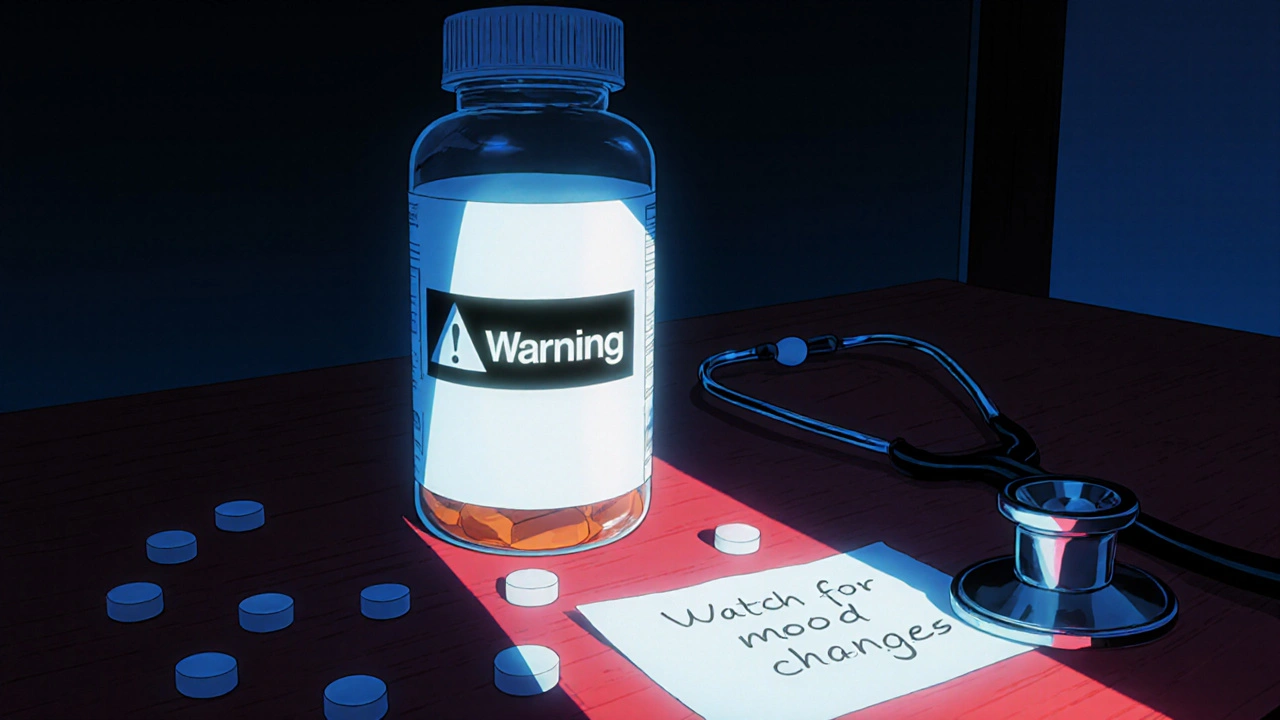
When you pick up a new prescription, you might not notice the small black rectangle on the drug’s label. But that box? It’s the FDA’s loudest alarm bell. A black box warning is the strongest safety alert the U.S. Food and Drug Administration can issue. It doesn’t mean the drug is banned. It means: this could kill you - if you don’t know what you’re doing.
What Exactly Is a Black Box Warning?
A black box warning is a bold, black-bordered box placed at the very top of a drug’s prescribing information. It’s not a suggestion. It’s a legal requirement. The FDA mandates it when clinical data shows a drug carries a serious - sometimes life-threatening - risk. These aren’t vague side effects like headaches or nausea. These are events like liver failure, suicidal thoughts, heart attacks, or sudden death. The warning format was formalized in the 1970s, but the system started after the Kefauver-Harris Amendments of 1962, when Congress demanded stronger proof of drug safety. Today, over 400 medications carry this warning, including common ones like antidepressants, diabetes drugs, and painkillers. The goal? Stop doctors and patients from ignoring danger. The FDA doesn’t want people to die because a warning was buried in fine print. So they put it in a box. Big. Black. Impossible to miss.Why Do Drugs Get a Black Box Warning?
The FDA doesn’t slap these on lightly. Three main reasons trigger a black box warning:- The drug has a risk so severe, it could outweigh its benefits for some patients - like a diabetes drug that increases heart failure risk.
- The danger can be reduced, but only if used exactly right - like requiring blood tests every few weeks to check liver function.
- The drug must be restricted - only given by specialists, only to certain age groups, or only after other treatments fail.
How Is It Different From Other FDA Warnings?
The FDA uses several types of safety alerts, but black box warnings sit at the top of the pyramid.- Standard warnings appear in the “Warnings and Precautions” section. They’re important, but not urgent.
- Drug safety communications are public notices - often for newly discovered risks.
- Boxed warnings are embedded directly into the drug’s official labeling. They’re binding. They’re permanent until the FDA says otherwise.
What Should You Do If Your Medication Has a Black Box Warning?
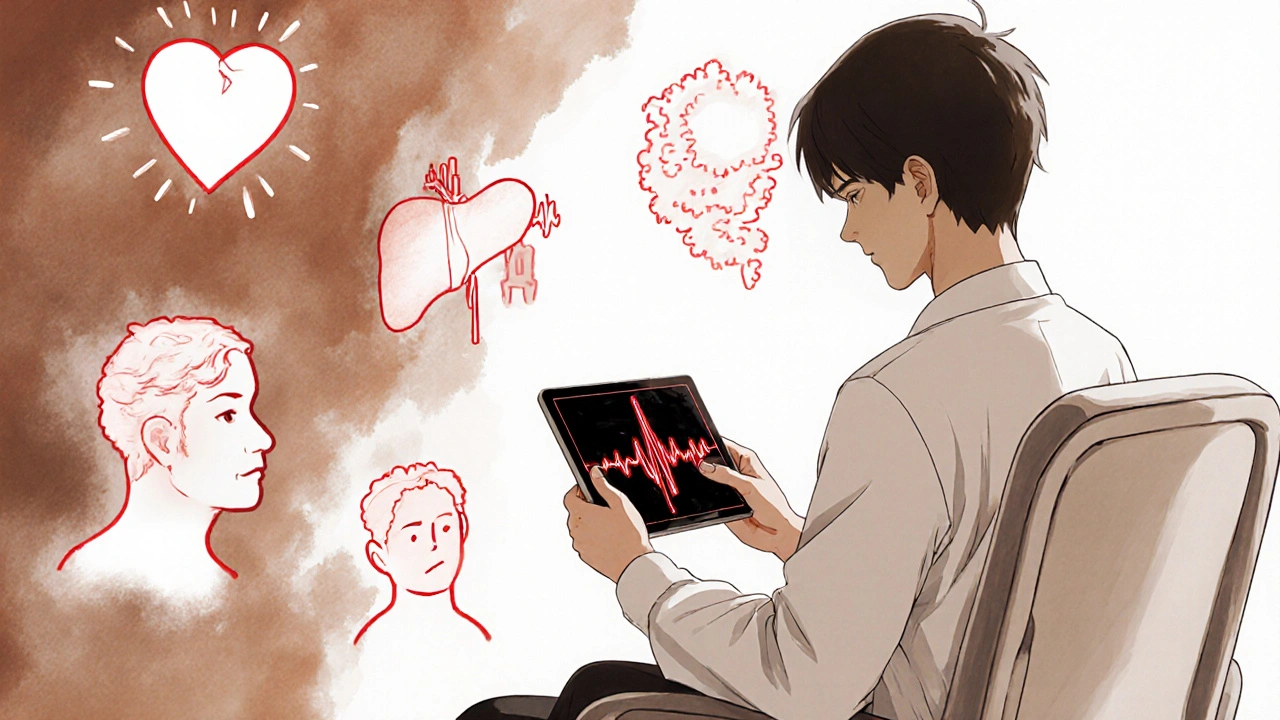
First: don’t panic. Don’t stop taking it. Don’t assume it’s unsafe. The warning doesn’t mean the drug is bad. It means it’s powerful - and needs careful handling. Talk to your doctor. Ask these questions:- What’s the specific risk in this warning?
- How likely is it to happen to me?
- Are there blood tests or checkups I need to catch problems early?
- Are there safer alternatives that work just as well?
- What should I watch for at home - and when should I call for help?
How the FDA Tracks Risks After a Drug Is Approved
Most black box warnings aren’t discovered in clinical trials. They show up after thousands - or millions - of people start using the drug. That’s because rare side effects only appear in large, real-world populations. A trial with 3,000 people might miss a risk that happens in 1 in 10,000. But once 5 million people take the drug? That’s 500 cases. That’s when the FDA notices. The agency uses the FDA Adverse Event Reporting System (FAERS) to collect reports from doctors, patients, and drug companies. If a pattern emerges - say, five people on a new antidepressant develop a rare brain condition - the FDA investigates. If the link is confirmed, they may add or strengthen a black box warning. You can help. If you or someone you know has a serious side effect, report it to the FDA’s MedWatch program. Your report could prevent someone else’s tragedy.Are Black Box Warnings Effective?
Sometimes. Sometimes not. The rosiglitazone case shows they can work - dramatically. But other warnings have little impact. Why? Because warnings don’t change behavior unless they’re understood, trusted, and acted on. Doctors might skip reading the full label. Patients might forget the warning after leaving the clinic. Media coverage plays a huge role - a warning that makes the news gets more attention than one buried in a PDF. Experts agree: the system needs to evolve. Right now, warnings often say things like “risk of sudden death.” That sounds scary. But what’s the actual chance? 1 in 100? 1 in 1,000? 1 in 10,000? Without numbers, patients can’t weigh the risk properly. The FDA is starting to move toward clearer language - using absolute risk, not just “serious risk.” That’s progress. But it’s slow. Until then, the burden falls on you and your doctor to dig deeper.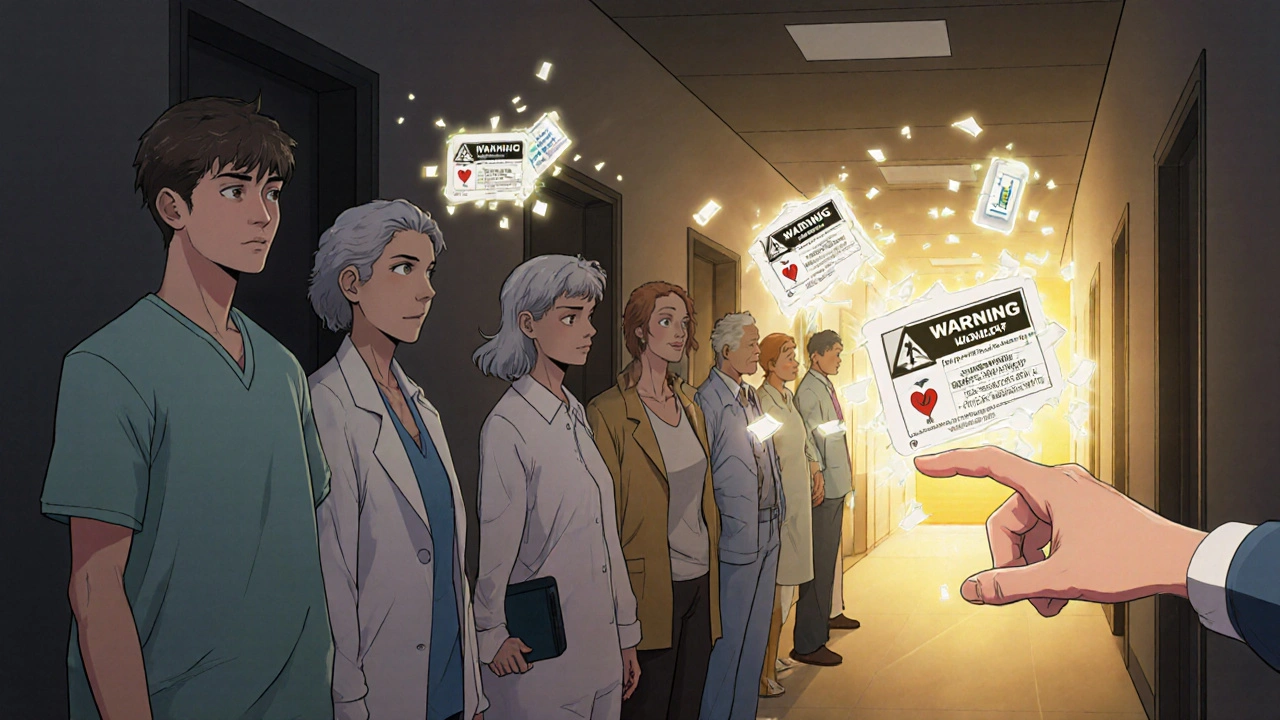
What Patients Can Do Right Now
You don’t need to be a doctor to use black box warnings wisely. Here’s what to do:- Always read the patient information leaflet that comes with your prescription.
- Keep a list of all your meds - especially those with black box warnings - and share it with every doctor you see.
- Don’t assume a drug is safe just because it’s been on the market for years. New risks can appear at any time.
- Use trusted resources like Consumer Reports’ Best Buy Drugs or the Drug Effectiveness Review Project to compare safety and cost.
- If you’re unsure, ask: “Is there a safer option? What happens if I skip this drug?”
Frequently Asked Questions
Does a black box warning mean I can’t take the drug?
No. A black box warning doesn’t mean the drug is banned or unsafe for everyone. It means the risks are serious enough that your doctor must carefully weigh them against the benefits. Many people take these medications safely - with proper monitoring and clear communication with their healthcare team.
Can I get a drug with a black box warning without a prescription?
No. Black box warnings only appear on prescription drugs. Over-the-counter medications don’t carry them. If you’re offered a prescription with a black box warning, your doctor is required to explain the risks and get your informed consent before filling it.
Do black box warnings apply to generic drugs too?
Yes. Generic drugs must have the same labeling as their brand-name counterparts, including black box warnings. The FDA requires this to ensure safety is identical across all versions of the same medication.
How often are black box warnings updated or removed?
They’re updated as new safety data becomes available. Some warnings have been strengthened over time - like those for certain antidepressants - while others have been removed after long-term studies showed lower risks than originally thought. The FDA reviews drug safety continuously through its FAERS database.
Can I report a side effect from a drug with a black box warning?
Yes. Anyone - patients, caregivers, or healthcare providers - can report adverse events to the FDA through MedWatch. Your report helps the agency identify new risks and decide whether to strengthen warnings. Visit fda.gov/medwatch to file a report.
What’s Next for Black Box Warnings?
The FDA is working to make these warnings more useful - not just louder. Future changes may include:- Adding actual risk numbers (e.g., “1 in 500 patients may develop liver failure”)
- Using plain language instead of medical jargon
- Creating digital alerts that pop up when doctors e-prescribe
- Improving how patients receive the warning - through apps, videos, or printed summaries


Sherri Naslund
November 19, 2025 AT 13:19Ashley Miller
November 19, 2025 AT 21:59Martin Rodrigue
November 20, 2025 AT 10:06Lauren Hale
November 20, 2025 AT 16:54Hannah Machiorlete
November 20, 2025 AT 18:40Donald Sanchez
November 22, 2025 AT 00:57Abdula'aziz Muhammad Nasir
November 22, 2025 AT 10:41Tara Stelluti
November 22, 2025 AT 13:37Danielle Mazur
November 23, 2025 AT 07:03