
Kava Medication Interaction Checker
Check if your medications interact with kava and increase liver damage risk
When you’re trying to manage anxiety without prescription drugs, kava might seem like a safe, natural choice. It’s been used for centuries in the South Pacific, and many people swear by its calming effects. But here’s the part no one tells you: kava can seriously damage your liver-especially if you’re taking other medications.
Why Kava Can Hurt Your Liver
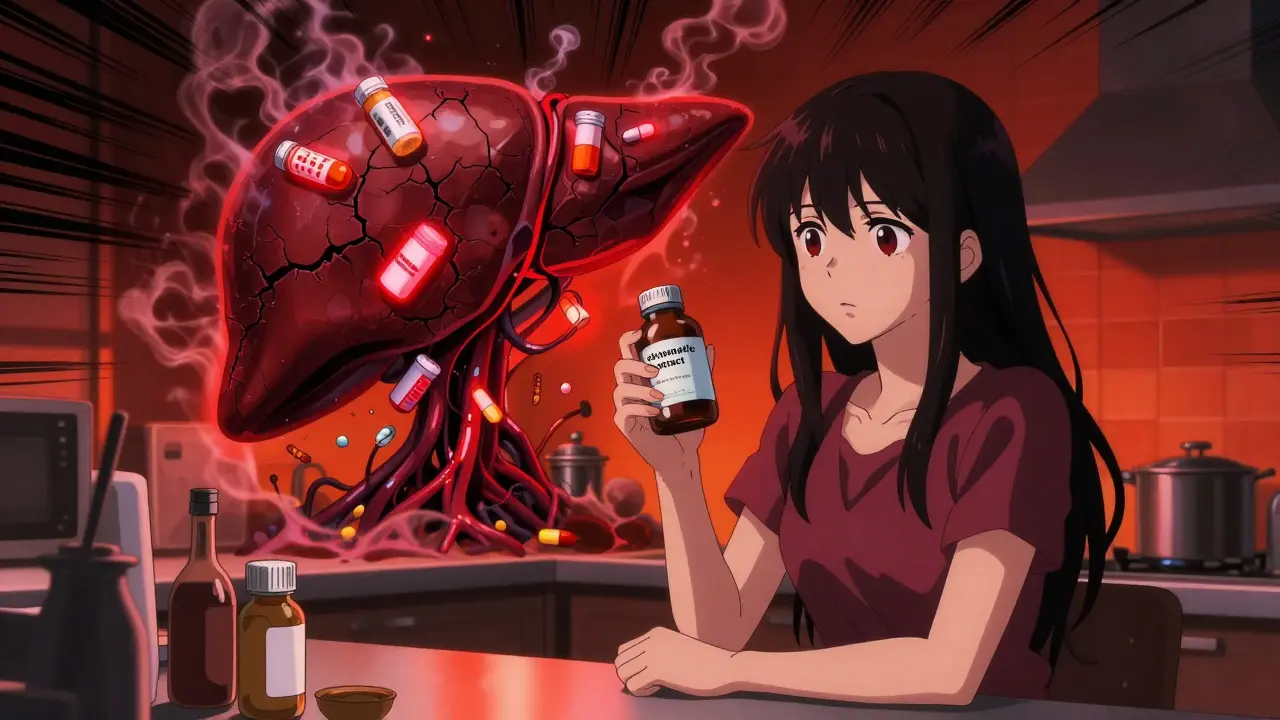
Kava’s main active ingredients, called kavalactones, help reduce anxiety by affecting brain chemicals similar to benzodiazepines. But they also mess with your liver’s ability to process toxins. The liver uses enzymes-especially CYP3A4, CYP2C9, and CYP2C19-to break down drugs and chemicals. Kava blocks these enzymes, which means other medications build up in your system instead of being cleared out. Worse, kava depletes glutathione, one of your liver’s most important antioxidants. Without enough glutathione, your liver cells become vulnerable to damage. This isn’t just theoretical. In 2002, the CDC reported 11 cases of liver failure linked to kava use, all requiring transplants. A 2003 UCLA study tracked 645 patients using kava supplements and found liver enzyme spikes in those taking higher doses. The real danger? It’s not always obvious until it’s too late. People often feel fine-no nausea, no fatigue-until their ALT (a liver enzyme) suddenly jumps from normal (<17 U/L) to over 2,400 U/L. That’s what happened to one patient taking kava alongside birth control pills and migraine meds. Within 17 weeks, they needed a liver transplant.Not All Kava Is the Same
There’s a big difference between traditional kava and what you find in American stores. In Fiji or Vanuatu, kava is made by grinding the root and mixing it with cold water. This method pulls out the calming kavalactones while leaving behind harmful compounds. But most supplements sold in the U.S. use ethanol or acetone to extract kavalactones. These organic solvents pull out flavokawains-chemicals now strongly linked to liver damage. The FDA’s 2020 review found that nearly all reported liver injuries came from these solvent-based extracts. Germany alone reported 26 cases, all from ethanolic extracts. Meanwhile, traditional water-based kava has been consumed safely for thousands of years with almost no liver injury reports. So if you’re considering kava, check the label. If it says “ethanolic extract,” “acetonic extract,” or “standardized to 70% kavalactones,” walk away. Stick to water-based powders or teas made from peeled root-those are far less risky.Medications That Can Turn Kava Dangerous
Kava doesn’t just hurt your liver on its own. It turns common medications into hidden threats. Here’s what you need to avoid combining with kava:- Acetaminophen (Tylenol) - Even at normal doses, this common painkiller stresses the liver. With kava, the risk of liver failure multiplies.
- Alcohol - Both are processed by the same liver enzymes. Together, they overload your system. Most liver injury cases involved alcohol use.
- Benzodiazepines (Xanax, Valium) - Kava enhances their sedative effects. You might feel extra calm, but your body can’t handle the combined load.
- Antidepressants (SSRIs, SNRIs) - These are metabolized by CYP enzymes kava blocks. This can cause toxic buildup and serotonin syndrome.
- Birth control pills - Estrogen-containing contraceptives are linked to liver stress. One documented case had a woman on norgestimate and ethinyl estradiol develop acute liver failure after 16 weeks of kava use.
- Statins (atorvastatin, simvastatin) - These cholesterol drugs are broken down by CYP3A4. Kava blocks that pathway, increasing the risk of muscle and liver damage.
- Antibiotics (erythromycin, clarithromycin) - Many antibiotics are processed by the same liver enzymes. Kava can turn them into liver toxins.
Even over-the-counter supplements like St. John’s Wort, milk thistle, or high-dose vitamin E can add to the burden. Your liver isn’t a machine with unlimited capacity-it’s a delicate system that can’t handle multiple stressors at once.
Who’s at Highest Risk?
Not everyone who takes kava gets liver damage. But some people are far more vulnerable:- People with pre-existing liver disease - Even mild fatty liver or hepatitis increases risk dramatically.
- Those taking multiple medications - The more drugs you take, the higher the chance of dangerous interactions.
- Heavy drinkers - Alcohol and kava together are a deadly combo.
- People with genetic variations in CYP enzymes - Some people naturally metabolize drugs slower. Kava makes this worse.
- Women over 40 - Several liver failure cases involved middle-aged women on hormonal medications.
- Those taking high doses - Doses over 250 mg of kavalactones daily significantly raise risk.
If you fall into any of these categories, don’t take kava at all. The risk isn’t worth it.
What to Do If You’re Already Taking Kava
If you’ve been using kava and are on any medication, here’s what to do now:- Stop taking kava immediately. Don’t wait for symptoms. Liver damage can be silent until it’s advanced.
- Get a liver panel test. Ask your doctor for ALT, AST, bilirubin, and GGT levels. Normal ranges vary, but if ALT is over 40 U/L and rising, that’s a red flag.
- Review all your medications. Bring a list of everything you take-including supplements, vitamins, and herbs-to your doctor. Many people forget to mention kava because they think it’s “just herbal.”
- Don’t restart kava. Even if your liver tests return to normal, re-exposure often causes worse damage. One case in Switzerland showed liver failure after restarting kava just two weeks after stopping.
Some people recover fully after stopping kava. In a Sacramento County study, patients who stopped kava and got supportive care saw their liver enzymes drop back to normal. But others needed transplants. There’s no way to predict who will recover.

Alternatives to Kava for Anxiety
You don’t need kava to feel calm. Safer, proven options exist:- Exercise - Just 30 minutes of walking five times a week lowers anxiety as effectively as some medications.
- Mindfulness and meditation - Studies show daily mindfulness practice reduces cortisol and improves sleep.
- Valerian root - This herb has been studied for anxiety and sleep. No liver injury cases linked to valerian in decades of use.
- L-theanine - Found in green tea, this amino acid promotes relaxation without sedation or liver risk.
- Cognitive behavioral therapy (CBT) - The gold standard for long-term anxiety management, with no side effects.
If you need something stronger, talk to your doctor about FDA-approved options. Prescription anxiolytics have known risks-but they’re monitored, dosed carefully, and backed by decades of safety data. Kava isn’t.
The Bottom Line
Kava might promise calm, but it comes with a hidden cost. The liver doesn’t scream when it’s failing-it just stops working. And when kava mixes with common medications, the damage can be rapid, severe, and irreversible. If you’re using kava for anxiety, ask yourself: Is this worth risking your liver? Especially when better, safer options exist?Stop taking kava if you’re on any medication. Get your liver checked. And never assume “natural” means safe.
Can kava cause liver damage even if I don’t drink alcohol?
Yes. While alcohol greatly increases the risk, kava alone has caused liver failure in people who never drank. The FDA and WHO have documented cases where patients used only kava supplements and developed severe hepatitis. The problem isn’t just alcohol-it’s kava’s effect on liver enzymes and glutathione levels.
Is water-based kava safer than extracts?
Yes, significantly. Traditional water-based kava, used in Pacific Island cultures for centuries, has almost no documented cases of liver injury. Organic solvent extracts-common in U.S. supplements-pull out harmful compounds like flavokawains that damage liver cells. Always choose products labeled as water-extracted or made from peeled root.
How long does it take for kava to damage the liver?
It can happen as quickly as 4-16 weeks. One documented case showed normal liver enzymes at week 8, then a spike to over 2,400 U/L by week 17. Others developed jaundice and confusion within weeks. There’s no safe timeline-you can’t predict who will react or how fast.
Should I get my liver tested before taking kava?
If you’re on any medication, yes. Even if you feel fine, a simple blood test for ALT, AST, and bilirubin can catch early signs of liver stress. But the safest choice is to avoid kava entirely if you’re taking other drugs. Waiting for symptoms to appear is too late.
Can I take kava with herbal supplements like ashwagandha or magnesium?
It’s not recommended. Ashwagandha is processed by the same liver enzymes as kava, and combining them may increase liver stress. Magnesium is generally safe, but no herbal combo is proven safe with kava. The safest approach is to avoid kava altogether if you’re using multiple supplements.
Why is kava still sold in the U.S. if it’s dangerous?
Because the FDA can’t ban dietary supplements without conclusive proof of harm under current law. Kava is sold as a supplement, not a drug, so manufacturers don’t need to prove safety before selling. The FDA has issued warnings since 2002, but the market continues to grow. That doesn’t mean it’s safe-it means regulation is weak.
What should I do if I think kava damaged my liver?
Stop taking kava immediately. See a doctor and ask for a full liver panel. Tell them you’ve been using kava-even if you think it’s harmless. Many doctors don’t ask about herbal supplements. Early detection can prevent the need for a transplant.



Chris Buchanan
December 23, 2025 AT 09:28Bro, I took kava for three months to dodge Xanax. Felt like a zen monk until my ALT hit 210. ER doc looked at me like I’d been drinking lighter fluid. No one warns you it’s not ‘natural’-it’s a silent liver assassin.
Now I just do breathwork and pretend I’m in a spa. Way cheaper and my liver doesn’t hate me.
Harsh Khandelwal
December 23, 2025 AT 12:04They say kava’s dangerous but the FDA’s just protecting Big Pharma’s profit margins. You think they want you to chill out naturally? Nah. That’s why they banned it in Europe-until the German pharma companies figured out how to patent kavalactones. Wake up, sheep.
My uncle in Kerala took it for 12 years. Still alive. Probably because he didn’t take any of that synthetic poison called ‘antidepressants’.
EMMANUEL EMEKAOGBOR
December 23, 2025 AT 20:11It is with deep respect for traditional practices that I offer this observation: kava has been consumed for generations in the Pacific Islands without widespread hepatotoxicity. The issue may lie not in the plant itself, but in the concentration methods, extraction solvents, and lack of regulatory oversight in Western supplements.
Perhaps we are not using kava as it was intended-brewed from fresh root, in community, with intention. Modern capsules are a far cry from the ceremonial bowl.
Gray Dedoiko
December 25, 2025 AT 16:22I get why people turn to kava. Anxiety sucks. But I tried it after reading all the hype and ended up with weird nausea and a weird metallic taste. Didn’t even feel relaxed. Just felt like my body was yelling at me.
Switched to magnesium glycinate. Zero liver drama. Still chill. Still me.
Aurora Daisy
December 26, 2025 AT 21:43Oh wow, a ‘natural’ remedy that kills your liver? Groundbreaking. Next you’ll tell me drinking bleach is ‘holistic’ because it’s ‘unprocessed.’
How many people have to die before we stop romanticizing ‘ancient wisdom’ that comes in a capsule labeled ‘100% Pure’? Honestly, Americans need a lesson in basic biology.
siddharth tiwari
December 27, 2025 AT 19:35you know what they dont tell u? kava is linked to the cia mind control progs in the 80s. they used it to make people docile so theyd take the vaccines. its all connected. the same ppl who sell you kava pills also sell your data to big pharma. dont trust the system.
my cousin in goa got liver failure after kava. he was fine until he started using the ‘premium’ brand. suspicious.
suhani mathur
December 29, 2025 AT 14:14Let’s be real-kava’s fine if you’re drinking it in Vanuatu from a freshly grated root, sitting under a palm tree, with your cousins laughing. But when you buy a 500mg extract from a warehouse in New Jersey that’s been sitting in ethanol for six months? That’s not herbal medicine.
It’s chemical roulette. And if you’re on statins, SSRIs, or even Tylenol? You’re playing Russian roulette with your hepatocytes.
bharath vinay
December 29, 2025 AT 20:23Everyone’s scared of kava but no one talks about how alcohol kills 30x more livers annually. Why is kava the villain? Because it’s cheap and herbal. If it were a patented drug made by Pfizer, it’d be on every doctor’s list.
It’s not the kava-it’s the capitalist system that wants you dependent on expensive pills. Don’t fall for the fear-mongering.
claire davies
December 30, 2025 AT 02:24I lived in Fiji for a year and saw kava used daily-every evening, in circles, with storytelling and silence. It was never about getting high. It was about connection. No one there had liver issues because they didn’t take concentrated powders or capsules. They didn’t take it with ibuprofen or antidepressants. They didn’t take it while working 60-hour weeks and sleeping 4 hours.
The problem isn’t kava. It’s how we’ve broken the ritual and turned it into a quick-fix supplement for burned-out Westerners who think ‘natural’ means ‘safe without consequences.’
Wilton Holliday
December 31, 2025 AT 14:22Just wanna say-this post saved my liver. I was about to order a big bottle of kava extract after seeing a TikTok influencer say it ‘replaced my Xanax.’
Thank you for the real talk. I’m switching to meditation apps and walking in the park. My therapist says I’m ‘progressing.’ My liver says thank you. 🙏
Raja P
January 2, 2026 AT 01:43Agree with Claire-kava’s not the problem, it’s the context. I grew up in Kerala where my grandma brewed kava root with coconut water and gave it to us after school. No side effects. But I saw a guy in Bangalore take a capsule and end up in ICU. Same plant. Different world.
Respect the tradition. Don’t turn it into a drug.