
Apfel Score Calculator for Postoperative Nausea Risk
Postoperative Nausea Risk Assessment
This tool calculates your risk for postoperative nausea and vomiting (PONV) using the Apfel score, a validated clinical tool. Based on your score, it recommends appropriate antiemetic prevention strategies.
When you’re taking medicine for pain, cancer, or surgery, nausea doesn’t just make you feel bad-it can delay recovery, increase hospital stays, and even make you avoid needed treatments. Medication-induced nausea is common, and not all antiemetics work the same. Choosing the right one isn’t about what’s newest or most expensive-it’s about matching the drug to your specific situation, risk factors, and what’s safe for your body.
What Exactly Causes Medication-Induced Nausea?
Nausea from meds doesn’t come from one place. Different drugs trigger different pathways in your brain and gut. Opioids like morphine or oxycodone slow down your digestive system and activate the vomiting center in your brainstem. Chemotherapy drugs flood your system with toxins that signal serotonin release, which directly stimulates nausea centers. Anesthesia, especially inhalational agents like sevoflurane, affects multiple systems at once, including the inner ear and brainstem. That’s why one antiemetic won’t fix everything.The Seven Main Types of Antiemetics and How They Work
There are seven major classes of antiemetics, each targeting a different part of the nausea pathway. Understanding these helps you avoid guesswork.- 5-HT3 receptor antagonists (ondansetron, granisetron, ramosetron): Block serotonin in the gut and brain. These are the go-to for chemo and post-surgery nausea. Ondansetron, the most common, works in 65-75% of cases for PONV.
- Dopamine receptor antagonists (droperidol, metoclopramide, prochlorperazine): Target the brain’s vomiting center. Droperidol is fast, cheap, and effective-even better than ondansetron in some studies for opioid-related nausea.
- Corticosteroids (dexamethasone): Reduce inflammation and enhance other antiemetics. They take 4-5 hours to kick in, so they’re best used as add-ons, not alone.
- Antihistamines (promethazine, dimenhydrinate): Good for motion sickness, but weak against drug-induced nausea. Only about 40-50% effective here.
- Anticholinergics (scopolamine patch): Work through the inner ear. Useful for travel nausea, but slow to act and not ideal for acute post-op cases.
- Sedatives (midazolam, propofol): Not traditional antiemetics, but they reduce nausea by calming the brain. Surprisingly effective in cesarean sections.
- Opioid antagonists/partial agonists (nalmefene, naloxone): Rarely used alone, but can help reverse opioid-induced nausea without killing pain relief.
Which Antiemetic Is Best for Post-Surgery Nausea?
Postoperative nausea and vomiting (PONV) affects nearly 30% of surgical patients. But not everyone needs treatment. The Apfel score helps decide who does.Four factors increase your risk: being female, not smoking, having had PONV or motion sickness before, and getting opioids after surgery. Each one adds points.
- 0-1 risk factors: Skip prophylaxis. Treat only if nausea hits.
- 2 risk factors: One antiemetic. Droperidol 0.625-1.25 mg IV is cost-effective and works faster than ondansetron. Ondansetron 4 mg IV is fine too if you’re concerned about sedation.
- 3-4 risk factors: Two drugs. Combine droperidol with dexamethasone 8 mg. This combo cuts PONV by over 50% compared to either alone.
Real-world data from Massachusetts General Hospital shows combining dexamethasone 4 mg with ondansetron 4 mg reduces rescue meds by 32% in opioid-induced nausea. That’s a big win for patient comfort.
Why Droperidol Is Underused (And Why It Shouldn’t Be)
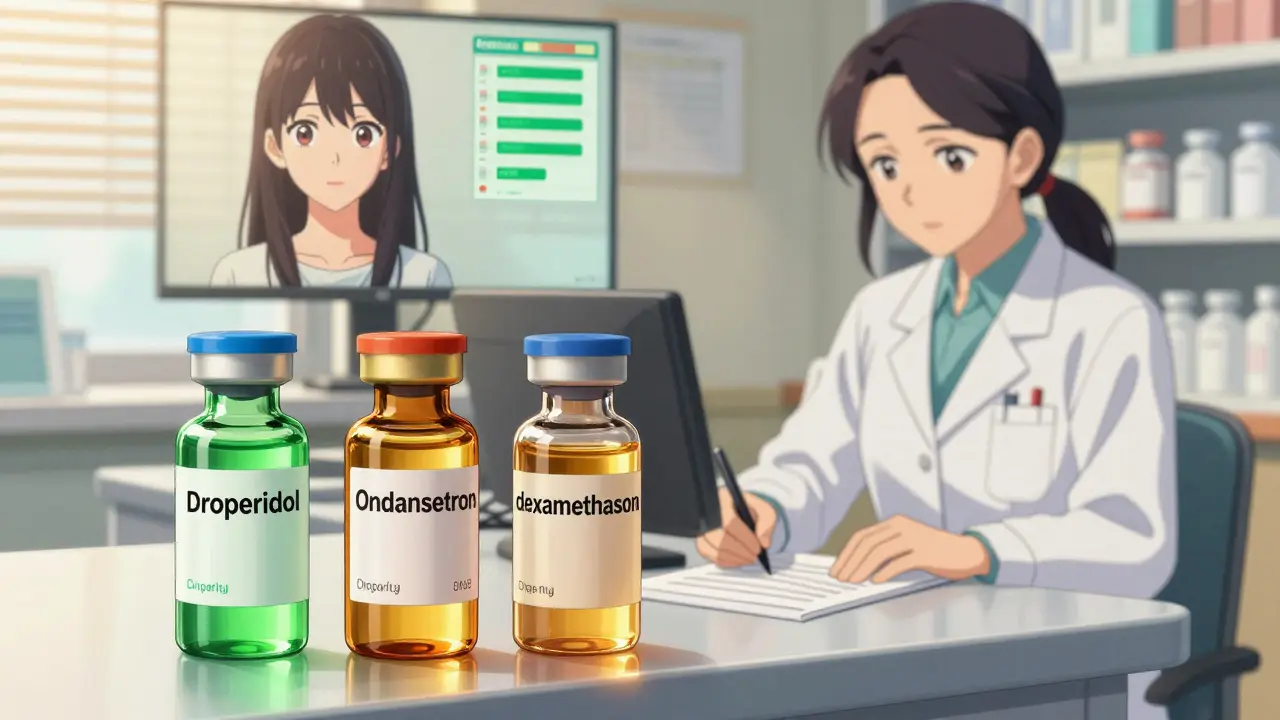
Droperidol is the dark horse of antiemetics. It costs about $0.50 per dose. It works in 15 minutes. It’s more effective than tropisetron and comparable-or better-than ondansetron for opioid-related nausea. Yet many hospitals avoid it because of old fears about QT prolongation.Here’s the truth: The FDA black box warning applies to doses over 2.5 mg. The standard dose for PONV is 0.625-1.25 mg. At that level, cardiac risk is negligible. Studies tracking over 500 patients found no serious arrhythmias with low-dose droperidol. Meanwhile, ondansetron has its own issues: headaches in 32% of users, and rare but serious QT prolongation in people with existing heart conditions.
On Reddit’s r/Anesthesiology, nurses and anesthesiologists consistently report: “Droperidol 0.625 mg gives better control than 4 mg ondansetron in opioid-tolerant patients.” That’s not anecdotal-it’s backed by trials showing PONV rates of 14.5% with droperidol vs. 26.7% with tropisetron.
When Ondansetron Falls Short
Ondansetron is the poster child for antiemetics. But it’s not perfect. It doesn’t work well for nausea caused by intestinal stasis or slow gastric emptying. It’s also expensive-$1.25 per 4 mg dose for the generic, but newer versions like intranasal Zuplenz or combination products like Akynzeo can cost $350.And it’s not always the most effective. In cesarean sections, sedatives like midazolam outperformed ondansetron for preventing vomiting. For chemotherapy-induced nausea, ondansetron and granisetron perform similarly-but neither beats the newer NK-1 receptor antagonists like rolapitant for delayed nausea.
Also, if you’re on other meds that affect CYP3A4 enzymes (like some antibiotics or antifungals), ondansetron can build up in your system. That raises your risk of side effects.
Metoclopramide: The Prokinetic That Often Misses the Mark
Metoclopramide speeds up stomach emptying, so it makes sense for nausea from slow digestion. But most medication-induced nausea isn’t caused by slow motility-it’s caused by brain signaling. At 10 mg, metoclopramide is barely better than placebo. At 25-50 mg, it hits 68% efficacy. But high doses come with risks: akathisia (restlessness), muscle spasms, and in elderly patients, up to 8% experience severe agitation.Many hospitals have switched to olanzapine (2.5-5 mg) for elderly patients because it’s just as effective and far safer. Olanzapine also blocks dopamine and serotonin, making it a dual-action option for tough cases.
Corticosteroids: Helpful, But Not Magic
Dexamethasone is often thrown into the mix because it’s cheap and boosts other drugs. But here’s the catch: the evidence for its use outside chemotherapy is weak. The OHSU Drug Effectiveness Review Project found no strong proof it works alone for PONV. It’s a booster, not a starter.Use it only in combination. And remember-it takes 4-5 hours to work. Giving it right before surgery won’t help. Give it during or right after anesthesia for best results.

Cost, Access, and Real-World Barriers
The global antiemetic market is worth $5.8 billion. But not all patients get the best option. In outpatient centers, cost drives decisions. Droperidol and dexamethasone cost pennies. Ondansetron is affordable in generic form. But newer drugs like netupitant/palonosetron (Akynzeo) are hundreds of dollars per dose.Many clinics don’t stock droperidol because of outdated policies. Others don’t have IV access for dexamethasone. Transdermal scopolamine requires 4 hours to absorb-useless in an emergency. Intranasal ondansetron (Zuplenz) solves that, but it’s not widely available.
Health systems that run antiemetic stewardship programs-where pharmacists help pick the right drug for the right patient-save 15-25% on costs and reduce unnecessary prescriptions.
What to Do When Antiemetics Don’t Work
If nausea continues despite first-line treatment, don’t just double the dose. Switch mechanisms. Try a dopamine blocker if you used a 5-HT3 antagonist. Or add olanzapine for refractory cases. In chemo patients, NK-1 antagonists like rolapitant are now recommended for delayed nausea.Also check for other causes: dehydration, constipation, anxiety, or medication interactions. Sometimes, the nausea isn’t from the drug itself-it’s from the combination.
Future of Antiemetics: Precision Over Protocol
The future isn’t about one-size-fits-all. Genetic testing for CYP2D6 variants can tell you if you’ll metabolize ondansetron slowly (increasing side effects) or quickly (making it ineffective). Clinical trials are already testing personalized antiemetic plans based on your genes, age, sex, and type of surgery or chemo.By 2029, the market will grow to $8.2 billion, driven by smarter, targeted therapies. But right now, the best tool is still simple: use the Apfel score, match the drug to the cause, and avoid overtreating low-risk patients.
Medication-induced nausea doesn’t have to be a side effect you just live with. With the right choice, it can be prevented-safely, cheaply, and effectively.
What’s the safest antiemetic for elderly patients?
For older adults, olanzapine (2.5-5 mg) is preferred over metoclopramide due to lower risk of movement disorders. Low-dose droperidol (0.625 mg) is also safe if cardiac history is clear. Avoid promethazine-it increases sedation and falls risk.
Can I take ondansetron with other medications?
Ondansetron can interact with drugs metabolized by CYP3A4, like some antibiotics, antifungals, and seizure meds. It may also raise QT prolongation risk if you’re on other heart-affecting drugs. Always check with your pharmacist before combining.
Is droperidol still safe to use?
Yes, at low doses (0.625-1.25 mg IV), droperidol is safe and effective for preventing post-surgery nausea. The FDA warning applies only to doses above 2.5 mg. At standard PONV doses, cardiac risks are extremely low.
Why does dexamethasone take so long to work?
Dexamethasone works by reducing inflammation and altering gene expression in the brain’s nausea centers. This takes time-typically 4 to 5 hours. That’s why it’s used as a preventive add-on, not a rescue drug.
Are there non-drug ways to reduce medication nausea?
Yes. Eating small, bland meals, staying hydrated, avoiding strong smells, and using ginger supplements (1 gram daily) can help. Acupressure wristbands may offer mild relief for some. But for moderate to severe cases, drugs are still the most reliable option.
How do I know if I’m at high risk for PONV?
Use the Apfel score: Female? Yes = 1 point. Non-smoker? Yes = 1 point. History of PONV or motion sickness? Yes = 1 point. Will get opioids after surgery? Yes = 1 point. Two or more points means you’re at moderate to high risk and should get prophylaxis.



Kenji Gaerlan
January 22, 2026 AT 02:00Oren Prettyman
January 22, 2026 AT 05:03Tatiana Bandurina
January 23, 2026 AT 01:29Philip House
January 23, 2026 AT 17:29Ryan Riesterer
January 24, 2026 AT 10:01Malik Ronquillo
January 24, 2026 AT 18:18Brenda King
January 25, 2026 AT 16:54Keith Helm
January 26, 2026 AT 15:29Alec Amiri
January 26, 2026 AT 19:39Patrick Roth
January 26, 2026 AT 22:32Akriti Jain
January 27, 2026 AT 13:08Mike P
January 29, 2026 AT 08:38Sarvesh CK
January 30, 2026 AT 02:53