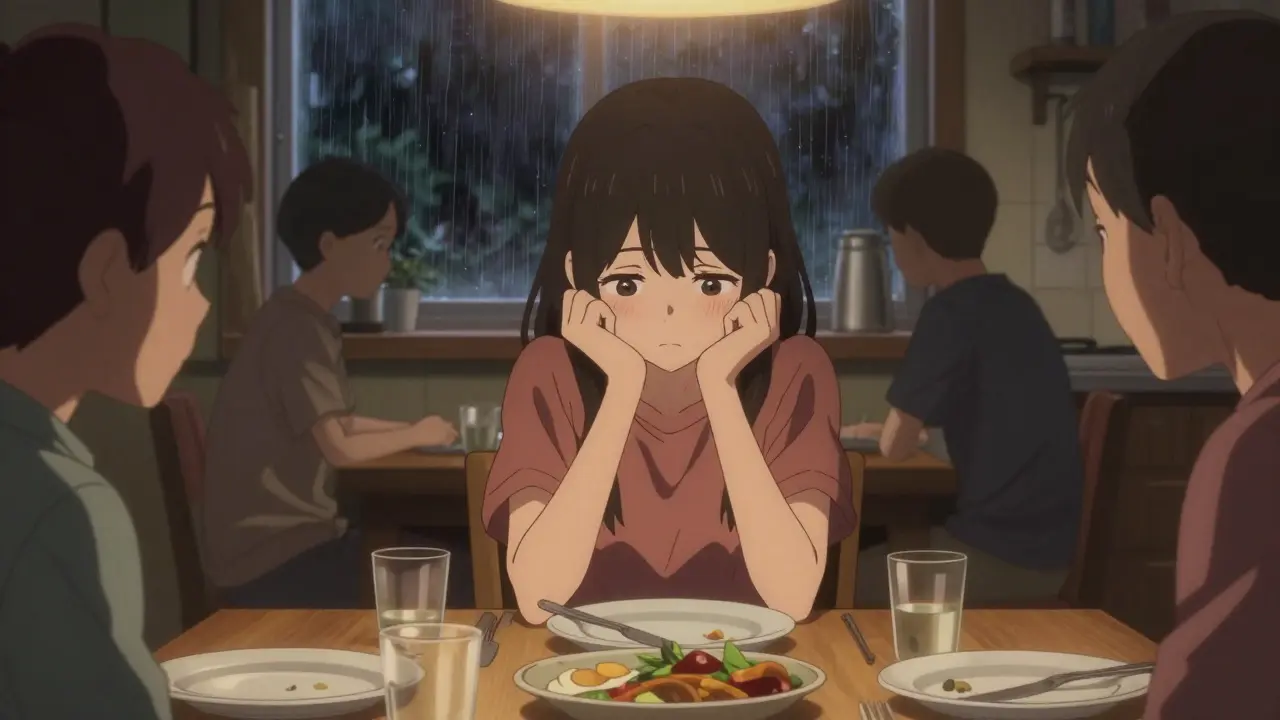
When a teenager stops talking at dinner, skips school, or seems to fade into the background, it’s easy to blame hormones or teenage moodiness. But when these signs last more than two weeks, they might be signs of depression-not just sadness, but a real illness that changes how a child thinks, feels, and functions. Depression in kids and teens isn’t rare. It affects about 1 in 5 adolescents by age 18. And left untreated, it can lead to school failure, substance use, self-harm, or even suicide. The good news? There are proven ways to help. Two of the most effective are family therapy and medication-but they work differently, and choosing between them-or using both-requires understanding what each actually does.
What Does Depression Look Like in Kids and Teens?
Depression in children doesn’t always mean crying all day. Younger kids might act out, throw tantrums, or complain of stomachaches with no medical cause. Teens often withdraw, sleep too much or too little, lose interest in friends or hobbies, or talk about feeling worthless. Some become irritable instead of sad-this is common in teens and often mistaken for rebellion. The DSM-5 criteria for major depressive disorder require at least five symptoms lasting two weeks or more, including depressed mood or loss of interest, plus changes in sleep, appetite, energy, concentration, or thoughts of death. It’s not just a bad week. It’s a persistent shift in how the child experiences the world.
Why Family Therapy Matters More Than You Think
Most people think of therapy as something the teen does alone-talking to a counselor in a quiet office. But for kids and teens, the family isn’t just support-it’s part of the problem and part of the solution. Family therapy doesn’t blame parents. It looks at how communication breaks down, how conflict gets stuck, and how emotional distance grows. One of the most effective models is Attachment-Based Family Therapy (ABFT). It’s built on the idea that when a child feels unsafe expressing pain, they shut down. ABFT helps parents learn to listen without fixing, to validate without dismissing, and to rebuild trust. A 2022 study found teens in ABFT had significantly lower suicidal thoughts than those in standard care. Parents often report feeling closer to their kids after just 8-12 weeks.
Other types of family therapy work differently. Structural family therapy fixes power imbalances-like when a teen is forced to act like the parent, or when parents avoid conflict so much that the teen feels unheard. Strategic family therapy uses clever interventions, like asking a teen to keep being depressed for a week to show the family how it affects everyone. It sounds odd, but it forces everyone to see their role in the cycle.
Family therapy isn’t magic. It needs everyone to show up. If one parent refuses to attend, or if family members blame the teen instead of working together, progress stalls. But when it works, the changes stick. Unlike medication, which stops working when you stop taking it, family therapy rewires how people relate to each other-long after sessions end.
When Medication Makes Sense
Not every teen with depression needs pills. But for moderate to severe cases-especially when there’s trouble sleeping, eating, concentrating, or when suicidal thoughts are present-medication can be life-saving. The U.S. Food and Drug Administration (FDA) has only approved two antidepressants for teens: fluoxetine (Prozac) and escitalopram (Lexapro). Others are sometimes used off-label, but these two have the most evidence for safety and effectiveness in this age group.
SSRIs don’t work overnight. It takes 4-6 weeks to see real improvement. And during the first few weeks, some teens feel more anxious or have racing thoughts. That’s why the FDA requires a black box warning: antidepressants can increase suicidal thoughts in the early stages of treatment. That’s scary-but it doesn’t mean they’re dangerous. It means close monitoring is essential. Weekly check-ins with a doctor during the first month are not optional. Many families skip this because they assume the doctor will call. But the responsibility is shared. Parents need to watch for changes: increased agitation, insomnia, talking about death, or sudden calm after a long low period-that can be a warning sign.
Side effects like nausea, headaches, or trouble sleeping happen in about 1 in 5 teens. Some stop taking the medication because of this. But for others, the relief is immediate. One 16-year-old told her mom, “I didn’t realize I’d forgotten what it felt like to wake up without dread.” That’s the difference medication can make.

Combining Therapy and Medication: The Best of Both Worlds
Research from the Agency for Healthcare Research and Quality shows that combining family therapy with medication works better than either alone. Medication helps lift the fog enough for a teen to engage in therapy. Therapy helps them understand why they feel the way they do and gives them tools to cope without relying on pills forever.
One 14-year-old boy, struggling with school and self-harm, started on fluoxetine. After three weeks, his mood lifted enough to sit in therapy without shutting down. His family learned how to stop yelling and start listening. Within four months, he was back in class and sleeping through the night. He stayed on medication for a year, then tapered off with his doctor. He still uses the communication skills he learned in therapy today.
This isn’t about lifelong pills. It’s about giving a teen time to heal. Depression often returns. But teens who’ve had both therapy and medication are less likely to relapse. They’ve built skills, not just chemical balance.
What Doesn’t Work-and Why
Some families try to “tough it out.” Others believe therapy is for “weak” people. Or they think medication turns kids into zombies. These myths cost time-and sometimes lives.
Exercise, mindfulness, and gratitude practices help. But they’re not enough for clinical depression. A teen who’s too tired to get out of bed won’t benefit from a 10-minute walk unless their brain chemistry improves first. Spiritual practices can comfort, but they don’t fix a chemical imbalance. And blaming the teen for being “lazy” or “dramatic” only deepens the shame that fuels depression.
Also, not all therapists are trained the same. A counselor who doesn’t specialize in families might focus only on the teen, missing how parental criticism, divorce, or financial stress plays into the problem. Look for someone certified in family systems therapy or trained in ABFT. The American Association for Marriage and Family Therapy requires 200+ supervised hours for certification. Don’t settle for less.

Real Challenges Families Face
Even when families want to help, real obstacles get in the way. Scheduling is a nightmare. Getting two parents, a teen, and a therapist on the same day takes work. Some families miss sessions because one parent works two jobs. Others avoid therapy because they fear being judged. One mother said, “I didn’t want to admit I was part of the problem.”
Cultural barriers matter too. In some communities, mental health is taboo. Talking to a stranger about family fights feels like airing dirty laundry. Therapists who understand cultural context-how silence can be respect, or how expressing emotion can be seen as weakness-are crucial.
And there’s a shortage. In the U.S., there are only about 8,500 certified child and adolescent family therapists for 42 million teens. Waitlists in many areas are 12-18 months long. That’s why telehealth is growing fast. Platforms like SparkTorney and Limbix now offer online family sessions. Early results show 72% of teens complete the full course-higher than in-person therapy.
What Comes After Treatment?
Depression doesn’t end when the last session is over. Recurrence is high. The American Academy of Pediatrics recommends monthly check-ins for up to two years after symptoms disappear. That’s because the brain is still developing. A teen who feels better might think they’re “cured” and stop taking meds or skip therapy. But depression loves to creep back when life gets hard-exams, breakups, family stress.
Parents who stay involved make the biggest difference. Not by hovering, but by checking in: “How’s your sleep?” “Do you still feel like you’re carrying the whole world?” “Want to go for a walk?” Simple questions, asked with calm curiosity, not pressure, keep the door open.
Where to Start
If you suspect your child or teen is depressed:
- See a pediatrician or family doctor. They can rule out medical causes like thyroid issues or anemia.
- Ask for a referral to a child psychologist or psychiatrist who specializes in depression.
- Request screening for suicidal thoughts. This isn’t scary-it’s necessary.
- Ask: “Do you recommend family therapy? Is medication an option?”
- Check if your insurance covers evidence-based models like ABFT or CBT with family involvement.
- If waitlists are long, call the SAMHSA National Helpline at 1-800-662-HELP (4357). They can connect you to local resources.
Don’t wait for things to get worse. Depression doesn’t fix itself. But with the right support, teens don’t just survive-they thrive.
Can family therapy help if my teen won’t talk to me?
Yes. Family therapy doesn’t require the teen to open up right away. Therapists work with parents first to change how they respond-reducing criticism, increasing warmth, and creating safety. Often, when the environment changes, the teen starts talking on their own. One study showed teens in ABFT began sharing emotions within 4-6 sessions, even if they were silent at first.
Are antidepressants safe for teens?
Fluoxetine and escitalopram are the only two antidepressants FDA-approved for teens, and they’re considered safe when monitored closely. The risk of increased suicidal thoughts is real but rare-and mostly happens in the first few weeks. With weekly doctor visits, this risk drops dramatically. The bigger danger is leaving depression untreated. Studies show the benefits of these medications outweigh the risks for moderate to severe cases.
How long does family therapy take?
Most evidence-based family therapies last 12-16 weekly sessions, each 50-90 minutes. Some models, like strategic or structural therapy, show improvement in 8-10 sessions. Attachment-Based Family Therapy usually takes 16-20 sessions because it focuses on deep emotional repair. Progress isn’t linear-some weeks feel worse before they get better. But most families report noticeable changes by week 8.
What if one parent refuses to participate?
Therapy can still help. Some models, like ABFT, work with one parent and the teen if the other is unavailable. The goal isn’t to fix the whole family at once-it’s to create change where it’s possible. Even one engaged parent can shift family dynamics. If the other parent later joins, progress accelerates. But don’t wait for perfect conditions. Start where you are.
Is family therapy covered by insurance?
Most insurance plans in the U.S. cover family therapy under mental health benefits, thanks to the 21st Century Cures Act. But you need to ask: “Do you cover family systems therapy or attachment-based family therapy?” Not all therapists are in-network. Call your insurer and ask for a list of providers trained in evidence-based family models. SAMHSA’s website also has a treatment locator.
What if my teen is suicidal?
Call 988 immediately. That’s the Suicide & Crisis Lifeline. It’s free, confidential, and available 24/7. Do not leave your teen alone. Remove access to firearms, medications, or sharp objects. Emergency rooms can provide immediate safety evaluation. Family therapy is still an option, but only after safety is ensured. ABFT has been shown to reduce suicidal thoughts faster than other therapies-but only if the teen is in a safe environment.


Phoebe McKenzie
January 2, 2026 AT 01:33Oh please. Another ‘family therapy is magic’ article. My cousin was in ‘ABFT’ for a year and still tried to kill herself. The system is broken. Parents are lazy, therapists are paid to keep them coming back, and kids are just pawns in a $30 billion industry that doesn’t actually fix anything. Medication? Sure, if you want your kid to be a zombie on SSRIs while the school system ignores them. Wake up.
Stephen Gikuma
January 2, 2026 AT 21:36They’re pushing this because the government wants to control parenting. Family therapy? That’s a socialist tool to break up the American family. And antidepressants? Big Pharma’s latest scam. I’ve seen kids on Prozac turn into emotionless robots. No wonder schools are full of zombies. This isn’t healing-it’s chemical obedience training.
Bobby Collins
January 4, 2026 AT 15:07Okay but… what if the family is the problem? Like, what if the mom’s a narcissist and the dad’s an alcoholic and the kid’s just trying to survive? Therapy doesn’t fix that. It just gives them a fancy word for ‘you’re not crazy, you’re just trapped.’ I’m not saying meds are perfect, but at least they let me breathe for a minute.
LIZETH DE PACHECO
January 6, 2026 AT 13:39I’m a therapist, and I can’t tell you how many parents come in saying, ‘My teen just needs to toughen up.’ Then they cry in session when they realize they’ve been the reason their kid stopped talking. ABFT isn’t about blame-it’s about rebuilding. I’ve seen silent teens start singing in the car again after 10 weeks. It’s not magic. It’s love, with structure.
Lee M
January 8, 2026 AT 04:29Depression isn’t a medical condition-it’s a spiritual crisis masked by modern science. We’ve replaced soul-searching with SSRIs because we’re too afraid of silence. Therapy? A band-aid on a severed artery. The real cure is meaning. Purpose. Connection to something bigger than dopamine levels. But no one wants to hear that. Too inconvenient. Too expensive. Too… human.
Matthew Hekmatniaz
January 8, 2026 AT 14:14As someone raised in a collectivist culture, I’ve seen both sides. In India, we don’t talk about depression-we fix it through community. Here, we isolate the kid and hand them a pill. Neither works perfectly. But combining therapy that respects family dynamics with carefully monitored meds? That’s the bridge. Not perfection. Just progress.
Dusty Weeks
January 9, 2026 AT 21:55my cousin took lexapro and started crying at the grocery store because the cereal aisle was too bright. then he said ‘i feel like i’m watching my life from outside.’ i thought that was poetic. then he tried to jump off a bridge. meds aren’t the answer. they’re a temporary silence. not healing. just quiet.
Bill Medley
January 10, 2026 AT 16:20Family therapy requires participation. Medication requires monitoring. Both require time. Most families have neither. The system fails not because the tools are flawed, but because we expect miracles without investment.
gerard najera
January 12, 2026 AT 07:59What if depression is the mind’s way of saying, ‘This environment is toxic’? We treat the symptom, not the source. A child who withdraws isn’t broken-they’re responding. Therapy helps the family adapt. Medication helps the child survive long enough to adapt. Neither is the end. Both are necessary steps.
Heather Josey
January 14, 2026 AT 06:01For anyone dismissing family therapy: it’s not about fixing your teen. It’s about fixing how you relate to them. I’ve watched parents who yelled for years sit in silence for 20 minutes and say, ‘I didn’t know she felt like she was drowning.’ That’s the moment change begins. Medication helps with the storm. Therapy helps you learn to swim.
Olukayode Oguntulu
January 14, 2026 AT 13:32Let’s be honest-this is a neoliberal narrative dressed in therapeutic jargon. The capitalist machine cannot tolerate dissenting youth, so it pathologizes nonconformity. ABFT? A sanitized version of obedience training. SSRIs? Chemical pacification for the under-18 demographic. The real issue is structural: poverty, surveillance, academic pressure. But we’d rather medicate the child than dismantle the system.
jaspreet sandhu
January 15, 2026 AT 18:18My brother was depressed at 15. We told him to pray more. He got better in 3 months. No therapy. No pills. Just discipline and hard work. Today he runs a business. America is weak. We give kids trophies for crying. You don’t fix sadness with words and chemicals-you fix it with character. Stop coddling them. Teach them to be strong.
sharad vyas
January 15, 2026 AT 19:06In my village, we don’t have therapists. We have elders. We have shared meals. We have silence that doesn’t need filling. Depression isn’t an illness-it’s a signal. Maybe the child is telling us we’ve forgotten how to be human. We don’t need more pills. We need more presence.
Sally Denham-Vaughan
January 17, 2026 AT 17:50Just had my 14-year-old say, ‘Mom, I think I’m finally okay.’ No drama. No tears. Just… okay. We did therapy. We tried meds. We didn’t give up. And now? We eat dinner together. And sometimes, we even laugh. That’s the win. Not perfect. Just… possible.
Phoebe McKenzie
January 18, 2026 AT 05:01Oh, so now you’re a therapist? You think your little ‘I watched my kid eat dinner’ story means you know what’s real? My niece died last year. She was on Lexapro. Her therapist said she was ‘making progress.’ Guess what? Progress doesn’t mean alive. You’re not helping. You’re just feeling good about yourself.