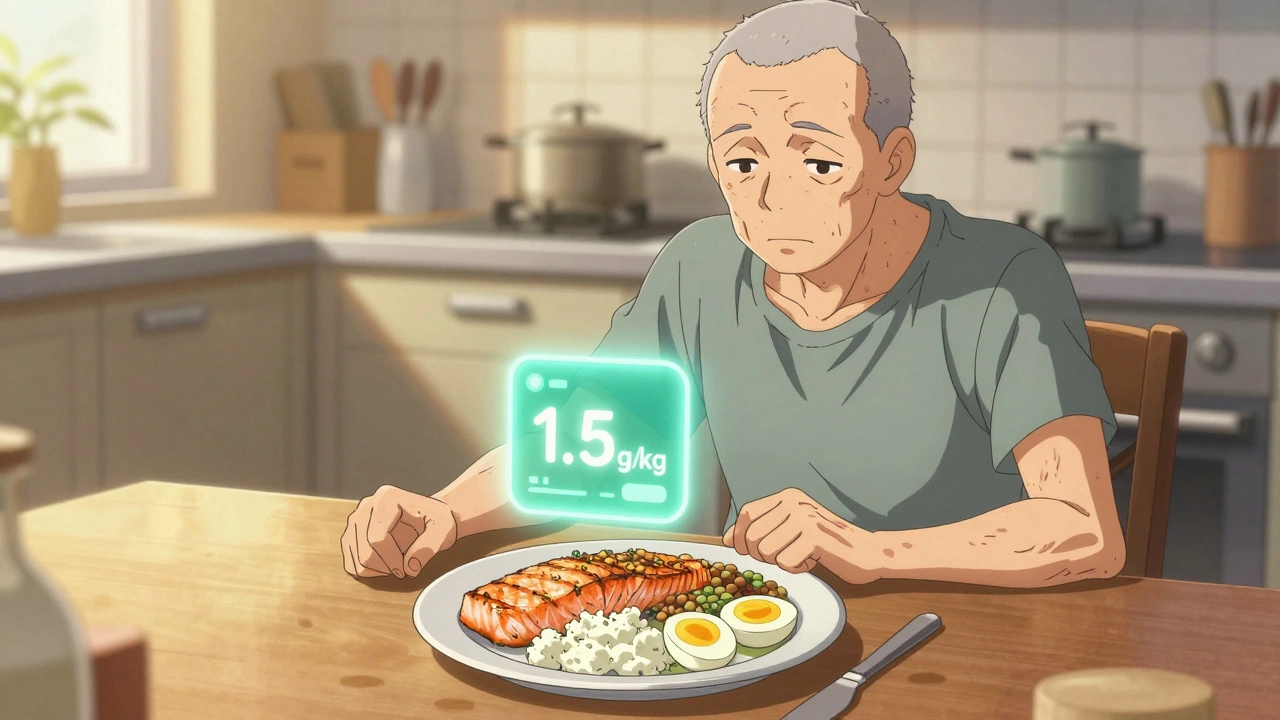
When your liver is damaged by cirrhosis, your body doesn’t just struggle to filter toxins-it starts breaking down your own muscle. This isn’t just about weakness. It’s about survival. For decades, doctors told people with cirrhosis to cut back on protein, fearing it would worsen confusion or brain fog from hepatic encephalopathy. That advice was wrong. And sticking to it could be killing you.
Why Protein Isn’t the Enemy-It’s Your Lifeline
The old belief was simple: less protein = less ammonia = fewer brain symptoms. But in 2004, a small but powerful study changed everything. Researchers gave one group of cirrhosis patients just 0.5 grams of protein per kilogram of body weight per day-the old standard-and another group 1.2 grams. The low-protein group didn’t get fewer episodes of confusion. Instead, they lost muscle faster. Their bodies started eating themselves just to stay alive.
Today, every major liver organization-from the American Association for the Study of Liver Diseases to the British Liver Trust-agrees: protein restriction is harmful. Cirrhosis turns your body into a furnace. Even at rest, you’re burning through energy and muscle faster than before. Without enough protein, you lose strength, mobility, and your ability to fight infections. Studies show people with cirrhosis who develop muscle loss (sarcopenia) are two to three times more likely to die.
It’s not about avoiding protein. It’s about getting the right kind, at the right time, in the right amount.
How Much Protein Do You Really Need?
You don’t need to guess. Experts have clear targets based on your dry weight-the weight without extra fluid from swelling or ascites.
- For most stable patients: 1.2 to 1.5 grams of protein per kilogram of dry body weight per day
- If you already have muscle loss: aim for 1.5 grams per kilogram
- If you’re very sick or in hospital: up to 2.0 grams per kilogram
For example: a 70 kg (154 lb) person needs 84 to 105 grams of protein daily. A 60 kg (132 lb) person needs 72 to 90 grams.
That’s not a lot when you think about it. One large egg has 6 grams. A cup of Greek yogurt has 15 to 20 grams. A 3-ounce chicken breast has 27 grams. A cup of lentils has 18 grams. You can hit your target without supplements-if you spread it out.
Not All Protein Is Created Equal
Here’s where most people get stuck. Not all protein sources are equal when your liver is failing.
Meat-especially red meat-can be harder to digest and may increase ammonia levels in sensitive people. But that doesn’t mean avoid meat entirely. It means prioritize better sources:
- Dairy: Milk, yogurt, cottage cheese, low-salt cheese
- Plant-based: Lentils, beans, tofu, edamame, soy milk, oats, nuts
- Eggs: One of the best tolerated sources
- Fish and poultry: Lean options like salmon, cod, chicken breast
Research shows people with hepatic encephalopathy handle dairy and plant proteins better than meat. That’s because plant proteins contain more branched-chain amino acids-compounds your muscles need to rebuild, and your liver struggles to process. Soy and legumes also come with fiber, which helps clear toxins from your gut.
Still, if you enjoy meat, don’t cut it out. Just balance it. Have a grilled chicken salad with lentils and tofu stir-fry on alternate days. Mix it up. Variety matters.

Timing Matters More Than You Think
It’s not just how much you eat-it’s when.
Your body doesn’t store protein like it stores fat or carbs. If you go too long without eating, your muscles start breaking down. Overnight fasting is especially dangerous. While you sleep, your body goes into starvation mode-and with cirrhosis, that means rapid muscle loss.
That’s why experts say: never go more than 4 hours without food during the day. Eat 3 to 5 small meals. And always, always have a protein-rich snack before bed.
Examples of a good bedtime snack:
- 1 cup of cottage cheese (14g protein)
- 2 hard-boiled eggs (12g protein)
- 1 scoop of whey protein mixed in water or milk (20g protein)
- Handful of almonds + a small yogurt (10g protein)
This late-night snack isn’t optional. It’s a medical intervention. Studies show it improves nitrogen balance, reduces muscle breakdown, and even helps you sleep better.
What If You Can’t Eat Enough?
Many people with cirrhosis lose their appetite. Swelling in the belly makes them feel full after a few bites. Taste changes make food boring. Fatigue makes cooking feel impossible.
That’s when you need to get smarter, not harder.
- Choose calorie- and protein-dense foods: whole milk instead of skim, nut butter instead of jam, avocado on toast, olive oil drizzled on veggies
- Use high-protein snacks: Clif Builder’s Bars (68g protein), Nature Valley Protein bars (40g), or protein shakes
- Blend protein into smoothies: Greek yogurt + banana + peanut butter + milk = 30g+ protein in one drink
- Ask your doctor about prescription medical nutrition drinks like Nepro HP or Ensure High Protein
Don’t wait until you’ve lost 10 pounds. Start now. Even 5 extra grams of protein a day can slow muscle loss.
Don’t Forget the Micronutrients
Protein alone won’t fix everything. Cirrhosis messes with how your body absorbs and uses vitamins and minerals.
Common deficiencies include:
- Zinc: Helps with taste, healing, and immune function. Doctors often prescribe 50 mg daily (elemental zinc).
- Thiamine (B1), B6, Folate: Critical for energy and brain function. Deficiencies can mimic or worsen confusion.
- Magnesium: Low levels are linked to muscle cramps and poor sleep.
But be careful: too much vitamin A or D can be toxic to a damaged liver. And if you have hemochromatosis, extra vitamin C can cause dangerous iron buildup.
Get your levels checked. Don’t self-supplement. Work with a dietitian who knows liver disease.
What About Sodium and Fluids?
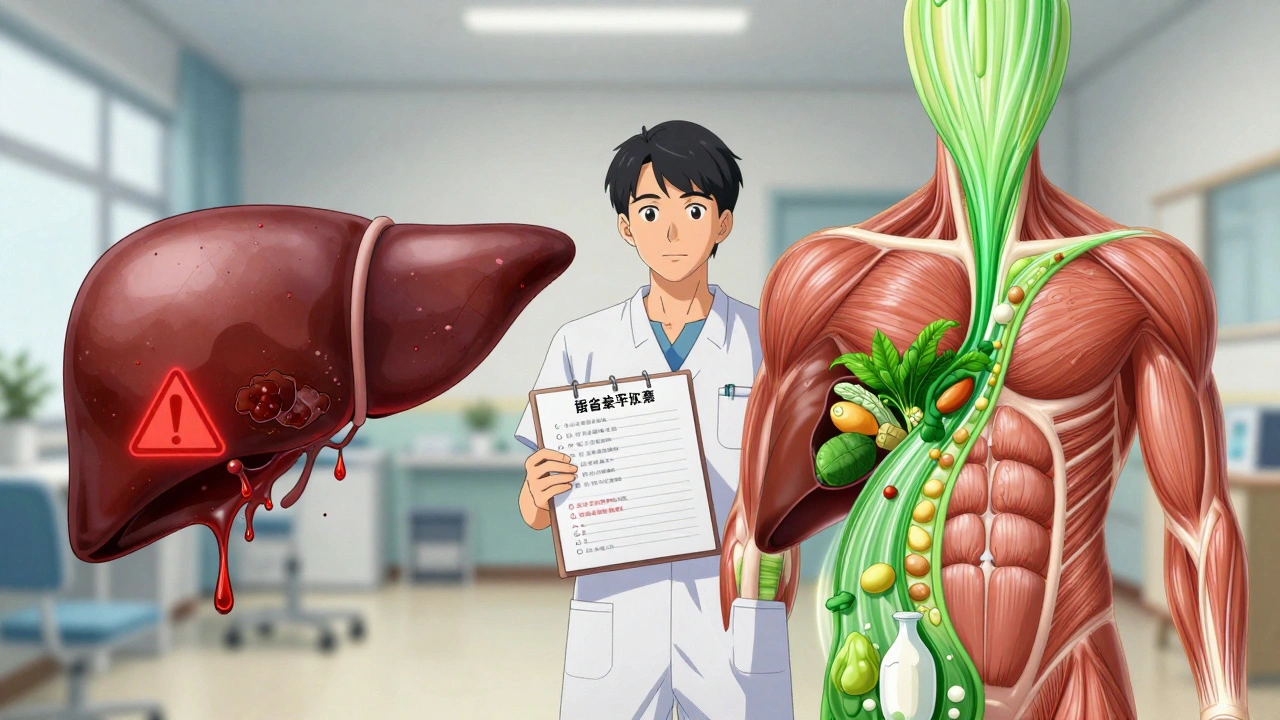
Most people with cirrhosis are told to cut salt to reduce swelling. But if you’re also cutting calories and protein to avoid salt, you’re trading one danger for another.
Experts now say: if you can’t meet your protein or calorie goals because of strict salt limits, loosen them. It’s better to have a little more fluid retention than to lose muscle and risk death.
Work with your doctor to find the balance. Maybe you can have one salty snack per day if it helps you eat more protein. Maybe you can use herbs and spices instead of table salt to flavor food.
It’s not about perfection. It’s about survival.
The Big Picture: Protein Is About Living Longer
This isn’t just about diet. It’s about quality of life. People who maintain muscle can walk without help. They can get out of bed. They can cook for themselves. They can wait for a transplant without becoming too weak to qualify.
A 2019 study found that nearly half of people on the liver transplant list had severe muscle loss-and they were almost three times more likely to die before getting a new liver.
That’s why modern liver care now includes nutrition as a core treatment-like medication. Your protein intake isn’t a suggestion. It’s part of your treatment plan.
If your doctor still tells you to cut protein, ask them to check the latest AASLD guidelines. The science has moved on. So should your care.
Start Today: Your 3-Step Action Plan
- Calculate your protein target: Multiply your dry weight (in kg) by 1.2 to 1.5. Write it down.
- Plan your meals: Spread protein across 4-5 meals. Include a high-protein snack before bed.
- Track and adjust: Use a free app like MyFitnessPal for a week. See where you’re falling short. Talk to your dietitian.
You don’t need to be perfect. You just need to be consistent. Every gram counts.
Adrianna Alfano
December 2, 2025 AT 20:50I used to think protein was bad for my liver-my old doc told me to eat like a rabbit. Turns out I was just starving my muscles. Lost 20 lbs of lean mass in 6 months before I figured this out. Now I eat cottage cheese before bed like it’s my job. My legs don’t shake when I stand up anymore. Fuck the old advice.
Casey Lyn Keller
December 3, 2025 AT 09:43They say protein is safe now but what they don’t tell you is that the liver industry profits off supplements and high-protein shakes. The real cure is a liver transplant. Everything else is just buying time while they charge you for whey protein.
Jessica Ainscough
December 4, 2025 AT 02:10This is the most helpful thing I’ve read in years. I’ve been scared to eat meat for years after my diagnosis. I’ll try mixing in lentils and eggs this week. No pressure to be perfect-just better than yesterday. Thank you.
May .
December 4, 2025 AT 14:49Protein is not the enemy and you need to eat it before bed no matter what
Sara Larson
December 5, 2025 AT 00:13YESSSSSS this is life-changing 💪🫶 I just started eating 2 eggs and a scoop of whey before bed and I slept like a baby for the first time in months. My husband said I stopped grinding my teeth. Also my nails are growing again?? LIVER HEALTH IS MUSCLE HEALTH 😭❤️
Josh Bilskemper
December 6, 2025 AT 05:121.2 to 1.5g/kg? That’s amateur hour. Real clinicians use 1.8-2.2g/kg for advanced cirrhosis. You’re not optimizing if you’re not hitting 2g/kg daily. And don’t even get me started on plant proteins-they’re incomplete unless you’re combining them in precise ratios. You’re doing more harm than good with tofu
Storz Vonderheide
December 6, 2025 AT 05:56I’m a nurse in a liver clinic and I see this every day. People come in too late because they were told to avoid protein. We’ve had patients regain mobility after just 3 weeks of proper intake. It’s not magic-it’s science. Please share this with someone who needs it. One gram can mean one more day at home.
dan koz
December 7, 2025 AT 10:02Man in Nigeria we don’t even have access to Greek yogurt or whey. We eat beans, groundnut soup, and smoked fish. My cousin with cirrhosis eats okra stew with fish every day. He’s still alive at 68. You don’t need fancy protein shakes. Just eat real food. Don’t let Western doctors scare you into buying supplements.
Kevin Estrada
December 8, 2025 AT 20:54Okay but what if this is all just a big pharma scam? I read a guy on Twitter who said the liver guidelines were rewritten because the supplement industry paid off the AASLD. And why is no one talking about the fact that protein makes your urine smell like ammonia? That’s not normal. I’m not eating anything until I get a second opinion from a naturopath. My cousin’s acupuncturist cured his fatty liver with turmeric and moonlight.
Katey Korzenietz
December 9, 2025 AT 23:321.5g/kg? That’s dangerously high. My aunt had hepatic encephalopathy and they told her to eat more protein-she ended up in a coma. You’re not helping. You’re enabling. People die from this. You’re not a doctor. Don’t give medical advice.