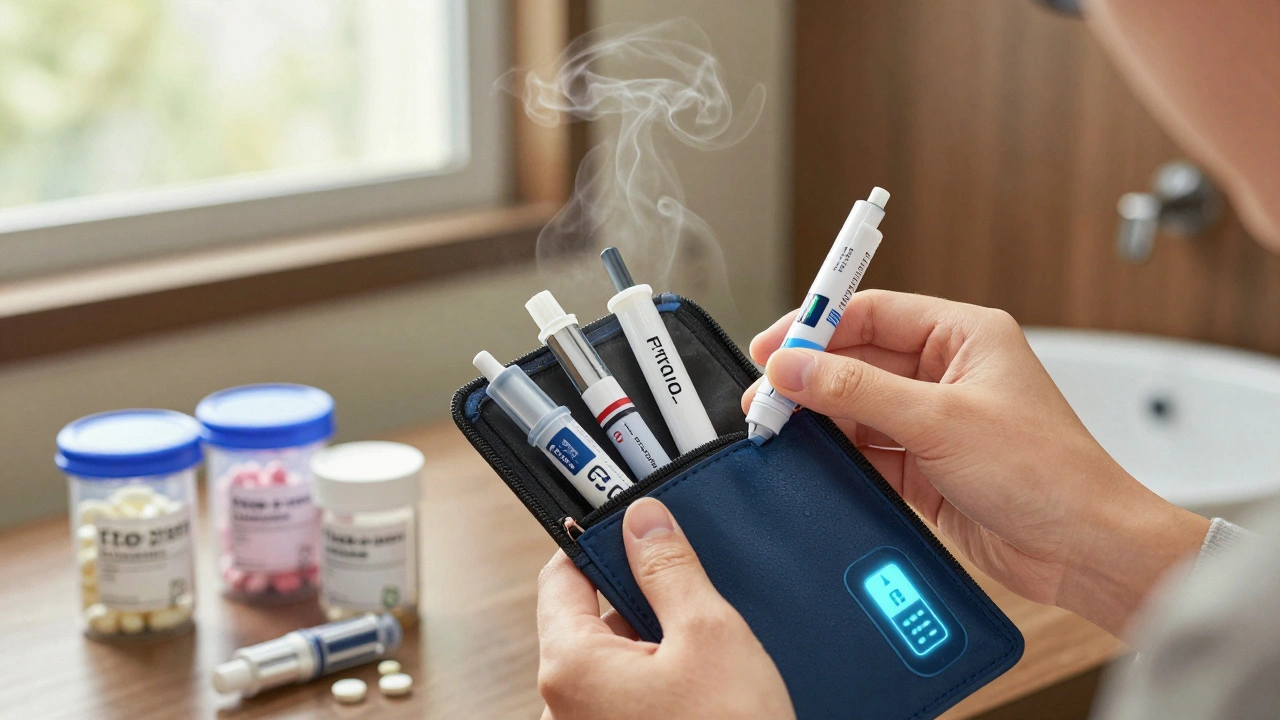
Running out of medicine on a long trip isn’t just inconvenient-it can be dangerous. A heart pill that lost potency, an inhaler that stopped working, or an EpiPen that didn’t activate because it got too hot-these aren’t hypotheticals. They happen every day to travelers who didn’t plan ahead. The truth is, most medications aren’t designed to survive weeks in a hot car, a steamy bathroom, or a baggage hold that hits 120°F. If you’re taking prescription drugs, insulin, EpiPens, or other sensitive meds, your trip depends on how well you protect them.
Know Your Medication’s Temperature Limits
Not all medications are created equal. About 78% of pills and capsules-like blood pressure meds, antibiotics, or pain relievers-can handle room temperature between 68°F and 77°F (20°C to 25°C). They can even survive brief spikes up to 86°F (30°C) without losing much strength. But that’s not true for everything.Refrigerated medications, which make up about 12% of prescriptions, are far more fragile. Insulin, EpiPens, certain biologics like Humira or Enbrel, and some antibiotics must stay between 36°F and 46°F (2°C to 8°C). A 2021 University of Florida study found that Humalog insulin loses 1.2% of its potency every hour it sits at 77°F. After just 12 hours at 95°F, it can lose over 20% of its effectiveness. That’s not a small drop-it’s the difference between a safe dose and a dangerous one.
Light-sensitive meds like epinephrine or some migraine drugs degrade fast in direct sunlight. Just 15 minutes of exposure can cut epinephrine concentration by 18%. Moisture is another enemy. Storing pills in your bathroom is a bad idea. The steam from showers breaks down coatings and causes pills to crumble or stick together. Aspirin, for example, turns into vinegar and salicylic acid when exposed to humidity-something that can irritate your stomach.
Use the Right Cooling Tools
If you need to keep meds cold, a regular cooler won’t cut it. Standard insulated bags from the grocery store might hold temperature for 12 to 24 hours-but only if you’re lucky. Medical-grade coolers, like those from Frio or Bocapharmacy, are built for this. They use gel packs activated by water, not ice, so they won’t freeze your meds or leak. These can maintain the 36°F-46°F range for 48 to 72 hours, even in 95°F heat.One traveler on Reddit kept insulin stable for 14 days across Southeast Asia using a Frio wallet. He rehydrated the gel packs every 48 hours at hotels. That’s the kind of planning that works. Ice packs, on the other hand, are risky. They can drop below freezing and damage insulin or injectables. TSA’s 2022 assessment found gel packs maintain temperature consistency 37% better than ice packs during flights.
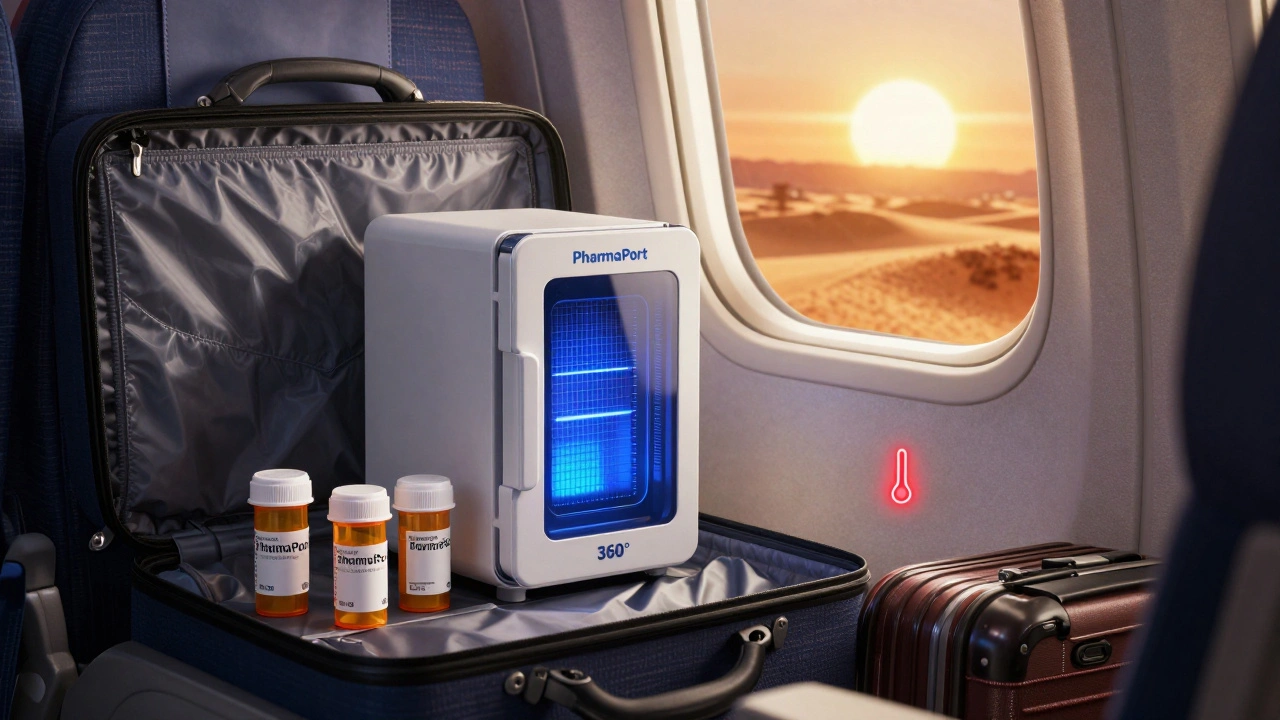
For longer trips or extreme climates, consider a portable fridge like the PharmaPort 360°. Launched in September 2023, it keeps meds stable for up to 120 hours without needing ice or rehydration. It’s expensive, but if you’re on a multi-week trip through the Middle East or tropical Asia, it’s worth it.
Never Pack Medications in Checked Luggage
This is non-negotiable. Checked bags can sit on hot tarmacs for hours, reach temperatures over 140°F, or get stuck in unheated cargo holds in winter. A 2023 Enlyte.com survey showed that 67% of medication failures during travel happened because meds were in checked bags.Always carry all medications in your carry-on. This isn’t just about temperature-it’s about access. If your flight is delayed, you need your meds. If you miss a connection, you need your meds. If your luggage gets lost, you still have your meds.
Keep them in their original containers with the pharmacy label attached. Customs officials in countries like Thailand, Japan, or the UAE will confiscate pills if they’re not in labeled bottles. One traveler was held at Bangkok airport because his seizure meds were in a pill organizer. He didn’t have the prescription bottle. He lost three days and had to pay for emergency refills.
Monitor Temperature Like a Pro
You can’t guess if your meds are safe. You need proof. That’s where temperature trackers come in. Devices like TempTraq or 3M’s TempTrend labels are small, disposable sensors you stick next to your meds. They record every temperature spike and drop. Some even change color if the meds were exposed to unsafe heat.A 2022 study in the Journal of Travel Medicine found these sensors detect 98.7% of temperature excursions. That means if your EpiPen sat in a hot car for an hour, you’ll know-before you need to use it. For high-risk meds like insulin or biologics, this isn’t optional. It’s insurance.
Plan Ahead-Start 14 to 21 Days Before You Go
Waiting until the night before your trip is a recipe for disaster. You need time to talk to your pharmacist. Ask them: “How long can this medication stay out of the fridge?” “Is there a travel-friendly version?” “Do I need a letter from my doctor?”Some medications now come in travel-stable formulations. Pfizer and other companies have started releasing versions that can last 72 hours at room temperature without refrigeration. If you’re on a long-term medication, ask if a version like this exists.
Also, get a printed copy of your prescription and a doctor’s note explaining why you need the meds. TSA and international customs require this for refrigerated or injectable drugs. The FDA’s 2023 guidance says travelers must declare medications at security checkpoints and bring storage instructions. Don’t risk being turned away.
Backup Plans Save Lives
What if your cooler breaks? What if you lose your meds? Always carry a backup. For insulin users, that means extra pens. For EpiPens, carry two. For antibiotics, ask your doctor for a prescription you can fill overseas if needed.Many pharmacies now offer international refill services. CVS, Walgreens, and others can send prescriptions to partners abroad. But you need to plan it ahead-don’t wait until you’re sick in a foreign country.
Use phone alarms to remind yourself when to take meds. A 2023 study in the Together by St. Jude community found that 92% of families who set alarms avoided missed doses during travel. Jet lag messes with your routine. Alarms keep you on track.
What to Do If You Suspect Your Meds Are Compromised
If your insulin looks cloudy or clumpy, throw it out. If your EpiPen has discolored liquid, don’t use it. If your pills are sticky, cracked, or smell strange, don’t risk it. You can’t tell by looking if a pill lost 15% potency-but you can guess if it’s been through a 100°F car ride for three days.When in doubt, get a new supply. Pharmacies in major cities like London, Tokyo, or Singapore can often fill prescriptions from U.S. doctors with a translated note. Bring a digital copy of your prescription on your phone. Some countries require a local doctor’s approval, but many will honor it if you show proof of need.
The bottom line: Your meds are not just pills. They’re your safety net. Treat them like your passport. Keep them cool, dry, labeled, and with you at all times. A little planning doesn’t just save money-it saves lives.

Benjamin Sedler
December 3, 2025 AT 12:43Yeah right, like anyone actually checks the temp of their EpiPen in a suitcase. I once left my insulin in a rental car in Arizona for 3 hours-98°F, no AC-and it still worked fine. People panic over numbers, but your body’s got a damn memory. If it feels right, it’s probably fine. Stop treating meds like fine wine.
Libby Rees
December 4, 2025 AT 23:06Proper storage of medications during travel is a critical aspect of health safety. Temperature, humidity, and light exposure can significantly affect pharmaceutical integrity. Always adhere to manufacturer guidelines and consult with a pharmacist prior to departure. Carry medications in original containers with labels intact to avoid legal complications abroad.
Rudy Van den Boogaert
December 5, 2025 AT 17:13I’ve been traveling with insulin for over a decade and the Frio wallet changed everything. Rehydrate it in the sink at the hotel, pop it in your bag, and you’re good for two days. No ice, no leaks, no drama. I also keep a backup pen in my wallet-just in case. And yeah, never check your meds. I once had a bag lost for five days and my pills were safe because they were on me. Don’t be that guy.
Also, if you’re going somewhere remote, ask your pharmacy about travel-friendly versions. Some newer formulations don’t need refrigeration. Saves space, saves stress.
Bill Wolfe
December 7, 2025 AT 01:22Oh wow. Look who finally woke up and realized that your meds aren’t just ‘stuff’ you toss in a bag like your socks. 🙄 I mean, really? A 2021 study showing insulin degrades at 77°F? Shocking. 🤦♂️ I’ve seen people store their EpiPens in their back pockets while hiking in Bali-right next to their sweaty phone and a half-melted chocolate bar. 🍫🔥
And yet, here we are-still treating life-saving drugs like disposable party favors. 🤷♂️ You want to live? Then treat your medication like your passport. Not like your gym bag. Not like your ‘I’ll figure it out later’ attitude. You think the FDA cares if you ‘didn’t know’? Nope. You think a Thai customs officer cares if your pills are in a Ziploc? Nope. You think your body will thank you for ‘winging it’? Also nope.
And for the love of all that is holy, if your insulin looks cloudy, THROW IT OUT. Not ‘maybe it’s fine.’ Not ‘I’ll use it once.’ THROW IT OUT. That’s not advice-that’s basic biology. 🧪❄️
Also, why are you still using ice packs? Did you miss the part where they freeze your meds? 🤯 Gel packs. Are. Better. 37% better. According to TSA. You’re not a rebel-you’re just a walking liability. 🚫🧃
Rebecca Braatz
December 7, 2025 AT 11:54You guys-this is literally life-or-death stuff. I’m not exaggerating. I’ve seen friends end up in ERs overseas because they thought ‘it’ll be fine.’ It’s not fine. Don’t be that person.
Start planning 21 days out. Talk to your pharmacist. Ask for travel versions. Get that doctor’s note. Print it. Save it on your phone. Carry TWO EpiPens. Always. I keep one in my purse, one in my carry-on, and one with my husband. Redundancy saves lives.
And yes, the Frio wallet? Worth every penny. I used it in Thailand for 18 days. Rehydrated it at every hotel. Zero issues. No panic. No melted insulin.
If you’re reading this and you’re about to travel with meds-stop scrolling. Go do it now. Your future self will thank you. You got this. 💪❤️