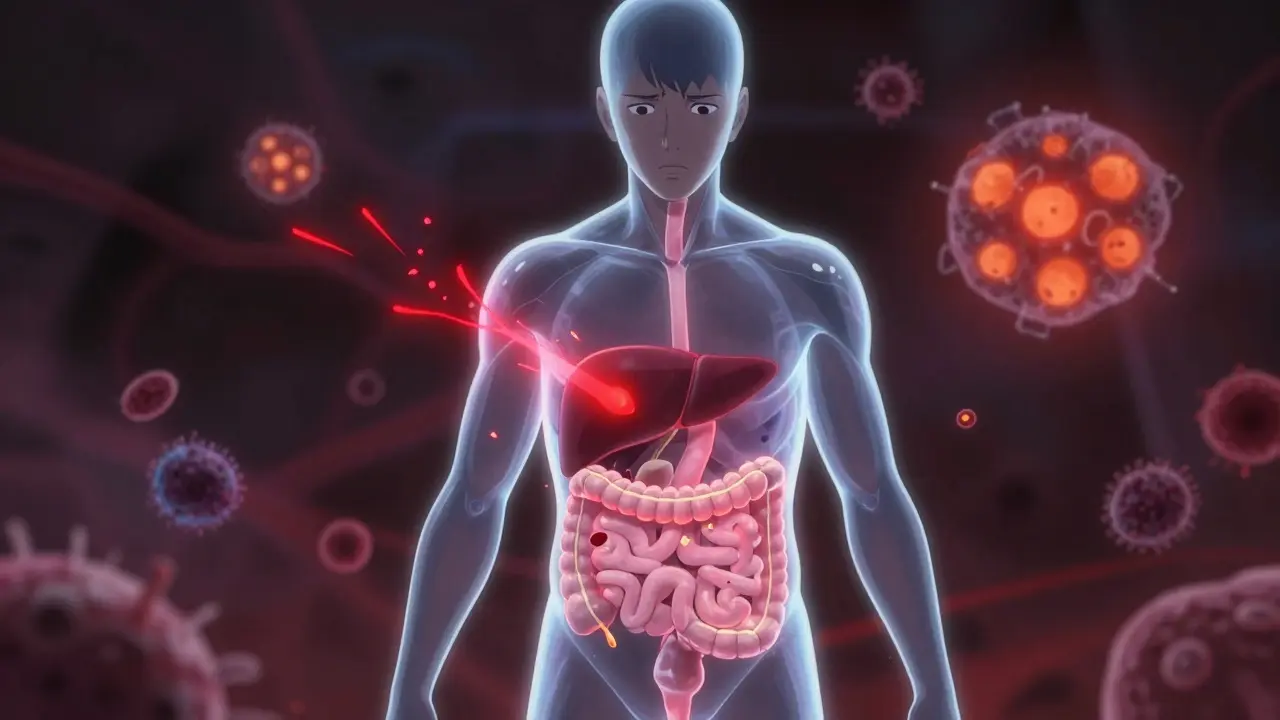
When you're diagnosed with celiac disease, the focus is usually on the gut - bloating, diarrhea, weight loss. But what if your liver enzymes are high, and your doctor says it’s not alcohol, not hepatitis, not fatty liver from obesity? That’s when things get confusing. Turns out, celiac disease and liver problems are more connected than most people realize - and fixing one often fixes the other.
Why Your Liver Shows Up Abnormal with Celiac Disease
Up to 40% of people newly diagnosed with celiac disease have elevated liver enzymes - mostly ALT and AST - even if they feel fine. These aren’t random spikes. They’re a direct signal that something’s off inside. In most cases, the liver isn’t damaged by toxins or viruses. It’s reacting to the same immune chaos happening in the small intestine. Celiac disease isn’t just about gluten hurting the gut. It’s an autoimmune condition where the body attacks its own tissues. That same misfired immune response can target the liver. Studies show that 4-6.4% of people with autoimmune hepatitis also have celiac disease. That’s not coincidence. It’s shared biology. The immune system gets confused. It sees gluten as a threat, then starts attacking liver cells too. There’s also the gut-leakiness factor. When gluten damages the intestinal lining, it creates gaps. Toxins, bacteria, and undigested food particles slip through into the bloodstream. The liver, your body’s main filter, gets flooded. It’s not designed to handle this kind of daily assault. Over time, that leads to inflammation and fat buildup - even in people who aren’t overweight.What Liver Problems Are Common With Celiac Disease?
The most frequent finding? Elevated transaminases. In one study of 67 biopsy-proven celiac patients, 70% had both ALT and AST higher than normal. That pattern is a red flag for celiac-related liver stress. Less common but more serious are conditions like:- Autoimmune hepatitis - where the immune system attacks liver cells directly
- Primary biliary cholangitis - damage to the bile ducts
- Primary sclerosing cholangitis - scarring of bile ducts
- MASLD (metabolic dysfunction-associated steatotic liver disease) - fat accumulation in the liver
How Often Does the Liver Heal?
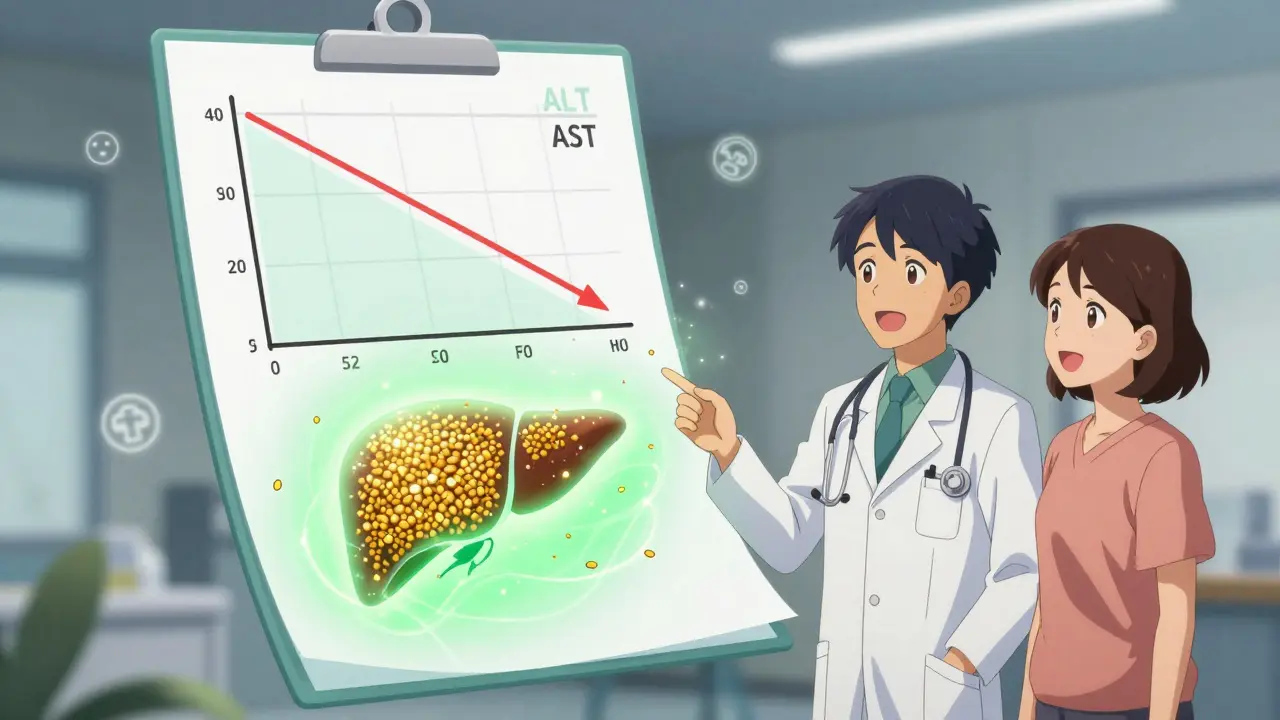
Here’s the good news: in most cases, the liver heals - if you stick to a strict gluten-free diet. A 2015 study by Dr. Daniel Leffler tracked 100 celiac patients with abnormal liver enzymes. After 18 months on a gluten-free diet, 79% had normal liver function tests. That’s not a fluke. It’s the rule. The liver doesn’t need drugs or surgery. It just needs to be free from gluten-triggered inflammation. But timing matters. Most people see improvement within 6 months. By 12 months, 85% are back to normal. If enzymes haven’t dropped after a year, doctors start looking for other causes - like autoimmune hepatitis or undiagnosed MASLD. That’s why follow-up blood work is non-negotiable.
Why This Gets Missed
Liver enzyme elevations in celiac disease are usually mild - 2 to 5 times the upper limit of normal. That’s not the kind of spike that sends you to the ER. Most doctors assume it’s early fatty liver or a lab error. They don’t connect it to celiac disease unless you’re already diagnosed. Even worse, many people with celiac disease have no digestive symptoms. They’re tired, have joint pain, or get migraines. Their liver enzymes are high, but no one checks for celiac. That’s why 68% of people surveyed by BeyondCeliac.org didn’t know about the liver connection before diagnosis. In fact, 4.7% of people diagnosed with cryptogenic cirrhosis - liver scarring with no clear cause - were later found to have undiagnosed celiac disease. Once they went gluten-free, their liver function improved dramatically. That’s why the European Association for the Study of the Liver now recommends testing all patients with unexplained liver disease for celiac disease.What You Should Do If You Have Celiac Disease
If you’ve been diagnosed with celiac disease, here’s your action plan:- Get liver enzymes checked at diagnosis - ALT, AST, ALP, and bilirubin. Don’t skip this.
- Repeat tests every 3-6 months until numbers normalize. Most do within a year.
- Work with a registered dietitian who specializes in celiac disease. They’ll help you avoid processed gluten-free junk that causes MASLD.
- Focus on whole foods: vegetables, fruits, lean meats, eggs, legumes, quinoa, buckwheat, and brown rice. Skip the gluten-free cookies and pasta.
- If enzymes don’t improve after 12 months, ask for a liver ultrasound and tests for autoimmune hepatitis or other liver conditions.
The Bigger Picture
Celiac disease doesn’t just affect the gut. It’s a whole-body condition. The liver is one of the most common extra-intestinal organs involved. And unlike other liver diseases - viral hepatitis, alcohol damage, or even some forms of fatty liver - celiac-related liver problems can be reversed without medication. Just remove gluten. Let the gut heal. Let the liver recover. The latest research confirms this. A 2025 meta-analysis found that siblings with celiac disease had double the risk of chronic liver disease compared to their unaffected brothers and sisters. That’s a powerful clue: it’s not lifestyle. It’s the disease itself. Researchers are now looking at genetic markers to predict who’s most at risk. Early data suggests people with two copies of the HLA-DQ2 gene (homozygous) have 2.3 times higher risk of liver abnormalities than those with just one copy. That could lead to personalized screening in the future.What’s Next
The medical world is catching on. In 2015, only 65% of doctors ordered liver tests when diagnosing celiac disease. By 2024, that number jumped to 92%. More clinics now include liver panels as standard. Insurance companies are starting to cover follow-up liver scans for celiac patients with persistent enzyme elevations. Pharmaceutical companies are also paying attention. Takeda’s Phase II trial tested a new enzyme therapy designed to break down gluten before it reaches the gut - potentially reducing liver inflammation too. While it’s not a cure, it could help those who accidentally ingest gluten. But the real solution is still simple: eat real food. Avoid processed gluten-free junk. Give your gut and liver time to heal. And don’t ignore those abnormal blood tests. They’re not noise. They’re a message.Can celiac disease cause liver damage?
Yes. Celiac disease can cause liver damage through autoimmune reactions, increased gut permeability, and malabsorption of protective nutrients. Common findings include elevated liver enzymes, fatty liver (MASLD), and in rare cases, autoimmune hepatitis or fibrosis. The good news: strict gluten-free diet adherence reverses these changes in most people.
Do liver enzymes return to normal on a gluten-free diet?
Yes, in about 79% of cases. Most people see improvement within 6 months, and 85% normalize within 12 months. If enzymes don’t improve after a year, further testing for coexisting liver conditions like autoimmune hepatitis is needed.
Is fatty liver common in celiac disease?
Yes - but not always for the reasons you think. Before diagnosis, malabsorption often prevents fat buildup. After going gluten-free, many people eat processed gluten-free foods high in sugar and unhealthy fats, which can trigger MASLD. This is why a whole-food, nutrient-dense gluten-free diet is critical.
Should I get tested for celiac disease if I have unexplained liver problems?
Yes, especially if you have cryptogenic cirrhosis or persistently elevated liver enzymes with no clear cause. Studies show 4.7% of people with unexplained liver disease have undiagnosed celiac disease. Testing is simple - a blood test for tTG-IgA antibodies followed by an endoscopy if positive.
What’s the best diet for liver health with celiac disease?
Focus on whole, unprocessed foods: vegetables, fruits, lean proteins, eggs, legumes, and naturally gluten-free whole grains like quinoa, buckwheat, and brown rice. Avoid gluten-free baked goods, snacks, and sugary cereals. Work with a dietitian who understands celiac disease to avoid hidden sugars and fats that harm the liver.
How often should liver enzymes be checked after a celiac diagnosis?
Check at diagnosis, then every 3-6 months until levels normalize. Most patients normalize within 12 months. If enzymes remain elevated after a year, further testing for autoimmune liver disease or MASLD is recommended.
Raja P
December 25, 2025 AT 03:58Wow, this is eye-opening. I had no idea celiac could mess with your liver like this. My ALT was always high, but my doctor just said 'maybe it's stress.' Turns out I was undiagnosed for years. Went gluten-free and my numbers dropped in 4 months. No meds, no supplements-just real food.
Austin LeBlanc
December 25, 2025 AT 13:06Of course it’s the gluten. Everything’s gluten these days. You people are so obsessed with diets. I’ve seen 10 people with 'celiac' who were just gluten-curious and wanted to be special. Your liver’s fine. Stop reading blogs and go drink a beer.
niharika hardikar
December 26, 2025 AT 10:00It is imperative to underscore the pathophysiological nexus between intestinal permeability and hepatic immune dysregulation in the context of celiac disease. The zonulin-mediated disruption of tight junctions facilitates the translocation of microbial endotoxins, thereby activating Kupffer cells and inducing a pro-inflammatory cascade. This is not merely a dietary anomaly-it is a systemic autoimmune phenomenon requiring multidisciplinary oversight.
Christine Détraz
December 28, 2025 AT 06:29I love how this post doesn’t just say 'eat gluten-free' but actually explains why the junk gluten-free food is worse than the original. My sister went gluten-free and started eating gluten-free donuts every day. Two years later, she had MASLD and didn’t even realize it. Whole foods aren’t a trend-they’re a lifeline.
Aurora Daisy
December 29, 2025 AT 08:11Oh great. Another American medical blog pretending to be science. We’ve had this figured out in the NHS since the 90s. You lot turn every minor lab abnormality into a Netflix documentary. Just get on with your life.
Paula Villete
December 29, 2025 AT 18:3779% heal? That’s wild. I’m 85% sure my liver’s been on vacation since I ditched the gluten-free cookies. Also, I typed ‘heal’ as ‘heal’ like 3 times and I’m not even sorry. You know what’s worse than gluten? Trying to be perfect. Just eat food. Not labels.
Georgia Brach
December 31, 2025 AT 12:31The data is cherry-picked. 79% normalization? What about the 21% who didn’t improve? Were they excluded? And where’s the control group? No mention of confounding variables like alcohol consumption, statin use, or undiagnosed NAFLD. This reads like a marketing pamphlet for a gluten-free brand, not peer-reviewed medicine.
Bhargav Patel
January 2, 2026 AT 05:17The human body is a symphony of interdependent systems. The gut, the liver, the immune system-they do not operate in isolation. To treat celiac disease as merely a gastrointestinal disorder is to misunderstand its essence. It is a signal, a whisper from the body that the harmony has been disrupted. Healing is not about restriction, but restoration.
Steven Mayer
January 3, 2026 AT 03:17Studies show 40% of celiac patients have elevated transaminases. But what percentage of those patients were also on medications? What about the impact of intermittent fasting? The metabolic burden of gluten-free processed foods is rarely quantified in these studies. The narrative is oversimplified. There is no single variable here.
Charles Barry
January 4, 2026 AT 14:09They don’t want you to know this. Big Pharma doesn’t profit from a gluten-free diet. That’s why your doctor never told you. They’re paid by the companies selling liver meds and biologics. The real cure? Remove gluten. The real cover-up? They call it 'idiopathic' so you keep paying for tests. Wake up.
Rosemary O'Shea
January 6, 2026 AT 03:07How quaint. A blog post with bullet points and a 'what you should do' list. As if this were a lifestyle magazine. I’ve seen three patients with celiac and cryptogenic cirrhosis in my practice. One was a violinist from Dublin. The other two? They’d been on 'gluten-free' diets for years and still ate gluten-laced soy sauce. The problem isn’t the disease-it’s the ignorance.
Ademola Madehin
January 7, 2026 AT 02:28Bro this hit different. My cousin got diagnosed with celiac after her liver crashed. She was so skinny but had fatty liver. Then she stopped eating the gluten-free pizza rolls and started eating beans and yams. Now she’s got energy. Like, real energy. Not that zombie glow. God bless whole foods.
suhani mathur
January 8, 2026 AT 02:41And yet, 68% of people didn’t know about the liver link. That’s not a gap in awareness-it’s a failure of medical education. If your GI doc doesn’t order liver enzymes at diagnosis, find a new one. Also, vitamin E and choline? Yeah, they’re not magic, but they’re not optional either. Eat spinach. Eat eggs. Stop buying the stuff in the yellow bag.