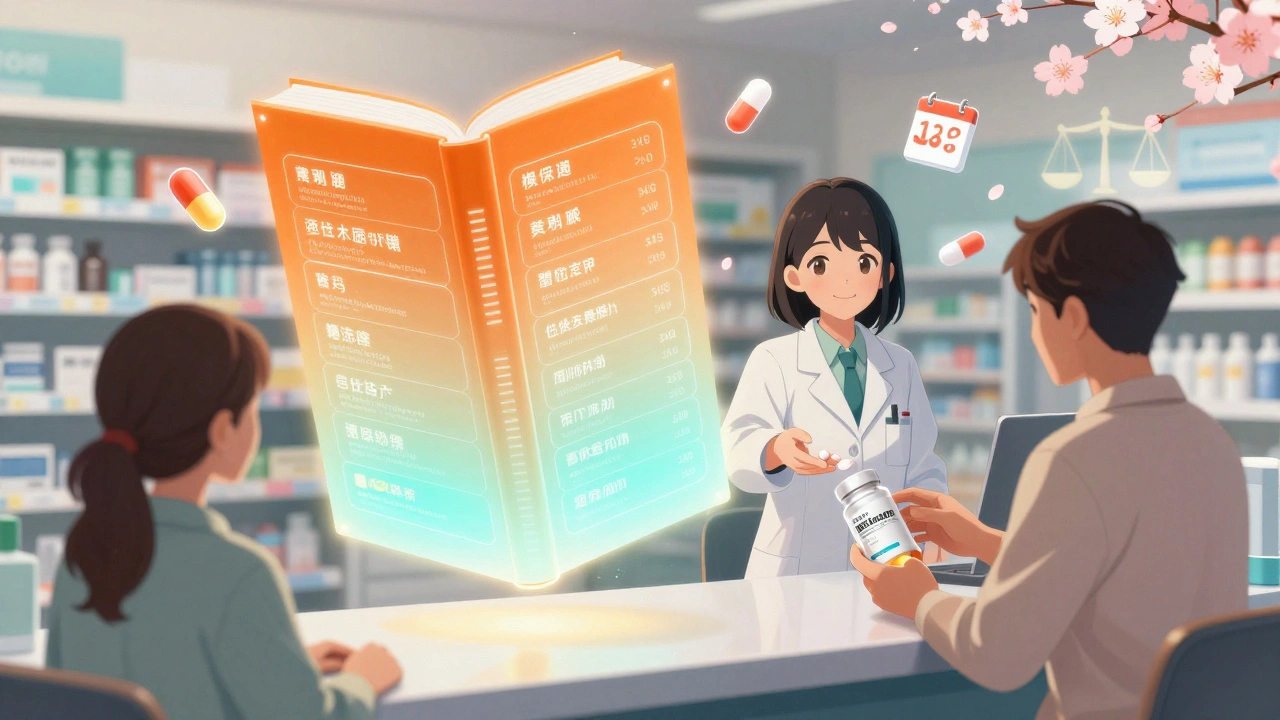
The Orange Book database isn’t just another government document-it’s the backbone of how generic drugs enter the U.S. market and how patients get affordable medications. Officially called Approved Drug Products With Therapeutic Equivalence Evaluations, it’s the U.S. Food and Drug Administration’s (FDA) official list of all small-molecule drugs approved for sale in the United States, along with the patents and exclusivity periods tied to them. This isn’t a historical artifact. It’s updated daily, used by pharmacists, generic drug makers, and even consumers, and it directly impacts how much you pay for your prescriptions.
What’s Actually in the Orange Book?
If you open the Orange Book, you’ll see more than just drug names. Each entry includes the brand name, the generic name, the dosage form (like tablet or injection), strength, and the application number-either an NDA (New Drug Application) for the brand version or an ANDA (Abbreviated New Drug Application) for the generic. But the real power lies in what’s underneath: patent information and therapeutic equivalence ratings.
Every approved drug has one or more patents protecting it. The Orange Book lists those patents by number, expiration date, and a patent use code. These codes tell you exactly which medical conditions the patent covers. For example, a drug might be approved for treating high blood pressure and heart failure, but the patent might only cover the heart failure use. That’s critical for generic manufacturers-they can launch a version that doesn’t infringe on the patent by skipping the protected use.
Then there’s therapeutic equivalence. This is where the Orange Book tells pharmacists whether a generic drug can be safely swapped for the brand name. Ratings like AB mean the generic is bioequivalent and interchangeable. An AP rating means it’s approved but not yet rated as interchangeable-often because it’s a new product. This is why your pharmacist can legally switch your brand-name pill for a cheaper generic without asking your doctor, as long as it’s rated AB.
Why the Hatch-Waxman Act Changed Everything
The Orange Book didn’t become essential until 1984, when Congress passed the Drug Price Competition and Patent Term Restoration Act-better known as the Hatch-Waxman Act. Before that, generic companies had to run full clinical trials to prove their drugs worked, which took years and cost millions. Hatch-Waxman changed that. It allowed generics to rely on the brand’s safety and effectiveness data, as long as they proved their version was bioequivalent. In exchange, brand companies got extended patent terms to make up for time lost during FDA review.
This deal created a predictable roadmap. Generic companies watch the Orange Book like a countdown clock. When a patent expires or exclusivity ends, they file their ANDA. The FDA then has 180 days to review it. The first generic to file often gets six months of exclusive marketing rights before others can enter. That’s why you sometimes see multiple generics hit the market at once-they’re racing to be first.
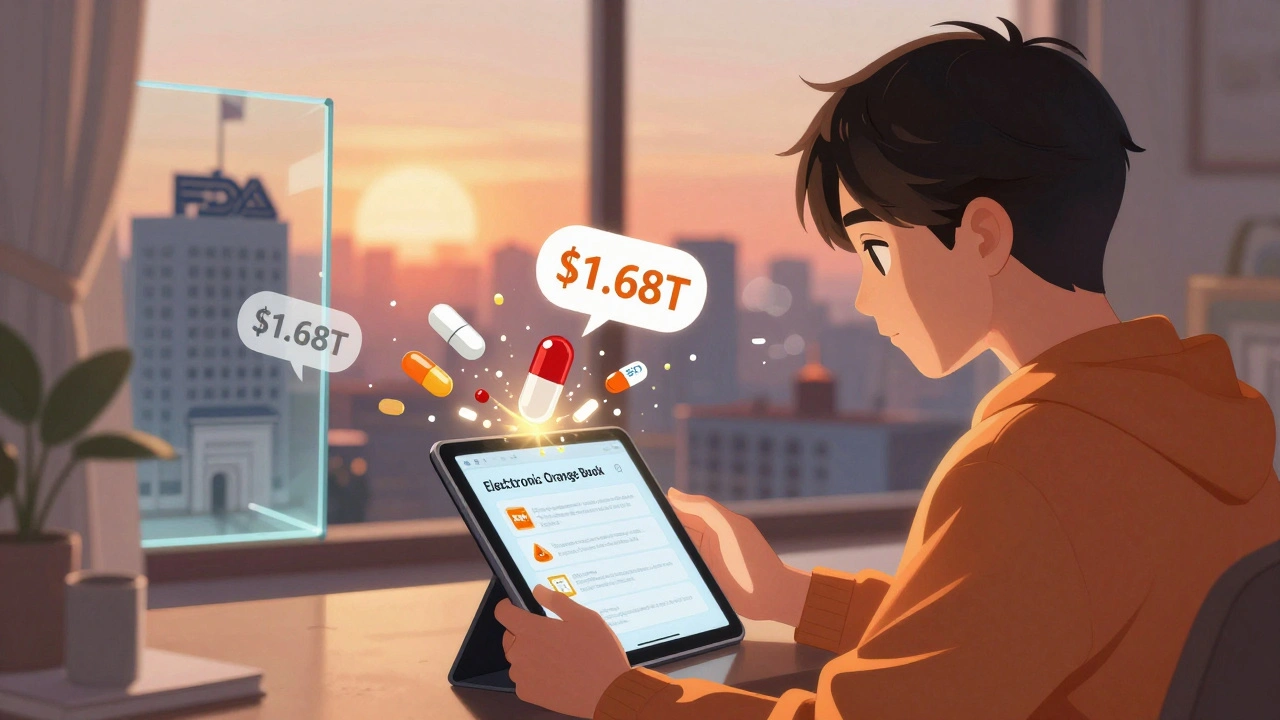
Since 1984, over 11,200 generic drugs have been approved thanks to this system. The result? Generic drugs now make up 90% of all prescriptions filled in the U.S., but only 23% of total drug spending. That’s over $1.68 trillion in savings over the last 40 years.
What’s Not in the Orange Book
It’s just as important to know what the Orange Book doesn’t include. It only covers small-molecule drugs-pills, capsules, injections made from chemical compounds. It doesn’t cover biologics like insulin, vaccines, or monoclonal antibodies. Those are listed in the Purple Book, which is far less detailed when it comes to patents. Biologics have their own approval pathway and longer exclusivity periods, which is why they stay expensive longer.
The Orange Book also doesn’t list manufacturing process patents. If a company patents a new way to make a drug, that’s not in the Orange Book. It doesn’t include unapproved drugs, compounded medications, or over-the-counter products. And it doesn’t reflect court rulings in real time. If a patent is challenged and invalidated in court, it can take weeks or months for that change to show up in the database.
Who Uses the Orange Book-and How
Pharmacists use it every day. When a doctor writes a prescription for a brand-name drug, the pharmacist checks the Orange Book to see if there’s an AB-rated generic available. If there is, they can substitute it unless the doctor or patient says no. One hospital pharmacist in Texas told me, “I check the Orange Book before I even fill the script. If there’s a generic, I call the doctor and ask if they’re okay with it. Most are.”
Generic drug companies have teams whose entire job is monitoring the Orange Book. They track patent expirations, exclusivity end dates, and new filings. One senior patent attorney at a major generics firm said, “We start our day by checking the Orange Book. A single patent expiration can mean millions in revenue if we’re ready to launch.”
Researchers use it too. The National Bureau of Economic Research (NBER) has digitized the entire database and made it publicly available. Since 2020, 78% of pharmaceutical economics papers have used this data to study how patent expirations affect drug prices, generic entry timing, and healthcare spending.
Even consumers are starting to use it. The FDA’s Electronic Orange Book gets over 1.2 million unique visitors a month-up from 400,000 in 2018. People type in their drug name and see if a cheaper version exists. Some even use it to argue with their insurance company when they’re denied a generic.
Problems and Controversies
The system isn’t perfect. Critics say brand-name companies abuse the Orange Book by listing patents that shouldn’t qualify-like patents on packaging, dosage forms, or minor chemical tweaks. This is called “evergreening.” For example, a company might get a new patent on a drug’s coating and add it to the Orange Book, even though the active ingredient hasn’t changed. That delays generic entry by years.
Harvard Medical School’s Professor Aaron Kesselheim testified before Congress in 2021 that this practice “creates artificial barriers to competition.” The Congressional Research Service confirmed that some patent listings are “of questionable validity,” meant more to scare off generics than to protect real innovation.
Another issue: delays. If a patent dispute is settled out of court, the settlement terms might allow a generic to enter early-but the Orange Book doesn’t always reflect that quickly. Users report waiting weeks for updates, which throws off launch plans.
And then there’s the complexity. Patent use codes (A, B, C) are confusing. A code like “C” means the patent covers a method of using the drug for a specific disease, but not others. Without training, even pharmacists struggle to interpret them. The FDA’s guide to these codes gets 250,000 views a month.
What’s Changing in 2025
The FDA is pushing for reforms. In January 2024, they proposed a new rule requiring more detailed patent descriptions and faster updates. They’re also cracking down on “patent thickets”-when companies list dozens of weak patents to block competition.
The Electronic Orange Book now has an API that processes over 2 million queries daily. It’s being upgraded for full release by the end of 2024, making it easier for developers to build tools that pull data directly into pharmacy systems or apps.
Industry analysts predict these changes will speed up generic entry for $157 billion in branded drugs set to lose patent protection by 2028. That could save the U.S. healthcare system up to $420 billion over the next five years.
How to Use the Orange Book Yourself
You don’t need a law degree to use it. Go to accessdata.fda.gov/scripts/cder/ob/. Search by brand name, generic name, or application number. You’ll see:
- The drug’s approved uses
- Therapeutic equivalence rating (AB, AP, etc.)
- List of patents with expiration dates
- Any exclusivity periods (like 5-year NCE exclusivity or 7-year orphan drug exclusivity)
If you’re looking for a cheaper version of your medication, look for the AB rating. If you see a patent expiring soon, you might be able to switch to a generic soon. If you’re confused, call your pharmacist-they’re trained to use it.
The Orange Book is not perfect. But it’s the most transparent, data-driven tool we have to make sure innovation doesn’t come at the cost of affordability. For patients, it’s a lifeline. For generics, it’s a roadmap. And for the system, it’s the only thing keeping drug prices from spiraling out of control.
Is the Orange Book the same as the Purple Book?
No. The Orange Book lists small-molecule drugs-pills and injections made from chemical compounds. The Purple Book lists biologics, like insulin, vaccines, and antibody treatments. Biologics are more complex and have different approval rules. The Purple Book doesn’t provide the same level of patent detail as the Orange Book, which makes it harder for generic versions (called biosimilars) to enter the market.
Can I trust the patent dates in the Orange Book?
The dates are accurate when published, but they don’t reflect court rulings in real time. If a patent is invalidated in court, it can take weeks for the FDA to update the database. Generic drug companies often use legal teams to track court outcomes separately. For consumers, treat the dates as a guide, not a guarantee.
Why does my pharmacist ask if I want a generic if the Orange Book says it’s AB-rated?
Even though the Orange Book says a generic is interchangeable (AB-rated), some doctors write prescriptions that say “dispense as written” or “no substitution.” Pharmacists must follow those instructions. They ask because they want to make sure you’re okay with switching-especially if you’ve had issues with a generic before.
How often is the Orange Book updated?
The Electronic Orange Book is updated every business day. New drug approvals, patent filings, and exclusivity changes appear within 24 hours. The old printed version used to come out monthly, but that’s obsolete. Today, the online version is the only one that matters.
Are there free tools to help me read the Orange Book?
Yes. The FDA’s website offers a free search tool at accessdata.fda.gov/scripts/cder/ob/. There are also third-party tools like DrugPatentWatch.com and LexisNexis, but those are paid services. For most people, the FDA’s tool is enough. The NBER also provides a free, downloadable dataset for researchers.

Anna Roh
December 9, 2025 AT 17:04So basically the Orange Book is just a fancy spreadsheet that lets pharmacists save us money without us even knowing it? Cool. I just hope they don’t start swapping my meds without telling me again. Last time I got a generic and felt like I was on a different drug entirely.
om guru
December 10, 2025 AT 18:09The Orange Book represents a cornerstone of pharmaceutical transparency and equitable access to essential medicines. Its structured patent and therapeutic equivalence data enables market efficiency and patient welfare. This system must be preserved and strengthened through regulatory rigor and ethical enforcement.
Richard Eite
December 12, 2025 AT 02:22Let’s be real the FDA is just playing politics with patents. Big Pharma bribes them to keep generics off the market. This Orange Book is a joke if you think it’s fair. I’ve seen patents on the damn color of the pill. That’s not innovation that’s theft.
Katherine Chan
December 12, 2025 AT 10:43I love that regular people can use this thing now. My grandma looked up her blood pressure med last week and found a generic that saved her $80 a month. She was so happy she sent me a meme of a dancing pill. This is what real progress looks like.
Philippa Barraclough
December 14, 2025 AT 02:58While the Orange Book provides a necessary and ostensibly transparent framework for therapeutic equivalence and patent disclosure, one must consider the structural limitations inherent in its design. The absence of manufacturing process patents, the lag in judicial updates, and the opacity of patent use codes suggest a system that is administratively cumbersome and potentially exploitable. Moreover, the reliance on static data points in a dynamic legal and pharmacological environment introduces significant informational asymmetries between industry actors and end-users, particularly when the latter lack access to legal or pharmaceutical expertise. The expansion of API access is a positive development, yet it remains insufficient without accompanying educational infrastructure for non-specialist users.
Olivia Portier
December 15, 2025 AT 22:12OMG I had no idea the Orange Book was this cool. Like I just searched my anxiety med and saw the patent expires next year and now I’m so hyped for the generic. My pharmacist is gonna be so mad I’m gonna switch but like… freedom baby 🎉
Tiffany Sowby
December 17, 2025 AT 11:37They say this saves money but what about the people who get sick because the generics aren’t the same? I’ve seen it happen. The FDA doesn’t care about real patients. They care about corporate profits and looking good on paper. This whole system is rigged.
Jennifer Blandford
December 19, 2025 AT 00:42Can we talk about how wild it is that a government database is literally keeping drug prices from going through the roof? I mean… we’re living in a world where a pill costs more than a Netflix subscription and this thing is the quiet hero. Someone give the FDA a hug.
Gilbert Lacasandile
December 20, 2025 AT 14:37I’ve been using the Orange Book for years as a pharmacy tech. It’s not perfect but it’s the best tool we’ve got. I wish more patients knew how to read the AB ratings. It’s not magic, it’s science.
Lola Bchoudi
December 22, 2025 AT 03:06Therapeutic equivalence is a pharmacokinetic and pharmacodynamic equivalence paradigm anchored in bioequivalence studies per 21 CFR 320.24. The AB rating signifies interchangeability under the Hatch-Waxman framework, contingent upon demonstrated AUC and Cmax within 80–125% confidence intervals. The Orange Book codifies this regulatory architecture, enabling market competition without compromising safety.
Morgan Tait
December 22, 2025 AT 12:29Ever notice how the FDA updates the Orange Book right after elections? Coincidence? I don’t think so. They’re hiding the real patent expirations until after the votes are counted. Big Pharma owns this whole thing. Even the API? Probably backdoored. I’ve got friends in the system. They’re scared to talk.
Darcie Streeter-Oxland
December 22, 2025 AT 23:06It is regrettable that the Orange Book continues to omit manufacturing process patents, thereby permitting potential circumvention of genuine innovation. The absence of real-time judicial updates further undermines its reliability as a public instrument. This is not transparency; it is administrative negligence.
Kathy Haverly
December 24, 2025 AT 07:5790% of prescriptions filled with generics? That’s not a win, that’s a failure. People are getting cheap, poorly made pills and calling it progress. I’ve seen patients have seizures after switching. This isn’t affordability, it’s pharmaceutical negligence disguised as reform.
Suzanne Johnston
December 25, 2025 AT 15:18There’s a deeper question here: if we’ve built a system that relies on patent expiration dates to determine access to medicine, then we’ve made healthcare dependent on legal technicalities rather than human need. The Orange Book is a brilliant tool, but it’s also a symptom of a broken system where innovation is monetized through delay, not discovery.