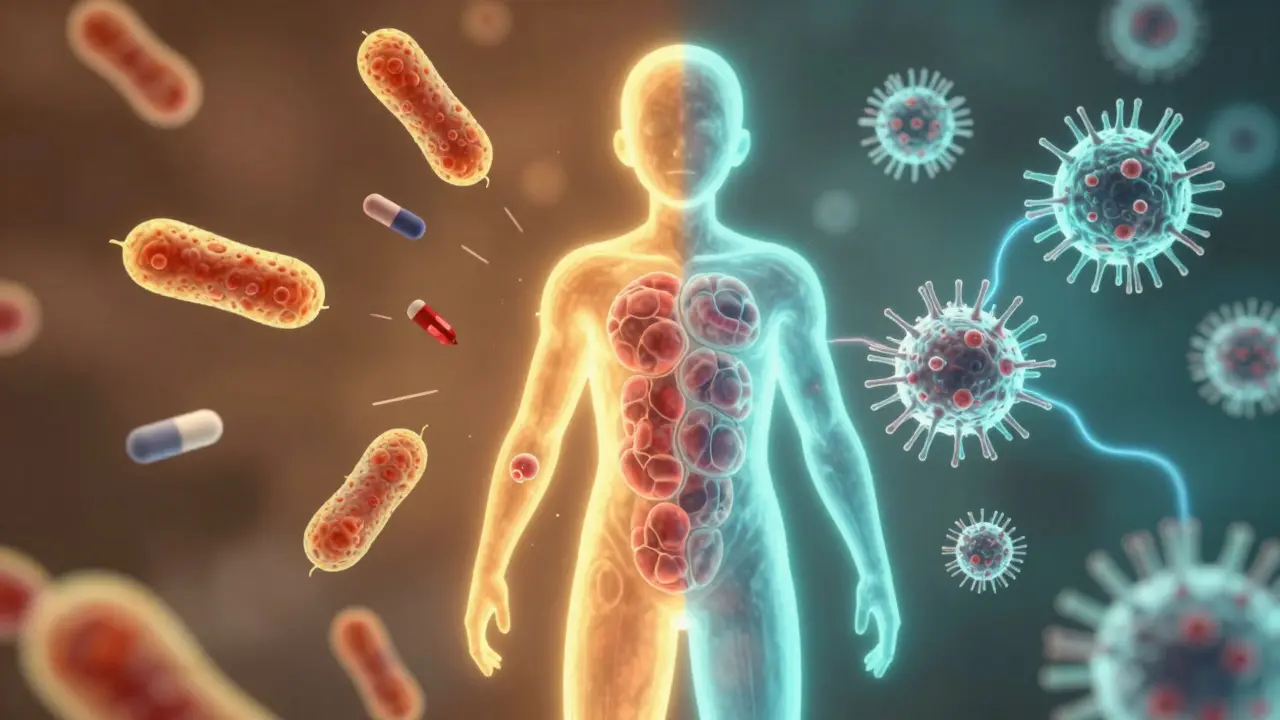
When you or your child gets sick with a fever, sore throat, or cough, the biggest question isn’t just how bad it is-it’s whether it’s bacterial or viral. The answer changes everything: one might need antibiotics, the other just rest and time. Yet, most people can’t tell the difference. And that confusion is costing lives.
What’s Really Going On Inside Your Body?
Bacteria and viruses aren’t just different germs-they’re completely different kinds of invaders. Bacteria are single-celled living organisms. They can eat, grow, and reproduce on their own, even outside your body. You find them in soil, water, and yes, even on your skin. Some are helpful. Others? They cause infections like strep throat, urinary tract infections, and tuberculosis.
Viruses are not alive in the traditional sense. They’re just genetic material wrapped in a protein shell. They can’t reproduce alone. They need to break into your cells, hijack their machinery, and turn them into virus factories. That’s how colds, flu, chickenpox, and COVID-19 spread. Without a host, viruses just sit there-useless.
This difference explains why antibiotics work on bacteria but do nothing to viruses. Antibiotics attack the cell walls or protein-making systems of bacteria. Viruses don’t have those. They’re built differently. Giving antibiotics for a viral infection is like using a hammer to fix a software bug-it’s the wrong tool, and it causes harm.
Symptoms: How to Tell Them Apart (Even Without a Lab)
Both can cause fever, cough, and fatigue. That’s why so many people get it wrong. But there are patterns.
Bacterial infections often come with higher fevers-above 101°F (38.3°C). Symptoms tend to stick around longer than two weeks. Or they get better for a few days, then suddenly get worse. That’s a red flag for a secondary bacterial infection, like sinusitis or pneumonia that follows a cold.
Viral infections usually start fast. You feel run down, achy, and stuffy. Fever is lower, often under 100.4°F (38°C). You might have a runny nose, watery eyes, or a dry cough. Most viral illnesses peak within 3-5 days and start improving by day 7. If you’re feeling better after a week, it’s likely viral.
But here’s the catch: viral infections can lead to bacterial ones. About half of hospitalized COVID-19 patients develop a secondary bacterial lung infection. That’s why doctors sometimes prescribe antibiotics even when the main problem is viral. It’s not because they misdiagnosed-it’s because they’re preparing for what comes next.
Testing: What Doctors Actually Use to Know for Sure
There’s no magic symptom that always tells you. That’s why tests matter.
For strep throat, a rapid antigen test gives results in 10 minutes with 95% accuracy. If it’s negative but the doctor still suspects strep, they’ll send a throat culture. That’s the gold standard-it’s 98% accurate, but takes 24-48 hours.
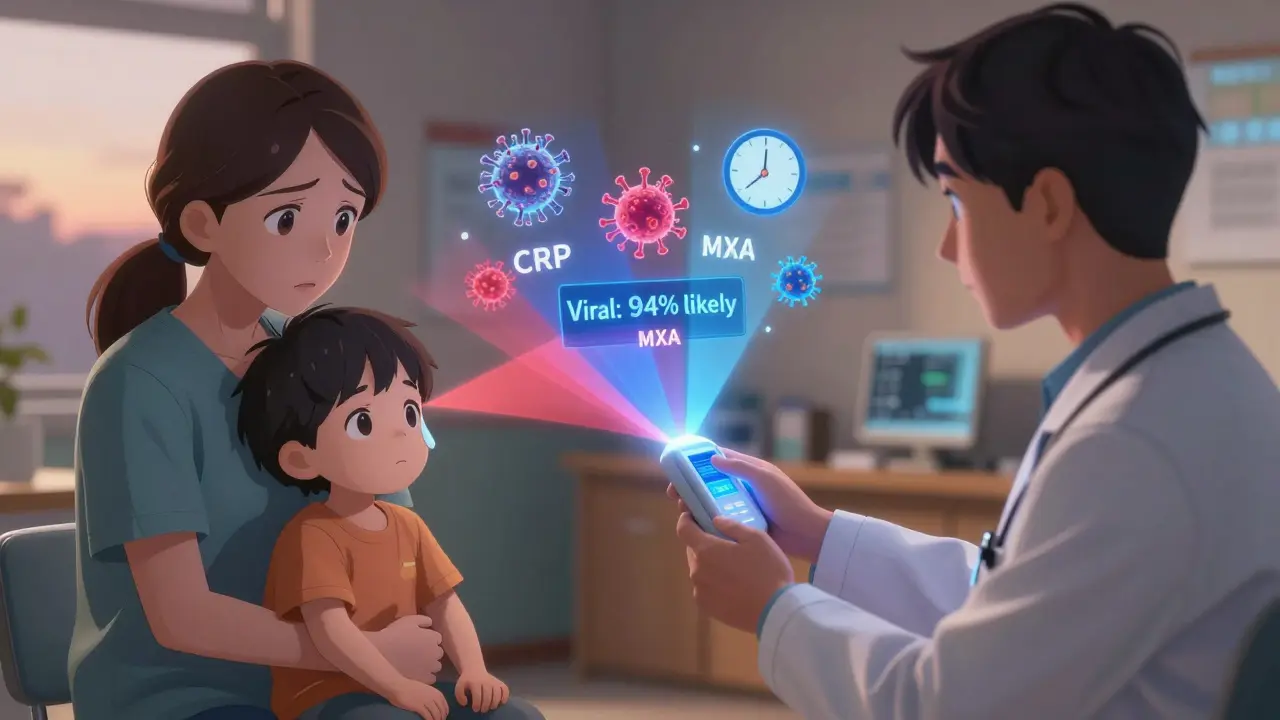
For viruses, PCR tests are the go-to. They detect viral DNA or RNA. For flu, they’re 90-95% accurate if done within the first 72 hours. Newer tools like the FDA-approved FebriDx test check for two biomarkers-CRP (a sign of inflammation) and MxA (a protein your body makes only when fighting a virus). It’s 94% sensitive and 92% specific. In 10 minutes, it tells you whether your infection is likely bacterial or viral.
For more serious cases, blood tests or chest X-rays help. But for most common infections, doctors use a mix of symptoms, timing, and quick tests. The Centor Criteria-a scoring system based on fever, swollen lymph nodes, tonsil white patches, and absence of cough-helps predict strep risk. A score of 3 or higher means you’re more likely to need a test.
Treatment: Antibiotics, Antivirals, and What Actually Helps
If it’s bacterial, antibiotics are the answer. But not just any antibiotic. Penicillin or amoxicillin for strep throat. Ciprofloxacin for some urinary infections. The course is usually 5-14 days. You must finish it-even if you feel better. Stopping early lets the toughest bacteria survive and multiply, creating drug-resistant strains.
If it’s viral, antibiotics won’t help. Period. Treatment is about support: rest, fluids, fever reducers like acetaminophen or ibuprofen, and time. Your immune system does the heavy lifting.
But there are exceptions. Antivirals exist for some viruses. Oseltamivir (Tamiflu) for flu, if taken within 48 hours of symptoms, can shorten illness by 1-2 days. Acyclovir helps with chickenpox and shingles. Remdesivir is used in severe COVID-19 cases. These drugs don’t cure the infection-they slow the virus down so your body can catch up.
For most people with a cold or flu, the best medicine is a warm soup, a humidifier, and sleep. No pills needed.
Why Misuse of Antibiotics Is a Global Crisis
Every time you take an antibiotic when you don’t need it, you’re helping create superbugs.
In the U.S. alone, 47 million unnecessary antibiotic prescriptions are written every year for viral infections. That’s almost half of all antibiotic prescriptions for colds and coughs. The result? Antibiotic resistance. Bacteria evolve. They learn to survive the drugs meant to kill them.
Drug-resistant infections already kill 1.27 million people worldwide each year. That’s more than HIV/AIDS or malaria. By 2050, that number could hit 10 million annually-more than cancer. In the U.S., resistant bacteria cause 35,900 deaths a year. Clostridioides difficile, a deadly gut infection often triggered by unnecessary antibiotics, kills over 12,800 Americans each year.
And it’s not just health. It’s money. Inappropriate antibiotic use costs the U.S. healthcare system $1.1 billion a year. Viral respiratory illnesses cost $45 billion in medical bills and lost workdays.
Parents are especially affected. Kids get 6-8 viral upper respiratory infections a year. That’s 22 million missed school days and 20 million lost workdays for parents in the U.S. alone. And most of those don’t need antibiotics.
What’s Changing in the Fight Against Infections?
Science is catching up. Researchers at the University of Queensland are testing new compounds-IMB-001 and IMB-002-that target bacterial surface proteins. These could bypass traditional resistance mechanisms. Early results are promising.
Phage therapy-using viruses that infect only bacteria-is making a comeback. In Europe, trials show 85% success in treating antibiotic-resistant infections where all else failed.
Universal coronavirus vaccines are in Phase III trials. If they work, they could prevent future pandemics by targeting common features across all coronaviruses-not just SARS-CoV-2.
And the tools are getting smarter. Rapid tests like FebriDx are now being used in clinics across Australia and the U.S. to cut down on unnecessary prescriptions. If your doctor offers one, say yes.
What You Can Do Right Now
Don’t demand antibiotics. If your doctor says you have a virus, trust them. Ask: "Is this bacterial or viral?" If they’re unsure, ask if a test is available.
Wash your hands. Get vaccinated-for flu, COVID-19, pneumococcus. Vaccines prevent both viral infections and the bacterial complications they cause.
Don’t save leftover antibiotics. Don’t share them. Don’t use them for the next cold. They’re not magic pills. They’re precision tools-and misusing them puts everyone at risk.
When you’re sick, rest. Drink water. Use a humidifier. Let your body heal. Most of the time, that’s all you need.
Can a viral infection turn into a bacterial infection?
Yes. Viral infections like the flu or COVID-19 can weaken your airways and immune defenses, making it easier for bacteria to invade. This is called a secondary infection. Common examples include bacterial pneumonia after the flu, or bacterial sinusitis after a cold. About half of hospitalized COVID-19 patients develop a secondary bacterial infection. That’s why doctors sometimes prescribe antibiotics during viral illness-not because they think it’s bacterial, but because they’re watching for complications.
Why don’t antibiotics work on viruses?
Antibiotics target structures that bacteria have but viruses don’t-like cell walls, protein-building machinery, or replication enzymes. Viruses aren’t cells. They’re just genetic material inside a protein coat. They don’t have walls to break, no metabolism to disrupt. They live inside your own cells, using your body’s systems to copy themselves. Antibiotics can’t reach them without harming your cells. That’s why antiviral drugs are designed differently-they interfere with how viruses enter or replicate inside cells.
How long should a cold or flu last before I worry?
Most viral colds and flu improve within 7-10 days. If symptoms last longer than 10-14 days, or if you feel better for a few days and then get worse-especially with high fever, chest pain, or thick yellow/green mucus-it could be a bacterial infection. Sinus pressure that doesn’t improve after 10 days, or a cough that turns into wheezing or shortness of breath, also warrants a doctor’s visit. Don’t wait for it to get serious. Early testing means better outcomes.
Are there home tests to tell bacterial from viral infections?
Not yet for home use. The FebriDx test, which measures CRP and MxA biomarkers, is available in clinics and urgent care centers, but not sold over the counter. Rapid strep tests are available in pharmacies, but only for sore throats. For most other symptoms, you need a doctor’s evaluation. Don’t rely on online symptom checkers-they’re not accurate enough to replace clinical judgment. If you’re unsure, see a provider.
Can I prevent bacterial and viral infections?
Yes. Vaccines are the most effective tool. Get your annual flu shot, stay up to date on COVID-19 boosters, and ensure you’re vaccinated against pneumococcus, whooping cough, and chickenpox. Wash your hands regularly, especially before eating or touching your face. Avoid close contact with sick people. Don’t share drinks or utensils. Keep your immune system strong with sleep, good nutrition, and stress management. Prevention is always better than treatment.


Benjamin Glover
December 16, 2025 AT 14:13Another American overprescribing nonsense. We’ve had rational medicine in the UK for decades-no one demands antibiotics for a sniffle. Your culture’s obsession with quick fixes is a public health disaster.
RONALD Randolph
December 18, 2025 AT 07:21WRONG. WRONG. WRONG. Antibiotics are NOT ‘magic pills’-they’re life-saving tools-when used appropriately! You don’t ‘trust your doctor’-you demand evidence! And if your doctor doesn’t offer a FebriDx test? Find a new one. Period. The CDC says 47 million unnecessary scripts annually-and you’re part of the problem. Stop being lazy. Stop being ignorant. Get tested. Or stay home.
John Brown
December 19, 2025 AT 21:01I’ve had three kids through colds, flu, and ear infections. The one thing I learned? Let your body heal. Soup. Sleep. Steam. No rush. No panic. Doctors aren’t villains-they’re guides. And sometimes, the best treatment is patience.
John Samuel
December 21, 2025 AT 11:03🌟 Let’s pause for a moment and celebrate the quiet revolution happening in infectious disease care. 🌟 Phage therapy? Biomarker-driven diagnostics? Universal coronavirus vaccines? This isn’t sci-fi-it’s happening in real time. We’re transitioning from shotgun prescribing to sniper precision. The future isn’t just bright-it’s *biologically elegant.*
Sai Nguyen
December 22, 2025 AT 17:26India has more antibiotic resistance than the U.S. because you people overuse drugs like candy. We don’t beg for pills-we endure. Your weakness is your privilege.
Christina Bischof
December 23, 2025 AT 23:37My sister had a cough that lasted 18 days. She didn’t get antibiotics. She got tea, rest, and a hug. She’s fine. Sometimes, the body just needs time.
Jocelyn Lachapelle
December 25, 2025 AT 15:40Love this breakdown. Seriously. I used to panic every time my kid had a fever. Now I know: if it’s day 5 and they’re smiling while eating soup? They’re winning. No meds needed. Just love and patience.
Mike Nordby
December 26, 2025 AT 09:15Regarding the claim that viral infections lead to secondary bacterial infections in approximately 50% of hospitalized COVID-19 patients: this figure requires contextualization. The original study (Liu et al., 2021, Lancet Infectious Diseases) reported a 48.7% co-infection rate in ICU cohorts-but only 12.3% in non-ICU patients. Generalizing this statistic to all viral infections is statistically misleading. The risk is elevated in critical illness, not routine upper respiratory illness. Therefore, blanket antibiotic prophylaxis remains unjustified outside of high-risk clinical settings.