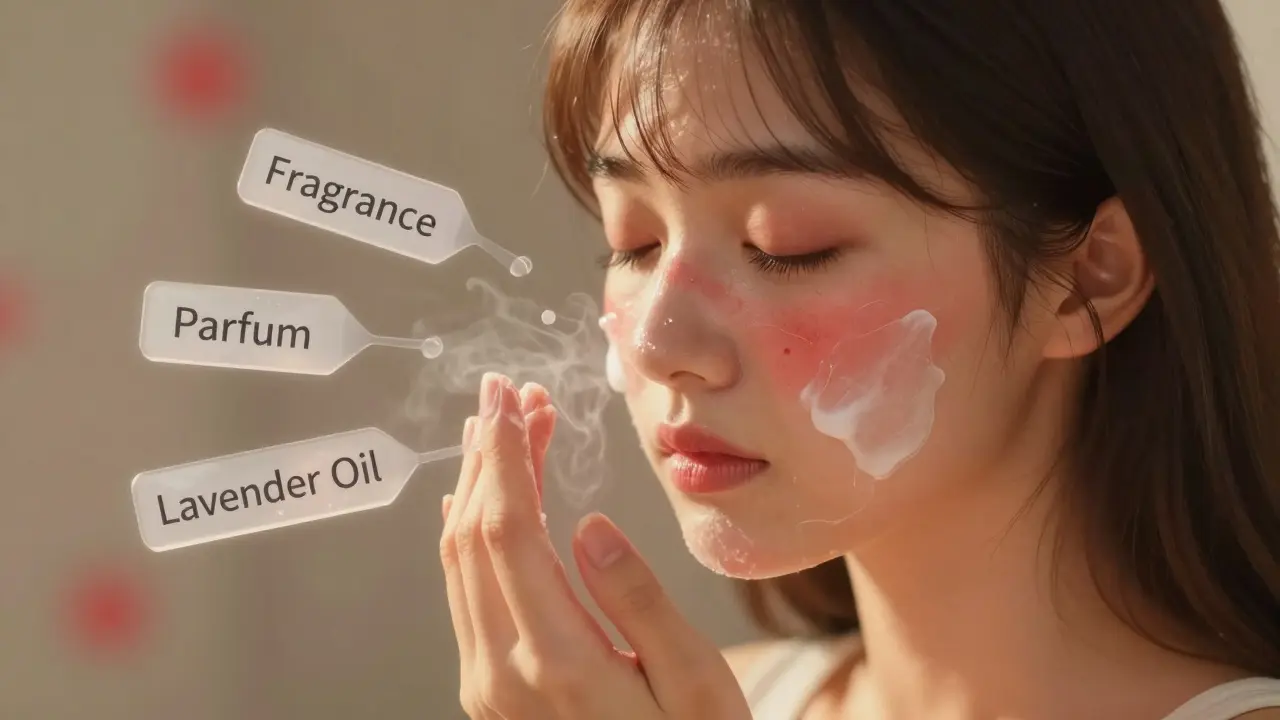
If your skin stings when you wash your face, turns red after using a new lotion, or feels tight even after moisturizing, you’re not alone. Millions of people deal with sensitive skin - and a huge part of the problem? Fragrance. Not the kind you smell in a candle, but the hidden chemicals in your moisturizer, cleanser, and even sunscreen that your skin can’t tolerate. The good news? Switching to a fragrance-free routine can make a dramatic difference. No magic potions, no expensive treatments - just smarter choices backed by dermatology and real-world results.
Why Fragrance Is the #1 Trigger for Sensitive Skin
Fragrance isn’t just a nice smell. On ingredient lists, it’s often labeled as “fragrance” or “parfum” - two words that hide dozens, sometimes hundreds, of undisclosed chemicals. These aren’t just for fun. They’re added to make products feel more luxurious, mask other smells, or create a sense of purity. But for sensitive skin, they’re like pouring salt on a wound. According to the American Contact Dermatitis Society, fragrance compounds cause 30-45% of all allergic reactions from skincare products. That’s nearly half. And it’s not just synthetic fragrances. Essential oils - often marketed as “natural” or “gentle” - are just as likely to trigger redness, itching, or burning. Dr. David J. Leffell from Yale School of Medicine says 22% of sensitive skin patients react to essential oils like lavender, tea tree, or citrus, even when labeled “chemical-free.” The issue isn’t just irritation. It’s damage. Sensitive skin often has a weakened barrier - like a broken fence around your house. Fragrance molecules slip through, triggering inflammation. That’s why your skin reacts to wind, cold, or even tap water. Fixing the barrier starts with removing the triggers. And fragrance is the biggest one.What “Fragrance-Free” Really Means (And What It Doesn’t)
Not all “fragrance-free” labels are created equal. There’s a big difference between “fragrance-free” and “unscented.” - Fragrance-free means no added scent ingredients - not even essential oils. This is what you want. - Unscented means a masking fragrance was added to cover up the smell of other ingredients. It still has fragrance - you just can’t smell it. A 2023 analysis by Pretty Farm Girl found that 68% of products labeled “natural” or “gentle” still contain fragrance, even if they don’t smell like anything. That’s misleading. And it’s why so many people think they’re doing everything right - but their skin still flares up. The only way to be sure? Read the ingredient list. Look for these red flags:- Fragrance
- Parfum
- Aroma
- Essential oils (lavender, peppermint, eucalyptus, etc.)
- Floral extracts (rose, chamomile, jasmine)
What to Look for in a Fragrance-Free Routine
A good fragrance-free routine doesn’t need five steps. In fact, the simpler, the better. Dermatologists recommend starting with just three products:- Fragrance-free cleanser - Use once a day, preferably at night. Over-cleansing strips your skin. Look for gentle formulas with ceramides or glycerin.
- Fragrance-free moisturizer - Apply within 30 seconds of washing while your skin is still damp. This locks in water. Key ingredients: ceramides (0.5-3%), hyaluronic acid (0.5-2%), glycerin (3-10%), and vitamins E and D.
- Fragrance-free mineral sunscreen - Zinc oxide or titanium dioxide. No chemical filters. No scent. SPF 30 or higher. Daily, even when it’s cloudy.
How to Test a New Product (The Right Way)
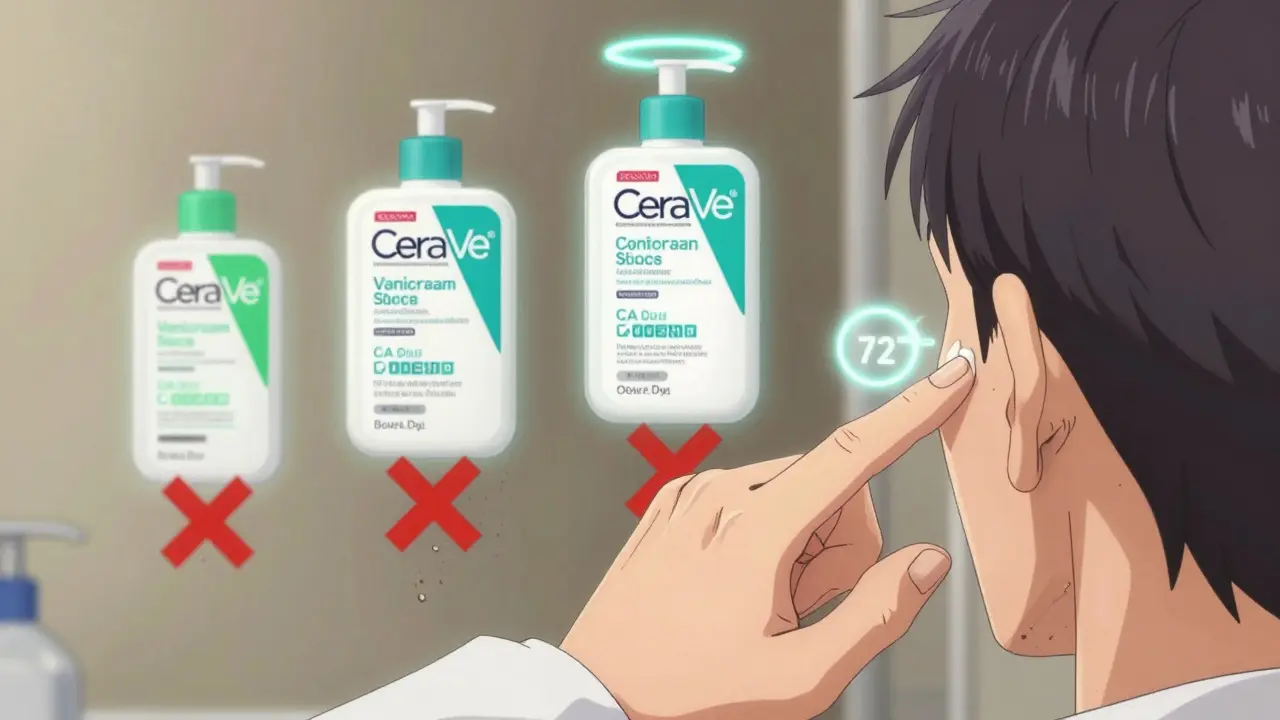
Never apply a new product all over your face on day one. Even if it says “hypoallergenic” or “dermatologist-tested.” Here’s the method most dermatologists use:- Wash and dry the skin behind your ear.
- Apply a pea-sized amount of the product.
- Leave it on for 72 hours. Don’t wash it off.
- Check for redness, itching, swelling, or flaking.
Real Results: What People Actually Experience
People who switch to fragrance-free routines don’t just feel better - their skin changes. On Reddit’s r/SkincareAddiction community, 78% of users with sensitive skin saw major improvement within 4-6 weeks. The top reports:- 83% - Less redness
- 76% - Less reaction to weather or pollution
- 62% - No more tightness after washing
- 47% - Higher hydration levels measured by skin scanners
The Downsides (And How to Deal With Them)
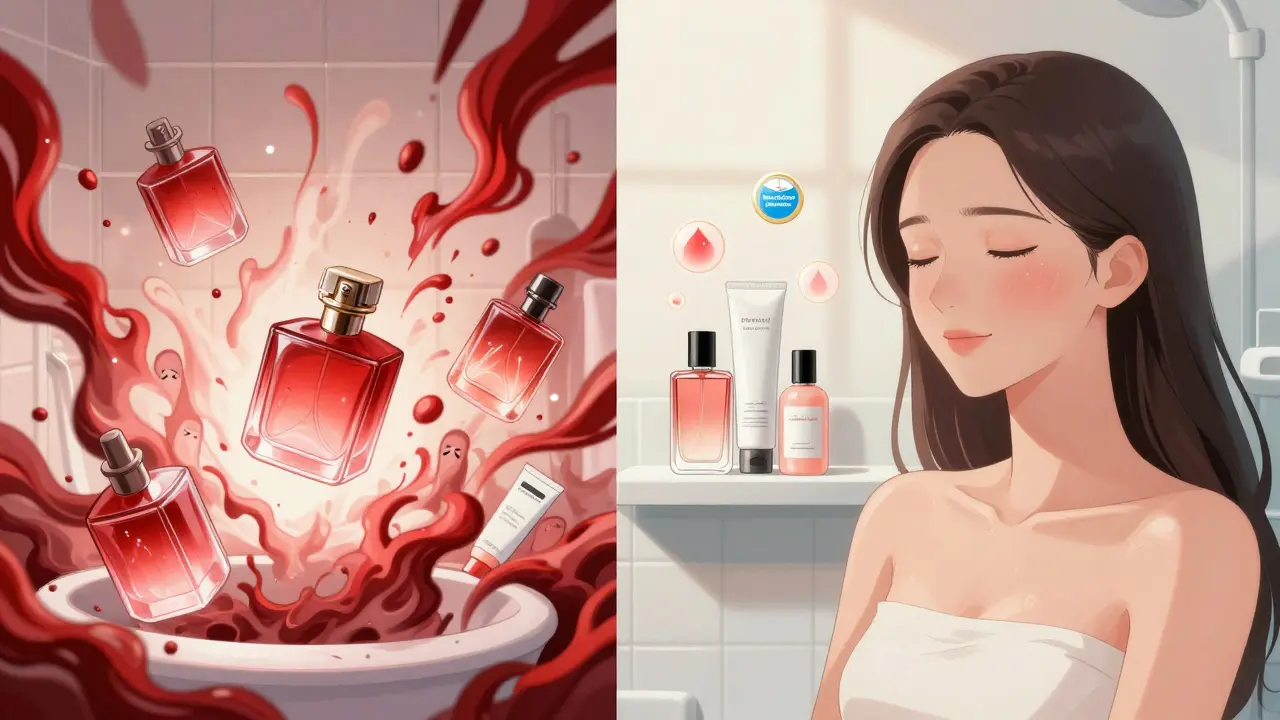
Fragrance-free skincare isn’t perfect. There are trade-offs. First, the smell. Most fragrance-free products smell like… nothing. Or maybe a faint soap or oil scent. That’s normal. But 63% of users in a Skincare.com survey said they found it “bland” or “clinical.” If you miss the sensory experience, try this trick: apply your favorite perfume to your wrists or neck - but never on your face. The “wrist perfume method” works for 68% of users who still want a scent without triggering their skin. Second, cost. Fragrance-free products average $28.50, compared to $22.75 for regular ones. But think of it like buying a good mattress - you’re paying for fewer reactions, less doctor visits, and less time spent managing flare-ups. Third, confusion. Labels lie. “Hypoallergenic” doesn’t mean fragrance-free. “Natural” doesn’t mean safe. That’s why tools like the National Eczema Association’s product verification app (used by over 285,000 people) are so helpful. It filters products tested for zero fragrance and verified by labs.What’s Next for Fragrance-Free Skincare
The market is changing fast. In 2023, the global fragrance-free skincare industry hit $3.8 billion - growing 17% a year, more than triple the overall skincare rate. Dermstore reports searches for fragrance-free products jumped 214% between 2019 and 2023. New regulations are coming. The EU already requires brands to list 26 specific fragrance allergens. In the U.S., the proposed CARES Act and California’s AB 1234 could force full disclosure of every fragrance ingredient - not just “fragrance.” That’s a big deal. Right now, companies can hide dozens of chemicals under one word. Soon, they might not be able to. Brands like Cleure and SVR are already ahead of the curve. Cleure’s clinical trial kits are now used in 1,200 dermatology offices. Their products contain zero parts per million of fragrance - verified by third-party labs. The future isn’t about eliminating scent. It’s about transparency. And for people with sensitive skin, that’s the most comforting thing of all.Final Checklist: Your Fragrance-Free Starter Kit
If you’re starting from scratch, here’s your no-fluff action plan:- Stop using anything with “fragrance,” “parfum,” or “essential oil” in the ingredients.
- Buy one fragrance-free cleanser (CeraVe, Vanicream, or SVR).
- Buy one fragrance-free moisturizer with ceramides and glycerin.
- Use mineral sunscreen with zinc oxide every morning.
- Test each new product behind your ear for 72 hours.
- Wait 4-6 weeks before adding anything else.
- Use the National Eczema Association app to verify products.
Can I use essential oils if they’re natural?
No. Essential oils like lavender, tea tree, and citrus are common triggers for sensitive skin. Even though they’re natural, they contain compounds that can irritate a compromised skin barrier. Studies show 22% of sensitive skin patients react to them. Skip them entirely.
Is fragrance-free the same as hypoallergenic?
No. “Hypoallergenic” is a marketing term with no legal definition. A product can be labeled hypoallergenic and still contain fragrance. Only “fragrance-free” guarantees no added scent ingredients. Always check the ingredient list, not the front label.
How long does it take to see results?
Most people notice less redness and irritation within 2-4 weeks. Full barrier repair takes 6-8 weeks. Be patient. Your skin needs time to heal. Don’t rush by adding new products too soon.
What if my skin feels dry after switching?
That’s normal at first. Fragrance-free products often lack drying alcohols and surfactants, so your skin may feel different. Apply moisturizer to damp skin right after washing. If dryness persists, switch to a richer formula with more ceramides and squalane.
Can I still use makeup?
Yes. Look for mineral-based makeup labeled fragrance-free. Avoid liquid foundations with added scents. Use a fragrance-free primer and remove makeup with a gentle, fragrance-free balm or oil. Always patch test new makeup behind your ear first.
Are fragrance-free products only for people with eczema?
No. While 41% of users have diagnosed conditions like eczema or rosacea, 59% self-identify as having sensitive skin without a formal diagnosis. Anyone who experiences stinging, redness, or tightness after using skincare can benefit from a fragrance-free routine.

Ryan Cheng
December 26, 2025 AT 17:11Just switched to CeraVe and Vanicream after years of burning every time I washed my face. No more redness. No more itching. Just clean, calm skin. Seriously, if you're struggling, skip the fancy stuff. This isn't about luxury-it's about not feeling like your face is on fire.
Also, never trust 'unscented.' I learned that the hard way.
wendy parrales fong
December 28, 2025 AT 01:30I used to think fragrance-free meant boring. Then I realized my skin wasn't the problem-it was everything I was putting on it. Now I don't miss the smell. I miss the constant irritation.
It's weird how something so simple can change your whole relationship with your skin.
Jeanette Jeffrey
December 29, 2025 AT 21:13Oh please. You're all just falling for the 'clean girl aesthetic' marketing. Fragrance-free is just a trend for people who think they're special because they read ingredient lists.
My skin's fine with lavender oil. You're just sensitive because you're overthinking it.
Also, zinc oxide looks like a chalky mess. Why are you all okay with looking like a ghost?
Shreyash Gupta
December 30, 2025 AT 00:42bro i tried fragrance free stuff and my face felt like sandpaper 😅
then i went back to my old lavender cleanser and boom-no drama
maybe its not the fragrance its your skin being weak?? 🤔
Jay Ara
December 31, 2025 AT 09:05been using vanicream for 3 months now and my skin finally feels like skin again
no more waking up looking like i got slapped
the only thing i miss is the smell but honestly i dont even notice anymore
just do the patch test dont skip it
josue robert figueroa salazar
January 1, 2026 AT 14:36fragrance-free is a scam. your skin doesn't need to be 'healed.' it needs to stop being so delicate.
you're not special. just stop crying.
david jackson
January 2, 2026 AT 21:52I spent 14 months testing 47 different products before I found the right combo. I tracked every red spot, every stinging sensation, every single night I woke up with my face on fire. I kept journals. I took photos. I cried. I screamed into pillows. And then-I found CeraVe. And SVR. And the patch test behind my ear. And now? My skin doesn't just survive-it breathes. I didn't know skin could feel this calm. I didn't know I was capable of feeling this peaceful. It's not skincare. It's therapy.
Also, I still use my lavender candle. Just not on my face. 😅
christian ebongue
January 3, 2026 AT 08:02lol i thought 'fragrance-free' meant no smell
turns out it just means no smell you can detect
my 'unscented' moisturizer still smells like regret and chemicals
also why is everything so thick?? like am i moisturizing or applying foundation?
jesse chen
January 4, 2026 AT 04:18I just want to say thank you for this post. Seriously. I've been dealing with this for years, and I didn't know what was wrong. I thought I was just 'bad at skincare.' Turns out, I was just using the wrong stuff. I tried the patch test behind my ear-and it saved me from buying three products that would've ruined my skin. I'm so glad I found this. Thank you.
Also, Vanicream is a miracle. I'm not even joking.
Joanne Smith
January 5, 2026 AT 03:01Oh sweet baby Jesus, the 'natural' section at Whole Foods is a minefield.
I bought a 'gentle' toner labeled 'organic rose water'-my face looked like a tomato that got into a fight with a lawnmower.
Now I read labels like I'm decoding a CIA file. And I'm not even mad. Just… impressed by how sneaky the beauty industry is.
Prasanthi Kontemukkala
January 6, 2026 AT 14:28For anyone feeling overwhelmed-start with just the cleanser and moisturizer. Don't try to fix everything at once.
It took me six months to stop adding 'one more thing.' But when I did? My skin finally stopped screaming.
You don't need 10 steps. You just need to stop hurting yourself.
Alex Ragen
January 7, 2026 AT 14:49It's fascinating, isn't it? The entire skincare industry is built on the illusion of transformation-yet the most profound, clinically validated results come from subtraction. We are not healing our skin with serums; we are allowing it to heal by removing the very things we were told were essential.
And yet, the market persists in selling us more. More complexity. More fragrances. More 'innovation.'
Perhaps the most radical act in modern self-care is doing nothing. And choosing silence over scent.
Lori Anne Franklin
January 9, 2026 AT 07:38so i tried the patch test and it worked!!
my face didnt explode 😭
but now i have to wait 4 weeks before i can try my favorite serum??
im so patient now i could be a monk
Bryan Woods
January 10, 2026 AT 14:33Well-structured and thoroughly referenced. The clinical data presented is compelling, particularly the 78% reduction in reactions with fragrance-free products. The 72-hour patch test protocol aligns with standard dermatological practice. I would only suggest including a brief note on water hardness, as mineral content can also influence sensitivity in conjunction with fragrance exposure. Otherwise, an excellent resource.