
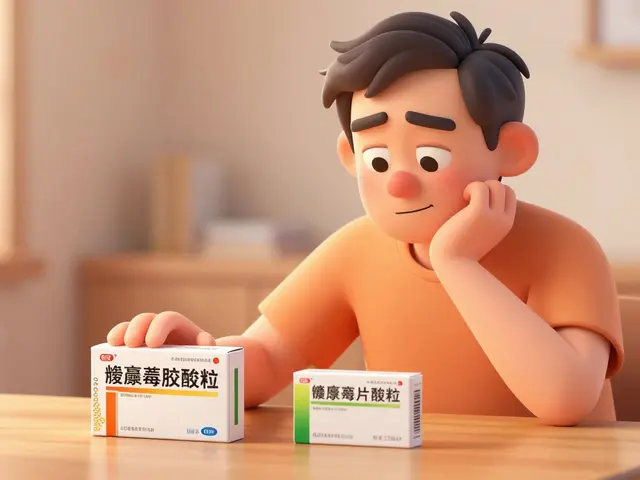
Imagine opening a bottle you've used for years, only to find the pills inside look completely wrong. Maybe your usual blue tablet is now white, or a round pill has become oblong. It happens more often than you think, and it sends a wave of doubt through anyone relying on that medicine. You might wonder if this new pill is safe or if you even received the right medication.
This isn't a manufacturing error. In most cases, your pharmacy simply switched suppliers. But that simple administrative change creates real confusion for patients. When we talk about generic medications, we aren't just talking about cheaper versions of brand drugs. We are discussing complex systems where physical appearance varies widely while internal chemistry remains locked down by strict rules. Understanding this balance helps bridge the gap between medical safety and patient peace of mind.
The Legal Reason Behind Changing Pill Shapes
You might assume the government forces companies to make different-colored pills, but trademark laws are the real driver here. Brand-name drug makers own the copyright to the specific shape and color of their original product. If a generic manufacturer made a pink oval pill exactly like the famous brand version, they could get sued for trade dress infringement. To avoid legal battles, generic companies choose their own designs.
This means that once a patent expires, multiple pharmaceutical companies start competing to produce the same medicine. Each company picks its own packaging and pill design. One maker might prefer green round tablets, while another chooses white capsules. Since pharmacies buy from whichever supplier offers the best price at the moment, the bottle you pick up today might come from Company A, and the bottle next month might come from Company B.
Pharmaceutical Manufacturers operate under these constraints. They must prove their product works, but they have creative freedom regarding the "inactive ingredients"-the fillers and dyes that give the pill its bulk and look. This flexibility is essential for competition, keeping costs low, but it introduces variability that can confuse patients who rely on visual cues to manage their health.
Safety Standards: What Actually Remains the Same
While the exterior changes, the interior must stay consistent. This concept is known as bioequivalence. Before any generic drug hits the market, regulatory bodies like the FDA require proof that the new version delivers the same amount of active ingredient into your bloodstream as the original brand name drug.
If the generic contains less active ingredient, it won't work. If it contains too much, it becomes dangerous. The regulations are tight. Every batch must meet identical standards for strength, purity, quality, and stability. The agency monitors manufacturing practices closely to ensure that a pill labeled 10mg actually delivers 10mg of the therapeutic agent every time.
| Attribute | Brand Name Drug | Generic Drug |
|---|---|---|
| Active Ingredient | Identical | Must match exactly |
| Pill Color | Fixed | Varies by manufacturer |
| Pill Shape | Fixed | Varies by manufacturer |
| Cost | High | 80-85% lower |
| Regulatory Approval | Clinical Trials | Bioequivalence Proof |
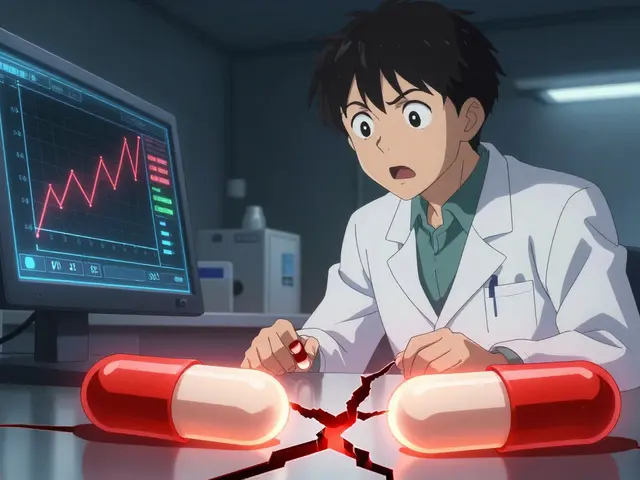
Despite these strict rules, perception matters. Just because a lab says two pills are equivalent doesn't stop your brain from hesitating when the package looks unfamiliar. That hesitation can lead to serious health risks if you decide not to take the dose.

When Appearance Changes Lead to Harm
There is a documented link between visual inconsistency and missed doses. Research cited by UCLA Health highlights a startling statistic: there is a 34% likelihood of patients discontinuing medication after a pill color change. For shape changes, that number jumps to 66%. Imagine nearly two out of three people stopping a life-saving heart medication because the pill turned from round to square.
Patient Adherence drops because people associate the physical look of the medicine with its function. If you trust the orange pill, the white pill feels suspicious. Doctors call this "non-adherence." It happens silently, often without the provider knowing until the patient returns with uncontrolled symptoms.
This issue affects millions. In the United States, generic drugs make up more than 70% of all prescriptions filled. With so many people switching between brands, the opportunity for confusion is massive. Some patients report nine appearance changes over a single decade. Another person might almost stop taking blood pressure meds because the tablet shifted from white to pink, fearing it was a dispensing error. The fear is rational, even if the science says the drug is safe.
Common Medications That Change Looks
Some medicines are notorious for having multiple appearances. Knowing this ahead of time prevents panic. For instance, Sertraline (often known by the brand Zoloft) appears as blue, green, or white tablets depending on who made it. You might think you were sent the wrong antidepressant when you see a shift in hue, but the chemical composition remains the same.
- Metformin: This diabetes staple shows up as round or oblong, and colors range from white to pink.
- Lisinopril: A common blood pressure med that often comes in white, pink, or peach tones.
- Gabapentin: Highly variable; the capsule size and color depend entirely on the supplier.
Even potassium supplements can be tricky. One patient described her standard pill as a flat, neon-orange circle. Later, she received white, capsule-shaped ones instead. Without prior warning, she couldn't be sure she was taking the right supplement. Recognizing that these variations are normal helps build resilience when you open that prescription bottle.

Practical Steps to Manage Confusion
You don't need to be a scientist to verify your meds, but you do need to be proactive. First, keep an updated medication list. Bring this list to every doctor visit. Better yet, bring the actual bottles if possible. This allows your healthcare team to spot discrepancies immediately. Dr. Darrick Lee, a family-medicine physician, suggests reviewing this list together each time you check in.
Use digital tools designed for identification. Websites like Medscape offer online pill identifiers where you can enter the imprint code found on the tablet. If your pill has letters stamped on it, type them into a search engine alongside the dosage. This cross-referencing confirms whether the new looking pill matches your prescription label.
Talk to your pharmacist openly. Don't let embarrassment hold you back. Pharmacists explain these switches frequently. They understand that a change in color doesn't mean a change in potency. According to the American Society of Health-System Pharmacists, most pharmacies now include appearance change notifications with refills to catch these issues before they cause harm.
If you notice a change, flag it immediately. Call your pharmacy or doctor. Ask, "Is this a new manufacturer?" Getting a verbal confirmation restores trust in the regimen. It turns an uncertain experience into a verified one.
Legal and Regulatory Updates
Regulations evolve to address these concerns. The MODERN Labeling Act of 2020 introduced mechanisms to update generic drug labeling when new safety evidence emerges. Furthermore, the Federal Register noticed changes in late 2025 regarding labeling updates based on new safety information. These moves indicate that regulators understand the stakes involved in patient perception.
While some experts argue for greater standardization of generic appearances to boost adherence, changing trademark laws poses a significant hurdle. Until legislation shifts to allow generics to mimic brand appearances exactly, patients must remain vigilant. The responsibility falls partly on consumers to verify, and partly on providers to communicate clearly.
Is it safe if my generic pill looks different?
Yes, it is safe. While the color or shape may differ due to the manufacturer, the FDA requires that generic drugs contain the exact same active ingredients and bioequivalence as the brand-name version.
Why do my pills change color every few months?
Pharmacies switch suppliers based on pricing and availability. Since trademark laws prevent copies of the brand look, different manufacturers produce different designs for the same medicine.
Should I stop taking the medication if it looks strange?
Do not stop abruptly. Contact your pharmacist first to verify the refill. Suddenly stopping can be more dangerous than the appearance change itself.
How can I verify a pill is correct?
Use online pill identifier tools using the imprint code on the tablet, or ask your pharmacist to explain the new appearance before you leave the counter.
Do inactive ingredients affect how well the drug works?
Inactive ingredients like dyes or fillers vary, but they do not change the therapeutic effect. However, allergies to specific dyes exist, so mention any past reactions to your doctor.


Calvin H
March 31, 2026 AT 23:11Corporate lawyers care way more about pill colors than your actual survival rate.
Rick Jackson
April 2, 2026 AT 08:15That is quite cynical but there is a kernel of truth hidden underneath the frustration.
We have to acknowledge that patent structures dictate supply chains heavily though.
Christopher Curcio
April 3, 2026 AT 18:12From a clinical pharmacology perspective the variation in excipients does not alter the area under the curve significantly.
Bioequivalence requirements mandate that Cmax and steady state concentrations remain within eighty percent to one hundred twenty five percent of the reference listed drug.
The inactive fillers such as cellulose or magnesium stearate are simply structural agents designed to maintain tablet integrity.
Visual inconsistency arises because different manufacturers utilize distinct binding agents during the compression phase.
Pharmacist education must focus on explaining that chromatographic profiles match despite the aesthetic divergence.
We observe this frequently when switching suppliers due to supply chain shortages or cost containment initiatives.
Patient anxiety regarding therapeutic efficacy often stems from a lack of understanding regarding dissolution testing protocols.
Carolyn Kask
April 4, 2026 AT 14:05Most of you clearly haven't read the data regarding non-adherence statistics properly.
Sixty six percent of patients drop medication solely due to shape changes which indicates systemic failure in communication.
You cannot simply wave away the psychological impact of a deviating physical form.
The FDA fails to protect the cognitive ease required for chronic therapy maintenance effectively.
We need stricter labeling mandates that explain the switch prior to dispensing.
Debbie Fradin
April 6, 2026 AT 11:29Oh great now we need a government lecture on reading comprehension skills for prescriptions.
But seriously if you talk to your pharmacist they usually explain the variance.
Dont let the panic button press itself just because the plastic bottle looks different this week.
Ruth Wambui
April 7, 2026 AT 17:20Those chromatic shifts are clearly signals from the surveillance state watching us consume their poison.
Why would they change it unless the composition had actually mutated behind closed doors.
I suspect the dye contains microchips for tracking ingestion patterns directly.
Beccy Smart
April 9, 2026 AT 03:45please stop judging based on aesthetics 💊 we are wasting so much energy here 😩 trust the process ✨
Katie Riston
April 10, 2026 AT 14:05We often overlook how our brains perceive truth versus how medicine actually functions.
Many patients feel a visceral connection to the color blue that science cannot quantify.
Psychology plays a larger role in adherence than biochemistry suggests sometimes.
When trust erodes because of visual cues health outcomes inevitably suffer silently.
We must question if regulatory bodies prioritize economics over emotional security enough.
Fear is a powerful mechanism that dictates human behavior more than logic.
If you see a white pill instead of red your heart races faster than necessary.
This reaction is biological and completely understandable even if technically unnecessary.
We live in an era where consumer confidence dictates medical success rates significantly.
Manufacturers should consider psychological safety alongside chemical purity strictly speaking.
Yet trademark laws forbid exact replication which creates unavoidable friction here.
Perhaps new legislation could allow slight variances without full infringement claims.
Until then we must educate ourselves rather than succumb to irrational panic completely.
Understanding the separation between appearance and efficacy saves lives daily.
Angel Ahumada
April 12, 2026 AT 02:47the ontological status of the tablet remains irrelevant to the jurisprudential nightmare of trade dress
you seem to grasp the metaphysical burden imposed by intellectual property regimes correctly
sanatan kaushik
April 13, 2026 AT 00:22In India we change pills all the time and nobody dies from it.
You just need to ask the chemist what is inside.
Vikash Ranjan
April 13, 2026 AT 09:40Actually most people would be better off switching brands entirely to get consistent dosages from a single maker.
RONALD FOWLER
April 13, 2026 AT 19:38people get scared easily just tell them its safe they need reassurance mostly
we forget everyone wants to stay healthy
William Rhodes
April 14, 2026 AT 04:31Stop worrying and fight for your health do not let fear dictate your biology.
We must push through the noise and stay compliant.