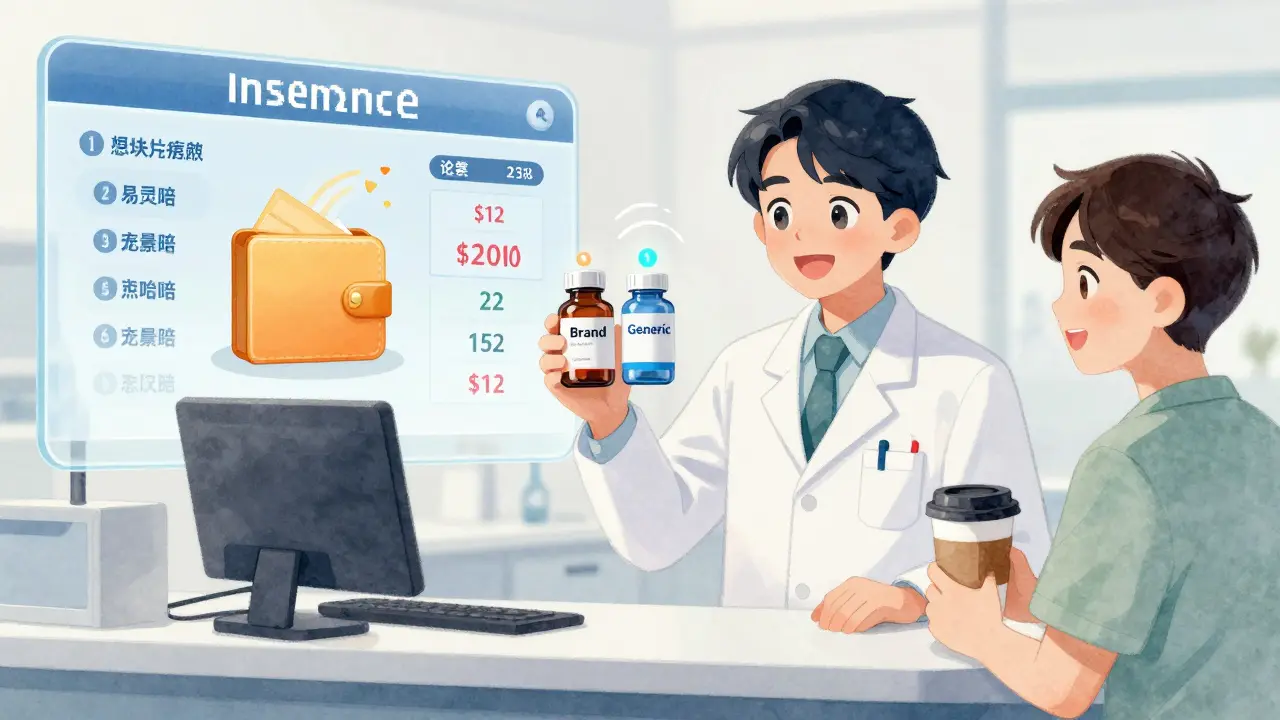
Every time you fill a prescription, your insurance company is already deciding which drug you’ll get - even before your doctor writes the script. It’s not about preference. It’s about cost. And the system behind that decision is called a preferred generic list - a hidden but powerful tool that shapes what medications you can access, how much you pay, and sometimes even whether you get the right treatment at all.
These lists aren’t random. They’re carefully built by teams of doctors and pharmacists hired by Pharmacy Benefit Managers (PBMs), the middlemen between insurers, drug makers, and pharmacies. Their job? Cut costs without sacrificing safety. And they do it by grouping drugs into tiers. Tier 1 is where the magic happens: preferred generics. These are FDA-approved copies of brand-name drugs that work the same way but cost 80% to 85% less. In 2023, 90% of all prescriptions filled in the U.S. were for generics - yet they made up only 23% of total drug spending. That’s the power of this system.
How Tiered Formularies Work
Most insurance plans use a tiered system with three to five levels. Each tier has a different price tag for you - the patient. Tier 1 is reserved for preferred generics. You’re looking at $5 to $15 for a 30-day supply. That’s cheaper than a coffee. Tier 2 includes preferred brand-name drugs and some higher-cost generics. Copays here? Usually $25 to $50. Tier 3 is for non-preferred brands - think of them as the expensive options. You’ll pay $50 to $100. And Tier 4? That’s where specialty drugs live: biologics, cancer treatments, rare disease meds. Coinsurance kicks in here - you might pay 30% or more of the list price, which can easily run into hundreds or even thousands per month.
The real trick? Even when a brand-name drug and its generic are on the same tier, the brand still costs more. A 2021 study found that on average, brand-name drugs in the same tier cost $349, while generics were $197. But because most plans use flat copays (not percentage-based fees), you might not notice the difference - until you switch plans and suddenly your $15 copay jumps to $80.
Why Insurers Push Generics
It’s simple math. The FDA says generics must be bioequivalent - meaning they deliver the same amount of active ingredient into your bloodstream within 80% to 125% of the brand’s rate. That’s not a guess. It’s a strict, tested standard. And in 98.5% of cases, they work just as well. So why pay $200 for a brand when you can get the same pill for $12?
Insurers don’t just hope you’ll choose the cheaper option - they make it easy. Lower copays. Fewer prior authorizations. And sometimes, they outright refuse to cover the brand unless you’ve tried the generic first. That’s called step therapy. It’s legal. It’s common. And according to the American Medical Association, 42% of doctors report delays in treatment because of it - especially for chronic pain, diabetes, or high blood pressure.
For insurers, this isn’t just about saving money. It’s about controlling spending. In 2023, PBMs processed 5.8 billion prescriptions. Of those, 89% were generics. That’s billions of dollars saved. And those savings help keep monthly premiums lower for everyone.
The Hidden Catch: Biosimilars and Co-Pay Cards
Not all generics are created equal. When it comes to biologics - complex drugs like Humira, Enbrel, or Stelara - things get messy. These aren’t simple chemical copies. They’re biosimilars: similar, but not identical. And while they cost less, insurers are pushing them hard. The problem? Brand-name manufacturers offer co-pay cards that cut your out-of-pocket costs to $0. Biosimilar makers? They don’t. And most insurance plans don’t let you stack those discounts.
One Reddit user in February 2024 shared they paid $1,200 a month for Humira - and $850 for the biosimilar Amjevita. Sounds better? Not if your old plan had a $300 co-pay card that disappeared when you switched. Suddenly, your $850 drug costs you $850. No help. No discount. And that’s why 44% of patients on biologics report trouble switching to preferred biosimilars.
Worse, some insurers now use “accumulator adjuster” programs. These let them count your manufacturer discount toward your drug costs - but not toward your annual out-of-pocket maximum. So you’re paying less now, but it doesn’t help you reach your cap. You stay stuck in high coinsurance longer. It’s legal. It’s growing. And it’s confusing.
What You Can Do
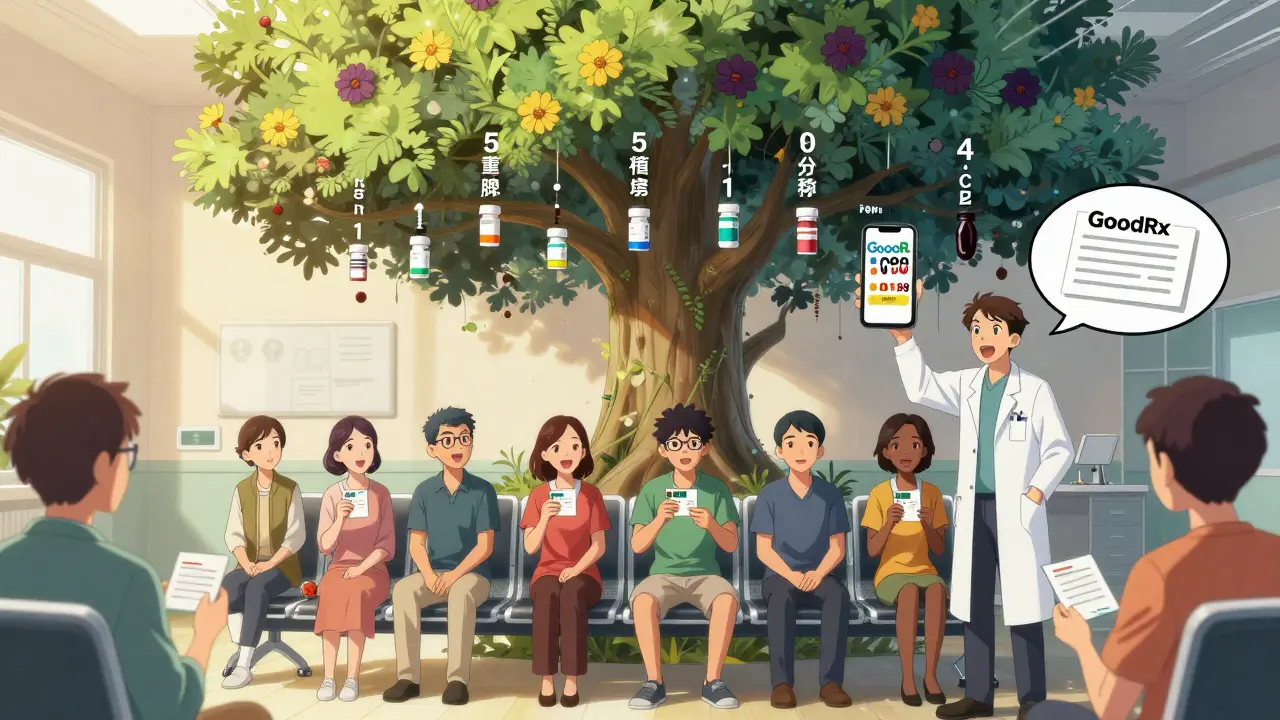
You’re not powerless. The first step? Know your formulary. Every year during open enrollment, your insurer sends a drug list. Open it. Search your meds. See which tier they’re on. If your drug’s on Tier 3, ask your pharmacist: “Is there a preferred generic?” In 89% of states, pharmacists can switch you to a generic unless your doctor writes “dispense as written.” Most patients don’t know that.
Use GoodRx or SingleCare. They often show cash prices lower than your insurance copay. If your drug costs $40 with insurance but $25 cash, pay cash. No need to involve your plan.
Appeal denials. If your doctor says you need the brand, file a prior authorization appeal. The Kaiser Family Foundation found 68% of these appeals succeed - if you have medical documentation. Don’t give up after one no.
Track your spending. If you’re on a biologic and your co-pay suddenly jumped from $10 to $300, check if your manufacturer’s card was discontinued. Ask your pharmacy. Ask your insurer. Ask your doctor. You might be able to switch to a different plan or drug.
The Bigger Picture
By 2025, Medicare Part D will cap out-of-pocket drug costs at $2,000 a year. That’s going to push even more people toward generics. And starting in 2025, Medicare will require biosimilars to be placed in the same tier as the brand-name drugs they copy. That’s huge. It means insurers can’t hide them on higher tiers anymore.
But the system isn’t perfect. A 2023 Harvard study found that while generic substitution saves the system $1.68 trillion a year, 1.2% of cases lead to bad outcomes - like unstable thyroid levels or seizures from switching warfarin brands. That’s why some doctors still resist. And why 23% of physicians avoid substituting generics for narrow-therapeutic-index drugs like blood thinners or epilepsy meds.
Insurers aren’t evil. They’re playing a game designed by lawmakers, PBMs, and drug companies. Their job is to keep premiums low. Your job? To understand the rules so you don’t get caught off guard.
What’s Next?
The future of formularies isn’t just about price. It’s about outcomes. UnitedHealthcare already started testing “value-based formularies” - where a drug’s tier depends on real-world data: Did it lower HbA1c? Did it reduce hospital visits? If yes, it moves up. If not, it gets kicked out. This shift could make formularies smarter - but also more complex.
For now, the rule stays simple: If there’s a generic, you’ll be pushed toward it. And if you want to stay in control, you need to know your plan, your meds, and your rights.
Why do insurers put generic drugs in Tier 1?
Insurers put generics in Tier 1 because they’re therapeutically equivalent to brand-name drugs but cost 80%-85% less. This lowers overall drug spending and keeps insurance premiums stable. Tier 1 also has the lowest copay - usually $5-$15 - making it the most affordable option for patients.
Can my pharmacist switch my brand-name drug to a generic without my doctor’s permission?
Yes, in 89% of U.S. states, pharmacists can substitute a generic for a brand-name drug unless the prescription specifically says “dispense as written.” Even if your doctor didn’t mention it, your pharmacist is legally allowed to make the switch - and often will, because it saves money for you and your insurer.
Why is my biosimilar more expensive than the brand-name drug even though it costs less?
Some biosimilars have lower list prices, but if your brand-name drug came with a co-pay card that cuts your cost to $0, switching to a biosimilar without that discount can leave you paying the full copay. Also, some insurers use “accumulator adjuster” programs that don’t count manufacturer discounts toward your out-of-pocket maximum, so you stay stuck in higher cost tiers longer.
How can I find out which tier my drug is on?
Check your insurer’s formulary list, usually available online during open enrollment or by calling customer service. You can also ask your pharmacist - they have access to the same formulary data. Tools like GoodRx or Medicare’s Plan Finder can also help compare tiers across plans.
What should I do if my insurance denies coverage for my prescribed drug?
Request a prior authorization appeal. Your doctor needs to submit documentation showing why the preferred generic won’t work for you - for example, past side effects, lack of effectiveness, or a narrow therapeutic index. The Kaiser Family Foundation reports 68% of these appeals succeed when supported by strong medical evidence.
Do all insurance plans use the same preferred generic lists?
No. Each insurer - and even each plan within an insurer - creates its own formulary. Medicare Part D plans must follow federal rules, but commercial plans vary widely. A drug on Tier 1 in one plan might be Tier 3 in another. Always check your specific plan’s list before choosing or switching.



Gwen Vincent
February 23, 2026 AT 17:07I never realized how much my pharmacy was quietly switching my meds until I got a bill for $120 instead of $15. Turned out my insurer changed formularies and my old generic got bumped to Tier 3. No warning. No email. Just a surprise at pickup. I called my doctor, they wrote ‘dispense as written,’ and now I’m stuck paying more-but at least I know the system’s rigged. I wish more people talked about this.
Nandini Wagh
February 24, 2026 AT 11:28So let me get this straight: the system is designed to save money… but only if you’re willing to be a lab rat for pharmaceutical middlemen? 😒
Holley T
February 26, 2026 AT 10:37Look, I get that generics save money-but let’s not pretend they’re all created equal. I had a friend who went from brand-name lamotrigine to generic and started having seizures. Not a joke. Not an outlier. The FDA’s 80-125% bioequivalence window? That’s a gap wide enough to drive a truck through. And now insurers are forcing people into biosimilars that aren’t even chemically identical? That’s not cost-cutting. That’s medical roulette. And don’t even get me started on accumulator adjusters-those are pure corporate greed dressed up as ‘efficiency.’ The system doesn’t care if you get better. It cares if you stop complaining.
Ashley Johnson
February 26, 2026 AT 16:03THEY'RE LYING TO US. PBMs are owned by big pharma. They make the formularies. They profit off the gap between what you pay and what the drug costs. It's a pyramid scheme. Your 'cheap' generic? The PBM gets a kickback from the manufacturer to push it. Your brand-name drug? They charge the insurer more so they can pay themselves more. It's all connected. And they don't want you to know. That's why they bury it in fine print. Wake up. This isn't healthcare. It's a casino.
Nerina Devi
February 27, 2026 AT 13:47My mother in India has been on insulin for 15 years. She pays $3 a vial. Here in the U.S., the same insulin costs $100 without insurance. I cried reading this. It’s not about efficiency. It’s about who gets to live. We need to fix this-not just for Americans, but for everyone.
Dinesh Dawn
March 1, 2026 AT 03:15Interesting read. I never thought about how co-pay cards create this weird imbalance-like, the brand gets a free ride while the biosimilar gets stuck with all the costs. Feels like the system rewards marketing over medicine.
Vanessa Drummond
March 1, 2026 AT 20:30My insurance just dropped my asthma inhaler from Tier 1 to Tier 3 and said ‘you can switch to the generic.’ But the generic makes me dizzy. I went to the ER last week because I couldn’t breathe. Now they’re telling me to ‘appeal.’ Like I have time to play paperwork bingo while I’m gasping for air. This system is cruel. And they wonder why people skip meds?
Nick Hamby
March 2, 2026 AT 15:51It is worth contemplating whether the current formulary structure, while economically rational, may inadvertently undermine the ethical imperative of patient autonomy. When cost containment becomes the primary driver of therapeutic decisions, we risk conflating affordability with appropriateness. The physician-patient relationship, once grounded in trust, now navigates the labyrinth of tiered formularies, prior authorizations, and hidden financial incentives. One must ask: Are we healing, or merely optimizing balance sheets?
kirti juneja
March 3, 2026 AT 20:28Y’all be trippin’. I’m from Delhi, and we’ve been using generics for decades. My uncle takes a $2 blood pressure pill that’s been around since the 90s-he’s still alive, still gardening, still yelling at his grandkids. The U.S. is so obsessed with branding, you forget pills aren’t sneakers. A pill is a pill. If it’s FDA-approved, it’s got your back. Stop overthinking it. Save your cash. Buy a coffee instead.
Christopher Wiedenhaupt
March 5, 2026 AT 00:52Thanks for sharing this. I had no idea pharmacists could switch meds without doctor approval. That’s wild. I’ll definitely check my formulary next open enrollment. Maybe I can save a few bucks.
Shalini Gautam
March 6, 2026 AT 21:06Why are we letting American corporations dictate health care? In India, we have universal access to generics. No tiered nonsense. No co-pay cards. No accumulator traps. This whole system is a capitalist scam. We need a public option. Now.
Natanya Green
March 7, 2026 AT 11:45OMG, I JUST REALIZED!! My co-pay went from $0 to $300 last month!! I thought I was going crazy!! I’ve been paying out of pocket and didn’t even know my co-pay card got cut off!! This is a nightmare!! I need to call my doctor, my insurer, my pharmacist, my cat-wait, no, my cat doesn’t care!! But I do!! I’m so mad!!