
Pharmacist ROI Calculator
Based on the article's data: Pharmacists reduce errors by 78% and every dollar invested returns $6.03 in savings. Enter your current data to see potential ROI.
Estimated Savings
Current Annual Error Cost
$0
Projected Savings
$0
ROI Calculation: For every $1 invested in pharmacists, you could save $6.03 (based on article data from Walter Reed Medical Center)
Medication errors don’t just hurt patients-they cost the U.S. healthcare system over $20 billion every year. At the same time, drug prices keep climbing, with annual increases hitting 10.2%. Hospitals and clinics can’t afford to cut corners, but they also can’t ignore the financial pressure. The good news? You don’t have to choose between saving money and keeping patients safe. In fact, the most effective cost-saving moves are the ones that make medication use safer.
Pharmacist-Led Care Saves Money and Lives
One of the biggest myths in healthcare is that saving money means cutting staff. The opposite is often true. Hospitals that put clinical pharmacists directly on care teams see dramatic results. At Walter Reed Army Medical Center, every dollar spent on pharmacist-led medication reviews returned $6.03 in savings. That’s not a guess-it’s a published study based on over 3,000 patients.
How? Pharmacists don’t just check prescriptions. They catch wrong doses, spot dangerous drug interactions, and prevent unnecessary hospital readmissions. One program for heart failure patients in a 390-bed hospital saved $5,652 per patient by having pharmacists review meds daily. Another study of 830 high-risk patients showed $2,139 less in total healthcare costs per person just 180 days after discharge. That’s nearly $1.8 million saved for one managed care plan.
These aren’t isolated wins. Hospitals with pharmacists on rounds report 78% fewer medication errors, and 65% of nurses say they stop doing dangerous workarounds when pharmacists are present. The key? Pharmacists aren’t just checking boxes-they’re part of the daily conversation about each patient’s care.
Generic Drugs Are Safe-When Used Right
Eighty-two percent of patients already use generic medications to save money. But here’s the catch: not all generics are created equal. The FDA says they’re bioequivalent to brand-name drugs, meaning they work the same way. But in drugs with a narrow therapeutic index-like warfarin, lithium, or phenytoin-even tiny differences can cause serious problems.
That’s why switching patients back and forth between different generic brands isn’t a cost-saving tactic-it’s a risk. The best approach? Stick with one generic manufacturer for each patient, especially for critical meds. If a switch is needed, monitor closely. A 2021 study in the New England Journal of Medicine showed early generic substitution programs led to therapeutic failures in some patients because of small variations in absorption. The fix? Don’t just swap drugs-track outcomes.
For most patients, generics are the smart choice. But for those on high-risk meds, consistency matters more than price. Pharmacists can help pick the right generic and ensure the switch doesn’t backfire.
Standardized Communication Stops Errors Before They Start
Most medication errors happen during handoffs-when a patient moves from the ER to a floor, or from hospital to home. One simple tool cuts these errors in half: SBAR.
SBAR stands for Situation, Background, Assessment, Recommendation. It’s a script nurses and pharmacists use to communicate clearly. Instead of saying, “Hey, this guy’s on a lot of meds,” they say: “The patient (Situation) is a 72-year-old with heart failure (Background). His creatinine rose this morning (Assessment). I recommend holding his lisinopril until we check his electrolytes (Recommendation).”
One large hospital system cut adverse events by 50% using SBAR. The cost? Training time. No new software. No extra staff. Just better communication. And it works because it forces people to slow down and say exactly what they mean.
Ready-to-Administer Meds Reduce Waste and Risk
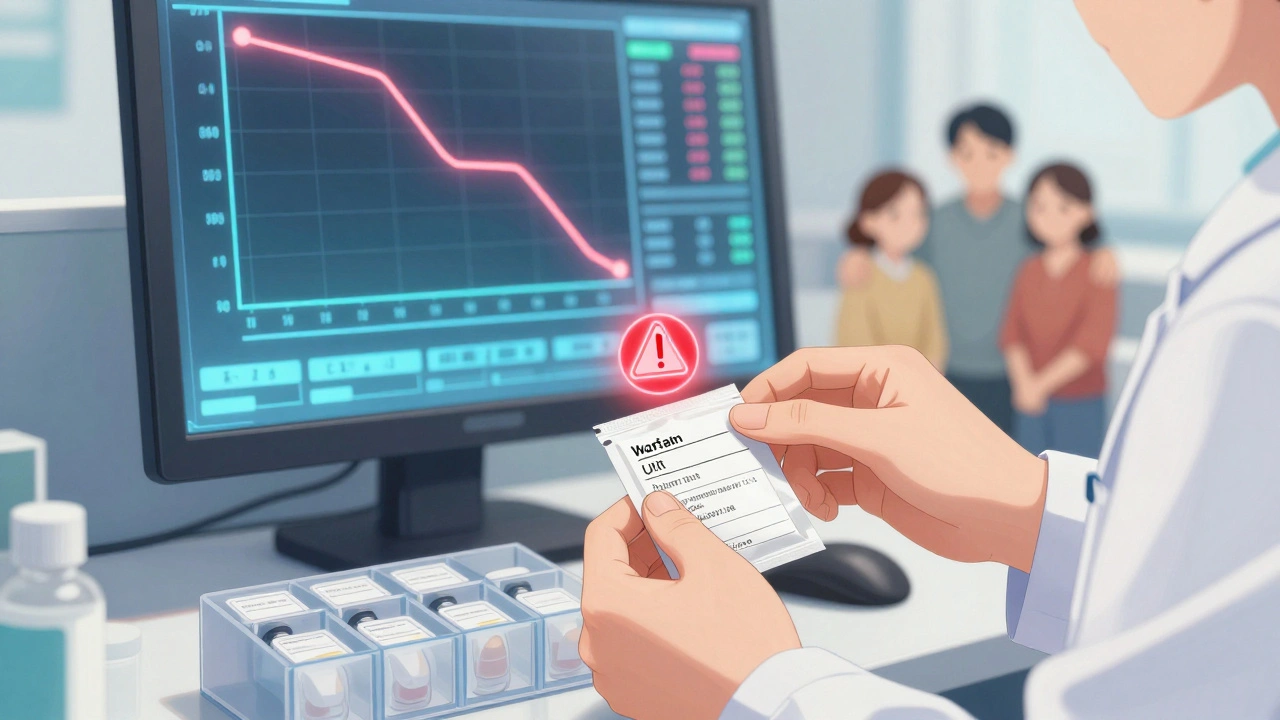
Think about how meds are prepared in a busy hospital. A nurse pulls vials, draws up doses, labels them, checks them twice, and then gives them. Every step is a chance for error. Ready-to-Administer (RTA) products change that. These are pre-filled syringes or unit-dose packs prepared by the pharmacy, labeled and ready to hand off.
RTA cuts preparation time by 30% and reduces dosing errors by up to 40%. It’s especially helpful during staffing shortages. But here’s the hurdle: RTA products cost 15-20% more upfront. Some administrators balk. But when you factor in the cost of a single medication error-extended hospital stay, litigation, lost trust-the math flips. One hospital saved $1.2 million in three months after switching to RTA, not because they spent less on meds, but because they stopped paying for mistakes.
Antimicrobial Stewardship Isn’t Just for Infections
Antibiotics are one of the biggest drivers of hospital drug costs-and one of the most misused. Aultman Hospital saved $2 million in a year by tightening how antibiotics are prescribed. How? They stopped automatic IV orders. They switched patients to oral antibiotics as soon as they could. They stopped giving antibiotics when they weren’t needed.
This isn’t just about saving money. It’s about stopping resistance. But even if you don’t care about superbugs, the financial case is clear. Every day you avoid an unnecessary IV antibiotic saves on drug cost, nursing time, and potential complications like C. diff infections. And those infections? They add $15,000-$30,000 to a patient’s bill.
What Doesn’t Work: Cutting Staff or Skipping Safety Steps
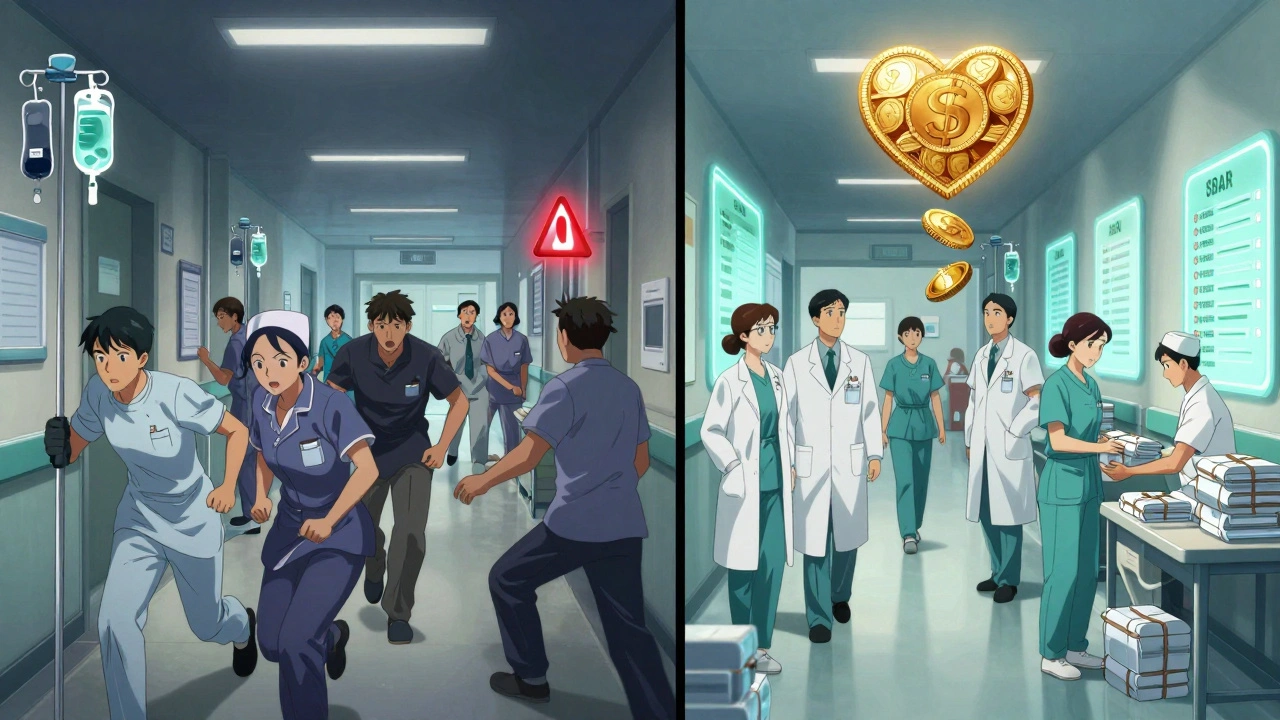
Not all cost-cutting is smart. One hospital director on LinkedIn shared a painful lesson: they cut pharmacy technician positions to save $300,000 a year. Three months later, medication errors jumped 22%. The cost? $1.2 million in extended stays and lawsuits.
Another mistake? Relying only on technology. Electronic prescribing cuts errors by 55%, and barcode scanning cuts administration errors by 41%. But tech can’t catch the wrong drug choice, the missed allergy, or the patient who’s taking six meds that interact. That’s where pharmacists come in. The top-performing hospitals-those with the best safety scores-have pharmacists on every unit. Technology helps. People save lives.
How to Start Making Changes
You don’t need a $10 million budget to start saving money safely. Here’s how to begin:
- Find your biggest risk area. Is it discharge? Is it antibiotic use? Is it high-risk meds like insulin or anticoagulants? Pick one.
- Bring in a pharmacist. Even one part-time clinical pharmacist can make a difference. Look for someone with Board Certification in Pharmacotherapy (BCPS)-those teams see 32% better outcomes.
- Implement SBAR. Train nurses, doctors, and pharmacists. Use it in handoffs. Make it part of the culture.
- Switch to generics where safe. Audit your top 10 most expensive meds. Can they be replaced with a stable generic?
- Track your results. Measure medication errors, readmission rates, and drug spending before and after. You’ll see the savings fast.
It takes 6-12 months to fully roll out these changes. But the payoff is real. Hospitals that do this see 18.7% higher patient satisfaction and 15-20% lower pharmaceutical costs per admission by 2025.
What’s Next?
The federal government is betting big on this. The CMS Innovation Center just allocated $500 million to test pharmacist-led programs. The FDA is fast-tracking new safety tech. And by 2027, 75% of health systems are expected to have pharmacists embedded in care teams.
This isn’t a trend. It’s the new standard. The hospitals that survive the next five years won’t be the ones that cut the most. They’ll be the ones that saved smart-by putting safety first, and letting the savings follow.
Can using generic drugs really be safe?
Yes, for most medications. The FDA requires generics to work the same way as brand-name drugs. But for drugs with a narrow therapeutic index-like warfarin, lithium, or thyroid meds-switching between different generic brands can cause problems. The safest approach is to stick with one generic manufacturer for each patient and monitor closely if a switch is necessary.
Do electronic prescribing systems eliminate medication errors?
They reduce errors by about 55%, but they don’t fix everything. E-prescribing stops wrong doses and duplicate orders, but it can’t catch a drug that’s inappropriate for the patient’s kidney function, or a hidden interaction with an herbal supplement. That’s why clinical pharmacists are still essential-they provide the judgment that software can’t.
Why are pharmacists so important in cost-saving efforts?
Pharmacists don’t just fill prescriptions-they prevent costly mistakes. They catch errors before they happen, reduce readmissions, and ensure patients get the right meds at the right dose. Studies show pharmacist-led programs return $6 for every $1 spent. That’s the highest return on investment of any patient safety intervention.
Is it cheaper to cut pharmacy staff to save money?
No. Cutting pharmacy technicians or pharmacists might save money short-term, but it leads to more errors. One hospital cut tech positions and saw a 22% spike in medication errors within three months-costing $1.2 million in extra stays and legal fees. Safety isn’t a cost center-it’s a revenue protector.
What’s the fastest way to start saving money on meds?
Start with your top five most expensive medications. Ask your pharmacy team: Can any be switched to a generic? Are they being used appropriately? Are there alternatives that cost less but work just as well? Even small changes here can add up fast. Then add SBAR communication to reduce errors during patient handoffs. These two steps alone can cut costs and improve safety within months.

Louis Llaine
December 8, 2025 AT 03:12Wow, another ‘pharmacists save money’ fairy tale. Tell me, when did the hospital admin start caring about patient safety instead of their quarterly bonuses? 😴
Jane Quitain
December 9, 2025 AT 19:18Yessss this is so important!! 🙌 I’ve seen pharmacists turn chaos into calm-like magic but with more paperwork and less glitter. Let’s fund them like heroes!! 💖
Ernie Blevins
December 10, 2025 AT 05:08Pharmacists cost money. Errors cost more. Duh. But who’s gonna pay for them? Not the nurses. Not the patients. Definitely not the CEO who just bought a yacht.
Kurt Russell
December 12, 2025 AT 04:47THIS. IS. THE. FUTURE. 🚀 Imagine a world where every hospital has a pharmacist on every floor-not just as a checker, but as a teammate. They catch errors before they happen. They save lives. They save MILLIONS. This isn’t theory-it’s happening RIGHT NOW. Let’s stop pretending we can’t afford it. We can’t afford NOT to.
Stacy here
December 12, 2025 AT 14:29They’re not telling you the whole story. The FDA? Controlled by Big Pharma. Generics? They’re all the same-except when they’re not. And why? Because they’re testing on poor people in third-world labs. You think your lithium is safe? Think again. The real cost is your soul. 💀
Wesley Phillips
December 12, 2025 AT 18:20SBAR? Cute. I’ve worked in three Tier-1 hospitals and none of them used it. The real solution is hiring MDs with PhDs in pharmacology and eliminating RNs from med administration. You can’t trust nurses with a syringe. Just saying.
Olivia Hand
December 14, 2025 AT 10:15What’s the actual failure rate of RTA products compared to manual prep? I’m not against it-but if the 15-20% markup is masking a hidden flaw in supply chain logistics, we’re just trading one risk for another. Data? Please.
Desmond Khoo
December 14, 2025 AT 11:54Pharmacists on rounds = game changer 🤝💯 I saw a guy in ICU go from ‘probably dying’ to ‘going home Friday’ because his med list got cleaned up. No tech, no hype-just a pharmacist who asked ‘why is he on this?’
Kyle Oksten
December 16, 2025 AT 02:07There’s a deeper issue here: we treat medication safety like a budget line item, not a moral imperative. Saving money by cutting staff isn’t economics-it’s ethics failure. The real ROI isn’t in dollars-it’s in dignity.
Sam Mathew Cheriyan
December 17, 2025 AT 06:41Generics are a scam. The FDA is paid by pharma. Look up the 2018 scandal in Bangalore. Your warfarin is laced with cheap filler. They want you dependent. Stay vigilant. #PharmaControl
Nancy Carlsen
December 18, 2025 AT 09:23For anyone new to this: start small. Talk to your pharmacy team. Ask if they can help with one high-risk med. You’d be amazed how one conversation changes everything. 🌱❤️
Ted Rosenwasser
December 18, 2025 AT 18:28Let’s be real-SBAR is just corporate jargon dressed up as ‘best practice.’ Real efficiency comes from automation, not nurses reading scripts. If you’re not using AI-driven clinical decision support, you’re wasting time.
Helen Maples
December 20, 2025 AT 16:46Stop romanticizing pharmacists. They’re not heroes-they’re overworked professionals doing their job. What we need is systemic change: mandatory staffing ratios, not feel-good anecdotes. This post reads like a marketing brochure for APhA.
Ashley Farmer
December 22, 2025 AT 13:15My aunt was almost given the wrong insulin dose because the label was smudged. That’s why RTA matters. Not because it’s trendy-it’s because someone’s life depends on that label being clear. Thank you for saying this.
Louis Llaine
December 23, 2025 AT 14:44Oh look, the author finally showed up. So what’s your bonus if your hospital hits ‘15% lower pharmaceutical costs’? Just wondering.