
Imagine carrying a seed in your garden that stays dormant for years, never sprouting, until a change in the weather suddenly makes it grow. That is exactly how Tuberculosis works in the human body. Most people think of TB as a sudden, violent cough, but for millions, it's a silent passenger that can sleep for decades before waking up. The real danger isn't just the disease itself, but the confusion between having the bacteria in your system and actually being sick with the disease.
The Silent Passenger: What is Latent TB?
When you breathe in the bacteria Mycobacterium tuberculosis is the bacterial agent that causes tuberculosis, characterized by its waxy coating that protects it from the host's immune system, your body doesn't always lose the fight. In many cases, your immune system manages to wall off the bacteria into tiny capsules called granulomas. This is Latent TB Infection (LTBI). In this state, you aren't sick, you have no symptoms, and most importantly, you cannot spread the bacteria to your family or coworkers.
For most people with latent TB, the bacteria stay dormant. However, it's a delicate balance. Think of it as a stalemate; your immune system is strong enough to keep the bacteria trapped, but not strong enough to kill them all. About 10% of people with latent TB will eventually develop active disease, but this risk skyrockets if your immune system takes a hit-such as through untreated HIV or certain chemotherapy drugs.
When the Balance Breaks: Active TB Disease
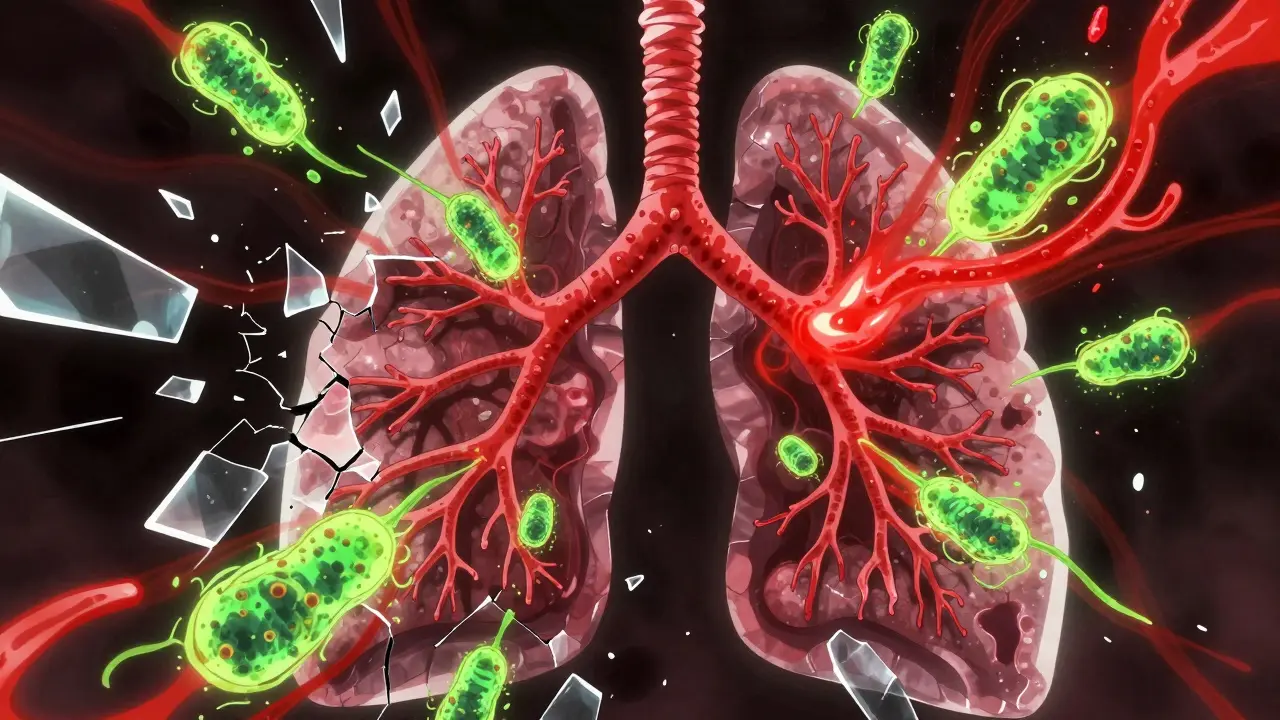
Active TB happens when those dormant bacteria break through the immune wall and start multiplying rapidly. This isn't just a respiratory issue; the bacteria begin destroying lung tissue and can even travel through the bloodstream to your kidneys, spine, or brain. Unlike the latent stage, Active TB Disease is contagious. If you have pulmonary TB, every time you cough or sneeze, you're releasing microscopic droplets containing live bacteria into the air.
The symptoms usually creep up on you. It starts with a cough that doesn't go away-usually lasting more than three weeks. Then come the "B symptoms": drenching night sweats that require you to change your pajamas, unexplained weight loss that makes your clothes hang loose, and a persistent low-grade fever. In advanced stages, you might experience hemoptysis, which is the medical term for coughing up blood. If you feel like you've got a permanent flu that refuses to budge, it's time to see a doctor.
Spotting the Difference: Diagnosis and Tests
You can't tell the difference between latent and active TB just by looking at a person. Doctors use a combination of immunologic tests and imaging to figure out where you stand. A Tuberculin Skin Test (TST) or an Interferon-Gamma Release Assay (IGRA) can tell a doctor if your immune system recognizes the TB bacteria. However, these tests only say "yes, the bacteria are here"; they don't say if the bacteria are active.
To distinguish the two, doctors look at the "Big Three": symptoms, a chest X-ray, and sputum samples. In latent TB, the X-ray is typically normal, and you feel fine. In active TB, the X-ray often shows cavities or infiltrates in the lungs, and a sputum culture-where you cough up mucus into a cup-will actually grow the bacteria or show a positive result on a Nucleic Acid Amplification Test (NAAT), which identifies the bacterial DNA quickly.
| Feature | Latent TB Infection | Active TB Disease |
|---|---|---|
| Symptoms | None | Cough, fever, night sweats, weight loss |
| Contagious? | No | Yes (if pulmonary) |
| Chest X-Ray | Usually Normal | Usually Abnormal |
| Sputum Test | Negative | Positive |
| Treatment Goal | Prevent progression | Cure disease & stop spread |

The Long Haul: Drug Therapy and Treatment
Treating TB isn't as simple as taking a week of antibiotics for a sinus infection. Because Mycobacterium tuberculosis has a thick, waxy wall, it's incredibly stubborn. If you stop taking your meds too early, the bacteria don't just come back-they come back as Multidrug-Resistant TB (MDR-TB), which is much harder to kill.
For latent TB, the goal is "preventative therapy." You might take a single drug like Isoniazid for nine months, or a shorter combination of Isoniazid and Rifapentine for three months. It's a slog, but it's the only way to ensure the bacteria never wake up.
Active TB requires a heavy-hitting approach. The standard "first-line" treatment is a four-drug cocktail: Isoniazid, Rifampin, Pyrazinamide, and Ethambutol. You take all four for the first two months to knock the bacterial load down, then drop to two drugs (usually Isoniazid and Rifampin) for another four to seven months. Because these drugs can be tough on the liver, doctors monitor your liver function tests regularly throughout the process.
To make sure patients don't miss doses, health departments often use Directly Observed Therapy (DOT). This is where a healthcare worker literally watches you swallow your medication. It sounds intense, but it's the most effective way to prevent the rise of drug-resistant strains that could threaten public health.
Who is Most at Risk?
TB doesn't hit everyone with the same intensity. While anyone can get it, certain groups face a much higher risk of the latent-to-active shift. People living with HIV are the most vulnerable because their T-cells-the soldiers of the immune system-are depleted, leaving the "walls" of the granulomas to crumble. Additionally, people with diabetes, severe kidney disease, or those taking immunosuppressant drugs for organ transplants are at higher risk.
Geography also plays a role. While TB rates in places like the US or Australia have hit historic lows, it remains a top-ten cause of death globally. People who have spent significant time in high-burden countries are often screened upon arrival because they are more likely to be carrying the latent "seed" that could sprout years later.
Can I get TB if I've already had it?
Yes. This is called reinfection. Even if you were cured of active TB in the past, you can breathe in new bacteria from another person and develop the infection again. This is why completing the full course of medication is so critical.
If I have latent TB, do I really need treatment if I feel fine?
While you feel fine now, the bacteria are still alive. Treatment reduces the risk of the infection becoming active in the future. If you are immunocompromised, treatment is absolutely essential because your risk of progressing to active disease is significantly higher.
How long does it take for TB medication to start working?
While the drugs start killing bacteria quickly, you are typically not considered non-contagious until you've been on the correct regimen for a few weeks and have a negative sputum culture. Never stop the medication just because you start feeling better.
Is TB just a lung disease?
No. While pulmonary TB (lungs) is most common, extrapulmonary TB can occur. The bacteria can travel to the lymph nodes, kidneys, or the spine (Pott's disease), causing inflammation and tissue damage in those areas.
Are there vaccines for Tuberculosis?
There is the BCG vaccine, used in many countries with high TB rates. However, it is less effective at preventing adult pulmonary TB and can actually cause a false positive result on a Tuberculin Skin Test, making diagnosis trickier for doctors.