
Switching from a brand-name pill to a generic can save you hundreds of dollars a year. But when you pick up your prescription and the pill looks totally different-maybe it’s a different color, shape, or has strange letters stamped on it-it’s natural to wonder: Is this the same medicine? You’re not alone. Thousands of people in Australia, the U.S., and beyond feel this confusion every month. The truth is, most of the time, it’s completely safe. But knowing how to check and what to watch for makes all the difference.
Why Generic Pills Look Different
Generic drugs contain the exact same active ingredient as the brand-name version. That means they work the same way in your body. But the law doesn’t let them look the same. Why? Because trademark rules protect the brand’s visual identity. If a generic looked identical to the brand, it could confuse patients or even be mistaken for a counterfeit. So manufacturers change the color, shape, size, or imprint. A blue oval pill from one company might become a white capsule with a score line from another. That doesn’t mean it’s weaker or different. It just means it’s made by a different company using different inactive ingredients-like dyes, fillers, or coatings-that don’t affect how the drug works. According to a 2020 study in Nature Scientific Reports, 78% of generic versions differ in color, 65% in shape, and 42% in size compared to the brand. That’s not a flaw-it’s standard practice.What Makes a Generic Drug Safe
The U.S. Food and Drug Administration (FDA) and similar agencies around the world require generics to prove they’re bioequivalent. That means they must deliver the same amount of active ingredient into your bloodstream at the same rate as the brand-name drug. The standard bioequivalence range is 80% to 125% for two key measurements: Cmax (how fast the drug peaks in your blood) and AUC (how much of the drug your body absorbs overall). For most drugs, this is more than enough to ensure safety and effectiveness. A landmark FDA study of over 2,000 bioequivalence tests found that, on average, generics differed from brand-name drugs by only 3.5% in absorption. That’s less than the natural variation you’d see between two batches of the same brand-name pill. For drugs with a narrow therapeutic index-like warfarin, levothyroxine, or lithium-the rules are stricter. The acceptable range is tightened to 90% to 111%. These drugs have a small window between effectiveness and toxicity, so switching manufacturers requires more caution.How to Identify Your Generic Pills
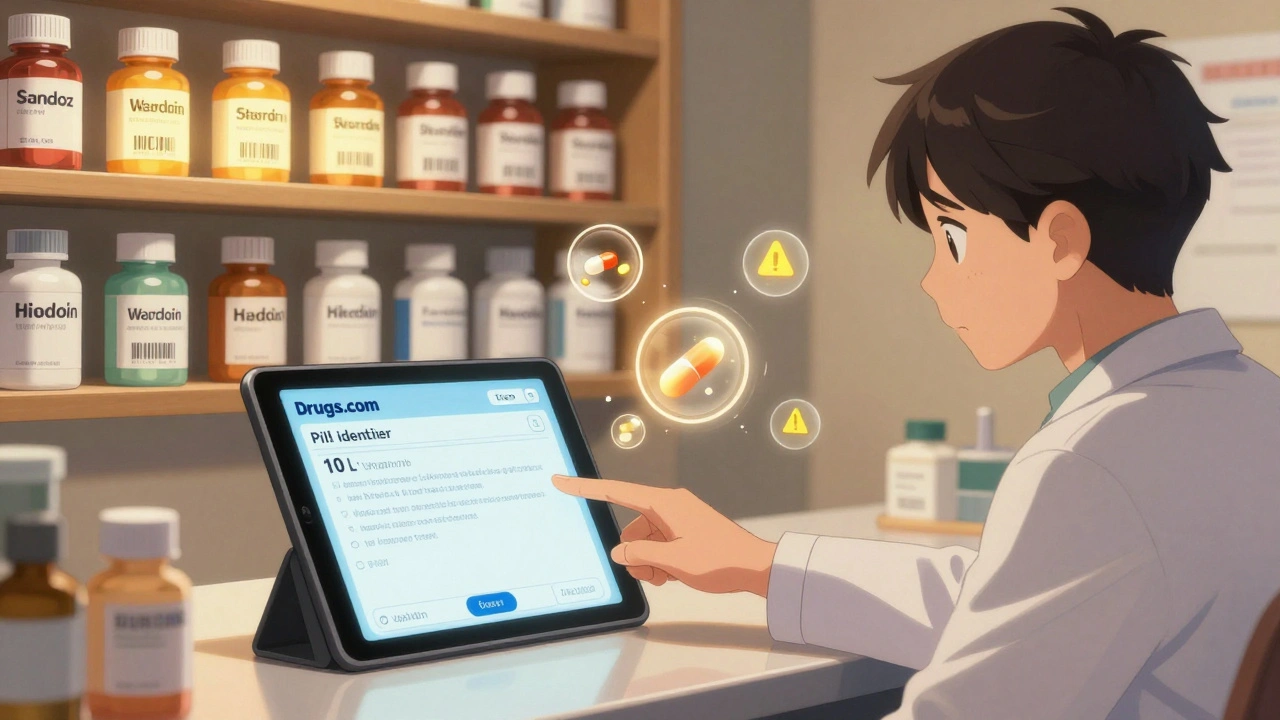
The best way to confirm you’re getting the right medication is by checking the imprint. Every prescription pill in the U.S. and many other countries must have a unique code stamped on it. That code is a combination of letters and numbers that identifies the drug, strength, and manufacturer. For example, a generic lisinopril 10mg might have the imprint “10 L” or “L 10.” The brand version might say “Zestril 10.” Same drug. Different imprint. Same effect. You can look up any pill using free tools like:- Drugs.com Pill Identifier - used by over 12 million people monthly. Just enter the color, shape, and imprint.
- Drugs@FDA - the FDA’s official database. Search by drug name or NDC code to see all approved versions.
- National Drug Code (NDC) Directory - used by pharmacists to track exact manufacturers and formulations.
Major Generic Manufacturers and What Sets Them Apart
Not all generic manufacturers are the same. A few big players dominate the market:- Teva - the world’s largest generic maker. Makes over 1,800 products. Known for consistent supply and wide availability.
- Mylan (now Viatris) - merged with Pfizer’s generics division. Strong in complex generics like inhalers and injectables.
- Sandoz - part of Novartis. Focuses on high-quality, high-volume generics. Popular in Europe and North America.
- Hikma - specializes in complex drugs like injectables. Takes longer to develop but offers more stable formulations.
When to Be Cautious
For most people, switching between generic manufacturers is completely safe. But there are exceptions:- Narrow therapeutic index (NTI) drugs - Like warfarin, levothyroxine, phenytoin, or lithium. Small changes in absorption can lead to serious side effects. Many doctors recommend staying with the same manufacturer.
- Psychiatric medications - Some patients report feeling different after switching generics, even if studies show no clinical difference. This may be due to placebo effect, sensitivity to inactive ingredients, or real but rare formulation issues.
- Chronic conditions - If you’re on long-term meds and feel fine, don’t switch unless necessary. Consistency matters.
What Patients Are Saying
A 2022 survey by Consumer Reports found that 41% of patients worried about pill appearance changes. About 18% said they’d question their pharmacist if the pill looked different. On Reddit’s r/pharmacy community, 68% of users reported no issues after switching generics. But 22% said they noticed changes-mostly with antidepressants or seizure meds. Many said they felt “off,” but couldn’t prove it was the drug. Others said their symptoms returned after switching to a cheaper version. These stories matter. Even if science says the drugs are equivalent, your body might react differently to new fillers or coatings. If you feel worse after a switch, talk to your doctor. Don’t assume it’s “all in your head.”
What You Can Do
Here’s a simple checklist to stay safe and informed:- Check the imprint - Use Drugs.com or ask your pharmacist to confirm the pill matches your prescription.
- Know your drug type - Is it an NTI drug? If yes, ask your doctor if you should stick with one manufacturer.
- Track your symptoms - Note any changes in how you feel after a switch. Write it down.
- Ask for DAW-1 - If you’re on a sensitive medication, ask your doctor to write “dispense as written” on the prescription.
- Don’t panic over color - A red pill today and a white pill tomorrow? Probably the same drug. Check the imprint.
The Bigger Picture
Generics save the U.S. healthcare system over $300 billion a year. Without them, many people couldn’t afford their meds. But the system is under strain. The number of generic manufacturers in the U.S. dropped from 128 in 2015 to 87 in 2023. Fewer companies mean less competition-and sometimes, supply shortages. In 2024, the FDA reported 288 active drug shortages, and 67% of them involved generic medications. That’s why your pill might disappear or change suddenly. It’s not about quality-it’s about supply chains, manufacturing delays, or profit margins. The good news? You’re not powerless. You can ask for the same generic brand. You can request a 90-day supply to reduce frequency of switches. You can report any unusual side effects to your doctor and the FDA’s MedWatch program.Final Thoughts
Generic drugs are safe, effective, and essential. The fact that they look different doesn’t mean they’re different. But your awareness matters. Learn to read the imprint. Know your drug’s category. Speak up if something feels off. You’re not just a patient-you’re a partner in your care. If you’ve ever been confused by a pill change, you’re not alone. But now you know how to check, what to ask, and when to be cautious. That’s power.Are generic drugs really as effective as brand-name drugs?
Yes, for the vast majority of drugs, generics are just as effective. The FDA requires them to prove bioequivalence-meaning they deliver the same amount of active ingredient into your bloodstream at the same rate as the brand-name version. Studies show the average difference in absorption is only 3.5%, which is less than the natural variation between two batches of the same brand-name pill.
Why does my generic pill look different every time I refill it?
Because different manufacturers make the same generic drug. Trademark laws prevent generics from looking exactly like the brand-name version, so each company uses different colors, shapes, or imprints. When a new manufacturer enters the market, your pharmacy may switch to their version-often because it’s cheaper. The active ingredient hasn’t changed, just the look.
Can changing generic manufacturers cause side effects?
For most people, no. But for drugs with a narrow therapeutic index-like warfarin, levothyroxine, or lithium-even tiny changes in absorption can cause problems. Some patients also report feeling different after switching due to sensitivity to inactive ingredients (like dyes or fillers), even if the drug itself works the same. If you notice new side effects after a switch, talk to your doctor.
How do I know if my pill is the right one?
Check the imprint-the letters or numbers stamped on the pill. Use a free tool like Drugs.com Pill Identifier: enter the color, shape, and imprint, and it will tell you exactly what drug it is. You can also ask your pharmacist to show you the match using the National Drug Code (NDC) database. Never rely on color or shape alone.
Should I ask my doctor to write “dispense as written” on my prescription?
If you’re taking a drug with a narrow therapeutic index-like warfarin, levothyroxine, or seizure medications-yes. This code (DAW-1) tells the pharmacy not to substitute the generic unless your doctor approves it. It helps prevent accidental switches that could affect your health. Even if you’re not on an NTI drug, asking for consistency can reduce confusion and anxiety.
Are there any tools I can use to identify pills at home?
Yes. The most reliable free tool is Drugs.com Pill Identifier. Just input the pill’s color, shape, and imprint, and it shows you the exact match. Your pharmacist also has access to the FDA’s Drugs@FDA database and the National Drug Code (NDC) Directory. Never guess based on appearance alone-always verify with the imprint.
Why are some generic drugs cheaper than others?
Price depends on competition. When only one company makes a generic, it can charge more-around 80-85% of the brand price. But when 10 or more companies start making it, prices drop by 70-80%. The cheapest version is usually the newest entrant trying to win market share. It doesn’t mean it’s lower quality-it just means more companies are competing.
Is it safe to switch between generic manufacturers for chronic conditions?
For most chronic conditions like high blood pressure or cholesterol, switching is safe. But for drugs with a narrow therapeutic index-like thyroid meds or antiseizure drugs-sticking with the same manufacturer reduces risk. If you’re stable on one version, ask your doctor to write “dispense as written” on your prescription. Consistency matters more than cost in these cases.
If you’ve ever stared at a pill and wondered, “Is this really the same?”, now you know how to find out-and when to speak up. Your health isn’t a gamble. With the right tools and questions, you’re in control.


Deborah Andrich
December 13, 2025 AT 02:30Stop worrying. Start reading.
Jennifer Taylor
December 13, 2025 AT 07:26nithin Kuntumadugu
December 15, 2025 AT 06:35John Fred
December 15, 2025 AT 21:47Harriet Wollaston
December 16, 2025 AT 15:12Lauren Scrima
December 17, 2025 AT 07:47sharon soila
December 19, 2025 AT 05:27Hamza Laassili
December 19, 2025 AT 18:40Tyrone Marshall
December 21, 2025 AT 03:21Alvin Montanez
December 22, 2025 AT 18:18Lara Tobin
December 24, 2025 AT 14:07Keasha Trawick
December 24, 2025 AT 18:45Webster Bull
December 25, 2025 AT 20:23Bruno Janssen
December 26, 2025 AT 09:56