
Ever taken a pill and wondered if your breakfast ruined it? Or skipped a meal to follow a label that said "take on an empty stomach"-only to feel dizzy or sick? You’re not alone. Many people don’t realize that what’s on your plate can make or break how well your medicine works. It’s not just about stomach upset. It’s about whether your body absorbs enough of the drug to do its job-or if it ends up doing nothing at all.
Why Food Changes How Medicines Work
Food doesn’t just fill your stomach. It changes how your body handles drugs. When you eat, your digestive system slows down. Gastric emptying-the process that moves things from your stomach to your small intestine-gets delayed by 30% to 50%. That means your pill sits in your stomach longer before it can be absorbed. For some drugs, that delay doesn’t matter. For others, it’s a disaster.Here’s the real kicker: food can either help or hurt absorption. Some drugs need fat to dissolve properly. Take griseofulvin, an antifungal. With a high-fat meal, your body absorbs 200% to 300% more of it. Why? Fat triggers bile release, which helps dissolve the drug so your gut can soak it up. But if you take it alone, it might as well be a sugar pill.
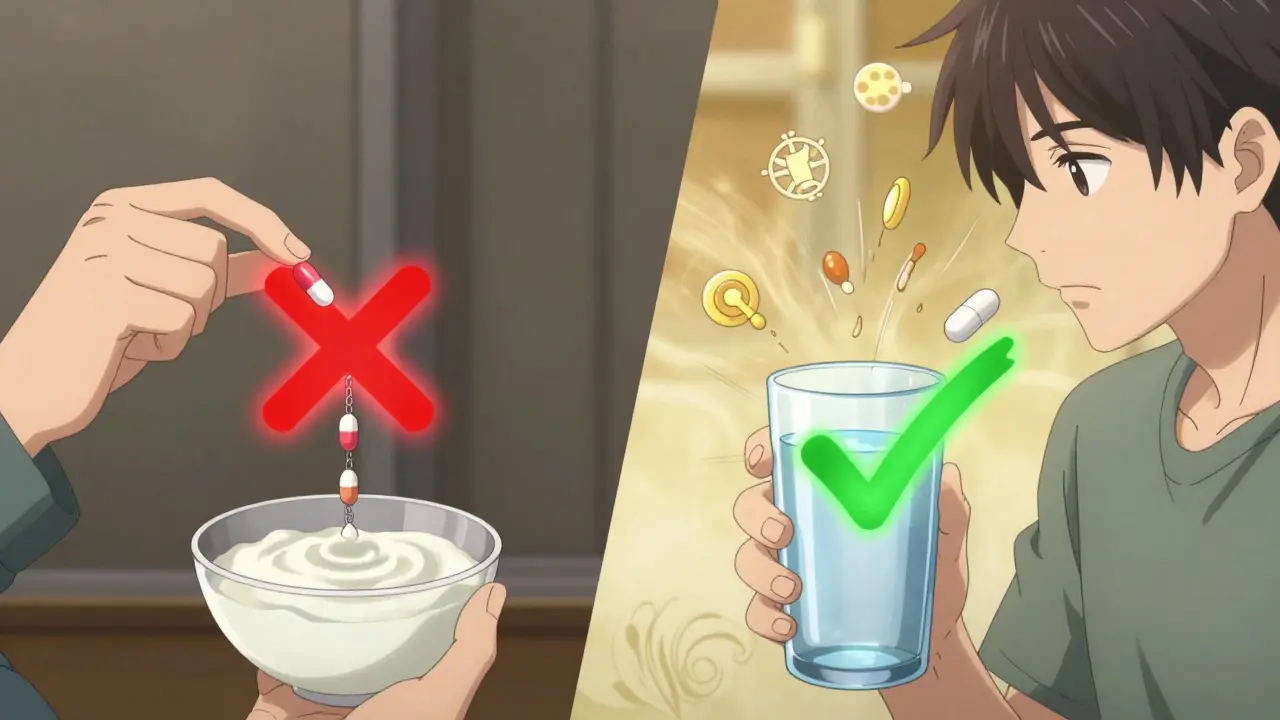
On the flip side, calcium, iron, and even milk can block absorption. Tetracycline antibiotics, for example, bind to calcium like glue. If you take doxycycline with yogurt or cheese, you might absorb only half as much. That’s why people end up with recurring UTIs-they took their antibiotic with breakfast and never knew why it didn’t work.
Empty Stomach vs. With Food: What Do Those Labels Really Mean?
You’ve seen the labels: "Take on an empty stomach," "Take with food," "Take 30 minutes before a meal." But what do they actually mean?"Empty stomach" isn’t just "no breakfast." It means one hour before or two hours after eating. Why? Because even a light snack can trigger gastric changes. Levothyroxine, the thyroid hormone, is a classic example. If you take it with food-even a piece of toast-you absorb 30% to 55% less. That’s enough to throw off your whole hormone balance. People with hypothyroidism often feel tired, gain weight, or get cold again-not because their dose is wrong, but because they took it with coffee and toast.
"Take with food" sounds simple, but it’s not always about a full meal. For some drugs, like the antibiotic nitrofurantoin, even a small snack of 200-300 calories boosts absorption by 40%. For others, like certain HIV medications, a full meal might cause too much delay. The key is consistency: take it the same way every time. If you start taking it with peanut butter on toast, stick with it. Don’t switch to applesauce halfway through.
And don’t forget timing. Sulfonylurea diabetes pills like glipizide must be taken 30 minutes before eating. Why? They trigger insulin release. If you take them on an empty stomach, your blood sugar can crash below 70 mg/dL-leading to shaking, sweating, confusion, or even fainting. A 2022 study found 23% of patients on these drugs had hypoglycemia episodes because they took them at the wrong time.
Drugs That Need Food-And Those That Can’t Have It
Here’s a quick reference for common medications and what they need:- Take with food: Nitrofurantoin (40% more absorption), Cefpodoxime (50-60% more), Ibuprofen (reduces stomach irritation), Glipizide (prevents low blood sugar), Semaglutide (if taken with food, absorption drops 44%)
- Take on empty stomach: Levothyroxine (30-55% less absorption with food), Tetracycline (50-75% less with dairy), Itraconazole (40% less if pH rises from fat), Mycophenolate (absorption drops with high-fat meals)
- Take 30 minutes before meals: Glipizide, Acarbose, some GLP-1 agonists
- Take after meals: Aspirin (enteric-coated versions can be taken without food), some antifungals like itraconazole (if taken with acidic drink)
Notice how some drugs have opposite needs? That’s why you can’t guess. A pill that works fine with food might be useless-or dangerous-without it.
Why So Many People Get It Wrong
A 2023 report from Express Scripts found that 45% of patients misunderstand "take with food" instructions. Many think it means "eat a big meal." But for drugs like certain antiretrovirals, a small snack is enough. A banana or a handful of nuts can do the trick. Eating a full burger? That might delay absorption too much.And what about "empty stomach"? People take levothyroxine right after coffee. Or they eat breakfast 15 minutes later because they’re running late. That’s not enough time. Your stomach is still processing food. And coffee? It can interfere with absorption too.
Reddit threads and drug forums are full of stories. One user, u/ThyroidWarrior, described months of fatigue and weight gain-until they realized they’d been taking levothyroxine with a protein shake. After switching to plain water 60 minutes before breakfast, their TSH levels normalized. Another person had recurring sinus infections because they took doxycycline with milk. Once they separated the two by two hours, the infections cleared.
Even doctors aren’t always clear. A 2022 study showed that 30% of prescriptions didn’t include clear food instructions. That’s why pharmacists are your best ally. When you pick up a new script, ask: "Should I take this with food, before food, or after? What counts as food?"
Real-World Tips to Get It Right
Here’s how to avoid mistakes:- Use alarms. Set two phone reminders: one for taking your pill, one for eating. For drugs like levothyroxine, set the alarm 60 minutes before breakfast.
- Keep a log. Write down what you ate and when you took your meds for a week. You might spot a pattern-like always feeling sick after taking ibuprofen with pizza.
- Don’t mix calcium-rich foods with antibiotics. Avoid dairy, calcium-fortified orange juice, or antacids within two hours of tetracycline, ciprofloxacin, or doxycycline.
- Use apps. Medisafe and MyTherapy let you set food-based reminders. Users who activated these features saw 27% fewer timing errors.
- Ask your pharmacist. They see hundreds of these interactions. They’ll tell you if your morning coffee, grapefruit juice, or protein bar could be messing with your meds.
For chronic conditions, consistency matters more than perfection. If you can’t take levothyroxine on an empty stomach every day, pick one routine-say, 60 minutes before your first meal-and stick with it. Your body will adapt. But if you switch between "with breakfast" and "on empty stomach," your thyroid levels will swing like a pendulum.
The Bigger Picture: Why This Matters
Food-drug interactions aren’t just a nuisance. They cost the U.S. healthcare system billions. A 2022 study linked these interactions to 8% of all medication-related problems-about $42 billion a year. For older adults on five or more medications, the risk jumps 65%. That’s why guidelines are tightening. Since 2020, 92% of new drug approvals include food-effect instructions. The FDA now tests drugs with plant-based meals, gluten-free options, and high-fat meals to reflect real diets.And it’s getting smarter. In 2023, a study in Lancet Digital Health showed that timing levothyroxine based on individual gastric emptying-measured with a simple breath test-improved outcomes by 22%. Imagine a future where your phone tells you: "Your stomach is ready. Take your pill now." That’s not sci-fi. It’s coming.
For now, the rule is simple: know your meds. Don’t assume. Don’t guess. Ask. And if you’re unsure? Wait. Better to delay a dose than to risk it not working-or worse, make you sick.
Can I take my pill with water if the label says "with food"?
No-not if the label specifically says "take with food." Water alone won’t help absorption for drugs that need fat or other food components. For example, antifungal drugs like itraconazole need acidic stomach conditions, which food helps create. Taking it with water only may mean you absorb less than half the dose. Always follow the exact instruction.
What if I forget to take my medicine with food? Should I take it later?
It depends. For drugs like levothyroxine, wait until your next scheduled dose. Don’t double up. For antibiotics like doxycycline, if you realize within an hour, take it with a small snack. For sulfonylureas, if you forgot to take them before a meal and already ate, skip the dose to avoid low blood sugar. Always check the drug’s specific guidelines or call your pharmacist.
Does coffee count as food when taking medicine?
Coffee doesn’t count as food for absorption purposes. But it can interfere. Caffeine can speed up gastric emptying, which might affect timing. More importantly, coffee is acidic and can interact with certain drugs like levothyroxine or iron supplements. Most guidelines recommend taking meds with plain water only, especially when "empty stomach" is required.
Can I take all my pills at once with breakfast?
No. Some drugs need empty stomachs, others need food, and some can’t be taken together. For example, calcium in supplements can block absorption of thyroid meds and antibiotics. Iron can interfere with some antibiotics. Mixing them all at breakfast can make several of them ineffective. Always space them out or ask your pharmacist for a personalized schedule.
Are there foods I should avoid completely with certain medications?
Yes. Grapefruit juice can block metabolism of statins, blood pressure meds, and some antidepressants, causing dangerous buildup. Dairy products block tetracycline and ciprofloxacin. High-fiber meals can delay absorption of digoxin. Always check for food interactions listed on your prescription label or ask your pharmacist. If you’re unsure, assume it’s risky and avoid it.