ALT: What It Is, Why It Matters, and How It Connects to Your Health
When your doctor orders a ALT, alanine aminotransferase, a liver enzyme that leaks into the bloodstream when liver cells are damaged. Also known as SGPT, it's one of the most trusted signs your liver might be under strain. Unlike vague symptoms like fatigue or nausea, ALT gives you a number—clear, measurable, and hard to ignore. It’s not a disease itself, but a signal. And when that signal spikes, it’s often pointing to something bigger: fatty liver, medication side effects, alcohol use, or even silent inflammation.
ALT doesn’t work alone. It’s part of a team with AST, aspartate aminotransferase, another liver enzyme that also rises with damage but shows up in muscles too, and bilirubin, a waste product your liver filters out, which builds up when the organ isn’t working right. A high ALT with normal AST? That’s often a red flag for fatty liver disease. High ALT and AST together? Could be hepatitis, drug toxicity, or heavy alcohol use. These patterns matter because they guide what comes next—cutting back on alcohol, switching meds, or testing for hepatitis B or C. And yes, some of the drugs linked to ALT spikes are the same ones you’ll find in our posts: statins for cholesterol, anastrozole for breast cancer, or even common antibiotics that stress the liver over time.
What you’ll find below isn’t just a list of articles. It’s a map of how ALT connects to real-life health choices. You’ll see how ALT levels shift with weight loss in NAFLD, why certain blood pressure meds like Micardis or Plendil are monitored closely, how antibiotics can trigger liver stress, and why statins are still safe for fatty liver if you’re watching your enzymes. There’s no fluff here—just clear links between what shows up on your lab report and what you can actually do about it. Whether you’re managing a chronic condition, taking long-term meds, or just trying to understand why your doctor asked for that extra test, these posts give you the context you need to ask better questions and take smarter steps.
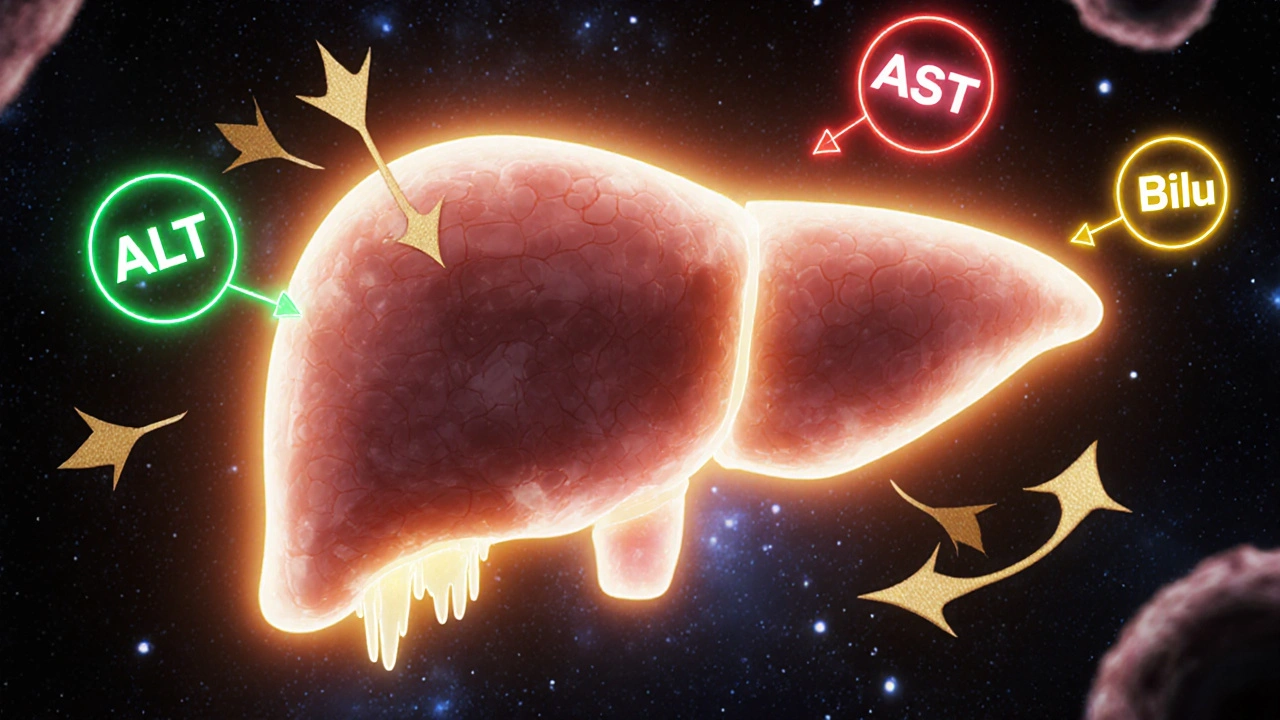
Liver Function Tests Explained: ALT, AST, Bilirubin, and What They Really Mean
Understand what ALT, AST, and bilirubin really mean in liver function tests. Learn how to interpret patterns, avoid common mistakes, and know when to act - not panic - based on your results.