SJS/TEN Symptom Checker
Check for SJS/TEN Symptoms
Stevens-Johnson Syndrome (SJS) and Toxic Epidermal Necrolysis (TEN) are rare but serious medication reactions. They require immediate medical attention. This tool helps you identify potential symptoms. If you experience these symptoms, go to the emergency room immediately.
Results will appear here
High-risk medications include:
- Allopurinol (gout medication)
- Lamotrigine (epilepsy, bipolar)
- Carbamazepine (epilepsy, nerve pain)
- Nevirapine (HIV treatment)
- Sulfamethoxazole (antibiotics)
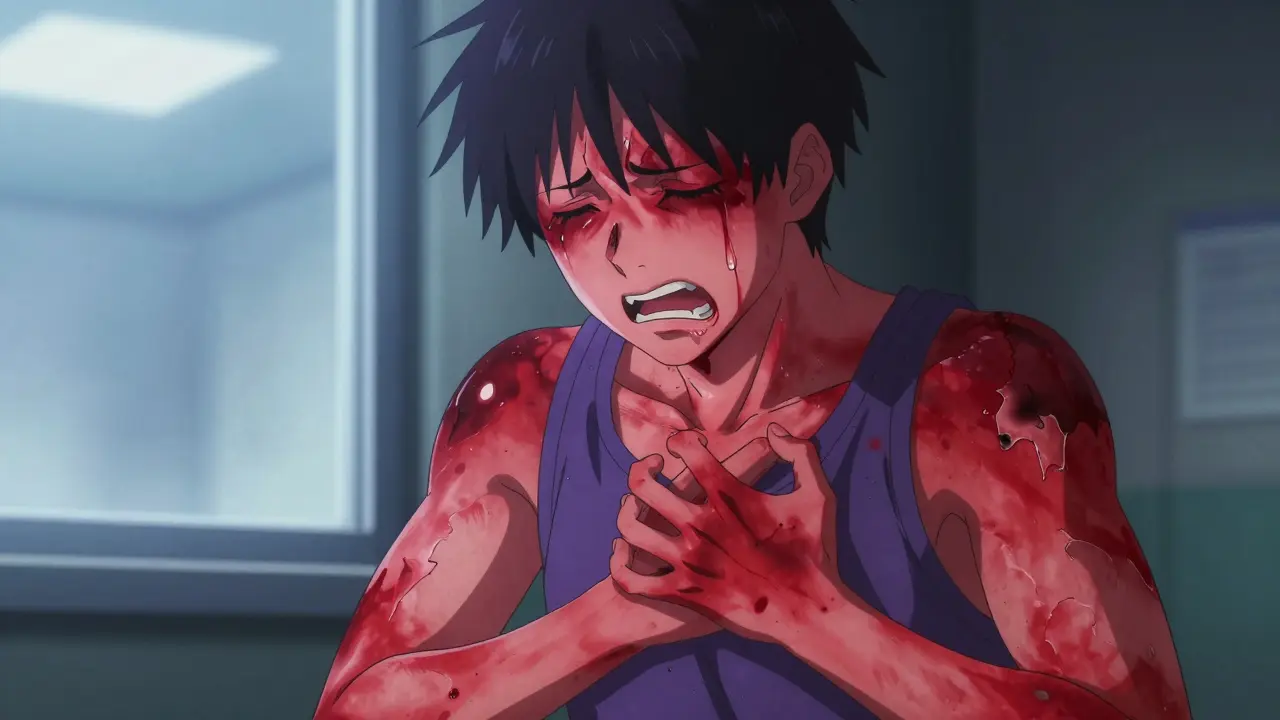
Imagine taking a medication you’ve been prescribed for months - maybe for epilepsy, depression, or gout - and suddenly, your skin starts burning, blistering, and peeling off like a sunburn gone terribly wrong. Your eyes swell shut. Your mouth is full of painful sores. You can’t swallow. You’re feverish and weak. This isn’t a bad allergic reaction. This is Stevens-Johnson Syndrome (SJS) or its more severe form, Toxic Epidermal Necrolysis (TEN). Both are rare but deadly drug reactions that demand immediate hospital care. If you or someone you know develops a sudden, worsening rash with blisters or mouth sores after starting a new medication, go to the emergency room now. Waiting could cost your life.
What Exactly Are SJS and TEN?
Stevens-Johnson Syndrome and Toxic Epidermal Necrolysis aren’t two separate diseases - they’re points on the same dangerous spectrum. Think of them as a sliding scale of severity, all triggered by medications. SJS involves less than 10% of your skin peeling off. TEN affects more than 30%. If it’s between 10% and 30%, doctors call it SJS-TEN overlap. The damage isn’t just surface deep. The top layer of your skin (the epidermis) dies and separates from the layers beneath. It’s like your body is literally shedding its outer defense.
The first signs often look like the flu: fever, sore throat, cough, tiredness. Then, within a day or two, a painful red or purple rash appears. It spreads fast. Blisters form. Your lips, eyes, and genitals start to ulcerate. Your skin may slough off in sheets. This isn’t a mild rash you can ignore. It’s a full-body emergency. Skin loss like this puts you at high risk for infection, fluid loss, and organ failure. That’s why treatment happens in burn units or intensive care - not a doctor’s office.
Which Medications Trigger These Reactions?
Not every drug causes SJS or TEN. But some are known red flags. According to medical guidelines, the highest-risk medications include:
- Allopurinol - used for gout
- Lamotrigine - an anticonvulsant for epilepsy and bipolar disorder
- Carbamazepine - another epilepsy and nerve pain drug
- Nevirapine - an HIV medication
- Phenytoin and Phenobarbital - older seizure drugs
- Oxicam NSAIDs - like meloxicam and piroxicam
- Sulfamethoxazole - often in antibiotics like Bactrim
Here’s the scary part: you don’t have to be on the drug for long. Reactions can happen within days - sometimes as early as the first week. Or, they can appear up to two weeks after you’ve stopped taking it. That’s why people who’ve had a rash and thought it was harmless might not connect it to the medication they took weeks ago.
And it’s not just the exact drug. If you’ve had SJS from one anticonvulsant like carbamazepine, you’re at risk if you later take phenytoin or lamotrigine. The same goes for sulfa drugs - avoid all of them if one triggered a reaction. Cross-reactivity is real. Survivors must avoid not just the culprit, but entire drug families.
Who’s at Higher Risk?
While SJS/TEN can strike anyone, certain factors raise the risk:
- People with HIV or weakened immune systems from chemotherapy
- Those with a family history of SJS - suggesting a genetic link
- People who’ve had a previous SJS reaction - recurrence risk is very high
- Those taking sodium valproate with lamotrigine - this combo increases risk
- Patients who rapidly increase doses of lamotrigine
- People allergic to trimethoprim
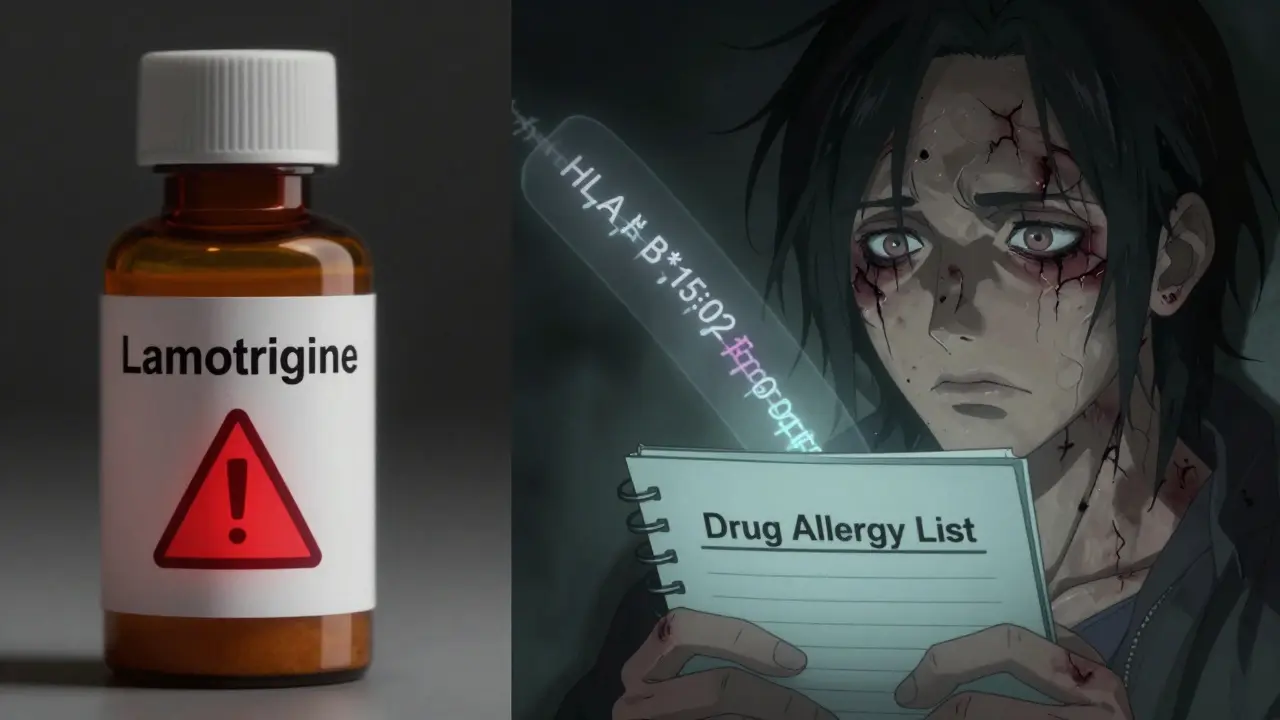
Children are more likely than adults to develop SJS from drugs like lamotrigine. But adults aren’t safe - especially those over 60 or with chronic illnesses. Genetics play a role too. Some people carry a gene called HLA-B*15:02, which makes them far more likely to react badly to carbamazepine. Testing for this gene is now standard in parts of Asia before prescribing the drug. In Australia and the U.S., it’s not routine - but doctors should consider it if you have Asian ancestry.
How Is It Diagnosed?
There’s no single blood test for SJS or TEN. Diagnosis relies on three things:
- Symptoms - rash, blisters, mucosal damage
- Timeline - started within weeks of taking a new drug
- Skin biopsy - a small sample of skin shows full-thickness epidermal death with little inflammation
Doctors use the SCAR (Severe Cutaneous Adverse Reaction) criteria to confirm. If more than 10% of your skin is detached, it’s TEN. If less than 10%, it’s SJS. The faster this is confirmed, the better your chances. Delayed diagnosis is one of the biggest reasons people die.
What Happens in the Hospital?
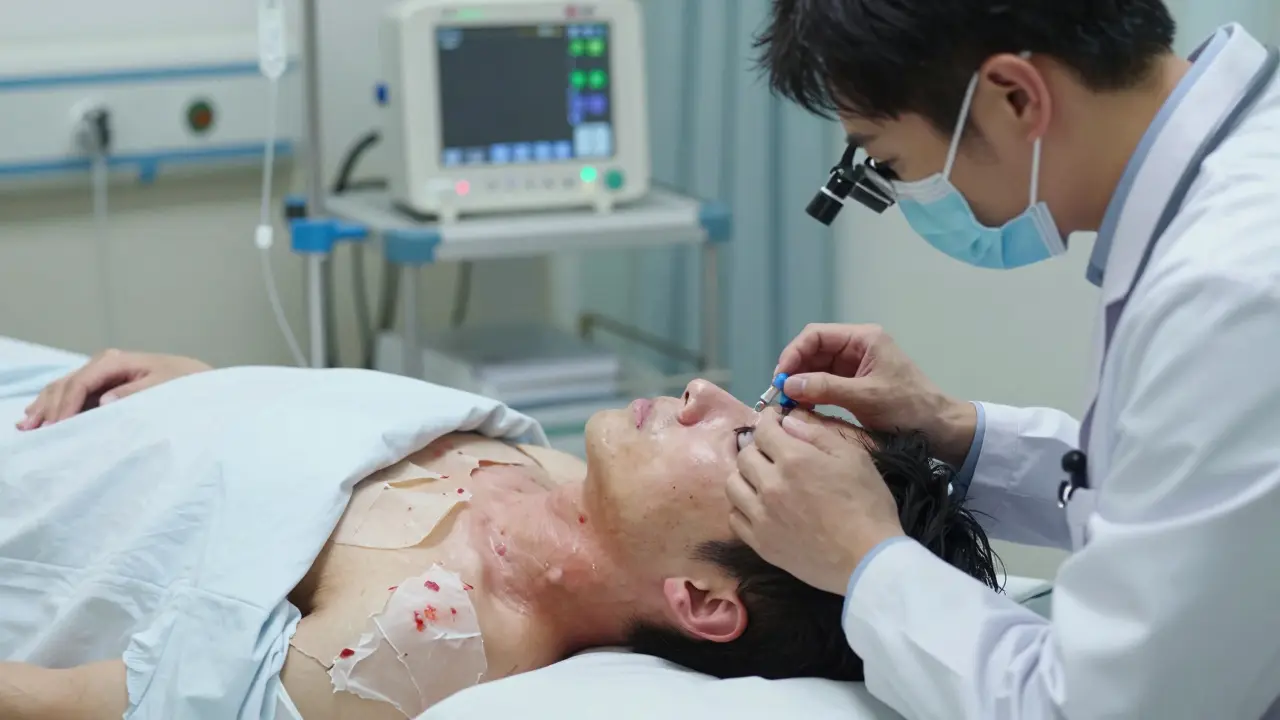
Once admitted, the first rule is simple: stop the drug. Immediately. No exceptions. Even if you think it’s helping your condition, continuing it will make things worse - fast.
Treatment is mostly supportive. There’s no magic cure. You’ll be treated like a severe burn patient:
- Fluids given through IV to replace what’s lost through damaged skin
- Wound care to prevent infection - sterile dressings, gentle cleaning
- Pain control - often requiring strong opioids
- Eye care - ophthalmologists check daily for corneal damage
- Nutrition support - often through a feeding tube if mouth sores make eating impossible
Some hospitals try immunomodulatory treatments like IVIG (intravenous immunoglobulin) or corticosteroids. But evidence is mixed. IVIG may help by blocking the immune attack, but it’s expensive and not always effective. Steroids are controversial - they can help reduce inflammation but also increase infection risk. Most experts agree: supportive care saves lives. The goal is to keep you alive until your skin regenerates - which takes weeks.
What Are the Long-Term Effects?
Surviving SJS or TEN doesn’t mean you’re out of the woods. Many face lifelong complications:
- Eye damage - dry eyes, scarring, corneal ulcers, even blindness. Up to half of survivors have lasting vision problems.
- Scarring and skin changes - dark or light patches, thickened skin, permanent hair loss
- Nail loss - fingernails and toenails may fall off and take months to regrow
- Oral issues - dry mouth, gum disease, difficulty chewing
- Esophageal narrowing - scar tissue can make swallowing painful
- Genital scarring - in women, vulvovaginal stenosis; in men, phimosis
One study found that 30-50% of survivors needed ongoing eye care for years. Some needed corneal transplants. Others couldn’t return to work because of chronic pain or vision loss. Recovery is slow - and often incomplete.
How Can You Prevent It?
Prevention is the best defense. Here’s what you can do:
- Know your high-risk drugs. If you’re prescribed lamotrigine, carbamazepine, or allopurinol, ask your doctor about your risk.
- Start low, go slow. Lamotrigine must be titrated slowly - doubling the dose too fast raises risk dramatically.
- Don’t restart a drug after stopping. If you stop lamotrigine for a few days and restart at the old dose, you’re at higher risk of SJS.
- Watch for early signs. A rash that spreads fast, especially with blisters or mouth sores? Go to ER. Don’t wait. Don’t call your GP. Go now.
- Keep a drug allergy list. Write down every medication that ever gave you a rash - even if it was mild. Share it with every doctor.
Some doctors now test for HLA-B*15:02 before prescribing carbamazepine to patients of Southeast Asian descent. If you’re unsure of your ancestry, ask if testing is right for you. It’s not perfect - but it saves lives.
What Should You Do If You Suspect SJS or TEN?
If you notice any of these symptoms within 1-8 weeks of starting a new medication:
- Red or purple rash spreading quickly
- Blisters on skin or inside mouth, eyes, or genitals
- Flu-like symptoms with skin changes
- Painful peeling skin
Stop the medication immediately. Call an ambulance or go to the nearest emergency department. Do not wait. Do not call your pharmacy. Do not check online. This is not something you can manage at home.
Bring your medication list. If possible, bring the pill bottle. Tell the ER staff: “I think I might have Stevens-Johnson Syndrome.” That phrase alone will trigger the right protocols.
Can SJS or TEN happen from over-the-counter drugs?
Yes. While most cases are linked to prescription drugs like lamotrigine or allopurinol, some over-the-counter NSAIDs - especially oxicam types like piroxicam - have been linked to SJS/TEN. Even common painkillers like ibuprofen or naproxen can trigger reactions, though this is rare. Always consider any new medication, prescription or not, as a possible cause if you develop a sudden rash with blisters.
Is SJS contagious?
No. SJS and TEN are not contagious. They’re your body’s extreme immune reaction to a drug. You can’t catch it from someone else. But if you’ve had it once, you’re at higher risk if exposed again - even to similar drugs. That’s why survivors must avoid all triggering medications for life.
How long does it take to recover from SJS or TEN?
Skin regrowth usually takes 3-6 weeks, but full recovery can take months or years. Many survivors deal with chronic issues like dry eyes, scarring, or pain for years. Some need ongoing care from dermatologists, ophthalmologists, and pain specialists. Recovery isn’t just about healing skin - it’s about managing lifelong damage.
Can you get SJS from vaccines?
Extremely rare. While a handful of case reports exist, vaccines are not a common cause of SJS/TEN. The risk is far lower than with medications like anticonvulsants or antibiotics. The benefits of vaccination far outweigh this tiny risk. If you’ve had SJS before, talk to your doctor before getting any new vaccine - but don’t avoid vaccines out of fear.
Why do some people get SJS and others don’t?
It’s a mix of genetics, immune system behavior, and timing. Some people carry genes (like HLA-B*15:02) that make their immune system overreact to certain drugs. Others have slower drug metabolism, leading to toxic buildup. And sometimes, it’s just bad luck. There’s no way to predict who will react - which is why vigilance matters more than testing for everyone.
Stevens-Johnson Syndrome and Toxic Epidermal Necrolysis are rare - fewer than 1 in a million people get them each year. But when they happen, they strike fast and hard. The difference between life and death often comes down to one thing: how quickly you recognize the warning signs and act. If you’re on a high-risk drug, know the symptoms. If you see them, don’t hesitate. Go to the hospital. Your life might depend on it.

APRIL HARRINGTON
March 11, 2026 AT 08:39Turns out I was one bad day away from losing half my skin
Why do doctors not warn us about this??
Tom Sanders
March 12, 2026 AT 11:13Jazminn Jones
March 14, 2026 AT 08:03Peter Kovac
March 15, 2026 AT 05:23Stephen Rudd
March 15, 2026 AT 20:10Erica Santos
March 17, 2026 AT 06:09George Vou
March 17, 2026 AT 22:46Scott Easterling
March 19, 2026 AT 15:54Mantooth Lehto
March 21, 2026 AT 13:25Melba Miller
March 22, 2026 AT 19:08Katy Shamitz
March 24, 2026 AT 14:30Dan Mayer
March 25, 2026 AT 19:20Judith Manzano
March 26, 2026 AT 07:23Morgan Dodgen
March 27, 2026 AT 13:21