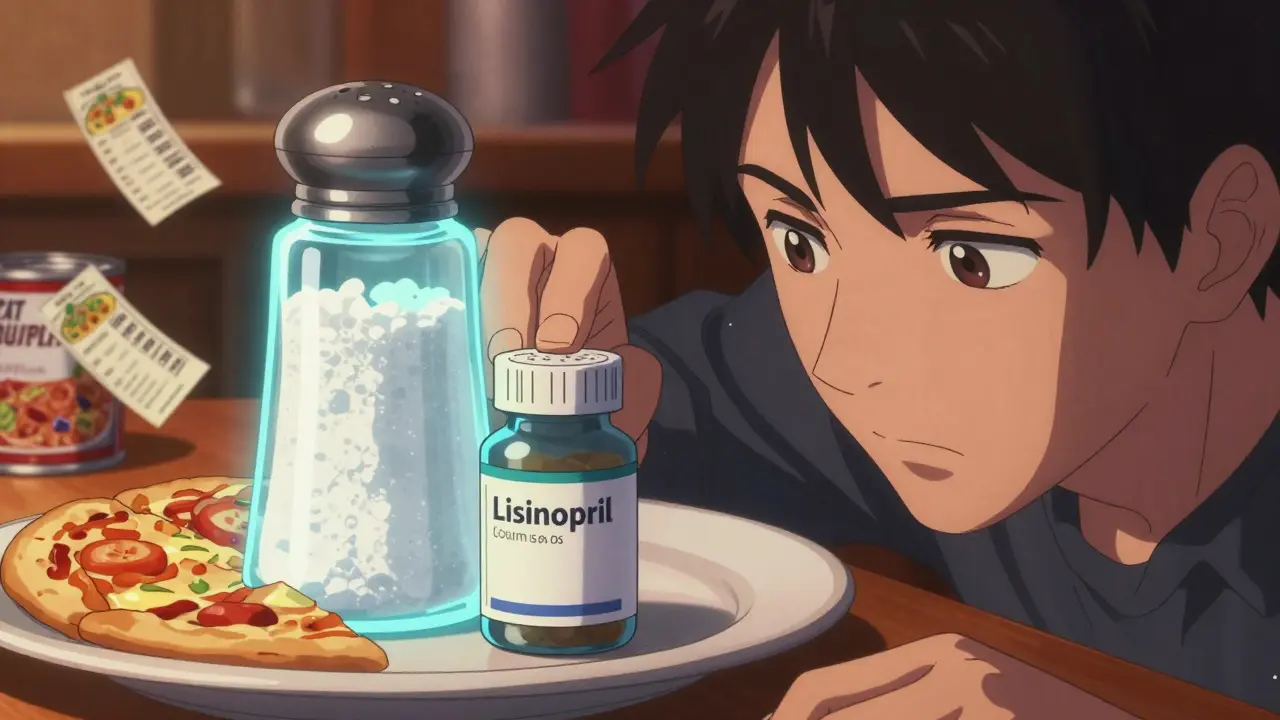
Salt Intake & Blood Pressure Calculator
How Salt Affects Your Blood Pressure
Cutting just 2,300 mg of sodium (about 1 teaspoon) can lower systolic blood pressure by 6 mm Hg — equivalent to starting a first-line blood pressure drug. For people on medication, reducing salt helps your drugs work more effectively.
Most sodium comes from processed foods. Only 30% comes from table salt. You might be consuming over 3,000 mg daily without realizing it.
Your Potential Blood Pressure Reduction
Reducing sodium from mg to 1,500 mg could lower your systolic blood pressure by mm Hg.
This is equivalent to additional blood pressure medication effect.
Practical Tips to Reduce Sodium
- Read nutrition labels carefully — 70% of sodium comes from processed foods
- Choose fresh foods over canned or frozen options
- Use herbs and spices instead of salt for flavor
- Ask for no added salt when eating out
- Aim for 1,500 mg daily if you have hypertension
When you’re on blood pressure medication, your doctor isn’t just telling you to take pills - they’re asking you to change how you eat. And one of the biggest, most overlooked factors? Salt.
Most people think high blood pressure is only about genetics or stress. But if you’re taking meds and still seeing high numbers, the problem might be hiding in your pantry, your lunchbox, or the takeout container you grabbed after work. A 2023 study published in JAMA found that cutting salt by just one teaspoon a day - about 2,300 mg - lowered systolic blood pressure by 6 mm Hg. That’s the same drop you’d get from starting a first-line blood pressure drug like lisinopril or losartan. And here’s the kicker: it works even if you’re already on meds.
Why Salt Makes Blood Pressure Drugs Less Effective
It’s not magic. It’s biology. Your kidneys control fluid balance. When you eat too much salt, your body holds onto water to dilute it. More fluid in your bloodstream means higher pressure on your artery walls. That’s why your blood pressure rises.
Now imagine you’re taking an ACE inhibitor, like enalapril. It works by relaxing blood vessels and helping your kidneys flush out extra fluid. But if you’re still loading up on sodium, your kidneys fight back. They hold onto fluid anyway. The drug is trying to help, but salt is overpowering it.
Same thing with diuretics - the “water pills.” They’re supposed to make you pee out extra sodium and water. But if you’re eating 4,500 mg of sodium a day (the average for many people), you’re basically asking your kidneys to work overtime. The diuretic can’t keep up. Your blood pressure stays high, and you might be tempted to up your dose - when the real fix is cutting salt.
A 2023 study tracked 213 adults over 60, half on blood pressure meds, half not. Everyone saw a drop in pressure when they cut sodium. For those on meds, the effect was even clearer: their drugs started working better. Doctors call this “salt sensitivity.” About 46% of people with high blood pressure are salt sensitive - meaning their pressure drops 5 mm Hg or more when sodium drops. That’s a real, measurable improvement.
How Much Salt Are You Really Eating?
You probably think you’re being careful. You don’t salt your food at the table. You skip the salt shaker. But here’s the truth: 70% of the sodium in your diet comes from packaged and restaurant food. Not from your kitchen.
Think about it:
- One slice of bread: 150 mg
- A single serving of canned soup: 800-1,200 mg
- A frozen pizza: 1,500 mg+
- A fast-food burger and fries: 2,000-3,000 mg
That’s already more than the American Heart Association’s maximum recommendation of 2,300 mg per day - and you haven’t even added salt at home. The average American eats 3,400 mg daily. In Australia, it’s not much different. Most people don’t even realize how much sodium they’re consuming until they start reading labels.
Here’s what to look for on nutrition facts:
- Choose foods with less than 140 mg sodium per serving - that’s the FDA’s definition of “low sodium.”
- Don’t trust “reduced sodium” claims. If the original was 1,000 mg, “reduced” might still be 700 mg.
- Watch for hidden names: monosodium glutamate (MSG), sodium nitrate, baking soda, sodium benzoate.
What Happens When You Cut Salt - Fast
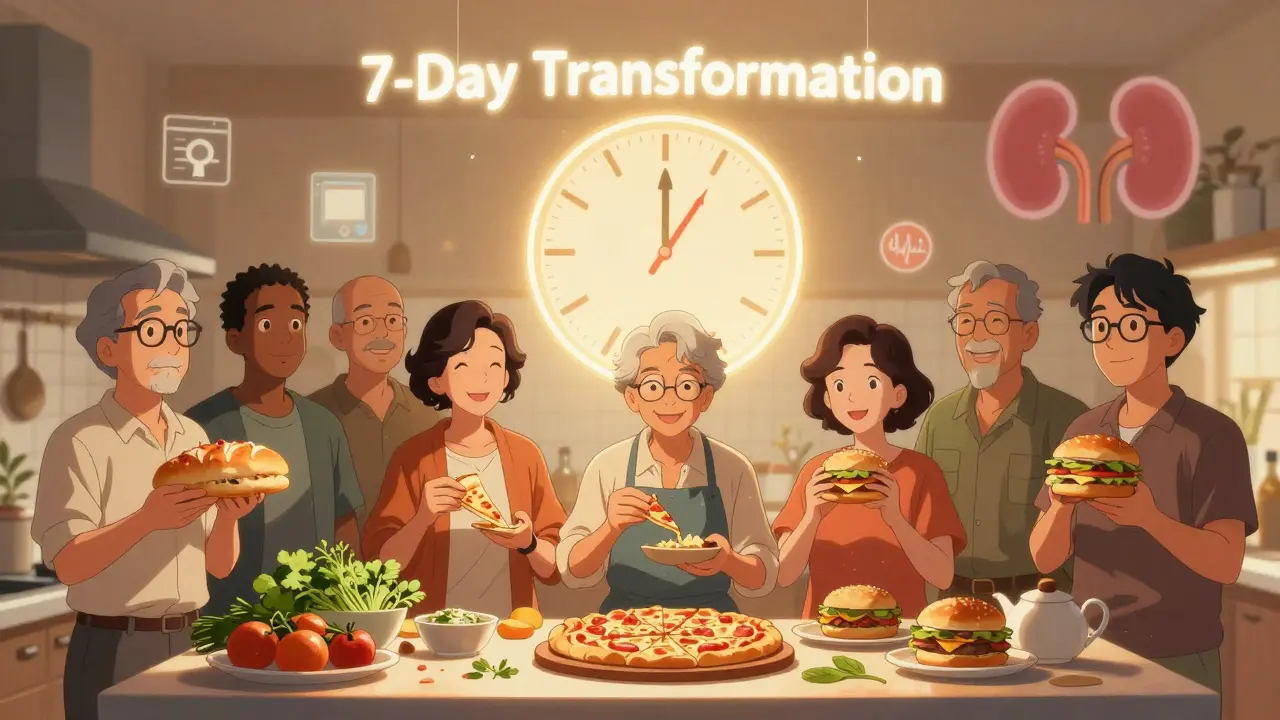
You don’t need to wait months. The same JAMA study showed measurable drops in blood pressure in just seven days.
Participants switched from their usual diet (around 4,500 mg sodium) to a low-sodium plan (500 mg daily). Within a week, their systolic pressure dropped an average of 7-8 mm Hg. That’s more than what many people get from adding a second medication.
And it’s not just about numbers. People reported feeling less bloated, less sluggish. Their clothes fit better. Their legs didn’t swell. These aren’t side effects - they’re signs your body is finally balancing out.
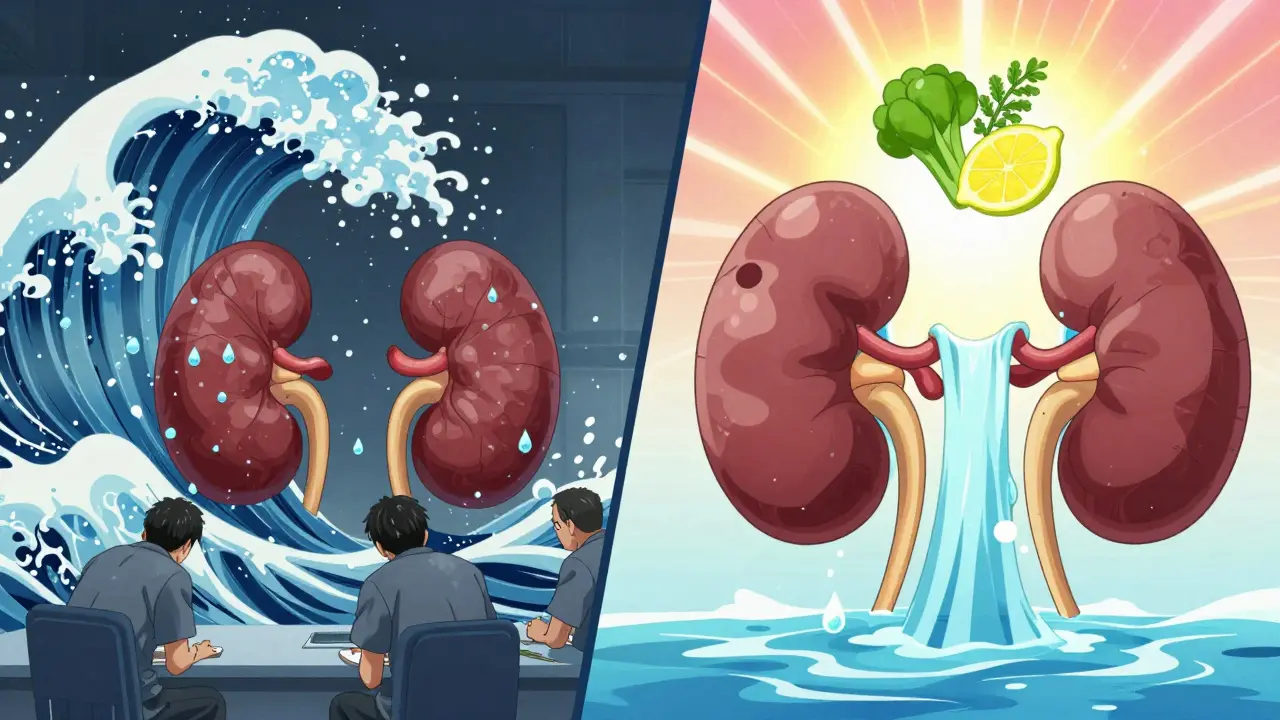
Even better: reducing salt doesn’t just help your blood pressure meds work better. It helps protect your kidneys and heart long-term. High salt intake increases protein in urine - a red flag for kidney damage. If you’re diabetic or have early kidney disease, salt can make your medications less effective at protecting your organs. Cutting salt gives your drugs a fighting chance.
Who Benefits Most? And Who Doesn’t?
Not everyone responds the same. About 25-30% of people show little to no drop in blood pressure when they cut salt. But that doesn’t mean it’s pointless.
Those who benefit most:
- People over 50
- Black adults (who tend to be more salt-sensitive)
- People with diabetes or kidney disease
- Those already on ACE inhibitors, ARBs, or diuretics
- Anyone with systolic pressure above 130 mm Hg
Even if you’re in the 25-30% who don’t see a big drop, cutting salt still helps your arteries, your heart, and your overall risk of stroke or heart attack. It’s not just about the number on the monitor.
One study found that for every 50 mmol drop in sodium excretion (roughly 1,150 mg), systolic pressure fell by 1.1 mm Hg. For hypertensive people, that effect was twice as strong. So even small changes add up.
Practical Tips to Cut Salt - Without Losing Your Mind
You don’t need to go on a bland, tasteless diet. Here’s how real people do it:
- Read labels before you buy. Don’t just glance at the front. Flip it over. Compare brands. Sometimes the “healthier” option has more sodium.
- Cook more at home. Use fresh herbs, garlic, lemon juice, vinegar, or pepper instead of salt. Try smoked paprika, cumin, or chili flakes for depth.
- Choose fresh or frozen vegetables. Canned veggies are soaked in salt. Frozen or fresh are better.
- Ask for no salt when ordering out. Most restaurants will do it - especially if you say you’re managing blood pressure.
- Try a potassium-based salt substitute. These replace sodium with potassium, which can help lower pressure. But if you have kidney disease or take certain meds (like ACE inhibitors), talk to your doctor first. Too much potassium can be dangerous.
- Gradually reduce. Your taste buds adapt in 2-4 weeks. Start by cutting 25% of your usual salt. Then 50%. You’ll be surprised how flavorful food becomes.
What About Salt Substitutes and Supplements?
Potassium chloride salt substitutes (like NoSalt or Nu-Salt) are popular. They taste similar, and studies show they can help lower blood pressure. But they’re not for everyone.
If you have:
- Chronic kidney disease
- Diabetes
- Are taking ACE inhibitors, ARBs, or spironolactone
…then high-potassium substitutes can raise your potassium levels dangerously. That can cause irregular heartbeat or even cardiac arrest. Always check with your doctor before switching.
There’s also no magic pill or supplement that blocks sodium absorption. The only proven way is to eat less of it.
The Bigger Picture: Why This Matters
The American Heart Association estimates that if everyone cut sodium to 2,000 mg per day, we could prevent 280,000 to 500,000 heart-related deaths over ten years. That’s not a guess - it’s based on CDC modeling.
Doctors are starting to treat high blood pressure differently. It’s not just about prescribing pills anymore. It’s about combining medication with precise dietary changes. The 2023 JAMA study calls this “the most significant advance in hypertension control since combination drug therapy.”
Think of it this way: your blood pressure meds are tools. Salt is a wrench thrown into the gears. Take out the wrench - and the tools work like they’re supposed to.
Can I stop my blood pressure meds if I cut salt?
No. Never stop or change your medication without talking to your doctor. Cutting salt can improve how well your meds work, and in some cases, your doctor may reduce your dose - but only after monitoring your blood pressure over weeks or months. Stopping meds suddenly can cause dangerous spikes in pressure.
Is sea salt or Himalayan salt better than table salt?
No. All salt - whether table, sea, kosher, or Himalayan - is mostly sodium chloride. The trace minerals in fancy salts are too small to make a health difference. A teaspoon of any salt still contains about 2,300 mg of sodium. The only difference is texture and flavor - not impact on blood pressure.
How long does it take to see results from cutting salt?
Many people see lower blood pressure in as little as 7 days. A 2023 study showed a 6-8 mm Hg drop in systolic pressure within a week of switching to a low-sodium diet. For some, it takes 2-4 weeks as taste buds adjust. Consistency matters more than speed.
Does salt affect all blood pressure meds the same way?
No. Salt has the biggest impact on ACE inhibitors, ARBs, and diuretics - the most common first-line drugs. These work by helping your body get rid of sodium and fluid. If you keep eating too much salt, they can’t do their job. Beta-blockers and calcium channel blockers are less affected, but salt still adds strain on your heart and arteries.
What’s the ideal daily sodium target for someone on blood pressure meds?
The American Heart Association recommends 1,500 mg per day as ideal, especially for people with high blood pressure or heart disease. The absolute maximum is 2,300 mg. Most people on meds should aim for 1,500-1,800 mg. That means avoiding packaged foods, eating mostly whole foods, and cooking from scratch.
Next Steps: What to Do Today
Here’s a simple plan:
- Check your pantry. Find three high-sodium items (soup, sauce, snack). Replace them with low-sodium versions.
- Next time you order takeout, ask for no salt. Make it a habit.
- Start reading food labels. Write down the sodium per serving for your top 5 foods.
- Book a follow-up with your doctor in 4 weeks. Ask them to check your blood pressure and whether your meds might be working better.
You’re not just taking pills. You’re taking control. And sometimes, the most powerful medicine isn’t in a bottle - it’s on your plate.

Tasha Lake
February 7, 2026 AT 21:12Okay but let’s talk about the renin-angiotensin-aldosterone system (RAAS) real quick. ACE inhibitors block angiotensin-converting enzyme, which means less angiotensin II → less vasoconstriction and less aldosterone → less sodium reabsorption. But if you’re chowing down 4,500 mg of NaCl daily, your kidneys just override the whole pathway. Aldosterone stays high, fluid retention wins. It’s not that the drug fails-it’s that the sodium load overwhelms the pharmacodynamic ceiling. This is why combo therapy with diuretics often gets prescribed. The body’s sodium set point is fucked.
Andrew Jackson
February 8, 2026 AT 05:35It is a moral failing of the highest order that the American populace continues to ingest sodium-laden industrial foodstuffs under the guise of convenience. We have abandoned the virtues of home-cooked meals, the dignity of culinary self-reliance, and the discipline required to resist the seductive blandishments of corporate agribusiness. This is not a medical issue-it is a civilizational collapse. The Founders did not draft the Constitution so that we might drown our hypertension in a bucket of KFC.
Joseph Charles Colin
February 9, 2026 AT 09:05From a clinical pharmacology standpoint, the salt-drug interaction is textbook. ACEi/ARBs reduce aldosterone-mediated sodium reabsorption in the distal tubule. Diuretics enhance sodium excretion via NKCC2 or ENaC inhibition. But if dietary intake exceeds renal excretory capacity-especially in salt-sensitive phenotypes-the drug’s efficacy plateaus. That’s why the JAMA study showed a 6 mmHg drop with sodium restriction alone. That’s equivalent to adding a second agent. We’re not talking about lifestyle fluff. We’re talking about restoring pharmacologic potency. And yes, 1,500 mg/day is the target for hypertensives on meds-no exceptions.
John Sonnenberg
February 10, 2026 AT 08:00I used to think I was doing fine-until I checked the sodium on my "healthy" turkey sandwich. 1,400 mg. JUST FROM THE BREAD AND MEAT. I started crying. I thought I was healthy. I thought I was winning. I was just a pawn in Big Salt’s game. My blood pressure was 152/98. Now it’s 128/82. I didn’t change my meds. I changed my bread. I didn’t know I could be this powerful. I didn’t know I was this vulnerable. I didn’t know salt was a silent killer. I’m not okay. I’m not okay.
PAUL MCQUEEN
February 11, 2026 AT 13:02So… you’re saying if I just stop eating salt, I don’t need meds? That’s what this is, right? Just… cut salt. And boom. Everything’s fixed. No more doctor visits. No more co-pays. No more pills in the morning. That’s the real agenda here. I’m not buying it. Someone’s getting rich off this. Probably the same people who sold us low-fat yogurt.
THANGAVEL PARASAKTHI
February 13, 2026 AT 01:10in india we have been using black salt (kala namak) for ages. it has trace minerals and tastes different. but honestly? still sodium. i tried cutting all processed food for 30 days. my bp dropped 10 points. my wife said i stopped snoring. weird. but true. also, no more bloating after roti. i think we all need to stop blaming genetics. it’s the masala packets.
Frank Baumann
February 13, 2026 AT 03:08You know what’s worse than salt? The fact that we’ve normalized this. We’ve normalized the fact that a single frozen meal contains 1,800 mg of sodium and we call it dinner. We’ve normalized the fact that our children are born with a preference for salt because their first solid food was pureed chicken nuggets. We’ve normalized the fact that hospitals serve salted broth to patients recovering from heart surgery. This isn’t a health crisis. This is a societal betrayal. And the worst part? We’re all complicit. I used to eat canned soup every day. I’m not proud. But now? I make my own broth. With garlic. With thyme. With love. And I cry every time I taste it.
Scott Conner
February 14, 2026 AT 19:43so i read the part about hidden sodium and i checked my protein powder. 320mg per scoop. i was using 2 scoops. that’s 640mg right there. before i even ate anything. i switched to unsweetened unflavored. now my bp’s down 8 points. also, my headaches stopped. i didn’t even know they were from salt. dumbass.
Marie Fontaine
February 15, 2026 AT 22:50OMG I DID THIS AND MY CLOTHES FIT BETTER?? I’M NOT KIDDING. I WENT FROM 150 TO 138 SYSTOLIC IN 10 DAYS. I’M SO HAPPY I WANT TO CRY AND DANCE AT THE SAME TIME. YOU GUYS. TRY IT. JUST TRY IT. NO MEDS. JUST CUT THE SODIUM. YOUR BODY WILL THANK YOU. I’M TALKING TO YOU, SWEETHEART. YOU CAN DO THIS.
Tatiana Barbosa
February 17, 2026 AT 13:11The RAAS suppression from sodium restriction is profound. When you lower Na+, aldosterone drops, endothelial function improves, arterial stiffness decreases. We’re talking about reverse remodeling. This isn’t just BP control-it’s vascular rejuvenation. And for patients on ARBs or ACEi? The synergy is exponential. You’re not just lowering pressure-you’re reducing fibrosis, inflammation, oxidative stress. It’s like giving your arteries a second chance. And the kicker? It’s free. No prescription. No pharmacy. Just discipline. And it works.
Susan Kwan
February 18, 2026 AT 19:36Wow. So the solution to hypertension is… not taking pills? That’s rich. Next you’ll tell me exercise prevents diabetes and sunlight cures depression. I’m sure the pharmaceutical industry is just devastated. Maybe if we all just stop eating and start meditating, we’ll all live to 120. Meanwhile, my doctor’s still getting paid. And I’m still paying my deductible. Thanks for the feel-good pseudoscience.
Random Guy
February 18, 2026 AT 19:43So let me get this straight. The real reason my BP is high is because I ate a bag of chips? Not my genes? Not stress? Not my job? Not my ex? Not the fact that my cat died last year? It’s… the chips? I feel so stupid. I’ve been blaming everything except the one thing I can actually control. I’m gonna throw out my Doritos. And my salsa. And my soy sauce. And my… oh god. I have no food left. I’m gonna starve. Or maybe… I’ll just cook.
Brett Pouser
February 20, 2026 AT 02:58in nigeria we have this thing called "bitter leaf soup"-it’s loaded with potassium, low sodium, and it’s basically medicine in a bowl. my uncle had hypertension for 15 years. he stopped meds, started eating it daily, and now he’s off everything. no joke. we don’t need fancy science. we need real food. and maybe we need to stop pretending our culture’s food is "too salty"-because it’s not the salt, it’s the processed stuff we copied from america.
Kathryn Lenn
February 20, 2026 AT 06:02Did you know the FDA approved sodium reduction guidelines in 2010? And then the food industry lobbied to delay implementation for 10 years? And now they’re calling it "voluntary"? That’s not science. That’s a conspiracy. The same people who hid tobacco risks are now hiding salt risks. They’re not even trying anymore. They just want you to buy "low sodium" versions that still have 800mg per serving. They’re laughing at us. And you? You’re still eating it. Wake up.
John Watts
February 21, 2026 AT 21:03I’ve been telling people this for years. Salt isn’t the villain-it’s the symptom. The real problem is how disconnected we are from our food. We don’t grow it. We don’t cook it. We don’t even know what’s in it. When I started reading labels, I realized I’d been eating sodium bombs for decades. Now I make my own tomato sauce. I roast my own vegetables. I use lemon. I use herbs. I use silence. And my BP? It’s stable. Not because of drugs. Because I remembered how to eat. You can too.