
If you manage intellectual property in pharma, you know that six months can mean hundreds of millions of dollars. That is precisely what pediatric exclusivitya regulatory incentive granting six months of additional market protection for approved drugs studied in children offers. However, there is a fundamental misunderstanding floating around the industry regarding how this protection actually functions. Many assume it extends the patent term itself. That is incorrect. Instead, it creates a regulatory wall that blocks the Food and Drug Administration (FDA) from approving competing generic applications.
To grasp the true power of this tool, you need to look past standard patent law and understand the mechanics of regulatory linkage under the Hatch-Waxman framework. When done correctly, pediatric exclusivity attaches to your entire portfolio of products sharing the same active ingredient, effectively freezing generic competition across the board for half a year.
Understanding Section 505A and Regulatory Origins
The legal basis for this protection comes from Section 505Aof the Federal Food, Drug, and Cosmetic (FDC) Act establishing the requirements for pediatric studies. Originally introduced during the FDA Modernization Act of 1997, these provisions were made permanent through the Best Pharmaceuticals for Children Act (BPCA)BCPAlegislation passed in 2002 requiring pediatric labeling updates and offering exclusivity incentives.
The goal was straightforward: fix the lack of safety data for drugs used in children. Before BCPA, most medications lacked pediatric dosing information because manufacturers had no legal obligation to test them in minors. Congress solved this by trading data for time. If you agree to run the studies requested by regulators, you get an extra six months where competitors cannot launch their version.
This system operates independently of traditional patent life extensions. A patent term extension usually compensates for time lost during clinical trials. Pediatric exclusivity is purely about rewarding new safety data. It applies to New Drug Applications (NDAs) but excludes biological products licensed under the Public Health Service Act, which fall under different regulations.
How the Mechanism Works in Practice
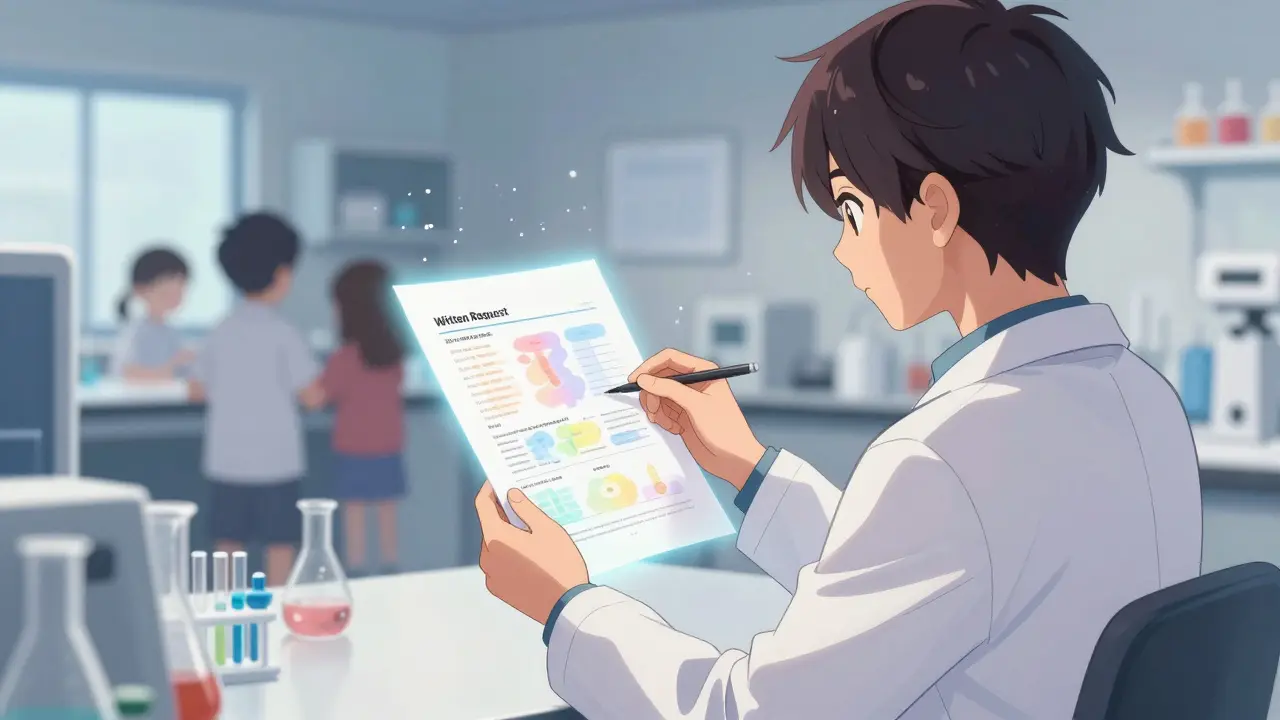
The process starts with communication from regulators. The FDAU.S. Food and Drug Administrationfederal agency responsible for protecting public health through food and drug oversight issues a formal letter called a Written Request. You don't just decide to study a child-safe formulation on your own; you must respond to a specific request outlining the necessary clinical trials.
- You receive the Written Request specifying the age groups and safety endpoints needed.
- You conduct the studies according to Good Clinical Practice standards.
- You submit a Supplemental New Drug Application containing the data.
- FDA reviews the submission within 180 days.
- Upon acceptance of the reports, the six-month clock triggers.
It is crucial to note that you do not need a label change to get this exclusivity. Unlike other types of regulatory protection, you only need to complete the studies and submit them per the filing requirements. Once the agency determines the studies were "acceptable," the protection activates automatically.
Distinguishing Patent Term From Market Protection
This is where most people get confused. Does pediatric exclusivity add six months to your patent? No. Your patent expiration date on the certificate remains exactly the same. What changes is the regulatory landscape surrounding that patent.
The extension applies to marketing approvals found in the Orange BookApproved Drug Products with Therapeutic Equivalence Evaluationsofficial publication listing FDA-approved drug products and related intellectual property. Specifically, it extends any non-patent marketing exclusivity periods, such as five-year New Chemical Entity exclusivity or three-year New Clinical Investigation exclusivity.
| Feature | Patent Term Extension (PTX) | Pediatric Exclusivity |
|---|---|---|
| Duration | Up to 5 years | Fixed at 6 months |
| Timing | Adds time to end of patent | Blocks ANDA approval temporarily |
| Eligibility | Compensates regulatory review time | Completing pediatric studies |
| Impact | Prolongs IP right | Extends regulatory barrier only |
Because it acts as a regulatory block, it covers all scenarios where an Abbreviated New Drug Application (ANDA) would rely on your patent data. Even if the underlying patent expires today, the FDA cannot issue final approval to a generic copy during the six-month window unless the generic company secures a court ruling invalidating the claim or obtains a waiver from you. This distinction is critical for timing your freedom-to-operate strategies.
Scope of Protection Across Formulations
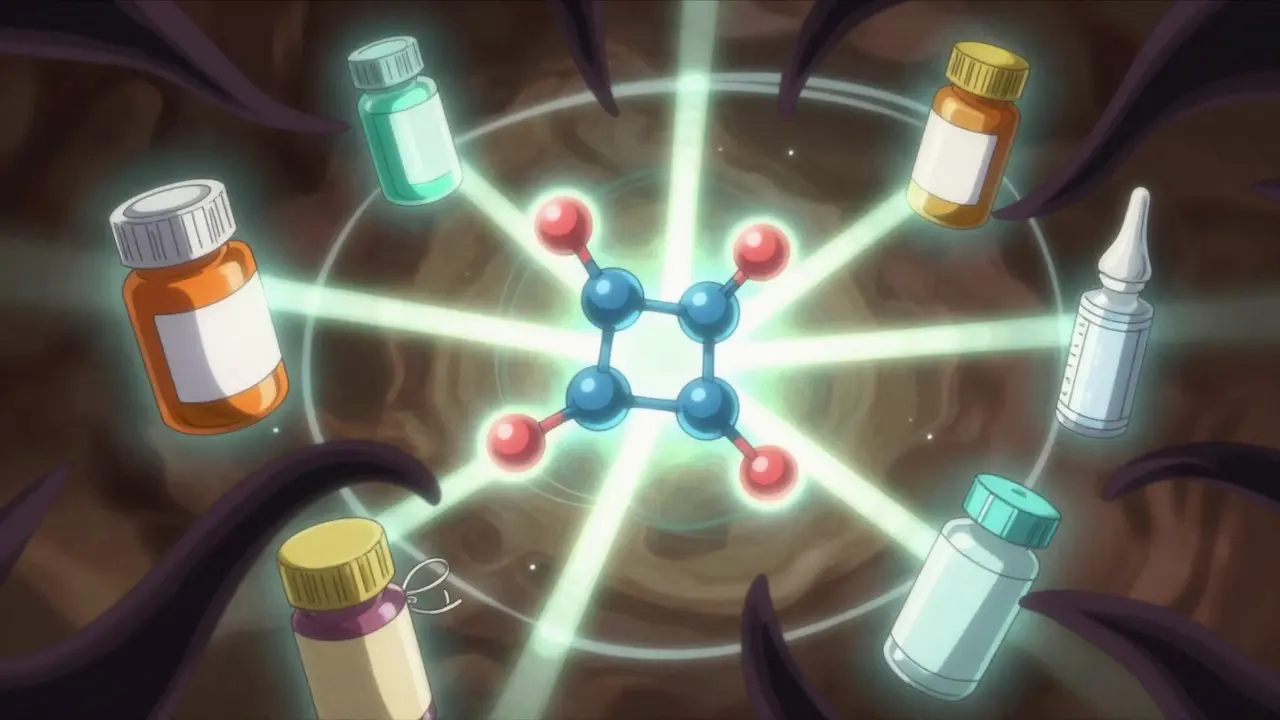
One of the most powerful aspects of this exclusivity is its broad scope. The protection is tied to the active moietythe specific molecule or ion responsible for the therapeutic activity of the drug, not just the single tablet you tested. Imagine you have an oral pill, a topical cream, and eye drops all based on the same chemical compound.
If you run the required pediatric study on the oral tablet and satisfy the Written Request, the six-month exclusivity attaches to all dosage forms and indications containing that active moiety. This means the generic competitor cannot launch their version of the eye drops either, even though they weren't part of the trial.
This multiplies the value of the program significantly. For blockbuster drugs with multiple formulations, one set of studies can lock out competition on the entire product line simultaneously. However, there is a catch: there must be some remaining exclusivity or patent life left on the products when the award is granted. If the patent has fully expired and there is no marketing exclusivity remaining, this specific benefit generally does not apply unless the supplemental application itself qualifies for new exclusivity.
Handling Generic Challenges and Exceptions
Generic manufacturers know this game well. They often file Paragraph IV certifications claiming your patent is invalid or they will not infringe upon it. If a generic company successfully sues and prevails in Paragraph IV litigation, the FDA may approve the drug before your exclusivity period ends.
Recent analyses, including insights from the FDA's 2020 guidance documents, clarify that the agency respects court rulings. If a judge decides your patent isn't enforceable, the exclusivity block disappears. The protection is "ironclad" only against applications that rely on your data without a successful challenge. There is also a procedural exception: if the generic applicant dismisses their civil action within 45 days of being sued, they can bypass certain hurdles, though a waiver from you is still required.
Furthermore, exclusivity doesn't prevent the FDA from reviewing an ANDA. They can perform all the administrative work. They simply cannot grant the final approval until the window closes. This means the generic enters the market the day after the six months end, leading to immediate price erosion once the protection lifts.
Strategic Limitations for Biologics
You need to be aware of a major gap in coverage: biologics. The Pediatric Exclusivity provision explicitly states it applies to drug products regulated under NDAs. It does not cover biologics regulated under the Biologics Price Competition and Innovation Act (BPCIA).
Unlike small molecule drugs where patent linkage prevents FDA approval directly, biosimilars operate under different patent linkages. This means the automatic statutory block on approval does not function the same way for monoclonal antibodies or large-molecule therapies. While you can still get pediatric data approved for a biologic, you won't get the automatic six-month exclusivity shield that freezes the approval date in the Orange Book.
Frequently Asked Questions
Does pediatric exclusivity extend the actual patent term?
No. It does not change the patent expiration date on the certificate. It creates a regulatory barrier that prevents the FDA from issuing final approval to a competing generic product for six months, regardless of whether the patent has technically expired.
Do I need a label change to qualify?
Not necessarily. You must complete acceptable studies and submit reports according to the Written Request. Approval of a label update is not strictly required for the exclusivity to attach, only the acceptance of the study data.
Can generic companies launch early if they win litigation?
Yes. If a generic company wins a Paragraph IV infringement lawsuit proving the patent is invalid, the exclusivity barrier is removed, and the FDA can approve the application before the six-month period concludes.
Does this apply to my drug's eye drops if I tested the pill?
Yes, provided they share the same active moiety. Pediatric exclusivity extends protection to all dosage forms and indications containing that specific molecule held by the sponsor at the time of the grant.
Is pediatric exclusivity available for biologics?
No. The statute limits applicability to drug products under Section 505(b) of the FD&C Act. Biological products regulated under the PHS Act (including those seeking biosimilar approval) do not qualify for this specific six-month exclusivity protection.


Arun Kumar
April 1, 2026 AT 20:31The regulatory mechanics described here highlight why many stakeholders misunderstand the true value proposition of pediatric studies.
Eleanor Black
April 2, 2026 AT 21:32The regulatory framework described here is indeed complex. Many people fail to grasp the nuance between patent terms and exclusivity periods. It is important to note that the FDA does not extend the actual intellectual property right itself. Instead, they create a temporary barrier against generic competition approval. This distinction matters significantly when calculating product lifecycles for revenue planning. Companies often miscalculate their financial projections by assuming this extends the monopoly date on paper. The statutory language specifically targets the Orange Book listings rather than the USPTO certificate. You must consider how the active moiety definition impacts your entire portfolio strategy. A single study on one formulation can block generics across different dosage forms entirely. This leverage is powerful yet frequently underutilized by smaller biotech firms lacking resources. Large conglomerates understand how to maximize this window during merger negotiations as well. Legal counsel needs to coordinate closely with regulatory affairs teams to execute this properly. Timing is everything regarding when the written request arrives versus patent expiry dates. Any misalignment could result in lost revenue opportunities worth millions easily. We should all advocate for clearer guidance documents from the agency moving forward. :)
Cara Duncan
April 4, 2026 AT 08:25This is such an interesting way to secure extra time without fighting patent courts directly 🌟 The scope covering all dosage forms really changes the game 💡
Russel Sarong
April 4, 2026 AT 13:28!!! That scope expansion is exactly what most analysts overlook !!!
Rocky Pabillore
April 4, 2026 AT 16:26Anyone claiming otherwise clearly lacks understanding of basic IP fundamentals in this sector.
James DeZego
April 5, 2026 AT 06:18It actually depends heavily on whether the generic company challenges the patent validity successfully before the clock starts :)
Owen Barnes
April 6, 2026 AT 19:37I beleive thier recieve of the written request is the crux of the matter. It shold be noted that timing is very imporant for thse things.
Christopher Beeson
April 7, 2026 AT 03:50The system essentially rewards compliance while punishing innovation stagnation through artificial barriers.
Callie Bartley
April 7, 2026 AT 14:32We cannot allow foreign entities to exploit loopholes designed for domestic patient safety benefits alone.
Sharon Munger
April 7, 2026 AT 21:21The distinction regarding biologics is particularly noteworthy in current litigation contexts.
Cullen Zelenka
April 8, 2026 AT 15:22There is still a lot of room for growth in how companies utilize these windows effectively.