Patents Don’t Expire the Same Way Everywhere
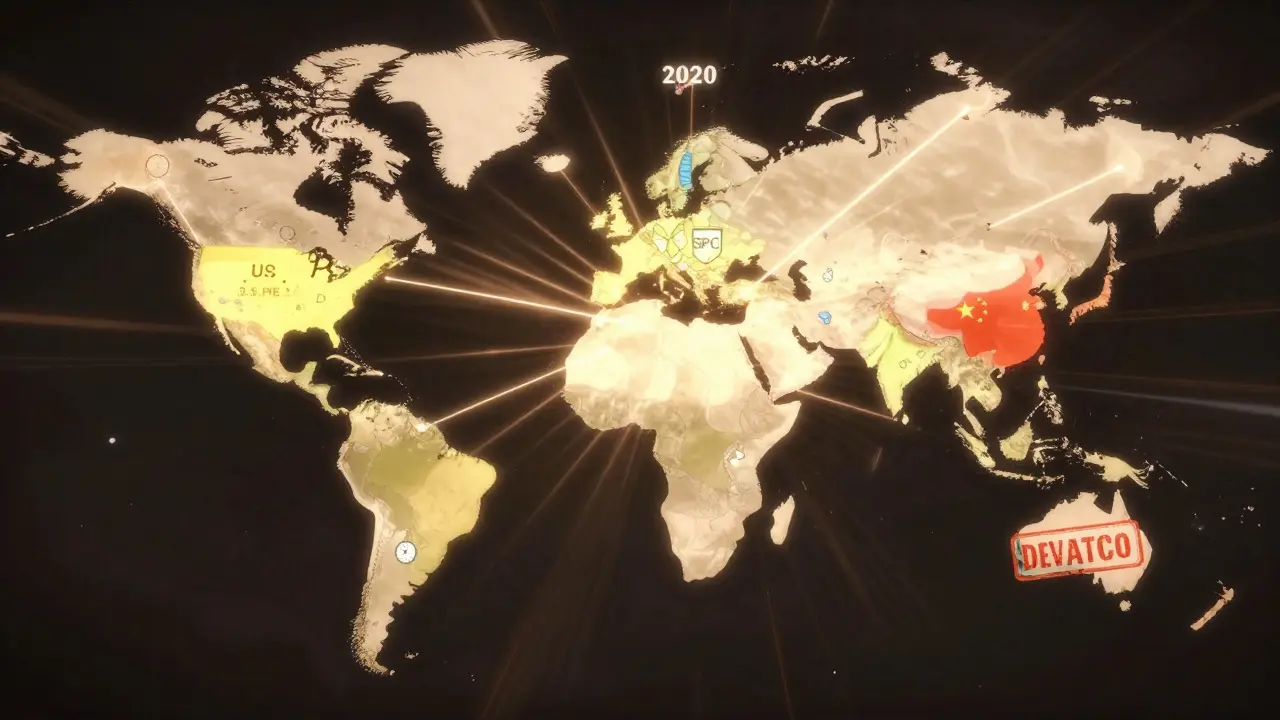
You might think a patent lasts 20 years everywhere-like a universal timer ticking down from the day you file. But that’s not true. In the U.S., a patent might expire in 20 years and 8 months because of delays at the patent office. In Europe, the same patent could get an extra 5 years if it’s a drug. In China, delays in examination can add time. In Brazil, the patent office is so backed up that many patents expire before they even get reviewed. This isn’t a glitch. It’s the system.
The global standard, set by the TRIPS Agreement a 1994 international treaty under the World Trade Organization that mandated a minimum 20-year patent term from filing date, did bring order. Before 1995, the U.S. gave patents 17 years from the grant date-not the filing date. That meant companies could delay getting a patent issued to stretch out protection. Now, nearly every country uses the 20-year clock starting from the first filing. But that’s where the harmony ends.
Why the Filing Date Matters More Than You Think
When you file a patent in one country, you get a priority date. That’s your anchor. Under the Paris Convention an international treaty signed in 1883 that allows inventors to file in other countries within 12 months and claim the original filing date, you have 12 months to file in other countries and still keep that original date. This is critical. If you file in the U.S. on January 1, 2020, and then file in Germany on December 15, 2020, your German patent still counts as filed on January 1, 2020. That means it expires on January 1, 2040-not December 15, 2040.
But here’s the catch: if you use the Patent Cooperation Treaty (PCT) a system administered by WIPO that lets you file one international application to delay national filings for up to 30 or 31 months, you can push out your national filings. You file a PCT application on January 1, 2020. You don’t have to pick which countries you want protection in until 30 or 31 months later. That gives you time to test markets, raise funding, or decide whether to spend thousands on patent fees in 10 countries. But the 20-year clock doesn’t reset. It still runs from January 1, 2020. Your patent expires in 2040, no matter when you enter each country’s system.
Country-Specific Rules That Change Everything
Let’s say you have a pharmaceutical patent filed in 2020. In the U.S., you might get a Patent Term Extension (PTE) a regulatory delay adjustment under 35 U.S.C. § 156 that can add up to 5 years to a patent term for drugs subject to FDA review if the FDA took too long to approve it. The average PTE in 2022 was 3.5 years. That means your patent could last until 2043.5-longer than your child’s college tuition timeline.
In Europe, you get something similar called a Supplementary Protection Certificate (SPC) a patent extension available in EU countries that compensates for regulatory approval delays, with a maximum of 5 years plus a 6-month pediatric extension. You can stack it with the 20-year term. So a drug patent filed in 2020 could last until 2045 if it gets both the full SPC and pediatric extension. Japan also allows extensions for unreasonable delays in examination-over 3 years-or regulatory delays over 1 year. China introduced patent term compensation in 2021 for similar reasons.
But not every country plays fair. India gives no extensions at all. If your drug sits in regulatory limbo for 7 years, you still lose 7 years of market exclusivity. Australia allows extensions for office delays, but only if they exceed a certain threshold. Brazil’s patent office has a backlog so large that many patents expire before they’re even granted. In practice, the effective term can be as short as 10 years.
Maintenance Fees: The Silent Killer of Patents
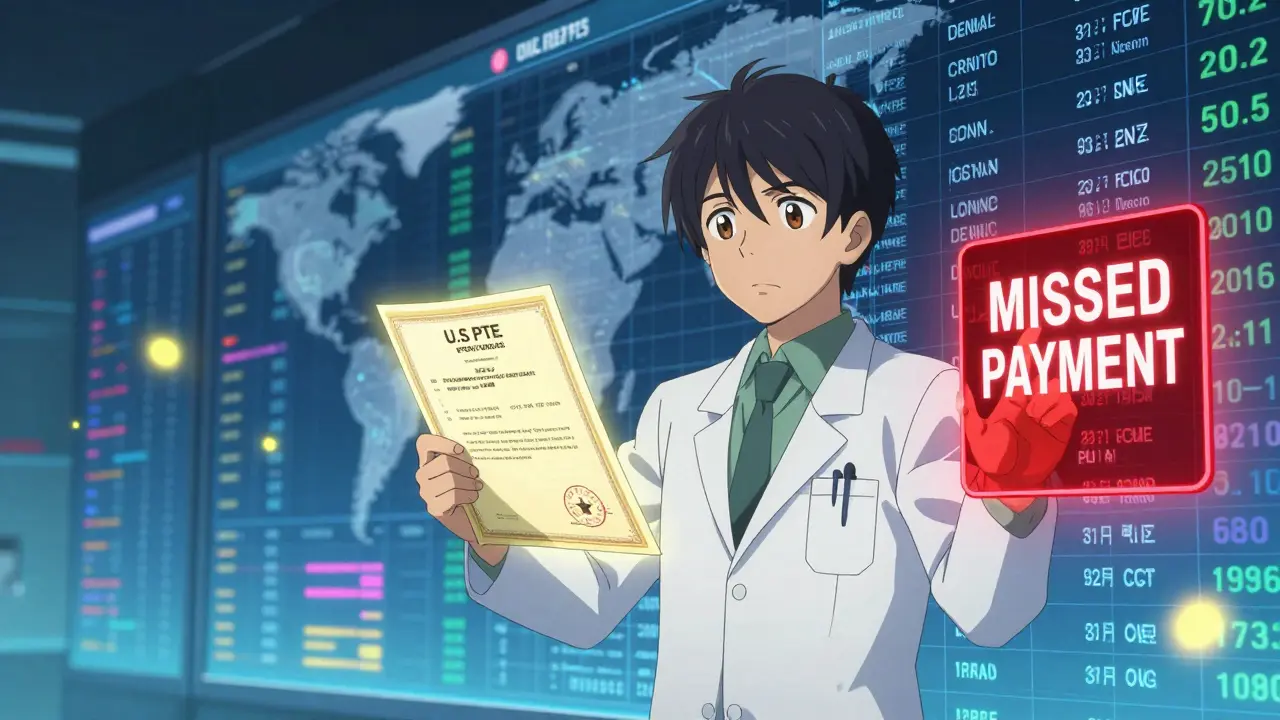
Even if your patent is set to expire in 2040, it can die years earlier-if you don’t pay the fees. Most countries require maintenance payments at intervals. In the U.S., you pay at 3.5, 7.5, and 11.5 years after grant. Miss one, and your patent dies. You get a 6-month grace period, but you pay extra. In Germany, you pay at years 4, 8, and 12. In Mexico, you pay four times: at 5, 10, 15, and 20 years. Switzerland only requires one payment at grant. If you’re managing a global portfolio, you’re juggling 15 different payment schedules.
Companies like Pfizer and Johnson & Johnson hire teams just to track these deadlines. One missed payment in Brazil can cost you $50,000 in lost revenue. That’s why patent management software isn’t optional-it’s survival.
Utility Models: The Short-Term Alternative
Not every invention needs a 20-year patent. In countries like Germany, China, Japan, and South Korea, you can file a utility model a type of intellectual property protection with shorter terms (typically 6-10 years) and lower examination standards than standard patents. These are cheaper, faster, and easier to get. They’re perfect for mechanical parts, tools, or consumer products with short life cycles. A utility model in China lasts 10 years. In Germany, it’s 10 years too. But you can’t extend it. No PTEs. No SPCs. It’s a fast-track, short-term shield.
Some companies use utility models as a tactical tool. File a utility model in China to block competitors while you wait for your main patent to be approved in the U.S. and Europe. It’s not the same protection, but it’s better than nothing.
The New European Patent: One Patent, 17 Countries
In June 2023, the Unitary Patent a single patent right covering 17 participating European Union countries with uniform enforcement and a 20-year term from filing went live. Before this, if you wanted a patent in Germany, France, and Italy, you had to get three separate patents, pay three sets of translation fees, and enforce them in three courts. Now, you file one, pay one fee, and it covers all 17 countries. The term? Still 20 years from filing. But the cost and complexity dropped dramatically.
This doesn’t change the expiration date-but it changes how you manage it. No more tracking 17 different maintenance dates. One payment system. One renewal calendar. For companies with European markets, this is a game-changer.

Why This Matters for R&D and Innovation
Patent expiration isn’t just a legal detail-it affects how companies spend money. A 2021 study in the Journal of Intellectual Property Law & Practice found that for every year you lose from your patent term, R&D spending drops by 3.2%. That’s because investors need to see a clear return window. If a drug’s patent expires in 2035 instead of 2040, companies may not fund the development in the first place.
Pharmaceutical firms don’t just file patents. They build entire product lifecycles around them. They time clinical trials to maximize PTE eligibility. They file in countries with the longest extensions first. They use utility models to delay generic entry. They track maintenance fees like a stock portfolio. This isn’t legal work-it’s strategic business.
What Happens When a Patent Expires?
When a patent expires, the invention enters the public domain. Anyone can make it, sell it, or improve it. That’s how generics enter the market. In the U.S., the first generic drug maker gets 180 days of exclusivity under the Hatch-Waxman Act. That’s why companies race to file for approval the moment a patent expires.
But expiration doesn’t mean the end of profit. Companies often keep selling branded products even after generics arrive-by improving formulations, changing delivery methods, or bundling with services. The patent may be gone, but the brand isn’t.
Final Reality Check
There’s no global patent. There’s no global expiration date. There’s a 20-year baseline-and then a maze of exceptions, extensions, delays, and fees. If you’re managing patents across borders, you’re not just a lawyer or inventor-you’re a project manager, a financial analyst, and a risk assessor all at once.
Want to know when your patent expires? Don’t just add 20 years to the filing date. Check:
- Which country’s rules apply
- Whether regulatory delays qualify for extensions
- Whether maintenance fees have been paid
- Whether the patent was filed under PCT
- Whether it’s a utility model or standard patent
One missed payment. One overlooked extension. One wrong country. And your 20-year protection vanishes.
Do all countries have a 20-year patent term?
Almost all do, thanks to the TRIPS Agreement. Every WTO member-164 countries as of 2023-must offer at least 20 years from the filing date. But some countries have shorter terms for utility models (6-10 years), and others allow extensions that push the term beyond 20 years. So while the baseline is 20 years, the actual term can be longer or shorter depending on the country and the type of invention.
Can a patent expire before 20 years?
Yes. If the patent owner doesn’t pay maintenance fees, the patent lapses. This happens often in countries with multiple payment deadlines, like the U.S. or Mexico. Patents can also expire early if the owner abandons them or if a court invalidates them. In countries with long patent office backlogs, like Brazil, some patents expire before they’re even granted.
What’s the difference between a PCT application and an international patent?
There’s no such thing as an international patent. A PCT application is a single filing that lets you delay choosing which countries you want to protect your invention in-up to 30 or 31 months. After that, you must enter the national phase in each country separately. Each country then examines and grants its own patent. The PCT doesn’t grant patents-it just delays the cost and complexity of filing in multiple countries.
Why do pharmaceutical patents last longer than other patents?
Because drug development takes years of clinical trials and regulatory review. A patent filed in 2020 might not get FDA approval until 2028. That leaves only 12 years of market exclusivity. To compensate, countries like the U.S., EU, Japan, and China offer patent term extensions (PTEs or SPCs) that add back time lost during regulatory review. These extensions can add up to 5 years-or more with pediatric bonuses.
How do I find out when my patent expires in another country?
You need to check the patent office database for that country. In the U.S., use the USPTO’s PAIR system. In Europe, use the EPO’s Espacenet. In China, use CNIPA’s system. But don’t rely on automated tools alone. Manual review is often needed because extensions, fee payments, and legal challenges can change the expiration date. Many companies use specialized patent management software that pulls data from multiple national offices and flags upcoming deadlines.
Does the U.S. still have a 17-year patent term?
No. Before June 8, 1995, U.S. patents lasted 17 years from the issue date. After that date, the U.S. switched to 20 years from the filing date to comply with TRIPS. Patents filed before June 8, 1995, are still subject to the old rule-so they expire at the later of 20 years from filing or 17 years from issue. But no new patents are granted under the old system.



June Richards
January 31, 2026 AT 21:29Jaden Green
February 1, 2026 AT 00:13Lu Gao
February 1, 2026 AT 13:30Angel Fitzpatrick
February 1, 2026 AT 20:37Melissa Melville
February 2, 2026 AT 05:25Bryan Coleman
February 3, 2026 AT 23:57Naresh L
February 5, 2026 AT 03:37Sami Sahil
February 5, 2026 AT 22:19franklin hillary
February 6, 2026 AT 22:31Ishmael brown
February 8, 2026 AT 20:22Aditya Gupta
February 8, 2026 AT 23:56Nancy Nino
February 9, 2026 AT 00:58