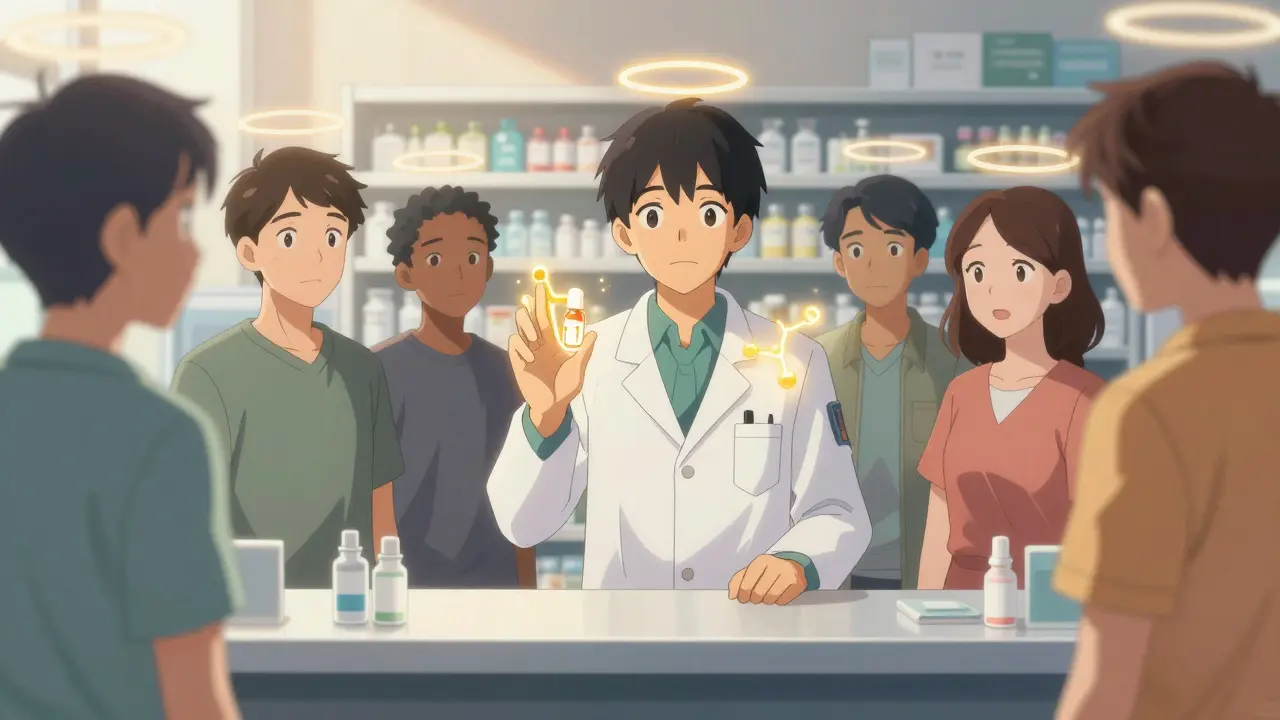
When you pick up a prescription, do you ever wonder why one pill looks completely different from another-even if they’re supposed to be the same medicine? If you’ve ever been handed a generic version of your usual brand-name drug and felt uneasy, you’re not alone. Many people do. But here’s the truth: generic medications aren’t cheaper because they’re weaker. They’re cheaper because they don’t carry the marketing costs, patent monopolies, or flashy packaging of their brand-name cousins. The real question isn’t whether they work-it’s why we still doubt them.
They’re the Same Drug, Just Without the Brand Name
Generic drugs contain the exact same active ingredient, strength, dosage form, and route of administration as the brand-name version. That’s not a marketing claim-it’s a legal requirement enforced by the FDA. To get approved, a generic must prove it’s bioequivalent: meaning it delivers the same amount of medicine into your bloodstream at the same speed as the original. The FDA requires this range: 80% to 125% of the brand’s performance. That’s not a wide margin-it’s a tight one. If a generic falls outside that, it gets rejected.Take levothyroxine, the drug used to treat hypothyroidism. One study tracked a patient who switched from Synthroid (brand) to generic levothyroxine. Her TSH levels stayed perfectly stable for over two years. She saved $300 a year. No side effects. No drop in effectiveness. Just lower cost. That’s not rare. It’s routine.
And yet, 33% of patients still believe generics contain only 80% of the active ingredient. That’s a myth. In reality, generics must contain 90-110% of the active ingredient, with strict manufacturing controls. The difference you see? That’s the inactive stuff-dyes, fillers, coatings. These don’t affect how the drug works. But they can change the pill’s color, shape, or size. And that’s where trust starts to crack.
Why Do People Doubt Generics?
It’s not about science. It’s about psychology.In Greece, only about 70% of patients trust generics when their doctor recommends them. In the U.S., it’s 94%. Why the gap? In Greece, 54% of people think brand-name drugs are higher quality. In the U.S., 82% have used generics and say they’re just as good. The difference? Exposure. Education. Trust in the system.
But even in the U.S., doubts linger. A patient on Reddit shared: “My generic Lyrica made me nauseous. The brand never did.” That story sticks. And it’s real-for some people, switching to a different inactive ingredient can trigger mild reactions. That doesn’t mean the generic is inferior. It means bodies react differently to dyes or fillers. But too often, that experience gets misread as “the generic doesn’t work.”
Older adults are more likely to trust generics-71% of those over 60 say they’re safe. Younger people? Less so. Why? Older patients have more experience with the system. They’ve seen doctors prescribe generics for decades. They’ve paid less out of pocket. They know what savings look like.
And then there’s the pharmacist. When you walk into a pharmacy and your usual blue pill is now white and oval-shaped, do you ask why? Or do you assume something’s wrong? Most people don’t ask. They just feel uneasy. That’s the system’s fault-not the patient’s.
The Role of Doctors and Pharmacists
Healthcare providers are the most powerful tool in building trust. A 2024 study found that 87.6% of patient decisions about generics could be predicted based on whether their doctor recommended them. That’s higher than any marketing campaign, TV ad, or website.When a doctor says, “This generic is just as effective and will save you $100 a month,” patients listen. But too often, doctors skip the conversation. They assume patients know. Or they’re in a rush. Or they don’t know the data themselves.
Here’s what works: a simple 10-minute chat. Show a diagram. Explain bioequivalence. Compare the active ingredients side by side. Use the word “same.” Not “similar.” Not “almost.” “Same.”
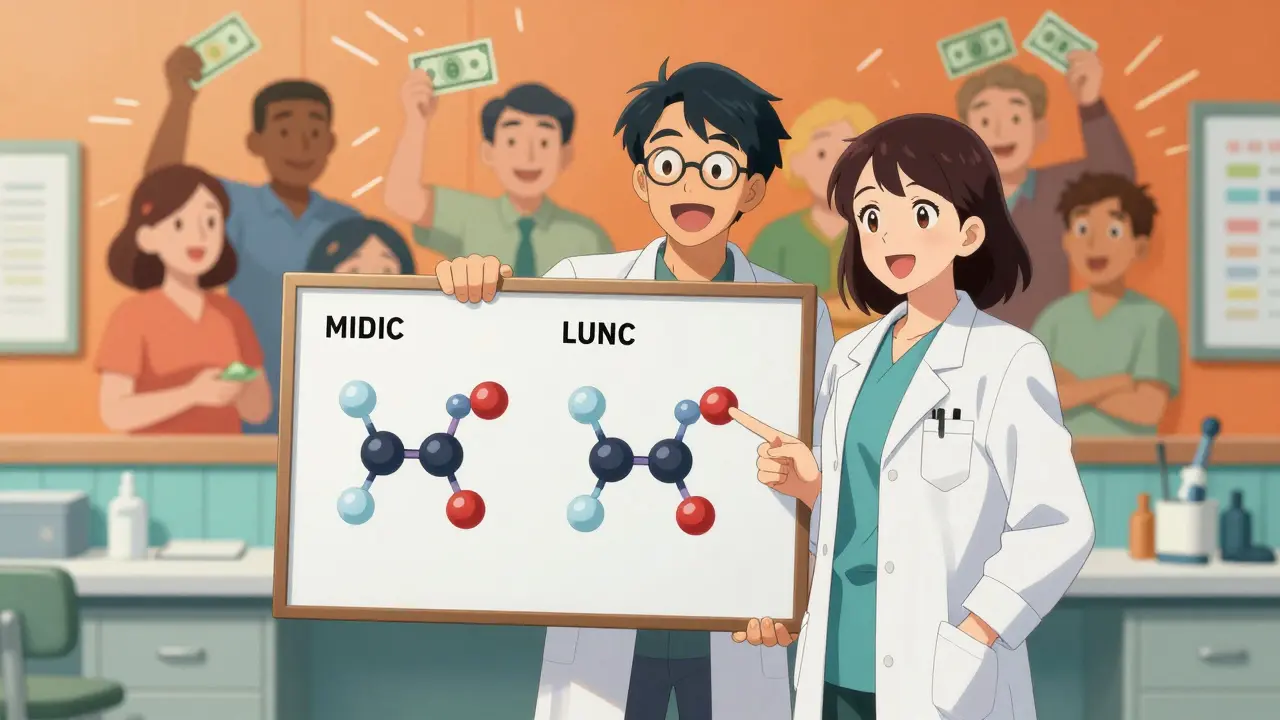
Kaiser Permanente cut generic refusal rates by 37% using a visual toolkit that showed identical molecular structures between brand and generic. Mayo Clinic hit 92% patient satisfaction on generic discussions by having pharmacists lead the conversation. Why? Because patients trust pharmacists more than they trust ads. More than they trust websites. More than they trust their own fears.
What’s Changing Now?
In January 2024, the FDA launched “Know Your Options,” a $15 million public education campaign. They’re using billboards, social media, and pharmacy flyers to show side-by-side comparisons of brand and generic pills. Same molecule. Same effect. Different price.Pharmacies are catching up too. CVS Health is testing AI tools that analyze your prescription history and send personalized messages: “You’ve been on this generic for 6 months. No changes in your blood work. You’ve saved $420.” That kind of feedback builds trust faster than any pamphlet.
By 2025, 78% of generic manufacturers will include QR codes on packaging. Scan it, and you’ll see the manufacturing site, batch number, and FDA inspection records. Transparency isn’t just good business-it’s trust-building.
How to Start Trusting Generics
If you’re unsure about switching:- Ask your doctor: “Is there a generic version of this drug?” If yes, ask why it’s not being prescribed.
- Ask your pharmacist: “Can you explain the difference between this brand and generic?” They’re trained to answer this.
- Check your pill. If it looks different, don’t panic. Look up the drug name + “generic appearance” online. You’ll see it’s normal.
- Monitor how you feel. If you notice side effects, tell your provider. But don’t assume it’s the generic’s fault. Sometimes, it’s just your body adjusting.
- Track your savings. Write down how much you paid last month vs. this month. That number speaks louder than fear.
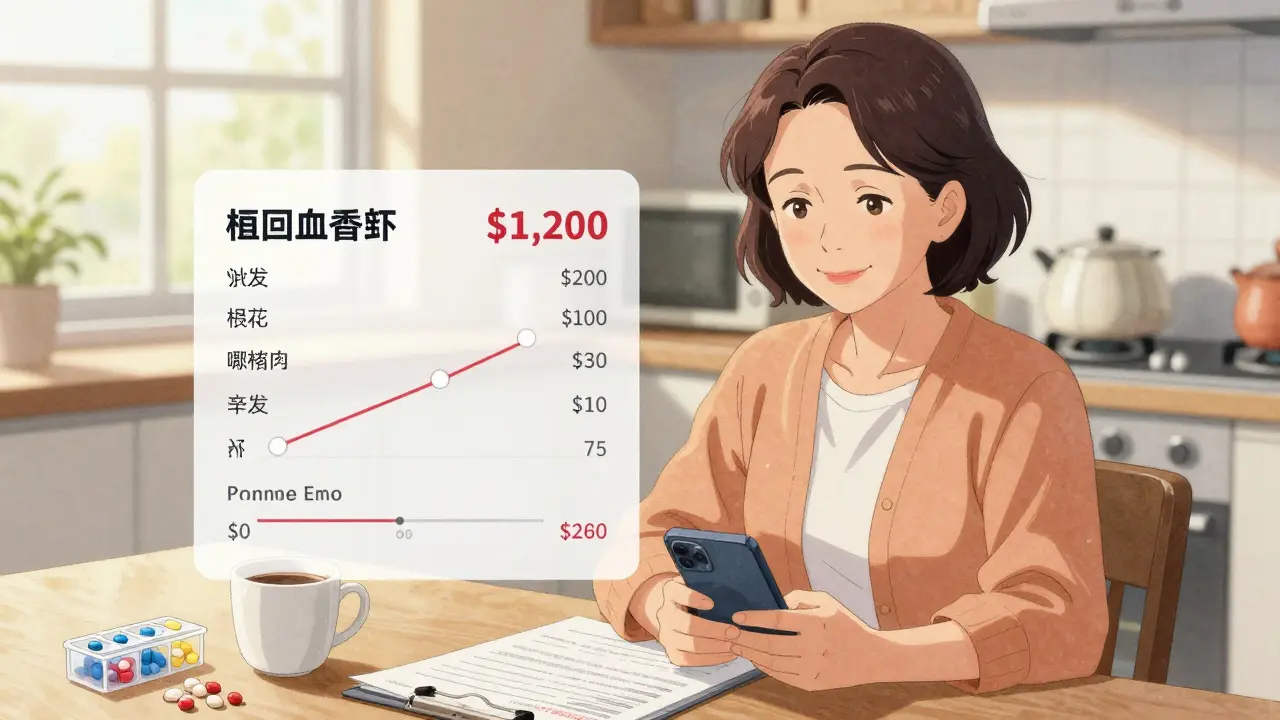
One Medicare patient switched from Eliquis to generic apixaban and saved $1,200 a year. Her blood tests didn’t change. Her anxiety did. But after three months, she said: “I wish I’d done this sooner.”
The Bigger Picture
Generics make up 90% of all prescriptions in the U.S. But they account for only 23% of drug spending. That’s because they cost 80-85% less. That’s $1.7 trillion in potential savings over the next decade-if we stop letting fear get in the way.It’s not about being cheap. It’s about being smart. A generic isn’t a downgrade. It’s a smart choice. It’s the same medicine, approved by the same agency, made to the same standards. It’s just not paying for a logo.
Next time you get a generic, don’t just take it. Ask. Learn. Compare. You might just save money-and finally stop worrying about whether it’s good enough.


RacRac Rachel
March 4, 2026 AT 02:43Just switched my mom’s levothyroxine to generic last month-she’s been on it for 6 months now, and her TSH is still perfect. 💚 She used to freak out every time the pill looked different, but now she laughs and says, ‘Same chemistry, different costume.’ Saved $360 a year. Why do we make this so hard? 🙃
Jane Ryan Ryder
March 5, 2026 AT 22:07LOL so now we’re selling generic drugs like they’re some kind of moral victory? 🤡 My cousin’s heart med went generic and she ended up in the ER because her body reacted to the dye. Don’t pretend everyone’s fine. This isn’t science-it’s corporate propaganda with a smiley face.
Callum Duffy
March 6, 2026 AT 18:47It is, indeed, a fascinating sociological phenomenon: the disparity between clinical equivalence and perceived efficacy. The psychological weight of visual dissimilarity cannot be understated, particularly in populations with limited health literacy. The pharmaceutical industry’s branding infrastructure has, over decades, constructed an implicit association between appearance and quality-a bias that empirical data alone struggles to dismantle.
Chris Beckman
March 8, 2026 AT 13:53yo i read this whole thing and like… the fda says 80-125% bioequivalent? that’s wild. like if your drug is 125% as strong as the brand name, isn’t that just… a stronger drug? and why do we even allow that? i’m not a doctor but i know what i know. also typos are free. 😎
Levi Viloria
March 9, 2026 AT 14:48My dad’s from rural Kentucky. He wouldn’t touch a generic until his pharmacist sat down with him, showed him the FDA paperwork, and said, ‘This is the same pill, just no logo.’ He cried. Not because he was sad-because he realized he’d been overpaying for 12 years. That’s the moment trust was built. Not with ads. Not with studies. With a human being taking 10 minutes.
Richard Elric5111
March 11, 2026 AT 04:29One cannot help but contemplate the epistemological dissonance inherent in the modern pharmacopeia. The patient, conditioned by semiotic cues-color, shape, imprint-confuses the container with the contained. The active ingredient, ontologically identical, is rendered alien by the inert adjuncts. Thus, we are not dealing with a failure of science, but with a failure of symbolic cognition. The pill, stripped of its branding, becomes an existential threat-not because it is different, but because it refuses to conform to the myth of distinction.
Dean Jones
March 11, 2026 AT 08:29Let me tell you something that nobody else is saying. The reason generics are so misunderstood isn’t because people are dumb. It’s because the system is designed to keep them confused. Pharmacies change the pill without warning. Doctors don’t explain. Insurance companies push generics like they’re doing you a favor, not like they’re saving your life. And then, when someone has a weird reaction to a new dye or filler-maybe they’re allergic to red #40, fine-they get blamed for being paranoid. But here’s the truth: if you’re not told what changed, you have every right to be scared. This isn’t about trust in generics. It’s about trust in the entire healthcare machine-and right now, it’s broken. We need mandatory labeling, we need pharmacist consultations, we need transparency-not just QR codes that lead to a PDF nobody reads. We need to stop treating patients like numbers and start treating them like people who deserve to know what’s going into their bodies.
Donna Zurick
March 13, 2026 AT 02:52My husband’s cholesterol med switched and he thought he was getting scammed. We looked it up together. Same molecule. Same results. Now he calls it his ‘stealth pill.’ 😎 We saved $500. I’m telling everyone.
tatiana verdesoto
March 13, 2026 AT 03:34My grandma’s on generic metformin. She’s 78. She said, ‘If it was bad, they wouldn’t let me take it.’ Simple. True. She’s had it for 8 years. No issues. No drama. Just less money spent on pills. We need more stories like hers.
Jessica Chaloux
March 13, 2026 AT 06:40I switched to generic Lyrica and had nightmares for 3 weeks. I thought I was going crazy. Then I read the label and realized the fillers were different. I went back to brand. My anxiety didn’t go away. But my sleep did. So now I pay more. And I’m okay with that. This isn’t about money. It’s about peace.
Mariah Carle
March 13, 2026 AT 18:18There’s a deeper layer here: we don’t just fear the generic. We fear the system that made us believe we needed the brand. The same system that told us luxury packaging = better health. The same system that profits from our confusion. The pill doesn’t change. We do. And maybe, just maybe, we need to stop blaming the pill and start asking why we were taught to distrust it in the first place.
Divya Mallick
March 15, 2026 AT 16:12IN INDIA WE HAVE BEEN USING GENERICS FOR DECADES. NO ONE CARES WHAT THE PILLS LOOK LIKE. WE CARE IF IT WORKS. AND IT DOES. YOUR WESTERN OBSESSION WITH BRANDING IS A LUXURY. 90% OF OUR POPULATION RELIES ON GENERICS. WE DON’T HAVE THE BUDGET FOR BRANDS. AND YET, WE LIVE. WE THRIVE. YOUR FEAR IS A PRIVILEGE.
Alex Brad
March 16, 2026 AT 06:20Pharmacist said same thing. Took 2 minutes. I believed him. Saved $420. Done.