What Is HPV, and Why Should You Care?
Human papillomavirus, or HPV, is one of the most common viruses you can get. Nearly everyone who’s sexually active will get at least one type of HPV in their lifetime. Most of the time, your body clears it on its own without any symptoms. But some types don’t go away-and that’s where the real risk begins.
There are over 200 types of HPV, but only about 14 are considered high-risk. Among these, HPV 16 and 18 cause about 70% of all cervical cancers. They’re also linked to cancers of the vulva, vagina, penis, anus, and throat. The scary part? These cancers don’t show up overnight. It can take 10 to 20 years for an HPV infection to turn into cancer. That’s a long window to catch it early-if you know what to look for.
The HPV Vaccine: A Simple Shield Against Cancer
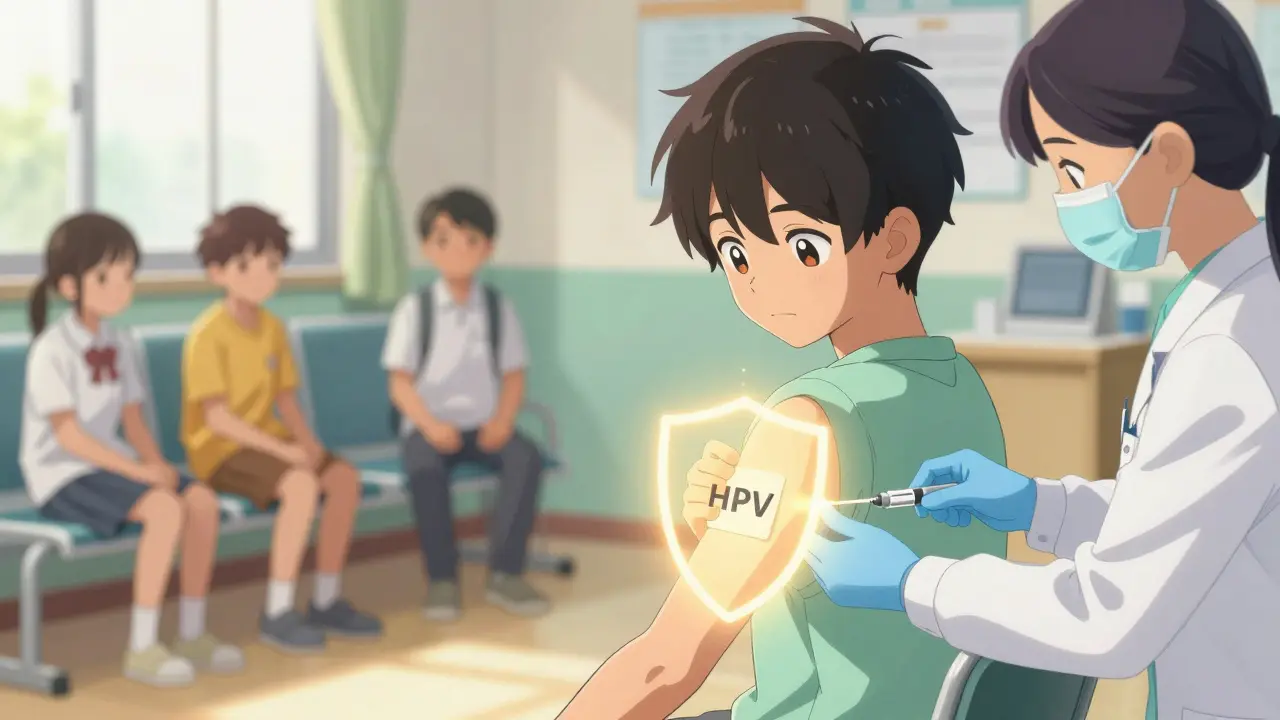
The HPV vaccine is one of the most effective cancer-prevention tools we have. It’s not just for teens. The vaccine works best when given before any exposure to the virus, which is why it’s recommended for kids as young as 9. But it’s still helpful up to age 45.
Today’s vaccines, like Gardasil 9, protect against nine types of HPV, including the two most dangerous ones: 16 and 18. That means it prevents about 90% of HPV-related cancers. Studies show that in countries with high vaccination rates-like Australia and the UK-cases of precancerous cervical changes have dropped by over 80% in young women.
It’s not just about girls. Boys get it too. HPV causes throat and anal cancers in men, and vaccinating boys reduces transmission to partners. The CDC and WHO both recommend the vaccine for all children at ages 11-12, with two doses if started before 15. After 15, you need three doses.
Some people worry the vaccine encourages early sexual activity. No study has ever shown that. It simply gives the body a head start in fighting a virus that can cause cancer decades later.
Screening Has Changed-Here’s What You Need to Know Now
For years, the Pap test was the gold standard. You’d go in for a pelvic exam, a swab of cells from your cervix, and wait for results. But times have changed. Today, the most powerful tool isn’t looking at cells under a microscope-it’s testing for the virus itself.
Primary HPV testing detects the DNA or RNA of high-risk HPV types. It’s more sensitive than the Pap test. A 2018 JAMA study found it catches 94.6% of serious precancers, compared to just 55.4% for Pap alone. That means fewer cancers slip through the cracks.
As of 2020, the American Cancer Society recommends starting screening at age 25 with HPV testing every five years. For those aged 30-65, you have three options:
- Primary HPV test every 5 years (preferred)
- Pap test every 3 years
- Both tests together (cotesting) every 5 years
For women aged 21-24, Pap tests every three years are still the standard. Why? Because HPV is so common in young people, and most infections clear on their own. Testing too early can lead to unnecessary procedures.
What Happens If Your Test Is Positive?
A positive HPV test doesn’t mean you have cancer. It means the virus is there-and your body might need help clearing it.
If you test positive for HPV 16 or 18, you’ll likely be referred for a colposcopy, where a doctor examines your cervix more closely. If you test positive for another high-risk type, you’ll usually get a Pap test as a follow-up. If both are abnormal, you’ll go to colposcopy.
This step-by-step approach-called triage-keeps you from getting unnecessary biopsies. The goal isn’t to treat every HPV infection. It’s to find the ones that are likely to turn into cancer and stop them before they do.
And here’s the good news: if you have a negative HPV test, your risk of developing cervical cancer in the next five years is extremely low-lower than if you had a normal Pap test. That’s why five-year intervals are safe and effective.
Self-Testing Is Changing the Game
One of the biggest barriers to screening? Getting to a clinic. Some people feel uncomfortable with pelvic exams. Others live far from a doctor. Some are undocumented, uninsured, or just too busy.
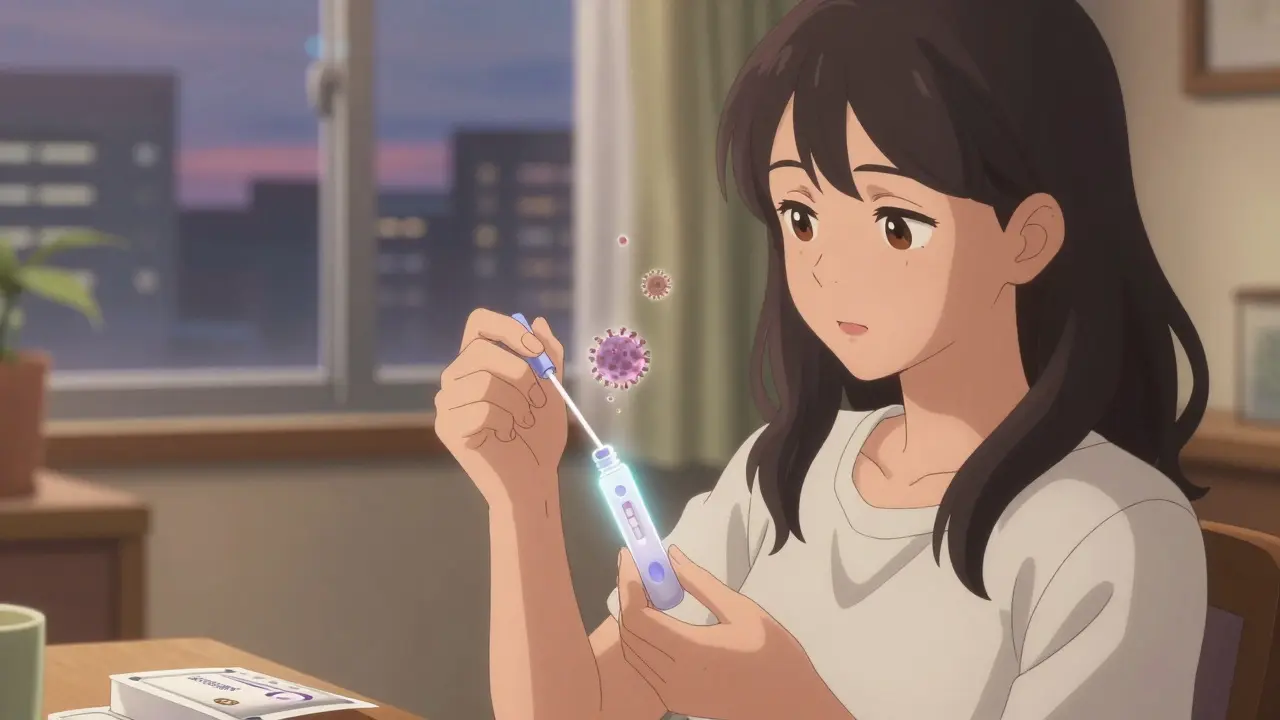
Self-collected HPV testing fixes that. You can swab your own vagina at home, send the sample to a lab, and get results in a week. Studies show it’s just as accurate as a test done by a clinician. Kaiser Permanente started offering it in January 2024, and early data shows it increases screening rates by 30-40% in underserved groups.
In Australia and the Netherlands, home testing programs have already led to more women getting screened. The WHO is now pushing for self-sampling to be included in national programs, especially in low-resource areas.
It’s not about replacing doctors. It’s about removing fear and access barriers. If you’ve avoided screening because of discomfort or logistics, this might be your way in.
Why Vaccination Alone Isn’t Enough
A lot of people think: “I got the vaccine, so I don’t need screening.” That’s a dangerous myth.
The HPV vaccine doesn’t cover all high-risk types. Even the best version only protects against nine. And if you were already exposed to HPV before vaccination, the vaccine won’t clear it. Plus, not everyone gets all the doses, or gets them at the right age.
The CDC is clear: vaccinated people need screening just like everyone else. The vaccine reduces your risk-but it doesn’t eliminate it. Screening is your safety net.
Think of it like wearing a seatbelt. It cuts your risk of death in a crash, but you still need to drive carefully. The vaccine is your seatbelt. Screening is your airbag.

The Big Picture: Global Progress and Stark Inequalities
The world has a plan to eliminate cervical cancer by 2050. The WHO’s 90-70-90 targets are ambitious but achievable:
- 90% of girls vaccinated by age 15
- 70% of women screened with a high-quality test by 35 and again by 45
- 90% of women with disease get treatment
High-income countries like Australia, Canada, and the U.S. are close to hitting these goals. But in low-income countries, only 19% of women have ever been screened. In sub-Saharan Africa, cervical cancer is still the leading cause of cancer death in women.
Here in Australia, cervical cancer rates have dropped by more than 80% since the national HPV program began in 2007. In the U.S., Black women still die from cervical cancer at 70% higher rates than White women-largely because of gaps in access to screening and follow-up care.
Progress isn’t automatic. It needs funding, education, and policy. But the tools exist. We know what works.
What’s Next? AI, Longer Intervals, and Better Tools
Technology is speeding up progress. In January 2023, the FDA approved an AI system called Paige.AI that helps pathologists spot abnormal cells in Pap smears faster and more accurately. It doesn’t replace humans-it makes them better.
Research also suggests that after two negative HPV tests, you might be safe for six years between screens. That could reduce testing burden without sacrificing safety.
And as self-sampling becomes more common, we may see HPV testing offered in pharmacies, schools, or even mail-order kits. The goal is to make screening as easy as a pregnancy test.
What Should You Do Right Now?
If you’re under 26: Get the HPV vaccine if you haven’t already. It’s your best defense.
If you’re 25-65: Talk to your provider about HPV testing. Ask if primary HPV screening is available. If not, stick with Pap tests every three years.
If you’ve never been screened: Don’t wait. Self-sampling might be an option near you. Ask your clinic, community health center, or local public health department.
If you’re over 65: You likely don’t need screening if you’ve had regular negative tests. But if you’ve never been screened, talk to your doctor. It’s never too late.
HPV doesn’t care about your income, your zip code, or your insurance. But you can care about your body. Vaccination and screening are simple, proven, and life-saving. The next step isn’t complicated. It’s just yours to take.
Demetria Morris
February 4, 2026 AT 18:52It's wild how many people still think the vaccine is just for girls. My brother got it at 12, and honestly? I wish more dads would stop being weird about it. It's not about sex, it's about survival. My aunt died of throat cancer linked to HPV-no smoking, no drinking, just bad luck and no vaccine. Don't be that person who waits until it's too late.
Susheel Sharma
February 6, 2026 AT 03:42Let’s be real: HPV screening is a $20 billion industry built on fear. 🤨 The WHO targets? Cute. But in reality, most women will never get screened. And self-sampling? Sure, it’s 'just as accurate'-until the lab loses your sample. Also, AI? That’s just a fancy filter for overworked pathologists. 📉
Jesse Naidoo
February 6, 2026 AT 17:06I got the vaccine at 18 and skipped screening for 6 years because I 'knew I was fine.' Then I got a positive result. Turns out, HPV doesn't care if you're 'careful.' I had a colposcopy. It was humiliating. I cried in the parking lot. If you're reading this and you're scared to go-go anyway. I'm still mad at myself for waiting.
Zachary French
February 7, 2026 AT 01:31Okay, so let me get this straight-vaccine for kids, HPV test every 5 years, and now we’re talking about mail-in swabs? What’s next? HPV detection via smart toilet? 🤯 The CDC says 'vaccination alone isn’t enough'-but honestly, if you’re not vaccinated by 12, you’re already playing Russian roulette with your reproductive system. And don’t even get me started on how we still treat cervical cancer like it’s some kind of moral failing. It’s a virus. Not a sin.
Daz Leonheart
February 8, 2026 AT 07:15My mom got screened at 23 and had a false positive. They did a biopsy. She was terrified for months. Then it cleared. She never went back. I got the vaccine at 11. I got screened at 25. Negative. I’m telling you-this stuff works. You don’t have to be perfect. You just have to show up. One test. One shot. That’s it. You’re doing better than you think.
Coy Huffman
February 10, 2026 AT 05:15There’s a quiet revolution happening here, and no one’s talking about it. We’re moving from reactive medicine to predictive prevention. The vaccine? That’s Phase 1. Screening? Phase 2. Self-sampling? Phase 3. AI-assisted diagnostics? Phase 4. The real win isn’t just fewer cancers-it’s that women no longer have to fear the speculum. That’s dignity. That’s progress. And it’s happening faster than we realize.
Amit Jain
February 11, 2026 AT 00:58Simple truth: if you are woman and over 25, get tested. If you are man or woman under 26, get vaccine. No drama. No shame. Just do it. Many people die because they wait. Your body is yours. Take care.
Keith Harris
February 11, 2026 AT 22:35Oh wow, another 'vaccinate everyone' PSA. Let me guess-you also think we should give kids fluoride toothpaste at birth and mandatory seatbelts in cribs? HPV is just one of 200 viruses. We don’t vaccinate against all of them. Why this one? Because Big Pharma found a way to make it profitable. And now we’re being gaslit into thinking this is 'science' when it’s just marketing with a stethoscope. 🤡
Kunal Kaushik
February 13, 2026 AT 00:21My cousin in Delhi got her first HPV test via a mobile clinic last year. She cried because she thought she’d never get screened. She didn’t have to go to a hospital. No one judged her. Just a nurse, a swab, and a promise: 'We’ll call you.' That’s all it took. 🌍❤️
Mandy Vodak-Marotta
February 13, 2026 AT 23:21Okay, so I’m 31 and I’ve never been screened because I hate pelvic exams. Like, full-on panic attack, sweating, can’t breathe. I thought I was the only one. Then I found out about self-sampling. I ordered a kit online. Took 2 minutes. Sent it back. Got the email saying 'negative' and I cried in my kitchen. Not because I was scared-I was relieved. Like, emotionally relieved. Like I’d been holding my breath for 10 years. And now I’m telling everyone I know. If you’re avoiding this because it’s 'awkward'-you’re not alone. But you’re also not stuck. There’s a way. And it’s easier than you think.