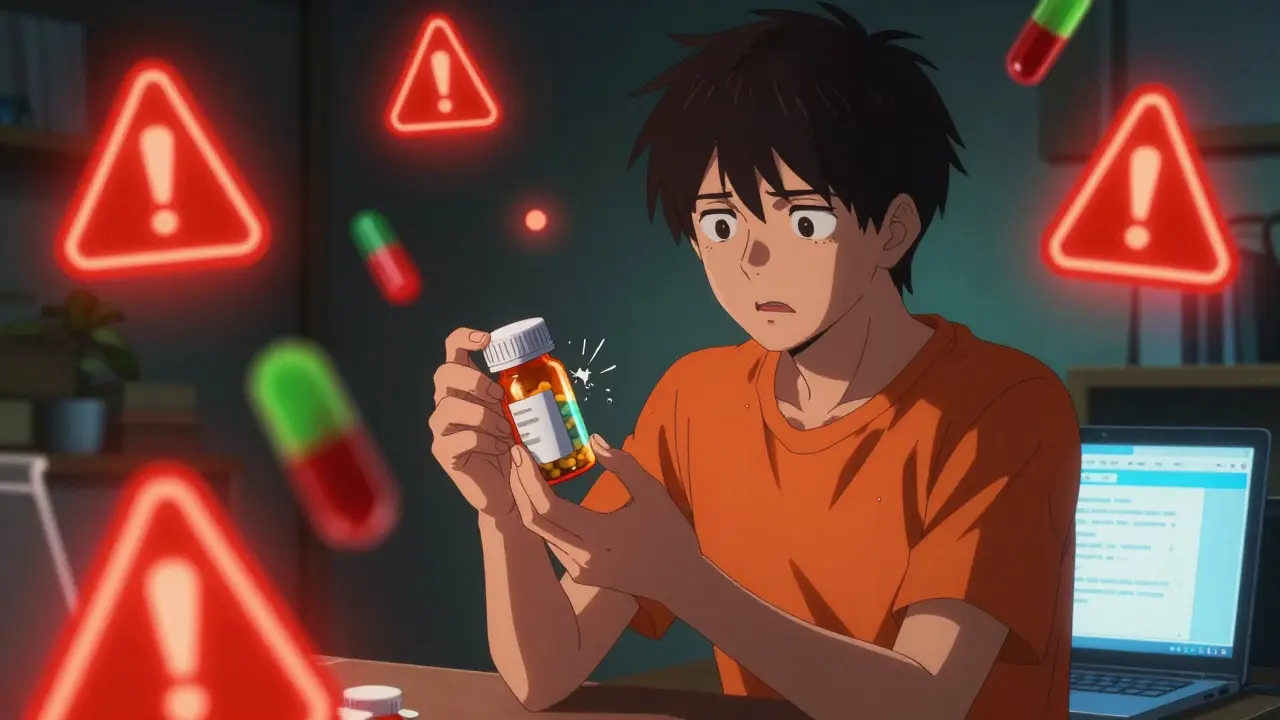
Every year, millions of people around the world take medicine they think is real - but it’s not. Counterfeit or tampered medications can look identical to the real thing, but they might contain no active ingredient, the wrong dose, or even toxic substances like rat poison or paint thinner. In 2022, the global market for fake drugs was worth over $205 billion. That’s not just fraud - it’s a public health emergency. If you suspect a medication is fake, your report could save a life. Here’s exactly how to do it - whether you’re a patient, a pharmacist, or someone who bought pills online.
What Counts as a Counterfeit or Tampered Medication?
A counterfeit medicine is made to look like a real one, but it’s fake. It might have the wrong active ingredient, no ingredient at all, or too much of a dangerous chemical. A tampered medication has been altered after leaving the manufacturer - maybe the packaging was opened and refilled, the expiration date was changed, or the seal was broken and resealed.
Common signs include:
- Packaging that looks blurry, has misspellings, or different colors than usual
- Pills that are the wrong shape, color, or size compared to what you’ve taken before
- Unusual smell or taste - like chemical or metallic
- Missing or altered batch numbers, expiration dates, or manufacturer info
- Seals that don’t match the brand’s design or are broken
- Buying from a website that doesn’t require a prescription for controlled drugs
These aren’t just red flags - they’re warning signs that someone’s risking your life. The FDA found that 96% of online pharmacies selling drugs without prescriptions in 2022 were illegal. If you bought medicine from a site you found through a Google ad or a social media post, you’re in high-risk territory.
What to Do Right After You Suspect a Fake Drug
Don’t throw it away. Don’t take more. Don’t flush it. Here’s what to do immediately:
- Stop using the medication - even if you think it’s working.
- Keep the original packaging, bottle, blister pack, receipt, and any online order confirmation.
- Take clear photos of the product: front and back of the box, the label, the pills, and the batch/lot number.
- Don’t handle the pills more than necessary. Wash your hands after touching them.
- If you’ve already taken some, monitor yourself for unusual symptoms - dizziness, nausea, rash, or sudden changes in how you feel.
Why preserve everything? Because the more evidence you have, the faster authorities can act. Dr. Paul Newton from Oxford University found that reports with photos and batch numbers are 68% more likely to lead to a successful investigation. Your photos might be the key that shuts down a whole distribution network.
How to Report in the United States
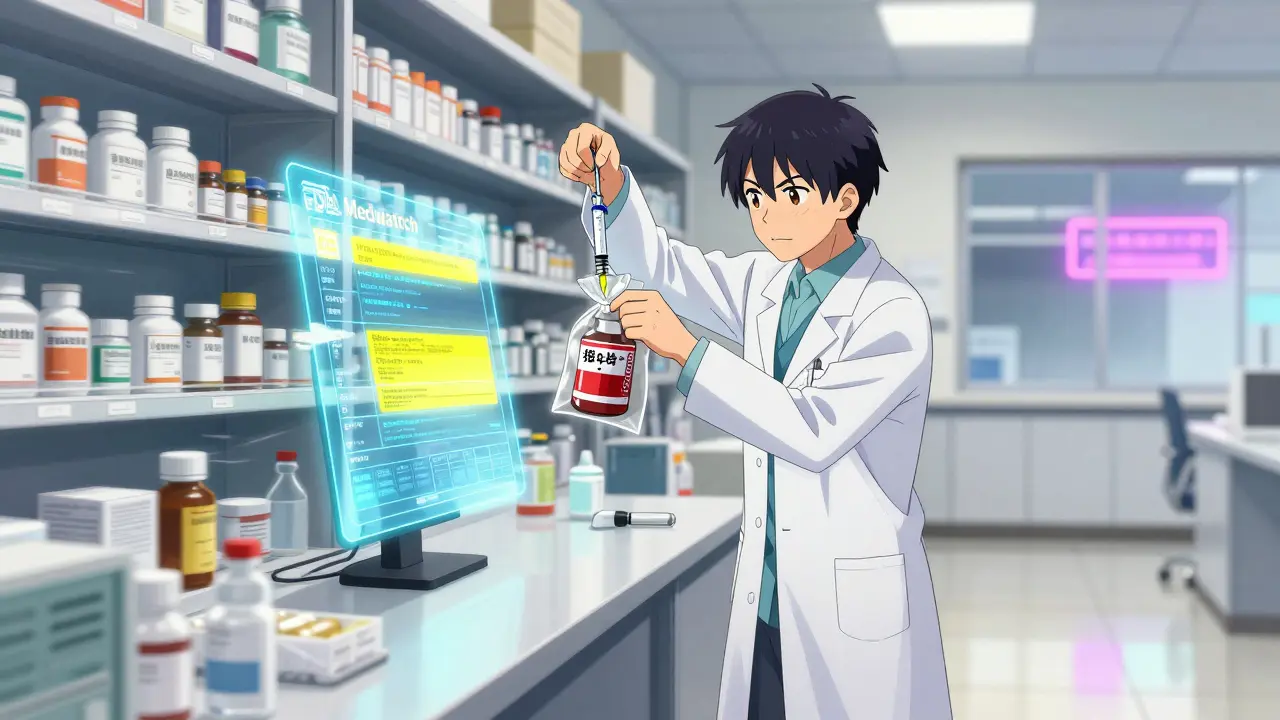
If you’re in the U.S., the FDA’s MedWatch program is your main tool. It’s free, anonymous, and designed for both patients and professionals.
For patients and the public:
- Go to www.fda.gov/medwatch and fill out Form 3500 online. It takes about 12-15 minutes.
- Or call 1-800-FDA-1088. A representative will take your report over the phone.
- You’ll be asked for: product name, manufacturer, batch number, expiration date, where you bought it, and a description of what looked wrong.
For healthcare professionals:
- Use the same MedWatch form, but you’re also required to report suspected counterfeit drugs under FDA guidelines.
- If you’re a pharmacist and suspect a forged prescription - like one written in multiple ink colors or with a fake doctor’s signature - don’t fill it. Contact local law enforcement immediately.
- Report to the DEA’s RxAbuse Tip Line at (571) 324-6499 if you think the drug is being diverted or sold illegally.
The FDA says reports submitted within 24 hours lead to product removal 4.2 times faster than those delayed beyond 72 hours. Speed matters.
How to Report in Canada
Canada’s system is more fragmented, with rules varying by province. But here’s what applies nationwide:
- For controlled substances (like opioids, Adderall, or Xanax), pharmacists must report theft or suspected forgery to Health Canada’s Office of Controlled Substances within 10 days. Use Guidance Document CS-GD-005 as your reference.
- In Ontario, pharmacists must email [email protected] with the prescriber’s details, drug names, and a copy of the prescription.
- Patients can report directly to Health Canada via their online form or by calling 1-866-225-0056.
Unlike the U.S., Canada doesn’t have a single centralized public portal like MedWatch - but Health Canada works with provincial agencies to track and remove dangerous products. Your report adds to the national picture.
What If You Bought It Online?
Most fake drugs come from websites pretending to be pharmacies. Amazon, eBay, and social media marketplaces are common sources. Here’s how to report them:
- Amazon: Go to the product page, click "Report product" → "Counterfeit" → follow prompts. Amazon processed over 7,800 pharmaceutical reports in 2022.
- eBay: Use the "Report item" link under the listing and select "Counterfeit or unauthorized product".
- Other websites: Report them to the National Association of Boards of Pharmacy (NABP) through their Verified Internet Pharmacy Practice Sites (VIPPS) program. They track illegal sites and alert regulators.
Don’t assume the platform will act on its own. If you don’t report it, the listing stays up - and someone else buys it.
What Happens After You Report?
It’s not instant. But it’s not silent, either.
The FDA receives over 100,000 MedWatch reports every year - about 2,300 of them involve counterfeit or suspect drugs between 2015 and 2022. When a report comes in with a batch number and photos, investigators cross-check it with manufacturer records. If it’s confirmed fake, they issue a public alert, pull the product from shelves, and work with customs to stop shipments.
One pharmacist in Texas reported a counterfeit insulin product in March 2023. Within 11 days, the FDA identified 142 affected lots and pulled them from 19 states. That’s the power of a single report.
But not all reports get quick responses. Some patients say they waited weeks without a reply. The FDA’s 2022 survey showed only 56% of consumers were satisfied with follow-up communication. That’s why it’s important to keep your own records - take screenshots of your report confirmation, save your receipt, and note the date you reported.
Why Your Report Matters
Counterfeit drugs don’t just hurt individuals - they break trust in the entire healthcare system. A single fake batch can reach thousands of people before anyone notices. The DEA says 73% of successful investigations in San Diego started with a tip from a regular person.
You don’t need to be a doctor. You don’t need to be an expert. You just need to notice something’s off and say something.
Every report you file helps:
- Remove dangerous products from circulation
- Identify criminal networks
- Improve detection tools like AI-powered image scanners the WHO is testing in Southeast Asia
- Push for stronger laws and better supply chain security
There’s a new FDA prototype app in testing that lets you snap a photo of a suspicious pill and automatically pulls the batch number, expiration date, and manufacturer info. It’s not public yet - but if you report now, you’re helping build the system that will make this easier for everyone else.
What Not to Do
- Don’t return it to the pharmacy unless they ask - they might not know how to handle it.
- Don’t try to sell it or give it to someone else.
- Don’t wait to see if others report it first - you might be the only one who noticed.
- Don’t assume it’s just a bad batch. If it looks fake, it probably is.
There’s no penalty for reporting a false suspicion. The system is designed to be cautious - better to report and be wrong than to stay silent and risk someone’s life.
What’s Next for Drug Safety?
The FDA is rolling out blockchain verification for drug supply chains by late 2024. That means every pill will have a digital trail - from manufacturer to pharmacy. If you report a fake today, you’re helping lay the groundwork for a future where counterfeits are nearly impossible to sell.
The WHO is training AI to spot fake medicine packaging from photos - and it’s already identifying 94% of counterfeit malaria drugs in pilot programs. But AI can’t see what you see. It can’t hear your story. It can’t know that your uncle took a pill from a website and ended up in the hospital.
That’s why your report matters more than ever.
What should I do if I took a counterfeit medication?
Stop taking the medication immediately. Contact your doctor or go to an emergency room if you feel unwell - symptoms like dizziness, vomiting, rash, or sudden weakness could indicate poisoning. Keep the packaging and any remaining pills for testing. Report the product to your national health authority - even if you feel fine now, others might be at risk.
Can I report a fake drug anonymously?
Yes. In the U.S., you can report to MedWatch online or by phone without giving your name. The DEA’s RxAbuse Tip Line also accepts anonymous tips. While providing your contact info helps authorities follow up, it’s not required. Your privacy is protected.
How long does it take for a reported fake drug to be removed?
It depends. If the report includes a batch number and clear photos, removal can happen within days - especially if the product is linked to a known manufacturer or distributor. The FDA says reports submitted within 24 hours lead to removal 4.2 times faster than those delayed beyond 72 hours. But if the product is sold online through multiple sellers, it can take weeks to track down all copies.
Are online pharmacies ever legitimate?
Yes - but very few. Only pharmacies with the VIPPS seal from the National Association of Boards of Pharmacy are verified as legitimate in the U.S. Look for the seal and check their website URL - it should end in .pharmacy. If a site sells controlled drugs without a prescription, it’s illegal. Never buy from a site you found through a pop-up ad or social media post.
Do I need to report if I only bought one pill?
Yes. One pill is enough. Counterfeiters often test small batches on unsuspecting buyers before scaling up. Your report could stop a larger operation before it spreads. Even if you only took one dose, if the packaging or pill looks wrong, report it. You’re not overreacting - you’re being vigilant.
What if the pharmacy refuses to take back the medication?
Pharmacies aren’t required to take back suspect medications unless they sold them. That’s why you should report directly to the FDA, Health Canada, or your national regulator. Keep the product, take photos, and file your report. Your report triggers an investigation - not the pharmacy’s return policy.
Can I report a fake drug if I bought it overseas?
Yes. If you’re in the U.S., report it to MedWatch - even if the product came from another country. The FDA tracks international counterfeit sources. If you’re in another country, contact your national health authority. The WHO’s Global Surveillance and Monitoring System collects reports from 141 countries, so your report adds to a global database that helps stop cross-border trafficking.

Shelby Price
February 4, 2026 AT 00:04Keith Harris
February 4, 2026 AT 05:07Samuel Bradway
February 5, 2026 AT 04:46Prajwal Manjunath Shanthappa
February 5, 2026 AT 16:17Ed Mackey
February 6, 2026 AT 20:50Katherine Urbahn
February 7, 2026 AT 00:12Alex LaVey
February 7, 2026 AT 11:54caroline hernandez
February 8, 2026 AT 12:29Joseph Cooksey
February 8, 2026 AT 16:08Justin Fauth
February 10, 2026 AT 06:01Amit Jain
February 10, 2026 AT 07:12Demetria Morris
February 11, 2026 AT 07:52Geri Rogers
February 11, 2026 AT 20:05