
When two or more drugs are combined into a single pill or treatment, the goal is simple: better results with fewer pills. But here’s the catch - not all combination products are created equal. Even if two pills have the same active ingredients, small differences in how they’re made can change how your body uses them. This is where therapeutic equivalence becomes critical. It’s not just about matching names on the label. It’s about making sure that switching from one version of a combination drug to another won’t hurt you - or make your condition worse.
What Does Therapeutic Equivalence Really Mean?
Therapeutic equivalence means two drug products can be swapped without changing how well they work or how safe they are. The U.S. Food and Drug Administration (FDA) calls this the "gold standard" for generic substitution. If a combination drug like amlodipine/benazepril (used for high blood pressure) has an "A" rating in the FDA’s Orange Book, it’s considered interchangeable with the brand-name version. That’s huge for patients and insurers - generic versions of these combos save billions each year. In fact, generics saved the U.S. healthcare system $1.7 trillion between 2013 and 2022. But here’s where things get tricky. Therapeutic equivalence only applies if the drugs have identical active ingredients, in the same strength, form, and route. So if one pill has 5mg of amlodipine and 10mg of benazepril, and another has 10mg and 20mg? They’re not interchangeable. Dose equivalence isn’t just a math problem - it’s a clinical one.Why Dose Equivalence in Combinations Is Harder Than It Looks
Imagine you’re taking a combo drug for cholesterol: ezetimibe and simvastatin. The brand version works great. You switch to a generic, and your LDL cholesterol jumps 15%. That’s not rare. A nurse practitioner in Texas reported this exact scenario in early 2023. The generic met FDA bioequivalence standards - but the formulation had a different coating, which changed how fast the drug was absorbed. For some patients, that’s enough to throw off their entire treatment. This happens because combination drugs aren’t just the sum of their parts. Sometimes they work together in ways we don’t fully understand. For example, tramadol and acetaminophen together reduce pain more than either drug alone. That synergy means you can’t just swap doses based on weight or age. You need to know how each component behaves in the body - and how the other drug affects it. Even more complicated are drugs with a narrow therapeutic index (NTI). These are medications where the difference between a helpful dose and a dangerous one is razor-thin. Think warfarin, levothyroxine, or phenytoin. In 2018, a study found that 12% of patients on levothyroxine combinations had adverse events after switching between generic versions - even though both met FDA standards. That’s not a glitch. It’s a reality.The Hidden Risks: Inactive Ingredients and Formulation Differences
You might think: "If the active ingredients are the same, what’s the big deal?" The answer is: everything else. Inactive ingredients - like fillers, dyes, or coatings - don’t treat your condition. But they can change how your body absorbs the drug. Take rivaroxaban, a blood thinner. There are seven generic versions approved in the U.S., all with an "A" rating. But three use croscarmellose sodium as a disintegrant. Four use sodium starch glycolate. One study showed that patients on the latter had slightly slower absorption rates. In a combo with aspirin, that delay could mean a higher risk of clotting. The FDA allows these differences because they don’t break bioequivalence rules. But in practice, they matter. A pharmacist in Sydney told me about a patient on a combination of metformin and sitagliptin who started feeling dizzy after switching generics. The new version had a different starch binder. It wasn’t labeled as a change. No one caught it until the patient brought it up.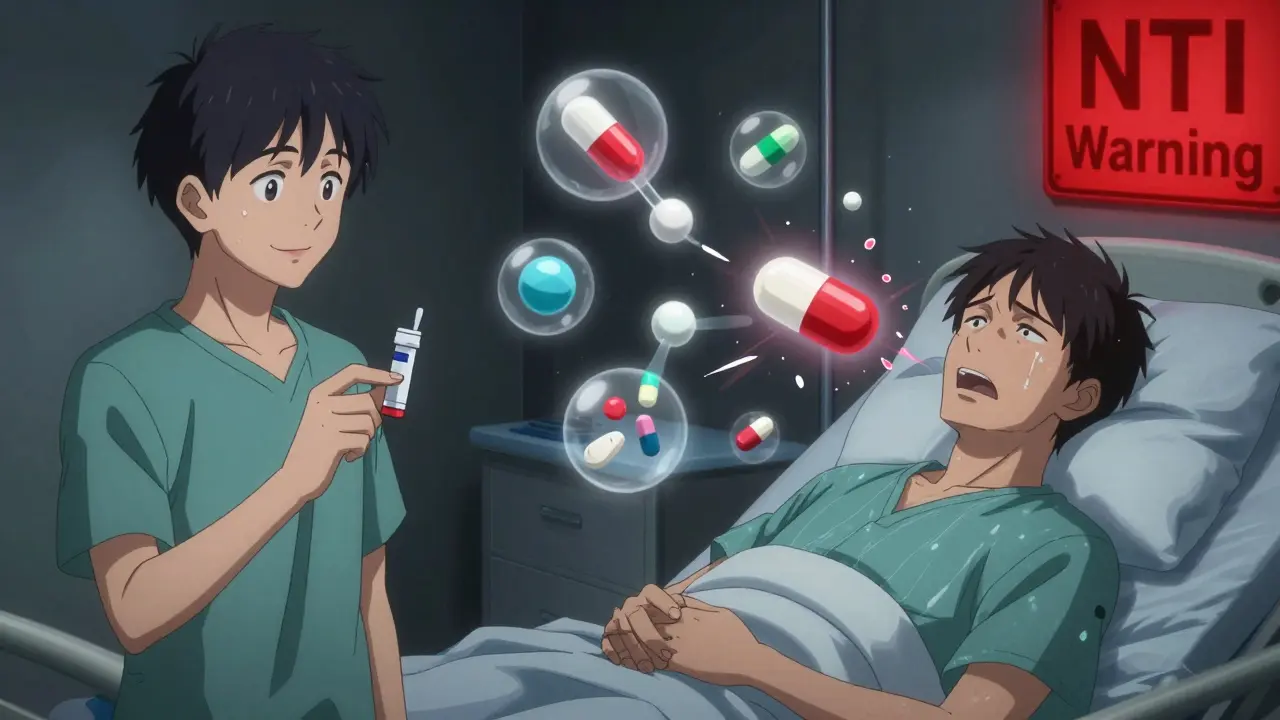
How to Safely Manage Therapeutic Equivalence
There’s no magic bullet. But there are proven steps to reduce risk:- Check the TE code - Always look up the combination in the FDA’s Orange Book. "A" means interchangeable. "B" means don’t switch without approval.
- Know the strength - Never assume 5mg/10mg is the same as 10mg/5mg. Order matters. Dose ratios matter.
- Track the manufacturer - If you’ve been stable on one generic, switching to another brand (even if it’s "A" rated) can cause problems. Document the maker and lot number.
- Watch NTI drugs extra close - For drugs like warfarin or levothyroxine, monitor lab results for 4-6 weeks after any switch. A 10% change in INR or TSH can be dangerous.
- Use barcode scanning - Hospitals that use barcode systems for drug verification cut substitution errors by over 60%. It’s not fancy - it’s necessary.
Real-World Consequences: What Happens When It Goes Wrong
The FDA’s Adverse Event Reporting System logged 247 incidents in 2022 tied to dose conversion errors in combination products. Over a third involved heart medications. Nearly a third involved psychiatric drugs like sertraline/olanzapine. One case involved a man with bipolar disorder who was switched from a brand combo to a generic. Within two weeks, he had a psychotic episode. His blood levels of olanzapine had dropped 30%. The generic had a different release profile. On the flip side, success stories exist. A hospital in California saved $1.2 million a year by switching patients to generic proton pump inhibitor combinations - with zero adverse events. How? They trained every pharmacist and nurse on the nuances of each combo. They didn’t just swap pills. They understood them.
What’s Changing? The Future of Combination Drug Equivalence
The FDA is working on new tools. In 2023, they released draft guidance for complex combinations - especially those where the dose-response isn’t linear. They’re also testing machine learning models that predict which formulation changes might break equivalence. Early tests got 89% accuracy. That’s promising. But the biggest shift is coming from personalized medicine. By 2030, experts predict that 30% of therapeutic equivalence decisions will include genetic data. If you’re a slow metabolizer of CYP2D6, a standard combo dose might be toxic. A generic version designed for average metabolizers won’t work for you. That’s not a flaw - it’s the next frontier. For now, the system works - mostly. But it’s not perfect. Therapeutic equivalence is a tool, not a guarantee. It helps save money and expand access. But it can’t replace vigilance.Frequently Asked Questions
Can I safely switch between generic and brand-name combination drugs?
Yes - but only if the FDA lists them with an "A" rating in the Orange Book and the active ingredients, strengths, and dosage forms are identical. Even then, monitor for changes in symptoms or lab results, especially with narrow therapeutic index drugs like warfarin or levothyroxine.
Why do some generic combination drugs cause side effects when switched?
Inactive ingredients - like binders, coatings, or fillers - can change how quickly the drug is absorbed. For example, one generic might use sodium starch glycolate, while another uses croscarmellose sodium. These differences can alter bioavailability, especially in sensitive patients or NTI drugs. The FDA considers this acceptable if it stays within bioequivalence ranges, but clinical outcomes aren’t always identical.
Are all combination drugs in the FDA Orange Book rated as therapeutically equivalent?
No. Only about 95% of evaluated products receive an "A" rating. The rest are rated "B," meaning there are unresolved bioequivalence questions. This often happens with complex combinations, 505(b)(2) applications, or drugs with differing inactive ingredients that may affect absorption. Always check the TE code before switching.
How do I know if my combination drug is a narrow therapeutic index (NTI) drug?
Common NTI drugs include warfarin, levothyroxine, phenytoin, digoxin, lithium, and cyclosporine. If your combination includes any of these, treat it as high-risk. The FDA requires stricter bioequivalence standards (90-111% instead of 80-125%) for NTI drugs. Always consult your provider before switching generics.
What should I do if I notice a change in how my combination drug works after a switch?
Contact your prescriber immediately. Keep a log of symptoms, timing, and when the switch happened. Request a blood test if applicable (e.g., INR for warfarin, TSH for thyroid meds). Ask your pharmacist to verify the manufacturer and lot number. Many adverse events are preventable with early detection.


Carla McKinney
February 11, 2026 AT 11:58Let’s be real - the FDA’s "A" rating is a joke. I’ve seen patients crash after switching generics. Not because of bioequivalence math, but because the filler in one brand makes them nauseous and the other makes them sleepy. The system doesn’t track individual reactions. It tracks averages. And patients aren’t averages.
They call it therapeutic equivalence. I call it pharmaceutical Russian roulette.
And no, I don’t trust the Orange Book anymore. Not after what happened with that levothyroxine batch in 2021.
Ojus Save
February 11, 2026 AT 13:57yo this is wild fr. i never knew that the coating on pills could mess up your meds like that. my uncle was on that combo for bp and switched generics and started feeling like a zombie. doc said "it’s all the same" but he wasnt the same. weird.
Jonathan Noe
February 13, 2026 AT 03:15Look, I get the fear-mongering. But here’s the truth: 95% of patients switch generics with zero issues. The FDA doesn’t approve a product based on theory - they test it in real people. The 5% who have problems? They’re usually on NTI drugs, and those are flagged. The problem isn’t the system. It’s that people don’t check the TE code or tell their pharmacist they’re switching.
Also - barcodes. Use them. Hospitals that do cut errors by 60%. That’s not magic. That’s basic hygiene.
Rachidi Toupé GAGNON
February 13, 2026 AT 10:29Whoa. This hit different. 🤯 I used to think generics were just cheaper copies. Now I realize they’re like… different flavors of the same ice cream. One’s vanilla with sprinkles, the other’s vanilla with crushed cookies - same base, totally different experience. And if you’re allergic to sprinkles? You’re screwed. No one tells you that.
Also - barcodes. YES. My cousin’s hospital uses them. No more mix-ups. Simple. Effective. Why isn’t this mandatory everywhere??
Jim Johnson
February 13, 2026 AT 20:32You’re not alone. I’m a pharmacist in Ohio, and I’ve had patients come in crying because they switched generics and their anxiety spiked. Or their seizures came back. Or their blood sugar went haywire.
Here’s what I tell everyone: If you’re stable, STAY STABLE. Don’t let a pharmacy swap it without your consent. Ask for the manufacturer. Write it down. If your doc doesn’t know the TE code? Find a new one.
And yeah - barcodes. We use them. It’s not hard. It’s just that nobody’s trained to care until someone gets hurt.
Vamsi Krishna
February 15, 2026 AT 05:30Why are we even letting this happen? The FDA is just a puppet of Big Pharma. They approve these "equivalent" drugs because they’re paid off. Look at the stats - every time a generic hits the market, the brand-name company’s stock drops. Coincidence? I think not.
And don’t even get me started on the inactive ingredients. Did you know some generics use talc? Talc! The same stuff that causes ovarian cancer? They’re poisoning us and calling it "safe".
Wake up, people. This isn’t medicine. It’s corporate control.
Suzette Smith
February 16, 2026 AT 02:20Actually, I think this whole "therapeutic equivalence" thing is overblown. I switched from brand to generic for my combo med and felt better. My BP dropped. My energy improved. Maybe the generics are better? Maybe the brand was just overpriced placebo?
Also, why are we so scared of change? Evolution isn’t always comfortable.
Autumn Frankart
February 16, 2026 AT 14:43They’re lying. All of it. The FDA, the manufacturers, the pharmacists - they’re hiding something. Did you know that the same generic company that makes your blood pressure med also owns the lab that tests it?
And the "A" rating? That’s not a rating. It’s a license to kill. They don’t test on people with real comorbidities. Only healthy volunteers. So if you’re diabetic? Over 65? Have kidney issues? You’re not in the study.
They’re turning us into lab rats. And you’re okay with it?
I’ve got documents. I’ve got emails. I’ll post them soon.
Pat Mun
February 18, 2026 AT 06:20This is such an important topic, and I’m so glad someone finally put it out there. I’ve been working in primary care for 18 years, and I’ve seen too many patients suffer silently after a switch. One woman thought she was just getting "old" - turns out her thyroid med was swapped, and her TSH went from 1.8 to 8.2. She was exhausted, gained 20 pounds, and cried every day.
But here’s the hopeful part: when we caught it, when we switched her back and monitored her, she bounced back. It’s not hopeless. It’s just that we need to listen. We need to document. We need to care about the details - the manufacturer, the lot number, the filler.
And yes - barcodes. We started using them last year. It’s been a game-changer. Not because it’s high-tech. Because it’s human.
Skilken Awe
February 18, 2026 AT 07:19Oh wow. Another one of those "let’s make healthcare cheaper" masterpieces. You know what’s cheaper than generics? Not prescribing them at all. Or better yet - not letting pharmaceutical conglomerates dictate dosing through inactive ingredient manipulation.
The FDA’s "A" rating? That’s not science. That’s a marketing brochure written by a lawyer who passed organic chemistry in 1997.
And you want me to believe that croscarmellose sodium vs. sodium starch glycolate doesn’t matter? Please. I’ve seen patients go from stable to ICU because of a binder change. You think that’s coincidence? It’s corporate negligence dressed up as regulatory compliance.
andres az
February 18, 2026 AT 07:34Why are we even talking about this? It’s obvious. The whole system is rigged. You think the FDA cares about you? Nah. They care about profit margins. They approve these combos because it’s easier than doing real studies. And now we’re stuck with pills that work 80% of the time - and we’re supposed to be grateful?
Just take the brand. Pay extra. It’s cheaper than the ER visits.
Steve DESTIVELLE
February 19, 2026 AT 08:36Therapeutic equivalence is a modern illusion born of industrial rationality. The body is not a machine. It does not respond to chemical equations. It responds to rhythm. To memory. To the unseen patterns of cellular resonance. When we swap a pill with identical active ingredients but different binders, we are not swapping a substance - we are swapping an experience. The body remembers. It holds trauma. It holds expectation. And when the pill changes, even slightly, the soul rebels.
Perhaps the real therapeutic equivalent is not in the tablet - but in the trust between patient and provider. And that trust has been commodified.
What is a pill but a symbol of surrender to systems we do not control?
Stephon Devereux
February 20, 2026 AT 13:14There’s so much wisdom here. The real takeaway isn’t about bioequivalence - it’s about agency. Patients deserve to know what’s in their pills. Not just the active ingredients, but the fillers, the coatings, the dyes.
We’ve turned healthcare into a transaction. But medicine is relational. It’s about continuity. It’s about knowing that the pill you took yesterday is the same pill you’ll take tomorrow.
Barcodes aren’t just tech - they’re trust tools. Pharmacists aren’t just dispensers - they’re guardians. And if we stop treating them that way, we’re not just risking health - we’re eroding dignity.
athmaja biju
February 21, 2026 AT 17:59As an Indian citizen, I find it deeply concerning that the U.S. regulatory system allows such inconsistencies. In India, we have strict bioequivalence guidelines enforced by CDSCO. We do not permit substitutions without explicit physician consent. Perhaps the American system is too permissive. Perhaps profit has overtaken principle. Perhaps we need to look beyond borders for better models.
Carla McKinney
February 22, 2026 AT 09:42And that’s why I don’t trust any pharmacist who says "it’s the same."
My sister switched from one generic to another - same TE code, same dose. She had a seizure. Turned out the new version used a different starch. Slower absorption. Blood levels dipped below therapeutic. They didn’t test for that.
They test for bioequivalence. Not clinical equivalence.
And that’s the scam.