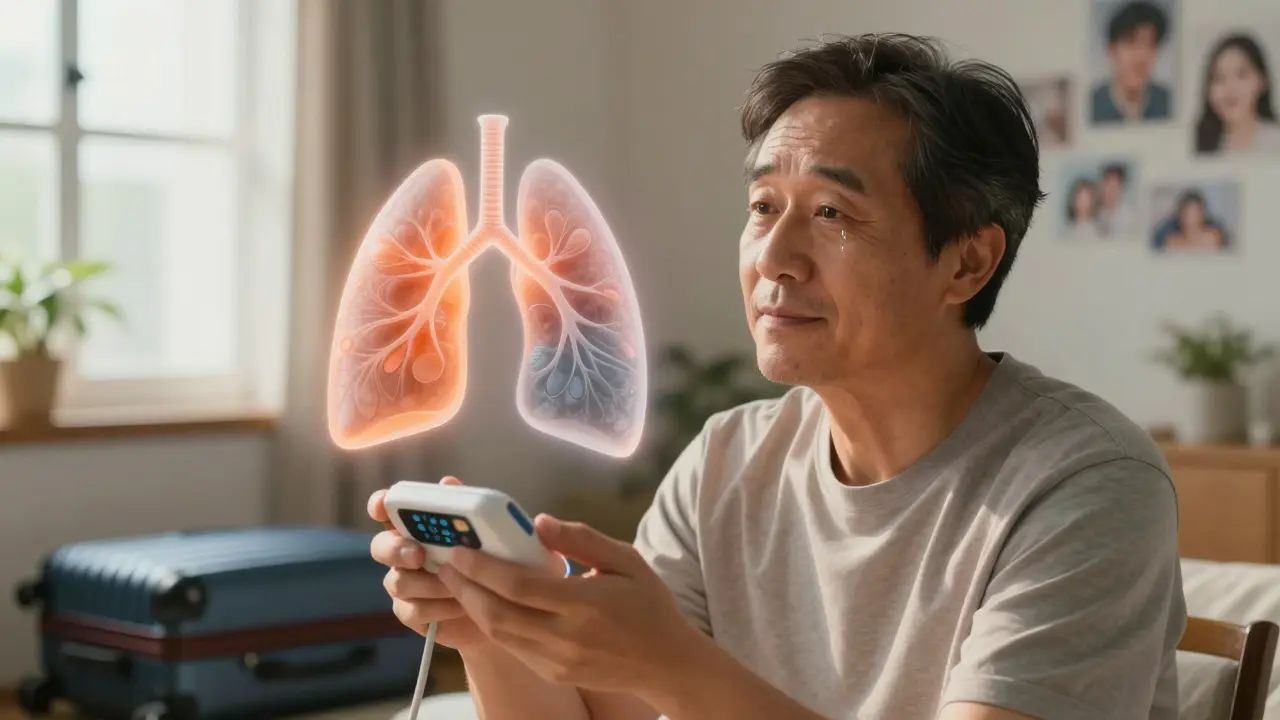
Chronic Obstructive Pulmonary Disease, or COPD, isn’t just a cough that won’t go away. It’s a serious, progressive lung condition that slowly steals your ability to breathe - and many people don’t realize they have it until it’s advanced. If you’ve been told you’re "just out of shape" or "getting older," but you’re constantly short of breath climbing stairs or tying your shoes, it might be more than that. COPD affects around 380 million people worldwide, and in Australia alone, over 600,000 people live with it. The good news? If caught early, you can slow it down. The better news? There are real, proven ways to live better, even with advanced disease.
What Exactly Is COPD?
COPD isn’t one disease - it’s two, often happening together: chronic bronchitis and emphysema. Chronic bronchitis means your airways are inflamed and produce too much mucus, making you cough daily. Emphysema damages the tiny air sacs in your lungs, so they can’t stretch and contract properly to move air in and out. Together, they create a constant feeling of not getting enough air.
The main cause? Smoking. About 85 to 90% of cases are linked to cigarette smoke. But it’s not just smokers. Long-term exposure to air pollution, chemical fumes, dust, or secondhand smoke can also trigger it. In some rare cases, a genetic condition called alpha-1 antitrypsin deficiency plays a role.
There’s no cure. But that doesn’t mean you’re out of options. Treatment isn’t about fixing the damage - it’s about managing symptoms, preventing flare-ups, and helping you stay active as long as possible.
The Four Stages of COPD (GOLD Classification)
Doctors use a system called GOLD - the Global Initiative for Chronic Obstructive Lung Disease - to stage COPD. It’s not just about how bad your lungs look on a test. It’s also about how much your symptoms affect your life. The key test is spirometry. It measures how much air you can forcefully blow out in one second (FEV1) compared to what’s normal for someone your age, height, and gender.
Stage 1: Mild COPD - FEV1 is 80% or higher of normal. At this point, you might have a daily cough with phlegm, especially in the morning. You might get winded after running or climbing stairs fast. But many people ignore it. They think it’s aging, being out of shape, or just a "smoker’s cough." The problem? By the time symptoms feel serious, you’ve already lost 30-50% of your lung function. If you quit smoking now, you can cut the rate of decline in half.
Stage 2: Moderate COPD - FEV1 drops to 50-79%. This is where most people finally seek help. Walking across a room or carrying groceries makes you stop and catch your breath. You might need to pause every few minutes on a level walk. Your cough is worse, and you’re more likely to get chest infections. Pulmonary rehab - a structured program of exercise and breathing training - can improve your walking distance by over 50 meters in just 8 weeks. This stage is your last best chance to slow things down.
Stage 3: Severe COPD - FEV1 falls to 30-49%. Breathing becomes a full-time job. Getting dressed, showering, or cooking can leave you gasping. You’re having flare-ups - called exacerbations - more than twice a year. These often land you in the hospital. Oxygen therapy may be needed if your blood oxygen drops below 88% at rest. Inhaled medications become more complex, often combining two or three drugs in one inhaler. You’ll need to be vigilant about vaccines - flu, pneumonia, and COVID-19 - because infections hit harder and recover slower.
Stage 4: Very Severe (End-Stage) COPD - FEV1 is below 30%, or below 50% with chronic low oxygen. At this point, you’re short of breath even when sitting still. You might need oxygen 15+ hours a day. Walking across the room might require a walker and oxygen tank. Nighttime breathing problems are common. You may develop blue lips or fingers (cyanosis) or feel confused from lack of oxygen. Life expectancy drops, but it’s not a death sentence. With the right care, many people live years with good quality of life. Treatments include long-term oxygen therapy, which can improve survival by 44% in those with low oxygen levels. For a small group of younger, otherwise healthy patients, lung volume reduction surgery or even transplant becomes an option.
Treatment Options by Stage
Treatment isn’t one-size-fits-all. It changes as your disease changes.
For Stage 1, the most powerful tool is quitting smoking. Nothing else comes close. Studies show quitting can reduce lung function decline by 50%. Short-acting inhalers like albuterol are used only when you’re really struggling to breathe - not daily. No long-term meds needed yet.
In Stage 2, doctors usually add long-acting bronchodilators. These keep your airways open for 12 to 24 hours. Common ones include tiotropium (Spiriva) or salmeterol (Serevent). You’ll also start pulmonary rehab. It’s not just exercise - it’s education on breathing techniques, nutrition, and how to manage flare-ups. Studies show it improves daily function by 54 meters on the 6-minute walk test. Annual flu shots and pneumococcal vaccines are non-negotiable.
Stage 3 often requires combination inhalers: a long-acting muscarinic antagonist (LAMA) and a long-acting beta-agonist (LABA). If you’ve had two or more flare-ups in a year, inhaled corticosteroids are added - creating a triple therapy. Oxygen therapy is introduced if your blood oxygen drops too low. You’ll need to learn how to recognize early signs of a flare-up - like more mucus, darker color, or increased wheezing - so you can start treatment fast and avoid the hospital.
Stage 4 means continuous oxygen therapy. Portable oxygen systems exist, but they’re heavy and last only 4-6 hours on a single charge. Many patients rely on home oxygen concentrators. Lung volume reduction surgery removes damaged parts of the lung to help the rest work better - and can improve survival by 15% in the right candidates. Lung transplant is possible for those under 65 with FEV1 under 20%, but it’s complex and requires lifelong immune-suppressing drugs.
What Works Beyond Medication
Medications help, but they’re only part of the picture. The most effective COPD management includes lifestyle changes that are often overlooked.
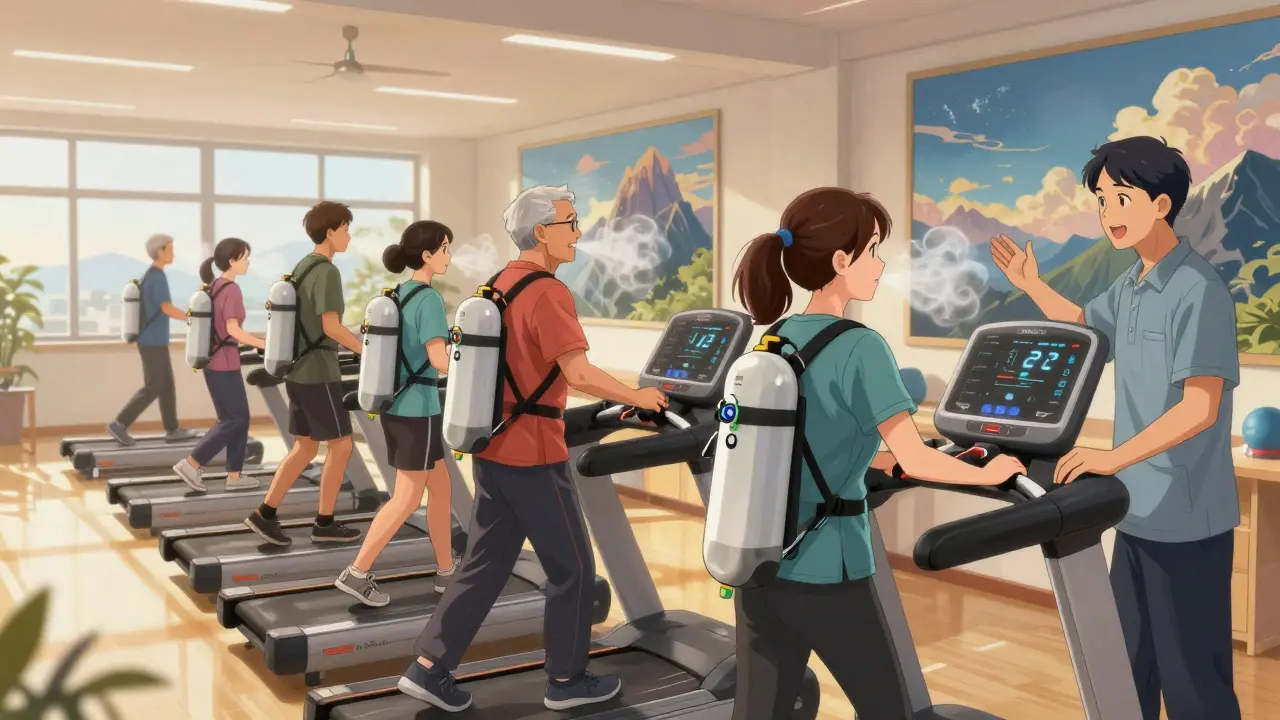
Pulmonary rehabilitation is the gold standard. It’s a supervised program with exercise, education, and counseling. It cuts hospital visits by 37%. Yet, only 1 in 5 eligible patients enroll. Why? Lack of access, cost, or not being told it’s an option.
Nutrition matters more than you think. Many COPD patients lose weight because breathing takes so much energy. Eating enough protein and calories helps you stay strong. A dietitian can help you plan meals that don’t leave you bloated or breathless.
Home environment is critical. Avoid smoke, strong cleaners, dust, and cold air. Use air purifiers. Keep your home clean and well-ventilated. Humidifiers can help if the air is dry.
Emotional health is often ignored. Anxiety and depression are common. Feeling trapped by your breath is terrifying. Support groups - like those run by the COPD Foundation - help people feel less alone. Talking to a counselor trained in chronic illness makes a real difference.
Common Mistakes and Pitfalls
Many people with COPD make the same mistakes - and they cost them dearly.
- Skipping inhaler technique: Up to 80% of patients use their inhalers wrong. If the medicine doesn’t reach your lungs, it doesn’t work. Ask your doctor or pharmacist to watch you use it - every time you get a new one.
- Not taking meds regularly: Studies show half of patients stop their long-acting inhalers within six months. They feel fine, so they think they don’t need them. But COPD doesn’t wait. Skipping meds leads to more flare-ups.
- Ignoring early signs of a flare-up: Waiting until you’re gasping means you’ll end up in the ER. If your mucus changes color, you’re coughing more, or your breathing is worse, call your doctor. Early antibiotics or steroids can stop it before it gets bad.
- Not getting vaccinated: Flu and pneumonia are deadly for people with COPD. Get them every year.
- Staying sedentary: Fear of breathlessness leads to inactivity. But muscles weaken, and you get worse faster. Movement - even slow walking - keeps your body strong.

What’s New in COPD Care (2025)
Treatment is evolving fast. In 2023, the FDA approved Breztri Aerosphere, the first single-inhaler triple therapy for both COPD and asthma-COPD overlap. It’s simpler than juggling three inhalers.
A new drug called ensifentrine, in late-stage trials, shows promise in improving lung function by 13% - a big jump for COPD meds. It’s not available yet, but it could be by 2026.
Digital tools are helping too. The Kyna COPD app, cleared by the FDA in 2023, uses AI to predict flare-ups 3-5 days in advance by tracking your symptoms daily. It’s not perfect, but it’s 82% accurate. Apps like this are changing how patients manage their disease at home.
Genetic research is growing. The NIH’s COPDGene study has found over 80 genes linked to how fast COPD progresses. In the future, treatment may be tailored to your genetic profile - not just your FEV1.
Final Thoughts: It’s Not Just About Lung Function
COPD is measured in numbers - FEV1, oxygen levels, exacerbation counts. But what matters most is your life. Can you hold your grandchild? Walk to the mailbox? Sleep through the night? Those are the real outcomes.
Early detection saves years. If you’ve smoked for years and have a persistent cough or shortness of breath, get tested. Spirometry is simple, cheap, and quick. Don’t wait until you’re gasping.
Even with advanced COPD, you can live well. It takes work - quitting smoking, taking meds, doing rehab, eating right, staying connected. But it’s possible. People with Stage 4 COPD are gardening, traveling with oxygen tanks, and attending family events. They didn’t give up. They adapted.
Your lungs may be damaged, but your life doesn’t have to be over. The tools are here. The knowledge is here. What you do next - that’s what counts.
Can COPD be reversed?
No, COPD cannot be reversed. The damage to the lungs is permanent. But the progression can be slowed significantly - especially if you quit smoking early. Medications, pulmonary rehab, and lifestyle changes help you manage symptoms and maintain function for years, even decades.
How do I know if I have COPD and not just asthma?
COPD and asthma both cause wheezing and shortness of breath, but they’re different. COPD usually starts after age 40, especially in smokers, and gets worse over time. Asthma often starts in childhood and symptoms come and go. Spirometry testing can tell the difference. In COPD, airflow limitation doesn’t fully reverse with medication. In asthma, it often does. Some people have both - called asthma-COPD overlap syndrome (ACOS).
Is oxygen therapy addictive?
No, oxygen therapy is not addictive. Your body needs oxygen to survive. If your lungs can’t deliver enough, supplemental oxygen is a medical necessity - like glasses for poor vision. Using oxygen as prescribed helps your heart, brain, and muscles work better. It doesn’t make your lungs lazy.
What’s the life expectancy with COPD?
There’s no single answer. Life expectancy depends on your stage, whether you smoke, your age, other health conditions, and how well you follow treatment. Someone with mild COPD who quits smoking can live into their 80s. Someone with severe COPD and frequent flare-ups may have a shorter lifespan. But many people live 10-20 years after diagnosis, even with Stage 3 or 4, if they manage it well.
Can I still travel with COPD?
Yes, but planning is essential. Talk to your doctor before flying - cabin pressure can lower oxygen levels. You may need to use portable oxygen during the flight. Always carry extra batteries, prescriptions, and a letter from your doctor. Choose destinations with good medical access. Many people with COPD travel successfully - they just plan ahead.
Are inhalers expensive, and is there help?
Some COPD inhalers cost $350-$400 a month without insurance. But help exists. Medicare covers 80% of costs for approved medications and oxygen. Many drug manufacturers offer patient assistance programs. Generic versions are available for some drugs. Talk to your pharmacist or social worker - you’re not alone in this cost burden.
Annette Robinson
January 9, 2026 AT 01:08I wish more people knew about pulmonary rehab. My mom started it last year after being told she was 'just getting old'-now she walks to the corner store without stopping. It’s not magic, but it’s the closest thing we’ve got.
Don’t wait until you’re gasping. Get tested. Even if you’re scared.
Luke Crump
January 9, 2026 AT 09:15Let’s be real-COPD is just capitalism’s way of selling inhalers to people who smoked because they were told it was cool in the ‘70s. We’re not fixing lungs, we’re monetizing regret.
Meanwhile, Big Pharma’s quietly patenting oxygen.
Wake up.
Molly Silvernale
January 10, 2026 AT 13:25There’s something haunting about the way lungs fail-not with a bang, but with a whisper: the pause between breaths, the hesitation before climbing a step, the way your own body becomes a stranger…
And yet-we still laugh, still hug grandchildren, still light cigarettes even when we know better.
Is it denial? Or is it defiance?
Maybe COPD doesn’t steal your life-it just forces you to choose what matters most.
And somehow, in the quiet gasps between words, we find the courage to keep speaking.
Even when the air won’t come.
Even when the world moves too fast.
Even when the inhaler runs out.
We still show up.
That’s not disease.
That’s human.
Prakash Sharma
January 10, 2026 AT 15:16USA spends billions on COPD drugs but ignores air pollution from factories owned by foreign corporations.
India has cleaner air than your cities-and still, we don’t have this many cases.
Blame the smoke? Or blame the greed?
Stop treating symptoms. Fix the environment.
Joanna Brancewicz
January 11, 2026 AT 12:47FEV1 < 30% = chronic hypoxia. Oxygen therapy improves survival by 44%. Non-negotiable.
Also: pulmonary rehab reduces hospitalizations by 37%. Why aren’t we prescribing it like insulin?
Evan Smith
January 12, 2026 AT 02:53So… you’re telling me if I quit smoking now, I can cut my lung decline in half?
And if I don’t? I’m basically signing up for a slow-motion death with a side of inhalers?
Okay. Got it.
Time to throw away the pack.
Thanks for the kick in the pants.
(Also-pulmonary rehab sounds like a gym for people who hate gyms. I’m in.)
Lois Li
January 13, 2026 AT 13:32I’ve been helping my uncle manage his Stage 3 COPD for three years.
He refused rehab at first. Thought it was ‘for weak people.’
Now he goes every Tuesday. Says it’s the only time he feels like himself.
It’s not about strength.
It’s about dignity.
You don’t have to be brave to start.
You just have to be ready to try.
And you’re not alone.
Aubrey Mallory
January 14, 2026 AT 09:54People say ‘COPD isn’t a death sentence’ like it’s a motivational poster.
Try living with oxygen tubes in your nose while your grandkid asks why you can’t hug them without wheezing.
It’s not inspirational.
It’s exhausting.
And the system doesn’t care.
Stop sugarcoating it.
Donny Airlangga
January 15, 2026 AT 11:24I’m a nurse. I’ve seen too many patients wait until they’re on 10L/min oxygen before they’ll quit smoking.
One guy told me: ‘I don’t wanna die, but I don’t wanna live without it either.’
That’s the real tragedy.
It’s not the disease.
It’s the delay.
Kristina Felixita
January 16, 2026 AT 11:25OMG I just found out my aunt has COPD and she’s been using her inhaler wrong this whole time 😭
She thought shaking it hard was enough… turns out she was just spraying it into the air.
Went with her to the pharmacy and the pharmacist showed her how to use it properly-she cried.
It’s not just meds.
It’s knowing how to use them.
And no one tells you.
PLEASE if you use an inhaler-ask someone to watch you. Seriously.
It changes everything.
christy lianto
January 18, 2026 AT 10:48My sister was diagnosed at 42. Smoked for 15 years. Quit cold turkey the day she got the results.
She’s now doing rehab, eating better, and walks 2 miles every morning.
She says: ‘I didn’t get better.
I got braver.’
That’s the real treatment.
Not the inhaler.
Not the oxygen.
Just… showing up.
Every day.
Even when it hurts.
Ken Porter
January 19, 2026 AT 05:34Why are we even talking about this? People choose to smoke. Now they pay the price.
Stop treating it like a tragedy. It’s a consequence.
And stop blaming the air. Your lungs aren’t victims. They’re rebels who gave up.
swati Thounaojam
January 20, 2026 AT 04:17in india we dont have access to these inhalers or rehab
my uncle died last year with a fan blowing on him cause he couldnt breathe
no oxygen no meds just prayers
why is this only talked about in usa?
Manish Kumar
January 20, 2026 AT 21:08Let me ask you this: if your lungs are damaged, and you can’t reverse it, then what are we really fighting for?
Is it longevity? Or is it the illusion of control?
We give people inhalers, oxygen, rehab-like tools to delay the inevitable.
But what if the real cure isn’t in medicine?
What if it’s in accepting that we are not masters of our bodies?
That we are, at our core, temporary vessels?
And that breathing-true breathing-is not about air, but presence?
Maybe the most powerful treatment isn’t a triple therapy inhaler…
But silence.
And stillness.
And letting go.
Dave Old-Wolf
January 22, 2026 AT 08:27I’ve been reading this whole thing and I’m wondering-how many of us have ignored our own cough?
I thought mine was just allergies.
Turns out I’ve been wheezing for two years.
Going to get spirometry next week.
Thanks for the nudge.
And if anyone else is scared to go… you’re not alone.
Go anyway.