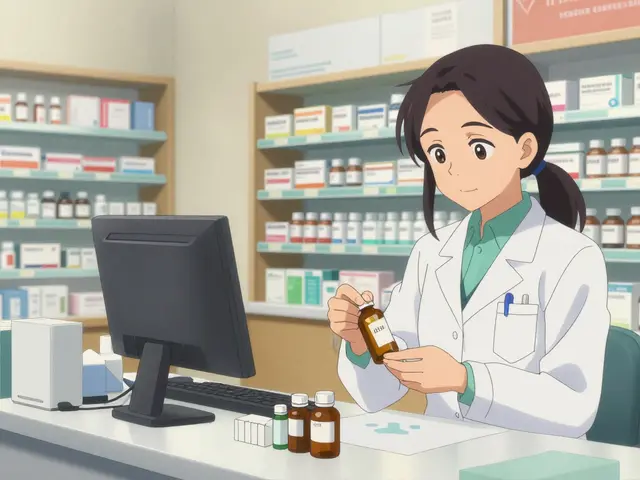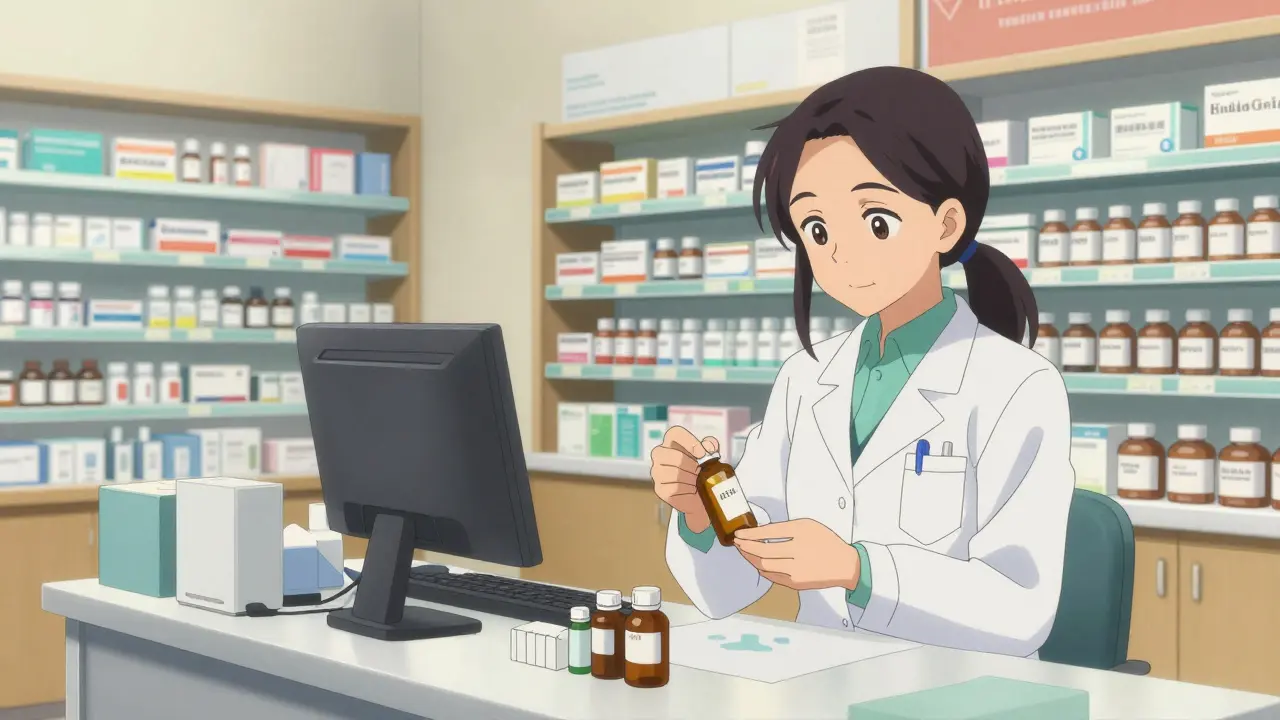
Imagine needing a life-saving medication, but the only available pill contains a dye you're allergic to, or the dose is just slightly too high for your body to handle safely. For most of us, the pharmacy is a place of standardized boxes and bottles. But for a small group of patients, those "one size fits all" options simply don't work. This is where compounded medications come into play-the art and science of tailoring a drug to a specific person's needs.
While the idea of a custom-made drug sounds like a luxury, for many, it's a medical necessity. Whether it's a child who can't swallow a pill or a senior whose stomach can't absorb a standard tablet, compounding fills the gaps that mass production leaves behind. However, because these drugs aren't mass-produced, they don't follow the same regulatory path as the meds you find on a typical drugstore shelf. Understanding the balance between this personalized care and the associated risks is key to staying safe.
What Exactly Is Medication Compounding?
At its core, Compounding is the pharmaceutical process of creating customized medications tailored to the unique needs of an individual patient . Long before we had giant factories pumping out millions of identical tablets, every single prescription was compounded by a local pharmacist. It's essentially a return to the roots of pharmacy, updated with modern science.
Today, a pharmacist might do this by altering a drug's strength, changing its form, or mixing several ingredients into one. For example, if a doctor needs a patient to take exactly 1.5mg of a drug, but the manufacturer only sells 1mg and 2mg tablets, a compounding pharmacist can create that precise 1.5mg dose. This level of titration is often critical for medications where a tiny difference in dosage can mean the difference between a treatment working and causing severe side effects.
When Do You Actually Need a Custom Formula?
Most people can get by with commercial drugs, but about 3% to 5% of patients hit a wall with standard prescriptions. There are a few common scenarios where a custom formula becomes the only viable option:
- Allergies and Intolerances: Many mass-produced pills use fillers like lactose, gluten, or specific dyes. For someone with a severe allergy, these "inactive" ingredients can be dangerous. Compounding allows the pharmacist to strip out the allergen entirely.
- Difficulty Swallowing: About 40% of adults and up to 80% of children struggle to swallow pills. A pharmacist can turn a tablet into a flavored liquid, a gel, or even a lozenge. In some cases, adding a cherry or grape flavor to a child's ADHD medication has been shown to boost adherence from 40% up to 95%.
- Absorption Issues: Some people, especially seniors, have gastrointestinal issues that prevent pills from being absorbed properly. In these cases, a Transdermal Gel can be created, allowing the medication to be absorbed through the skin and bypassing the gut entirely.
- Complex Regimens: If you're taking five different medications a day, the chance of missing a dose is high. Compounding can sometimes combine multiple active ingredients into a single dose, simplifying a complex routine.
The Safety Trade-Off: FDA Approval vs. Customization
Here is the part where you need to be careful: Compounded Medications are not FDA-approved products . This doesn't mean they are "illegal" or "fake," but it does mean the FDA hasn't vetted the specific custom formula for safety, quality, or effectiveness before it reaches the patient.
This lack of standardized oversight creates a real risk. While compounded drugs make up only about 1% of all prescriptions, they represented 17% of drug recalls between 2010 and 2020. The most sobering example was the 2012 New England Compounding Center outbreak, where contaminated sterile injections led to hundreds of meningitis cases and dozens of deaths. This tragedy highlighted why the environment where these drugs are made is just as important as the ingredients themselves.
| Feature | Commercial Medications | Compounded Medications |
|---|---|---|
| FDA Approval | Required for every batch | Not FDA-approved |
| Dosage | Fixed strengths (e.g., 10mg, 20mg) | Precise, custom titration |
| Ingredients | Standard fillers/dyes used | Can remove allergens (lactose, gluten) |
| Form | Mostly pills, capsules, or liquids | Gels, creams, troches, flavored liquids |
| Cost | Generally lower (especially generics) | Higher due to manual labor |
How to Find a Safe Compounding Pharmacy
Since not all compounding pharmacies operate at the same level of quality, you can't just pick the closest one. You need to look for specific markers of professionalism. First, check if the pharmacy is accredited by the Pharmacy Compounding Accreditation Board (PCAB). This is a gold standard, yet only a small fraction of the thousands of compounding pharmacies in the U.S. actually hold this accreditation.
You should also ask if they follow USP Standards. Specifically, USP Chapter <795> covers non-sterile compounding (like creams), and USP Chapter <797> covers sterile compounding (like injections). If a pharmacy can't tell you how they adhere to these standards, find another one.
Finally, ensure there is a direct line of communication between your doctor and the pharmacist. A safe compound isn't just about the chemistry; it's about the relationship between the provider and the pharmacist to ensure the formula is exactly what the patient needs.
Common Use Cases and Modern Trends
While some compounding is about necessity, other areas have seen a surge in popularity. Hormone Replacement Therapy (HRT) often uses compounding to create bioidentical hormone ratios that mimic the body's natural chemistry more closely than synthetic versions.
We're also seeing a rise in compounded weight loss medications. For instance, some pharmacies produce compounded versions of semaglutide. However, the FDA has issued warnings about this, particularly when pharmacies produce these in huge quantities that look more like manufacturing than individual patient care. When a "custom" drug is being mass-produced for profit, the safety risks of the compounding world meet the scale of the manufacturing world, which is a dangerous combination.
Looking ahead, the field is moving toward precision compounding. Some pharmacies are starting to use pharmacogenomic data-your actual genetic profile-to tweak dosages. For people with specific gene variants (like CYP2D6) that change how they metabolize drugs, this personalized approach is showing significantly better therapeutic outcomes.
Managing the Cost and Insurance Hurdle
Be prepared for a sticker shock. Because these drugs are made by hand, they cost more. A basic non-sterile compound might cost $30 to $100, whereas a generic equivalent might only be $10. If you need a complex sterile injection, you could be looking at $200 to $500 per dose.
Insurance is another headache. Many providers view compounding as "experimental" or unnecessary if a commercial alternative exists. Statistics show that Medicare Part D covers far fewer compounded claims compared to standard drugs. Always ask your pharmacist for the exact NDC (National Drug Code) or a detailed invoice to help your insurance company understand why the custom formula was medically necessary.
Are compounded medications safe?
Generally, yes, when prepared by a qualified pharmacist. However, they carry more risk than FDA-approved drugs because they aren't subject to the same pre-market testing. The safety depends entirely on the pharmacy's adherence to USP standards and their quality control processes.
Why aren't all medications compounded?
Cost and stability. Mass-producing drugs in a factory is significantly cheaper and ensures every single pill is identical. Many drugs are also unstable when altered; changing a pill to a liquid might make the active ingredient break down faster, rendering it useless.
Can I get compounded meds without a prescription?
No. In almost every legal jurisdiction, compounded medications require a valid prescription from a licensed healthcare provider. This ensures there is a medical necessity for the custom formula and a provider monitoring the patient's response.
What should I do if my compounded medication feels inconsistent?
Contact your doctor and pharmacist immediately. Unlike mass-produced drugs, custom formulas can sometimes have "potency drift" if not mixed perfectly. If you notice a change in how the medication feels or if your lab results fluctuate wildly, the formulation may need adjustment.
Do all pharmacies offer compounding?
No. Most retail pharmacies only do very basic compounding (like mixing two liquids). For complex changes, like removing allergens or creating transdermal gels, you need a specialty compounding pharmacy with the proper equipment and certification.