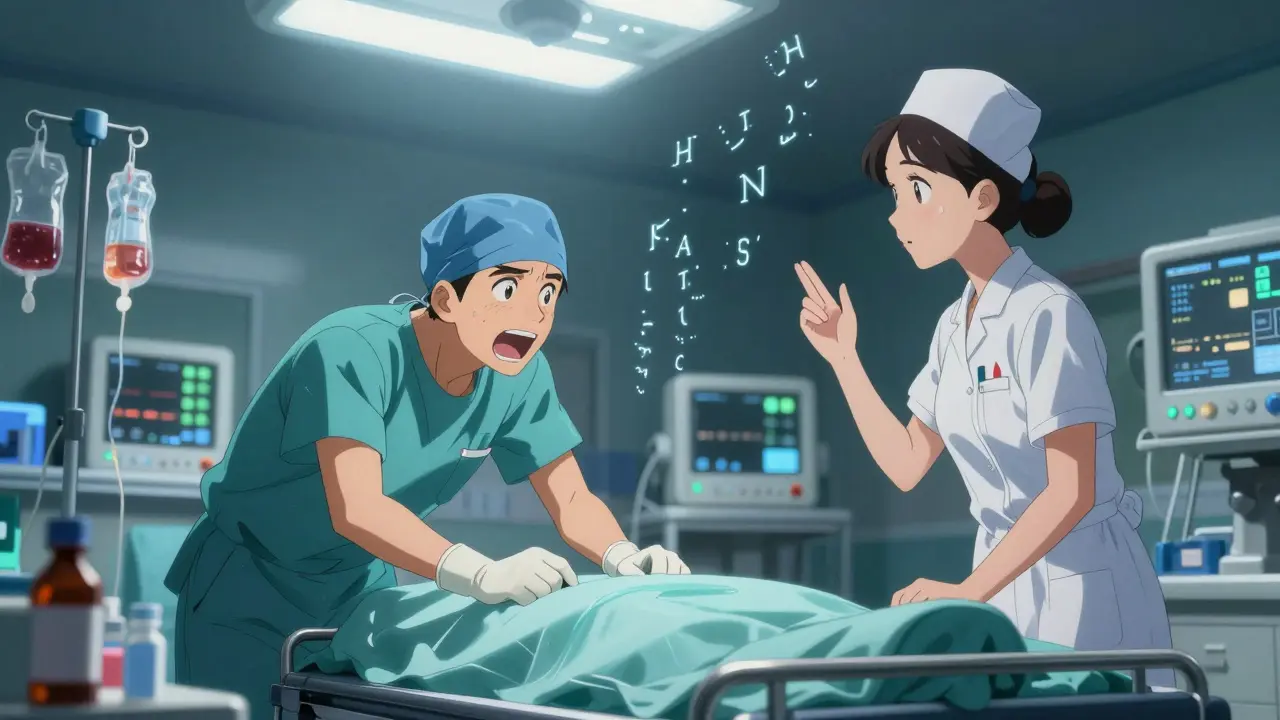
When a doctor calls in a medication order over the phone, or shouts a dose across a busy ER bay, lives hang in the balance. Verbal prescriptions are still part of daily care - in emergencies, during surgery, or when tech fails. But they’re also one of the most dangerous steps in patient care. Studies show verbal prescriptions have a 30-50% error rate. That’s not a typo. Half of all mistakes in these orders come from simple miscommunication: a misheard number, a confused drug name, a rushed instruction.
Here’s the hard truth: no one remembers a verbal order perfectly. Not the nurse who hears it. Not the doctor who says it. The only real record is the one written down - and written down right now. That’s why safety protocols exist. Not to slow things down, but to stop preventable deaths.
Why Verbal Prescriptions Are Still Used
You might think electronic systems killed verbal orders. They didn’t. They just reduced them. In hospitals today, 10-15% of all medication orders still come through the phone or face-to-face. In emergency rooms? That number jumps to 25-30%. Why? Because sometimes, waiting to type is deadly.
Imagine a trauma patient bleeding out. The surgeon needs to give a dose of epinephrine - now. There’s no time to log into a system, click through menus, or wait for a nurse to find a tablet. The patient’s life depends on speed. That’s when verbal orders save lives.
Same goes for operating rooms. Sterile fields mean no one can touch a keyboard. No one can hand a tablet to the anesthesiologist mid-surgery. The only way to communicate is voice. And that’s okay - if done right.
But outside these moments? Verbal orders are a shortcut that costs lives. A 2021 Medscape survey found 68% of nurses had at least one near-miss every month because a doctor mumbled a drug name. One nurse recalled a prescriber saying “Hydralazine” like “Hydroxyzine.” The nurse didn’t catch it. The patient nearly died.
The Rules That Save Lives
There’s a clear, proven way to cut verbal order errors in half. It’s not fancy tech. It’s not new software. It’s two words: read-back verification.
Since 2006, The Joint Commission has required every verbal order to be repeated back - word for word - by the receiver. The prescriber then confirms: “Yes, that’s correct.” This simple step reduces errors by up to 50%.
But it’s not enough to just say “I heard it.” You need to say it exactly how it was said. That means:
- Spell out drug names phonetically. Not “Zyprexa.” Say: “Z-Y-P-R-E-X-A.”
- State numbers in two ways. Not “15 mg.” Say: “Fifteen milligrams. One-five milligrams.”
- Never use abbreviations. No “BID,” “QID,” “PO,” or “SC.” Say: “twice daily,” “four times daily,” “by mouth,” “under the skin.”
- Confirm the indication. Why is this drug being given? “For atrial fibrillation.” Not “for heart.”
These rules aren’t suggestions. They’re standards backed by the Centers for Medicare & Medicaid Services (CMS) and The Joint Commission. And they’re required in 42 states as part of licensure.
High-alert medications? Even stricter. Insulin, heparin, opioids, and chemotherapy? Most hospitals ban verbal orders for these unless it’s an emergency. Even then, every letter, every number, every unit must be confirmed twice.
The Silent Killer: Sound-Alike Drugs
One of the biggest dangers isn’t bad hearing. It’s bad naming.
“Celebrex” and “Celexa.” “Zyprexa” and “Zyrtec.” “Hydralazine” and “Hydroxyzine.” These drugs look alike. Sound alike. And they do completely different things.
According to the Institute for Safe Medication Practices (ISMP), sound-alike confusion causes 34% of verbal order errors. A nurse once gave a patient 100 mg of hydralazine - a blood pressure drug - thinking it was hydroxyzine, an antihistamine. The patient went into shock. She survived. But only because someone caught the mistake before it was fully administered.
There’s no fix for this except training and discipline. Every nurse and doctor needs to know the top 20 high-risk pairs. Hospitals should post them in break rooms. During orientation. On phone scripts. You don’t just learn them once. You review them monthly.

What Gets Written Down - And When
Verbal orders aren’t real until they’re documented. And they must be documented immediately.
The record must include:
- Patient’s full name and date of birth
- Exact medication name, spelled out
- Dose with units (e.g., “5 milligrams,” not “5 mg”)
- Route (oral, IV, IM, etc.)
- Frequency (e.g., “every 6 hours”)
- Reason for the drug (indication)
- Name and credentials of the prescriber
- Time and date the order was received
- Time and date the order was authenticated
CMS requires authentication within 48 hours. But top hospitals like Johns Hopkins and Mayo Clinic require it before the shift ends. Why? Because if you wait, someone else might change the order. Or forget it. Or misread it.
And no - a nurse can’t just write “Dr. Smith ordered it.” That’s not enough. You need the full name. The title. The license number if required. No shortcuts.
Where It Goes Wrong
The biggest failures don’t happen in the ER. They happen during shift changes.
A 2006 Pennsylvania Patient Safety Authority report found 42% of verbal order errors occur when one nurse hands off to another. Why? Because the incoming nurse is tired. The outgoing nurse is rushing. The prescriber is distracted.
One case involved a premature infant. During transfer, a nurse heard: “Ampicillin 200 mg and gentamicin 5 mg IV.” She didn’t repeat it back. The baby got the wrong dose. The gentamicin was supposed to be 0.5 mg - not 5 mg. Ten times too much. The child suffered kidney damage.
Another common mistake? Multiple orders at once. “Give him Tylenol, then Zofran, then morphine, and start the drip.” That’s a recipe for disaster. Always take one order at a time. Write it down. Confirm it. Then move to the next.
And don’t forget: prescribers aren’t immune to distraction. A doctor might be talking to a family member while giving an order. Or checking a text. Or answering a call. That’s when errors happen. That’s why protocols say: “Let me finish this order, then I’ll answer your question.”
What’s Changing - And What’s Coming
The future isn’t eliminating verbal orders. It’s making them safer.
By 2025, KLAS Research predicts verbal orders will drop to 5-8% of total orders. Why? Voice recognition in EHRs is getting better. Surgeons will soon say, “Give 50 mg of fentanyl,” and the system will type it - with automatic alerts for duplicates or wrong doses.
But even then, some situations will always need voice. Think field medics. Rural clinics. Power outages. Natural disasters.
The FDA is launching a 2024 initiative to standardize how high-risk drugs are pronounced. That means hospitals will have official audio guides for “diltiazem” vs. “diltiazem ER.” No more guessing.
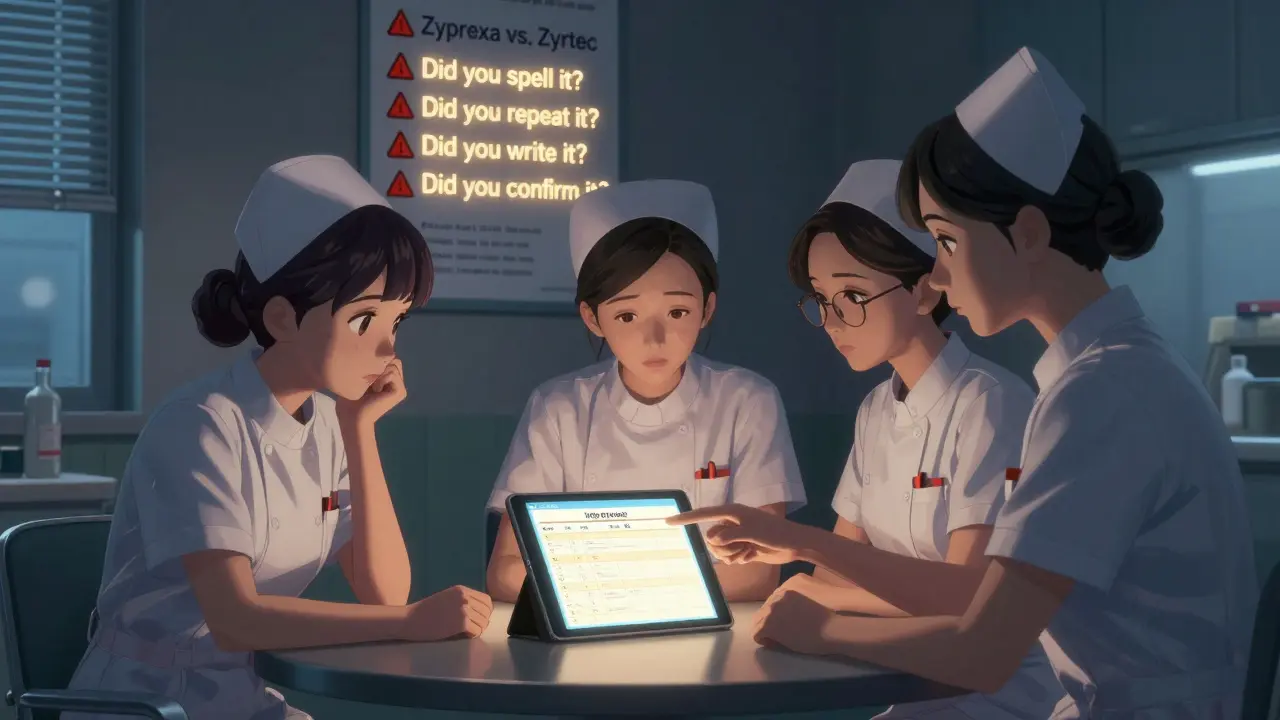
And every hospital now has a safety checklist. Not a form. Not a poster. A live protocol: “Did you spell it? Did you repeat it? Did you write it? Did you confirm it?” If any step is missed, the order doesn’t go through.
What You Can Do - Right Now
If you’re a nurse, a pharmacist, or a doctor:
- Never accept a verbal order without read-back.
- Always spell out drug names. Even if the prescriber says, “It’s obvious.”
- Ask for clarification if anything feels off. Even if it’s your boss.
- Document immediately. Don’t wait. Don’t assume someone else will.
- Speak up if your team skips steps. Silence kills.
If you’re a manager or administrator:
- Train staff quarterly on high-risk drug pairs.
- Use standardized scripts for phone orders.
- Require same-shift authentication - no exceptions.
- Track how many verbal orders are given. If they’re rising, investigate why.
Verbal prescriptions aren’t going away. But the mistakes? They’re preventable. Every single one.
Are verbal prescriptions legal?
Yes, verbal prescriptions are legal under CMS and The Joint Commission regulations. But they must follow strict safety rules, including read-back verification and timely documentation. State laws may add additional restrictions, especially for high-alert medications like insulin, heparin, and opioids.
Can nurses write verbal orders?
No. Only licensed prescribers - doctors, nurse practitioners, physician assistants - can give verbal orders. Nurses can receive, repeat, and document them, but they cannot initiate them unless they have prescriptive authority under state law.
What’s the biggest risk with verbal prescriptions?
The biggest risk is miscommunication due to similar-sounding drug names. Studies show 34% of verbal order errors involve confusion between drugs like Hydralazine and Hydroxyzine, or Zyprexa and Zyrtec. These mix-ups can lead to overdoses, organ failure, or death.
Do I need to spell out every drug name?
Yes. Always spell out medication names phonetically. Even common ones. Saying “Lisinopril” as “L-I-S-I-N-O-P-R-I-L” prevents confusion with similar-sounding drugs like Lisinopril-HCTZ or Lipitor. This is a standard requirement under The Joint Commission and ISMP Canada guidelines.
How soon must a verbal order be documented?
CMS requires authentication within 48 hours. But leading hospitals require documentation and authentication before the shift ends. Delaying documentation increases the risk of misinterpretation, duplicate orders, or missed doses. Immediate entry into the electronic health record is the gold standard.


peter vencken
March 22, 2026 AT 08:01Chris Crosson
March 23, 2026 AT 18:33Linda Foster
March 23, 2026 AT 21:53Blessing Ogboso
March 24, 2026 AT 11:33Jefferson Moratin
March 26, 2026 AT 04:05Grace Kusta Nasralla
March 26, 2026 AT 07:32Aaron Sims
March 28, 2026 AT 05:52Stephen Alabi
March 29, 2026 AT 11:04Agbogla Bischof
March 30, 2026 AT 19:12Anil Arekar
March 30, 2026 AT 21:36Elaine Parra
April 1, 2026 AT 00:39Natasha Rodríguez Lara
April 1, 2026 AT 13:14