Bilirubin: What It Is, Why It Matters, and How It Connects to Your Health
When your body breaks down old red blood cells, it produces bilirubin, a yellow pigment formed from the breakdown of hemoglobin. Also known as bile pigment, it’s not waste—it’s a normal part of how your body recycles blood. Most bilirubin gets processed by your liver, the organ that filters toxins and manages metabolism, then leaves your body through bile. If something goes wrong in that chain, bilirubin builds up—and that’s when you start seeing signs like yellow skin or eyes.
That yellowing is called jaundice, a visible symptom of elevated bilirubin in the blood. It’s not a disease itself, but a signal. It can mean your liver is overloaded, your bile ducts are blocked, or your body is destroying red blood cells too fast. People often worry when their blood test shows high bilirubin, but levels can rise for harmless reasons too—like intense exercise, fasting, or even genetics. Newborns commonly have elevated bilirubin because their livers are still learning how to process it. That’s why pediatricians check it so closely.
Bilirubin doesn’t work alone. It’s tied to other liver enzymes, chemicals like ALT and AST that help track liver health. When doctors see high bilirubin along with high ALT or alkaline phosphatase, they start looking at liver damage, hepatitis, or gallstones. But if bilirubin is high and the rest are normal? It could be Gilbert’s syndrome—a harmless, common condition where the liver just processes bilirubin a bit slower. No treatment needed. Just awareness.
You’ll find bilirubin mentioned in posts about liver health, medication side effects, and even newborn care. Some drugs can stress the liver and raise bilirubin. Others, like statins or antibiotics, might show up in bloodwork as a warning sign. It’s not always about disease—sometimes it’s about timing, diet, or how your body handles stress. What matters most is the pattern: one high number means little. A trend over time? That’s the story.
What you’ll find below are real, practical guides that connect bilirubin to the bigger picture: how liver health affects your meds, why jaundice shows up in certain conditions, and how to interpret lab results without panic. These aren’t theory-heavy articles. They’re written for people who want to understand what their body is telling them—and what to do next.
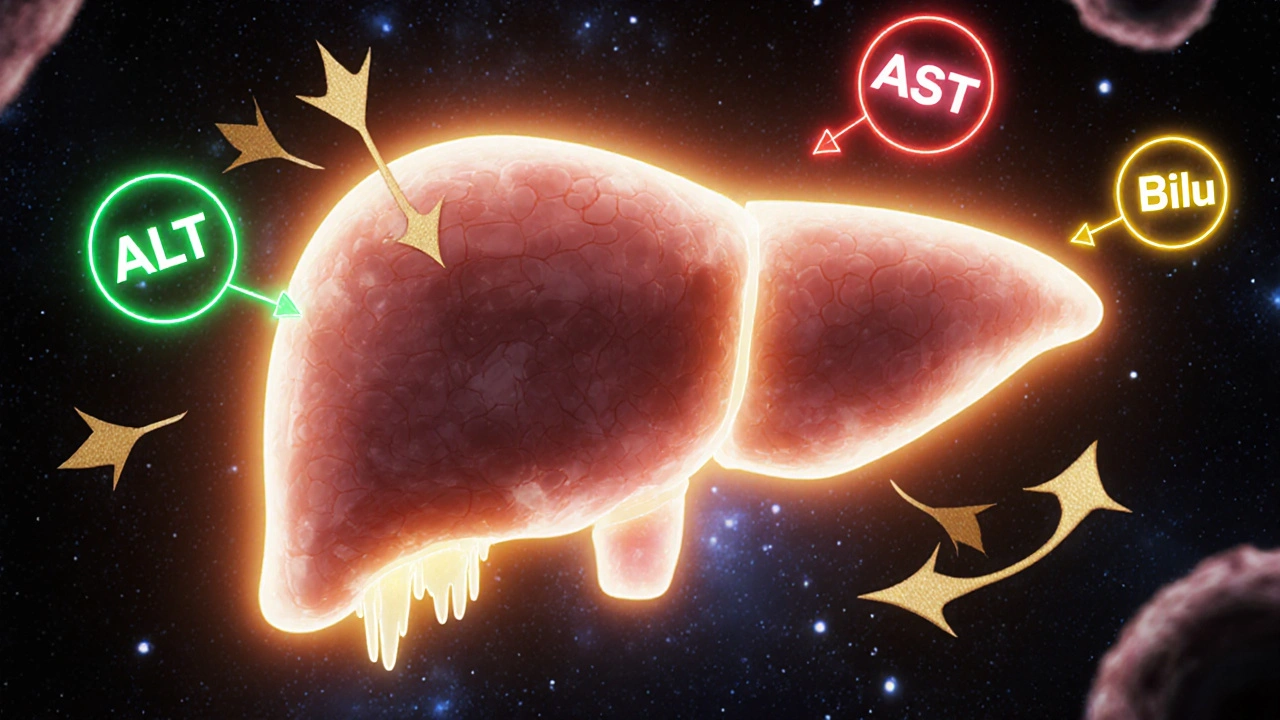
Liver Function Tests Explained: ALT, AST, Bilirubin, and What They Really Mean
Understand what ALT, AST, and bilirubin really mean in liver function tests. Learn how to interpret patterns, avoid common mistakes, and know when to act - not panic - based on your results.