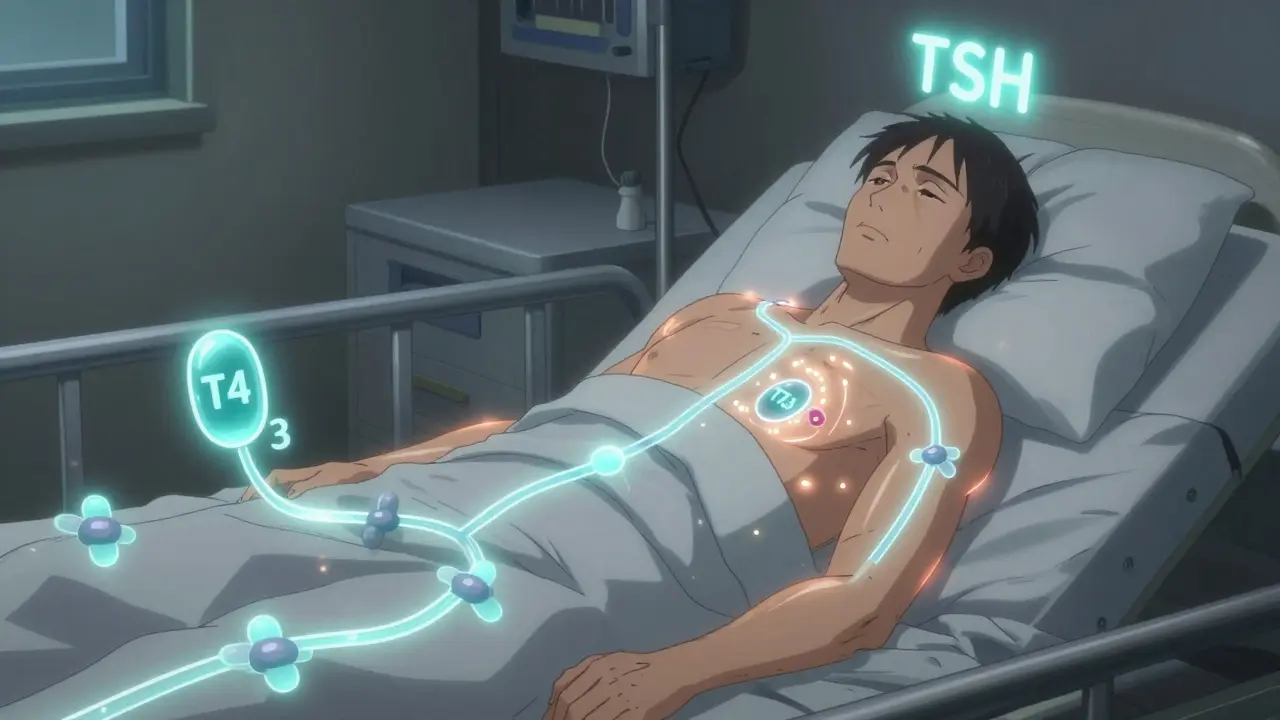
When you’re seriously ill, your body doesn’t just feel tired-it changes how your hormones work. One of the most misunderstood shifts happens in your thyroid lab results. You might see low T3, low T4, or even a weirdly high reverse T3, and your doctor might think you have hypothyroidism. But here’s the catch: your thyroid gland is perfectly fine. This isn’t a thyroid problem. It’s your body adapting to stress. This is sick euthyroid syndrome, also known as nonthyroidal illness syndrome (NTIS). And it’s happening in up to 75% of people in intensive care units.
What’s Really Going On With Your Thyroid Tests?
Your thyroid makes two main hormones: T4 (thyroxine) and T3 (triiodothyronine). T4 is mostly a storage form. Your body converts it into T3, the active hormone that tells your cells how fast to burn energy. In sick euthyroid syndrome, that conversion breaks down. Your body stops turning T4 into T3. Instead, it starts making reverse T3 (rT3), which is inactive and actually blocks T3 from working. This isn’t a malfunction-it’s a survival move. In healthy people, about 80% of T4 becomes T3. In someone with severe infection, trauma, or major surgery, that drops to 30-50%. At the same time, the enzymes that clear out reverse T3 slow down. So rT3 builds up. The result? Low T3, high rT3, and T4 that’s often low too. Meanwhile, TSH-the hormone your brain sends to tell your thyroid to work-stays normal. That’s the biggest clue. If your TSH is normal while your T3 and T4 are low, it’s almost certainly not a thyroid disease. It’s your body hitting pause on metabolism.Which Illnesses Trigger This?
This isn’t something that happens with a cold or the flu. It shows up when your body is under serious stress. Sepsis? Up to 85% of patients show these changes. Major surgery? Around 70%. Severe burns? 75-80%. Even a heart attack can trigger it in over half the patients. Chronic conditions like advanced liver disease, kidney failure, and anorexia nervosa also cause it-sometimes for months. The more severe the illness, the worse the hormone changes. In trauma patients, these shifts can show up within 24 to 48 hours. In people with long-term illness, the pattern becomes more complex. Sometimes TSH creeps up slightly during recovery, which can confuse doctors into thinking hypothyroidism is developing. But that’s often just the body resetting.Why You Might Feel Like You Have Hypothyroidism
It’s not just the numbers. People with sick euthyroid syndrome often feel exactly like someone with an underactive thyroid. Fatigue? 85% report it. Weakness? 78%. Cold hands and constipation? Common. In advanced cases, body temperature drops below 35°C, breathing slows, blood pressure falls, and mental confusion can set in. It’s easy to see why someone might think they need thyroid medication. But here’s what’s missing: no swollen neck, no dry skin, no puffy face, no elevated thyroid antibodies. Those are signs of Hashimoto’s or other autoimmune thyroid diseases. In sick euthyroid syndrome, your immune system isn’t attacking your thyroid. It’s just turning down your metabolism to save energy. That’s why treating it with levothyroxine doesn’t help-and can hurt.
Why You Shouldn’t Take Thyroid Pills for This
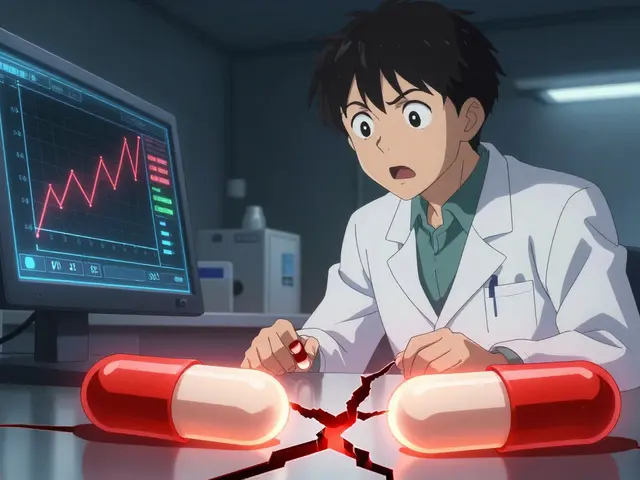
Giving thyroid hormone to someone with sick euthyroid syndrome is like adding gas to a car that’s in neutral. The engine isn’t running, so the fuel just sits there. Multiple studies have looked at this. One 2022 trial with 450 critically ill patients found no difference in survival or ICU stay between those given levothyroxine and those who weren’t. Both groups had a 28% death rate. Another study showed that patients who got thyroid hormones were more likely to develop heart rhythm problems. Doctors who misdiagnose this as true hypothyroidism are making a real mistake. Research shows about 12% of ICU patients get unnecessary thyroid treatment because of confusing lab results. That’s not just a waste of money-it can lead to dangerous side effects like atrial fibrillation or bone loss. The American Thyroid Association and the Endocrine Society both say: don’t treat the labs. Treat the illness.How Doctors Tell the Difference
The key is context. If you’re in the hospital with pneumonia and your T3 is low but your TSH is normal? That’s sick euthyroid syndrome. If you’re an outpatient with fatigue, weight gain, and high TSH along with low T4? That’s primary hypothyroidism. If your TSH is low and your T3/T4 are low? That’s central hypothyroidism-a rare condition where the brain isn’t signaling the thyroid-and that does need treatment. The best way to avoid confusion? Don’t order thyroid tests unless there’s a clear reason. The Endocrine Society recommends against routine thyroid screening in ICU patients because 90% of abnormal results are due to illness, not thyroid disease. If a test is done and looks strange, wait. Repeat it after recovery. If the numbers go back to normal, it was sick euthyroid syndrome. If they stay low and TSH stays high, now you’ve got real hypothyroidism.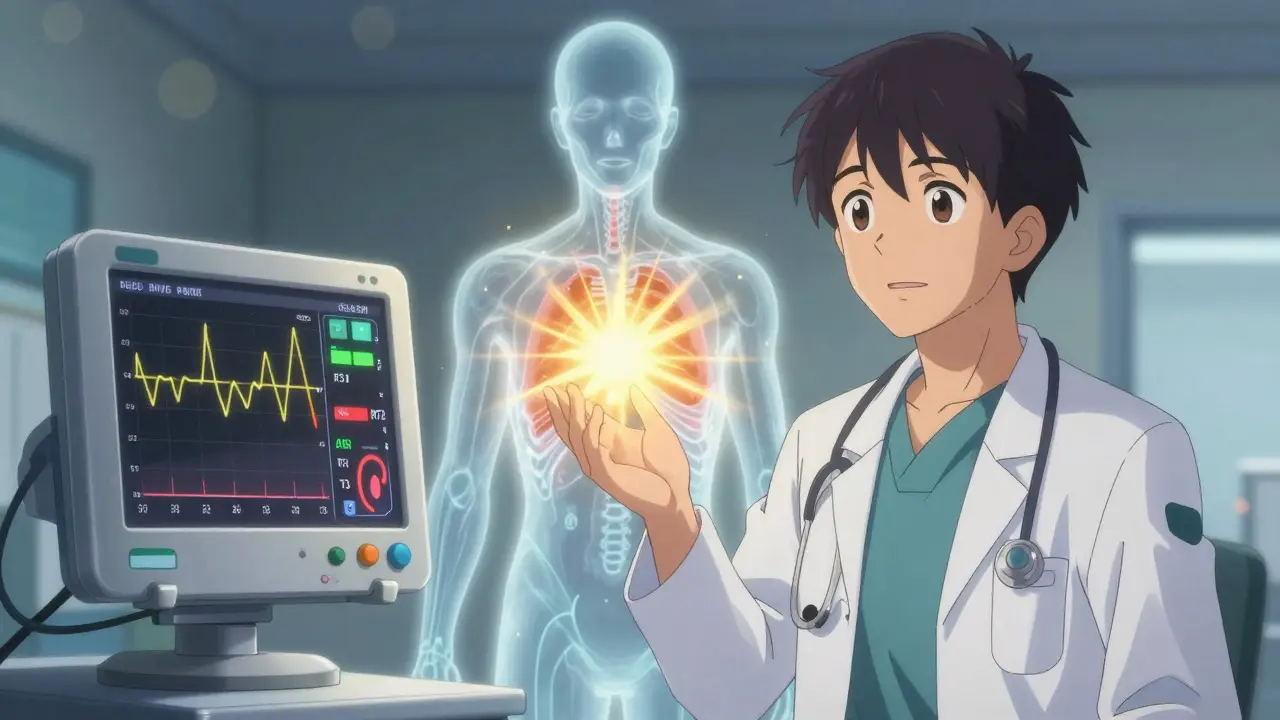
What Happens When You Recover?
The good news? Most people bounce back. Once the infection clears, the surgery heals, or the trauma stabilizes, the body restarts its normal hormone conversion. T3 levels rise. Reverse T3 drops. T4 returns to normal. TSH settles back into the 0.4-4.0 mIU/L range. This usually takes a few weeks. In chronic illness, it can take months. That’s why follow-up matters. If you were hospitalized with a serious illness and your thyroid tests were abnormal, ask your doctor to recheck them 4 to 6 weeks after you’re feeling better. That’s the standard recommendation from the American Association of Clinical Endocrinology. If the numbers are still off, then it’s time to look for true thyroid disease.The Bigger Picture: It’s Not a Disease-It’s a Survival Trick
Think of sick euthyroid syndrome like your body putting its metabolism on standby. When you’re fighting sepsis or recovering from burns, your body needs to save every bit of energy. Slowing down your metabolism by 15-20% helps preserve muscle, protect your heart, and keep your brain working. It’s not broken. It’s optimized. Researchers are now studying whether the degree of T3 suppression can predict outcomes. One study found that patients with T3 levels below 40 ng/dL had a 45% chance of dying. Those with T3 above 80 ng/dL had only a 15% risk. That means these hormone levels might one day help doctors judge how sick someone really is-even before other signs show up. The bottom line? Your thyroid isn’t failing. Your body is trying to survive. Don’t let abnormal labs lead to unnecessary treatment. Focus on healing the illness. The hormones will follow.Is sick euthyroid syndrome the same as hypothyroidism?
No. Hypothyroidism means your thyroid gland isn’t making enough hormone due to damage, autoimmune disease, or surgery. Sick euthyroid syndrome means your thyroid is working fine, but your body is changing how it uses thyroid hormones because of severe illness. The lab results look similar, but the cause and treatment are completely different.
Can stress or diet cause sick euthyroid syndrome?
Mild stress or dieting won’t cause it. This syndrome only happens with serious, life-threatening illness-like sepsis, major trauma, heart attacks, or advanced liver disease. People with anorexia nervosa can develop it because their bodies are in extreme metabolic stress. But skipping a meal or having a rough week won’t trigger these hormone changes.
Why does reverse T3 go up in sick euthyroid syndrome?
During severe illness, your body reduces the activity of the enzyme that turns T4 into T3 (type 1 deiodinase) and increases the enzyme that turns T4 into reverse T3 (type 3 deiodinase). Reverse T3 binds to thyroid receptors but does nothing. It’s like putting a fake key in a lock-it blocks the real key (T3) from working. This helps slow your metabolism to conserve energy.
Should I get thyroid tests if I’m sick?
Only if your doctor suspects a true thyroid problem-like unexplained weight gain, persistent fatigue after recovery, or a history of thyroid disease. Routine thyroid testing in hospitalized patients is discouraged because over 90% of abnormal results are due to illness, not thyroid disease. Unnecessary tests lead to misdiagnosis and harmful treatment.
What if my TSH is slightly high after I recover?
A mildly elevated TSH (4.1-10.0 mIU/L) during recovery is common and usually temporary. It doesn’t mean you now have hypothyroidism. This often happens as your body resets its hormone balance after a major illness. Repeat the test in 4-6 weeks. If TSH stays high and T4 stays low, then it’s worth investigating further. If it returns to normal, it was just part of your recovery.
Can sick euthyroid syndrome be prevented?
No, it can’t be prevented. It’s a natural response to severe illness. Trying to block it with supplements or diet won’t work. The only way to avoid it is to avoid serious illness-which isn’t always possible. The goal isn’t to stop the syndrome, but to recognize it so you don’t get treated for something that isn’t there.



Amanda Eichstaedt
January 12, 2026 AT 15:01Wow, this is one of those posts that makes you rethink everything you thought you knew about thyroid labs. I had a friend in the ICU last year with sepsis and they were prescribed levothyroxine because her T3 was low. She ended up in atrial fibrillation. Turns out it was just her body shutting down to survive. No one told her it wasn’t real hypothyroidism until she recovered and got retested. This needs to be common knowledge.
Alice Elanora Shepherd
January 13, 2026 AT 02:51Thank you for this clear breakdown. As a nurse in the ICU, I see this every week. The most dangerous part isn’t the misdiagnosis-it’s how quickly doctors jump to medication without waiting for recovery. I always tell families: ‘Don’t treat the numbers. Treat the person.’ If the patient’s infection clears and the T3 doesn’t bounce back, then we reassess. Otherwise, it’s just noise.
gary ysturiz
January 14, 2026 AT 17:44This makes so much sense. Your body isn’t broken-it’s being smart. Like putting your phone on low power mode when the battery’s about to die. You don’t fix it by plugging in a charger that’s meant for a different device. You fix the battery. Same here. Let the body heal. The hormones will follow.
Darryl Perry
January 15, 2026 AT 23:12Interesting. But let’s be honest-most doctors don’t have time to learn this. They see low T3, they see hypothyroidism, they prescribe. It’s faster. And if the patient feels worse after? Well, they’re just not compliant. This post is academic. Real medicine is about efficiency, not nuance.
laura manning
January 16, 2026 AT 11:41According to the 2022 randomized controlled trial referenced (n=450), there was no statistically significant difference in mortality between levothyroxine-treated and placebo groups (p=0.87). Additionally, the incidence of new-onset atrial fibrillation was 3.2% higher in the treatment arm (95% CI: 1.1–5.3). These findings are consistent with the 2012 Endocrine Society guidelines, which categorically recommend against thyroid hormone replacement in nonthyroidal illness syndrome. Misinterpretation of thyroid function tests in critical illness remains a pervasive, iatrogenic hazard.
Monica Puglia
January 16, 2026 AT 20:24So… if you’re sick, your body just says ‘nah, not today’ to your metabolism? 😅 I love this. It’s like your cells are on vacation and they turned off the AC to save electricity. No need to fix the thermostat-just let them chill until they’re ready to come back. 🙌
Lawrence Jung
January 18, 2026 AT 00:00They say the body knows best but then we pour pills down its throat like it’s a broken machine. Maybe the real disease is our arrogance. We think we can outsmart evolution with a prescription pad. But nature doesn’t care about your lab values. It cares about survival. And sometimes survival means silence.
Windie Wilson
January 19, 2026 AT 02:12So let me get this straight… when you’re dying, your thyroid goes on strike? And the doctors are the ones who think they’re helping? Classic. Next they’ll prescribe coffee to someone in cardiac arrest because ‘their caffeine levels are low.’
TiM Vince
January 19, 2026 AT 14:58I’ve seen this in my dad after his bypass. His T3 was trash, TSH was normal. Doctor wanted to start meds. I pushed back. We waited. Six weeks later, everything normalized. No pills. Just time. This is why I don’t trust labs without context. Numbers lie. Stories don’t.
Konika Choudhury
January 21, 2026 AT 10:39Indian hospitals do this all the time too. They see low T3 and give thyroxine without checking TSH. My cousin got treated for hypothyroidism after dengue fever and now she’s on meds for 2 years. Her TSH was normal the whole time. Why do doctors ignore basic physiology?
Cassie Widders
January 22, 2026 AT 22:44My grandma had this after pneumonia. She was so tired and cold. We thought she needed thyroid meds. Turns out, she just needed rest. After a month, she was back to knitting and complaining about the weather. No pills. Just time. This post is a gift.
Audu ikhlas
January 23, 2026 AT 20:37Western medicine is so arrogant. You think you know everything because you have a machine that reads numbers. But the body is ancient. It has wisdom. You don’t fix a forest fire by spraying water on the trees. You let it burn clean. Same here. Let the body reset. Stop treating symptoms like they’re the enemy.
Christina Widodo
January 24, 2026 AT 22:45Wait-so if I get really sick and my T3 drops, I shouldn’t panic? I just wait? And if I feel better and the numbers fix themselves, it was never a thyroid issue? That’s… kind of beautiful. Like my body was doing yoga while I was screaming at the lab report.
Eileen Reilly
January 25, 2026 AT 01:19OMG I thought I had hypothyroidism after my surgery. I was on levo for 3 months. Felt worse. Finally got retested-TSH was 1.8. T3 normal. I cried. I was so mad. Why didn’t anyone tell me this? I wasted money, time, and my mental health over a lab glitch.
Abner San Diego
January 25, 2026 AT 12:48Look, I don’t care what the studies say. My uncle got thyroid meds after his heart attack and he’s alive today. So who cares if it’s ‘just’ sick euthyroid? If it helped, it helped. You people are overthinking this. Let doctors treat the patient, not the textbook.