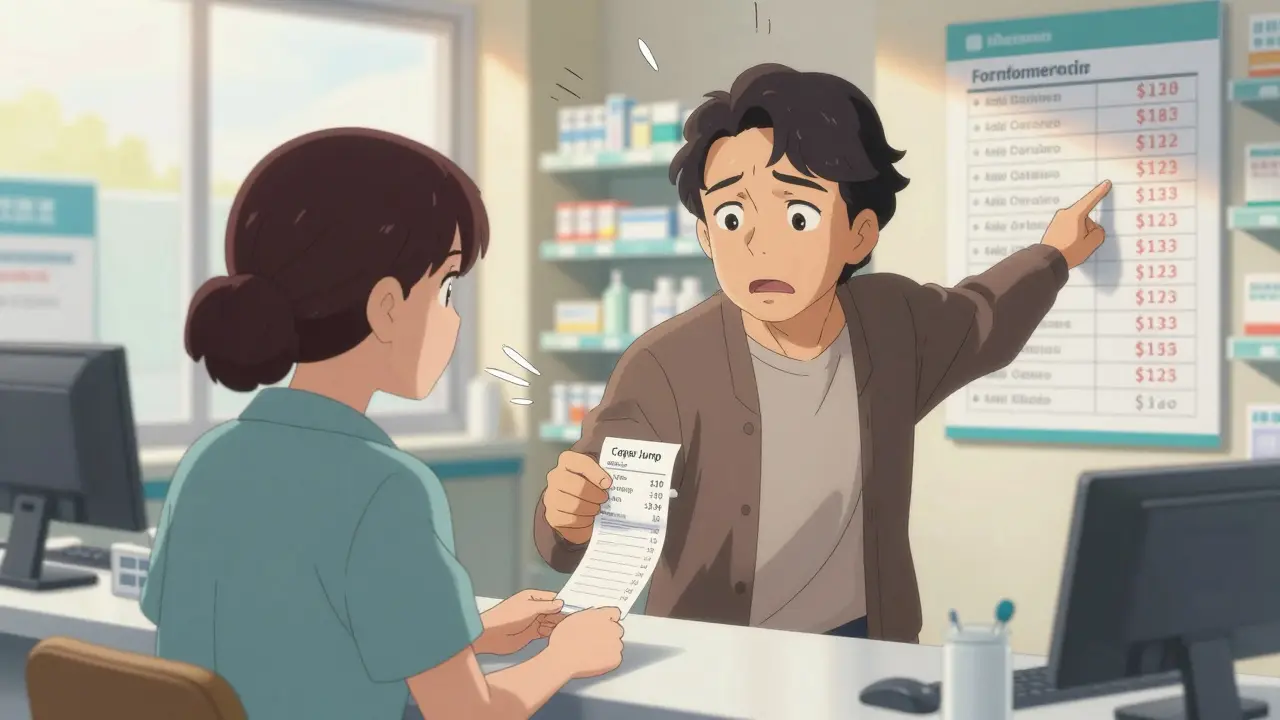
Every year, your prescription drug coverage changes-often without you noticing until you show up at the pharmacy and your copay jumps from $10 to $113. That’s not a mistake. It’s a formulary update, and in 2025, these changes are bigger than ever. If you’re on Medicare Part D, or even if you get your drug coverage through an employer or private plan, you need to understand what’s happening and how to protect yourself.
What Exactly Is a Formulary?
A formulary is just a list of drugs your insurance will pay for. It’s divided into tiers, and each tier has a different cost to you. In 2025, most plans follow this structure:- Tier 1: Preferred generics-usually $1 to $10 per prescription.
- Tier 2: Non-preferred generics or preferred brand-name drugs-around $47.
- Tier 3: Non-preferred brand-name drugs-$113 on average.
- Specialty Tier: High-cost drugs like biologics or cancer treatments-either $113 or 25% of the drug’s price.
Insurance companies and pharmacy benefit managers (PBMs) like CVS Caremark, OptumRx, and Express Scripts update these lists every year. They remove drugs, move them to higher tiers, or add new ones-often to save money. But when they do, it can mess with your treatment.
Why 2025 Is Different
The Inflation Reduction Act of 2022 didn’t just change taxes-it changed how Medicare pays for drugs. Starting January 1, 2025, three big things kicked in:- The coverage gap (aka the "donut hole") is gone. You now pay 25% of your drug costs from the moment you hit the initial coverage limit ($5,030 in 2025) until you hit the catastrophic threshold ($8,000).
- There’s a new $2,000 annual out-of-pocket cap. If you spend more than that on prescriptions, your plan pays 100% for the rest of the year. About 3.2 million Medicare beneficiaries will save an average of $1,500 in 2025-some even more.
- Insurers are now forced to push generics and biosimilars harder. Why? Because the law rewards plans that reduce spending on expensive brand-name drugs.
This means your insulin, arthritis medication, or asthma inhaler might suddenly be moved to a higher tier-or removed entirely. And if it’s removed, you’ll need a prior authorization or step therapy to get it back.
What’s Getting Removed or Moved
In 2024, CVS Caremark excluded 21 specialty drugs. In 2025, they cut that number to just 9. But they added 18 new drugs-11 of them biosimilars. That’s not a coincidence.For example:
- Herzuma and Ogivri (breast cancer drugs) were removed.
- Kanjinti and Trazimera (biosimilar versions) were added.
Same active ingredient. Same effectiveness. But the biosimilar costs 30% to 50% less. That’s why insurers are pushing them.
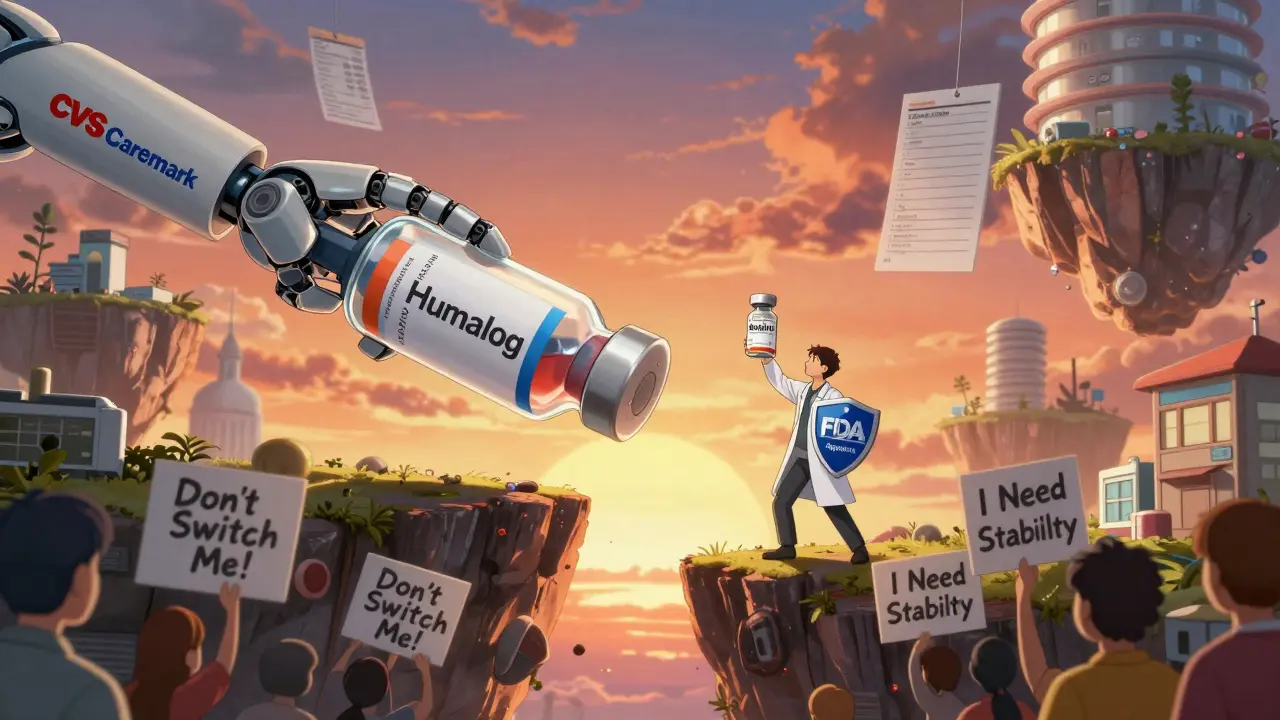
UnitedHealthcare moved Humalog insulin to Tier 3 in some plans, raising copays from $35 to $113 overnight. One Reddit user wrote: "I had to call my doctor three times just to get an exception. I went three days without my insulin."
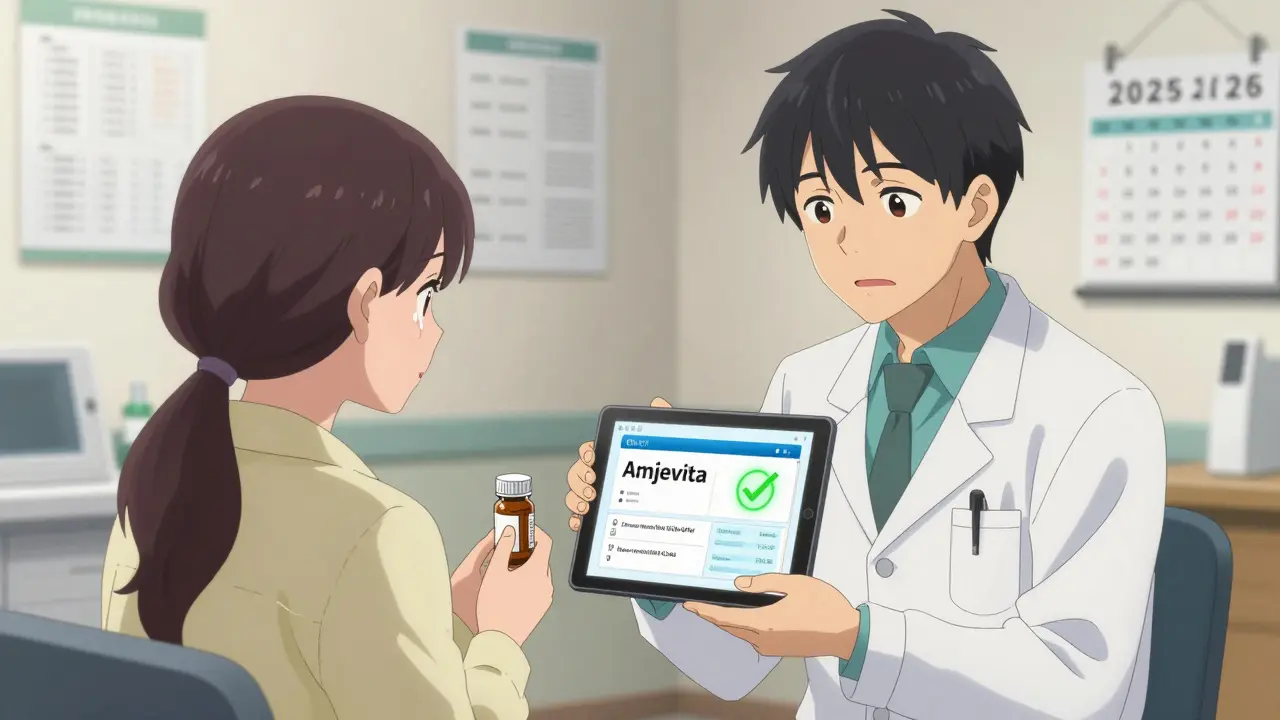
On the flip side, another user switched from Humira to Amjevita (a biosimilar) and saved $450 a month-with no drop in effectiveness.
Why Generic Switching Isn’t Always Safe
Switching from a brand-name drug to a generic isn’t always harmless. For some conditions-like epilepsy, thyroid disease, or mental health-it can cause real problems. Even small differences in how a drug is absorbed can throw off your dosage.That’s why doctors call it non-medical switching: when the change isn’t about your health, it’s about the insurer’s bottom line. According to healthcare attorney Scott Glovsky, these kinds of switches increased by 23% in 2024.
Dr. Karen Ignagni, former CEO of America’s Health Insurance Plans, warned that aggressive generic switching could hurt vulnerable patients-especially those with chronic conditions who rely on stability.
But here’s the good news: the FDA has made it easier. In May 2024, they updated their guidance to say PBMs can cover biosimilars even if they’re not officially labeled "interchangeable." That means more options, faster.
How to Find Out If Your Drug Is Affected
You won’t get a letter from your doctor. You’ll get a notice from your insurer-usually in October or November. But don’t wait.Here’s what to do now:
- Log into your plan’s website and check your 2025 formulary. Look for your exact drug name (including brand and generic versions).
- Call your pharmacy. Pharmacists have access to real-time formulary data. Ask: "Is my medication still covered? Has the tier changed?"
- Ask your doctor. Tell them you’re worried about formulary changes. They can check if a cheaper alternative exists that’s still safe for you.
- Check for exceptions. If your drug is removed or moved up, you can request an exception. Your doctor fills out a form. In 2024, 82% of tiering exceptions were approved-but only 47% of complete exclusions.
For urgent cases, you can request an expedited exception-processed in 24 hours. But if you wait until January, you might go without your meds for weeks.
What to Do If Your Drug Is Excluded
If your drug is removed from the formulary entirely, you have options:- Request an exception with your doctor’s support. Include medical records showing you’ve tried alternatives and failed.
- Ask for a 30-day transitional supply. Most plans must give you one if your drug was covered in 2024.
- Switch to a biosimilar. If one exists, ask your doctor if it’s right for you. Many patients report no difference in side effects or effectiveness.
- Appeal. If your exception is denied, you can appeal. The process takes 30 to 90 days, but you’re entitled to it.
Some plans, like Cigna, require 30 days’ notice before a change. Others, like Aetna, give you 60 days. But if a new generic hits the market, they can change things with just 30 days’ notice.
The Big Picture: What’s Coming in 2026
The next wave is even bigger. Starting January 1, 2026, Medicare will start negotiating prices for 10 high-cost drugs-including Stelara, Prolia, and Xolair. These drugs must be covered by every Part D plan, no matter what.And guess what? Biosimilars for these drugs are already in development. By mid-2025, we’ll likely see the first biosimilar versions of Stelara hit the market. That means another round of formulary changes-this time, forced by federal law, not just insurer cost-cutting.
Milliman projects that by 2026, 65% of Part D plans will require generic or biosimilar substitution for non-protected drugs. That’s not a suggestion. It’s policy.
What You Can Do Right Now
You can’t stop formulary changes. But you can control how they affect you.- Review your formulary in October. Don’t wait for a letter.
- Ask your pharmacist for alternatives. They know what’s covered and what’s not.
- Keep a list of your medications-including dose and frequency-and bring it to every doctor visit.
- Don’t skip doses if your drug is removed. Call your doctor or pharmacist immediately.
- Use the 30-day transitional supply if offered. It buys you time to get an exception.
The system is stacked to push you toward cheaper drugs. But you’re not powerless. With the right information, you can make sure your treatment doesn’t get caught in the crossfire.
What’s Next?
The next big shift will come in 2029, when Medicare negotiates prices for 20 drugs. By then, biosimilars will make up nearly half of all targeted therapies, according to FDA projections. That means even more switches, more paperwork, and more chances for disruption.But it also means more savings. For many people, this is the difference between affording their meds or not.
Stay informed. Ask questions. Advocate for yourself. Your health depends on it.
What happens if my drug is removed from the formulary?
If your drug is removed, you can request an exception from your insurer. Your doctor must submit a form explaining why you need it. If approved, you’ll get coverage. If denied, you can appeal. You’re also entitled to a 30-day transitional supply so you don’t run out while waiting for a decision.
Can I switch to a biosimilar without asking my doctor?
No. Even if your insurer automatically switches you, you should always talk to your doctor first. Biosimilars are safe for most people, but not everyone. Conditions like autoimmune diseases or neurological disorders may require extra caution. Your doctor knows your history and can tell you if the switch is right for you.
How do I know if a drug is a biosimilar?
Biosimilars have names that end in -mab, -cept, or -derm, and often include a four-letter suffix like -ab or -af. For example, Amjevita is a biosimilar to Humira. Your pharmacist or insurance plan’s formulary will label them clearly. If you’re unsure, ask your pharmacist to confirm.
Why do some drugs get moved to higher tiers?
Insurers move drugs to higher tiers to encourage you to choose cheaper alternatives. If a generic or biosimilar becomes available, the brand-name version often gets bumped up. It’s not about safety-it’s about cost. But if the brand is medically necessary for you, you can request an exception.
Are there drugs that can’t be switched?
Yes. Medicare protects certain drug classes from formulary restrictions, including anticonvulsants, antidepressants, antipsychotics, cancer drugs, HIV/AIDS drugs, and immunosuppressants. These must have at least two drugs covered on every tier. But outside these protected classes, insurers have wide freedom to switch you.
What if I can’t afford my drug after a formulary change?
You have several options: request an exception, switch to a biosimilar, apply for patient assistance programs from drug manufacturers, or use nonprofit organizations like NeedyMeds or the Patient Access Network Foundation. The new $2,000 out-of-pocket cap in 2025 will also help many people avoid extreme costs.
Do all insurance plans have the same formulary?
No. Each insurer-whether it’s UnitedHealthcare, CVS Caremark, or Cigna-creates its own formulary. Even two Medicare Advantage plans from the same company can have different drug lists. Always check your specific plan’s formulary each year, even if you’ve been with the same insurer for years.
When do formulary changes take effect?
Most formulary changes take effect on January 1. But if a new generic is approved by the FDA, insurers can change coverage with only 30 days’ notice. You should get a notice in writing by October or November, but don’t wait-check your formulary early.




Vikrant Sura
December 21, 2025 AT 12:48Cara Hritz
December 22, 2025 AT 21:35Tarun Sharma
December 24, 2025 AT 01:56Kathryn Weymouth
December 25, 2025 AT 03:46Aliyu Sani
December 25, 2025 AT 09:55Art Van Gelder
December 26, 2025 AT 22:17Jeremy Hendriks
December 27, 2025 AT 15:30Herman Rousseau
December 28, 2025 AT 03:19Jim Brown
December 29, 2025 AT 01:17Nader Bsyouni
December 29, 2025 AT 09:21Sai Keerthan Reddy Proddatoori
December 29, 2025 AT 10:01Jamison Kissh
December 30, 2025 AT 18:46