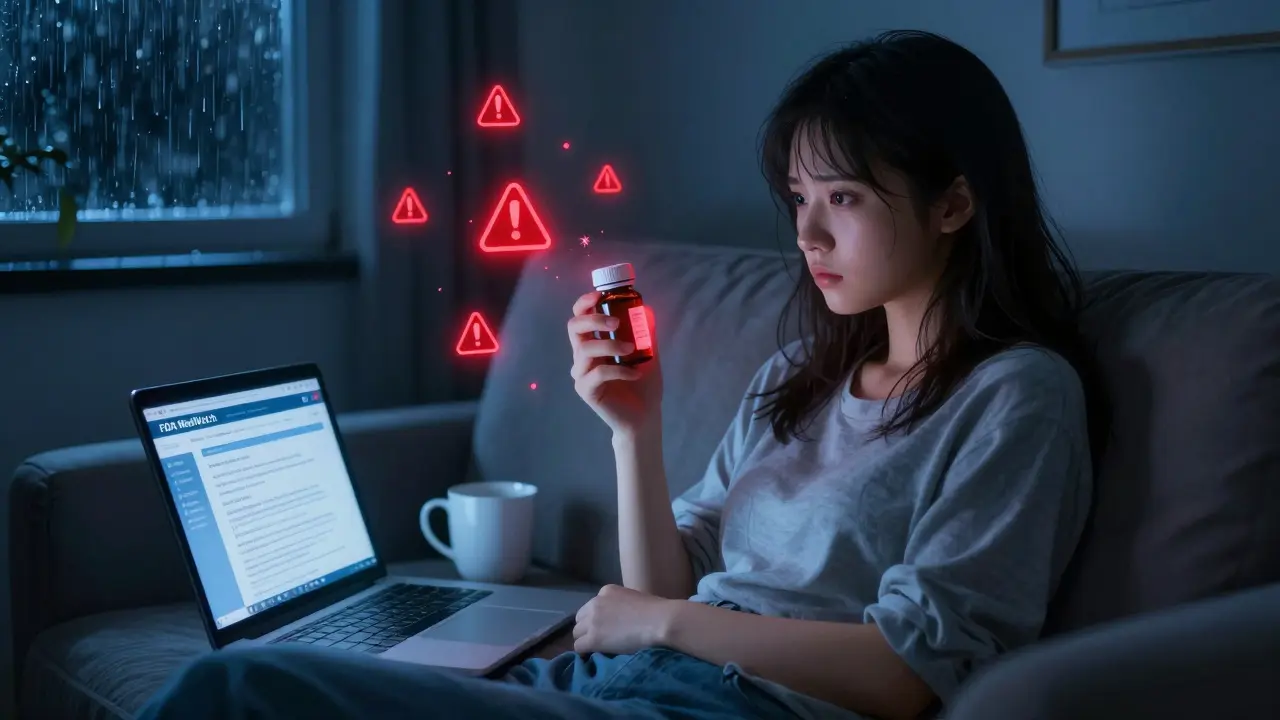
Every year, hundreds of thousands of people in the U.S. experience side effects, product failures, or safety issues with medications, medical devices, or even dietary supplements. But only a small fraction ever report them. If you’ve had a bad reaction to a drug, noticed a faulty insulin pump, or seen your child’s formula cause unexpected symptoms, you’re not alone-and you don’t need a doctor to speak for you. The FDA lets you report directly. This isn’t bureaucracy. It’s your right. And it might save someone else’s life.
What You Can Report to the FDA
You don’t need to be a medical expert to know something’s wrong. If you’ve experienced something serious after using an FDA-regulated product, you can report it. That includes:
- Severe side effects from prescription or over-the-counter drugs (like heart palpitations, liver damage, or suicidal thoughts)
- Medical device failures (a pacemaker that stops working, a glucose monitor giving wrong readings, a catheter that breaks)
- Dietary supplements that make you sick (even if they’re sold as “natural”)
- Contaminated infant formula or unsafe cosmetics
- Therapeutic failure (a drug that just doesn’t work when it’s supposed to)
- Use errors (like misusing an inhaler because the instructions were unclear)
The FDA defines a serious event as one that results in death, hospitalization, disability, birth defects, or requires medical intervention. But even if it doesn’t meet that bar-if you felt something was off and it scared you-you should still report it. Rare problems only show up after thousands of people use a product. That’s where your report matters.
How to Submit a Report: 4 Ways to File
The FDA gives you four options to file. Pick the one that works for you.
- Online: Safety Reporting Portal (SRP) - This is the fastest way. Go to www.fda.gov/medwatch and click “Report a Problem.” You’ll fill out a simple form with your details, the product, and what happened. The form is designed for patients, not doctors. No jargon required. But here’s the catch: since August 2024, the portal has been glitchy. It crashes. It freezes. People have reported spending hours trying to submit. If it fails, try again later or switch to another method.
- Phone: 1-800-FDA-1088 - If tech isn’t your thing, call. Representatives are available Monday through Friday, 8 a.m. to 8 p.m. Eastern Time. You’ll be asked the same basic info: what product, what happened, when, and your contact details. They’ll type it into the system for you. This works well if you’re stressed, elderly, or not comfortable typing medical terms.
- Mail: FDA Form 3500 - Download the PDF from the FDA website. Print it. Fill it out by hand. Mail it to the address listed on the form. This is slower, but reliable. No internet? No problem. The form is free. You can also request a paper copy by calling the number above.
- Spanish: FDA Form 3500B - If you’re more comfortable in Spanish, use the 3500B version. It’s identical to the English form, just translated. The FDA still doesn’t offer forms in other languages, but they’re working on it.
Pro tip: Don’t wait. While there’s no legal deadline for patients, the sooner you report, the better. The FDA’s new AI system can flag patterns faster if reports come in quickly. A delay of weeks could mean missing a chance to catch a dangerous trend.
What Information You Need to Provide
You don’t need a medical degree. But you do need to answer a few key questions clearly:
- Product details: Name, brand, lot number, expiration date. If you don’t have the box, check your pharmacy receipt or the product packaging. Lot numbers are small but critical. About 38% of patient reports fail because they’re missing this.
- What happened: Describe your symptoms in plain language. “My leg swelled up,” “I couldn’t breathe,” “My blood sugar dropped to 45.” Include when it started and how long it lasted.
- When it happened: Date and time of the event. Was it right after taking the pill? After using the device for 3 weeks?
- Other meds or products: Did you take anything else? Even aspirin or herbal tea? These can interact.
- Outcome: Did you go to the hospital? Recover on your own? Still have symptoms?
- Your contact info: Name, phone, email. This is optional, but if you want a confirmation email (which the FDA sends within 5 business days), you need to include it.
Don’t worry if you’re unsure about medical terms. The FDA’s Patient Reporting Toolkit, updated in November 2024, now has a built-in symptom wizard that helps you pick the right words. It’s like a chatbot that translates “I felt dizzy and nauseous” into the language the FDA’s system understands.

Why Your Report Matters
Most clinical trials test drugs on 500 to 3,000 people. But once a drug hits the market, millions use it. That’s when rare side effects show up-like one in 10,000 cases. Your report could be that one.
In 2024, patient reports helped trigger 17 official FDA safety actions. One example: 287 patients reported insulin pens leaking or giving wrong doses. The FDA reviewed them, found a manufacturing flaw, and issued a public warning. That’s real impact.
Patients also catch things doctors miss. A 2023 study found patient reports included 37% more detail about when symptoms started and 28% more info about over-the-counter medicines taken alongside the product. That’s because you live with your body. You know your routine. You know what’s unusual.
Even if your report doesn’t lead to a recall, it adds to a database of over 25 million reports. That data helps the FDA spot trends, update labels, or warn other patients. It’s not just about you. It’s about the next person.
What Happens After You File
Once you submit, your report goes into the FDA Adverse Event Reporting System (FAERS). It’s not reviewed by a person right away. First, it’s filtered by AI. The system checks for duplicates, missing info, and urgency. If it’s flagged as serious, it gets prioritized.
Processing used to take 22 business days. Now, thanks to new AI tools, it’s down to 9. The FDA aims to cut that to 5 by late 2026.
You won’t get a call. You won’t get a follow-up. But if your report helps trigger a safety update, you might see it in a public notice. That’s how you know your voice mattered.

Common Problems and How to Avoid Them
Not every report gets processed cleanly. Here’s what goes wrong-and how to fix it:
- “I couldn’t find the lot number.” Check the box, the bottle, the receipt, or call the pharmacy. If you still can’t find it, write “unknown” and describe the product as best you can.
- “The portal crashed.” Try a different browser. Use Firefox or Chrome. Avoid Safari if possible. Or switch to phone or mail.
- “I didn’t know what to write.” Use the symptom wizard in the FDA’s toolkit. Write like you’re telling a friend. “I felt like I was going to pass out.” That’s better than “syncope.”
- “My doctor didn’t report it.” That’s okay. Doctors are busy. They’re not required to report every case. You are the expert on your own body.
- “I’m worried about privacy.” The FDA legally can’t share your name without your permission. Your report is confidential. That’s protected under 21 CFR 10.75.
And don’t be discouraged if you get no response. Most reports don’t lead to immediate action. But they’re still part of the system. Think of it like a smoke detector. You don’t hear it work every day. But when it does, it saves lives.
What’s Changing in 2025 and Beyond
The FDA isn’t standing still. In January 2025, they launched the Next Generation Safety Reporting System (NGSRS). It automatically checks lot numbers against product databases. It uses AI to code symptoms faster. It’s being tested with major device makers like Medtronic, whose patient-reported device issues jumped 27% after adding a direct reporting button in their app.
By 2027, the FDA plans to add reporting in five more languages. By 2028, they want one unified portal for all products-drugs, devices, supplements-instead of six separate systems. That’s a big step toward making this easier for everyone.
But there’s still a gap. Only 0.3% of people who have adverse drug reactions report them. That means 99.7% of problems go unreported. That’s not just a number. It’s a blind spot.
Final Thought: You’re Not Just a Patient. You’re a Watchdog.
The FDA doesn’t have eyes everywhere. It relies on people like you to see what’s happening in real life. You’re not a data point. You’re a witness. Your story gives context to cold statistics. Your report might not fix your problem. But it could prevent someone else’s tragedy.
So if something went wrong-don’t let it be silent. Take 20 minutes. Fill out the form. Call the number. Mail the paper. Your voice matters. The system needs it.
Can I report a problem even if I’m not sure it was caused by the product?
Yes. You don’t need to prove causation. The FDA’s job is to investigate whether there’s a link. If you experienced a serious reaction after using a product, report it-even if your doctor says it’s “probably unrelated.” Your report adds to the evidence.
Do I need to pay to file a report with the FDA?
No. Filing a report is completely free. There are no fees, subscriptions, or hidden costs. The FDA provides all forms, portals, and phone lines at no charge to the public.
Will the FDA contact me after I file a report?
Usually not. The FDA receives over 350,000 patient reports a year. They don’t have the staff to follow up with each person. But you will receive a confirmation email within 5 business days if you provide your email address. That’s your receipt.
Can I report a problem with a supplement or cosmetic?
Yes. The FDA regulates dietary supplements and cosmetics, even though they don’t go through the same approval process as drugs. If you had a reaction-rash, nausea, heart issues-you can and should report it. These products are often assumed to be safe, but they’re not always.
Is my report confidential?
Yes. Under FDA regulation 21 CFR 10.75, your personal information is protected. The FDA cannot share your name, address, or contact details without your written consent. Your report is anonymized in public databases.
What if I made a mistake on my report?
You can submit a corrected report. Just include your original report number (found in your confirmation email) and write “Amendment” at the top. The FDA accepts updates. More accurate info helps them more.




Alex Danner
January 8, 2026 AT 11:16Just filed my third report last week after my mom’s glucose monitor kept showing 200 when her actual level was 78. Scary stuff. The phone line was way easier than the portal-got through in 3 minutes. FDA rep was nice, typed everything out. Didn’t think it mattered until I read that 287 reports triggered that insulin pen recall. Turns out, my story was part of a pattern. Feels good to be part of the solution.
steve rumsford
January 10, 2026 AT 07:48the portal crashed 7 times. i swear it’s rigged. i ended up mailing the form. took 3 days to print, fill out, and drop it in the box. but hey, at least it went through. also, i didn’t know you could report supplements. my protein powder made me break out like a teenager. guess i’m reporting that too.
Katrina Morris
January 11, 2026 AT 11:17as someone who grew up in a family that trusted doctors blindly i never thought to report anything. until my niece had a seizure after a new formula. we thought it was coincidence. turns out 3 other moms had the same thing. we reported. no one called us back. but now the label says ‘may cause neurological reactions’ in bold. that’s huge. your voice matters even if no one answers.
Rachel Steward
January 13, 2026 AT 02:05Let’s be real-the FDA’s system is a glorified dumpster fire with a fancy AI veneer. They claim ‘25 million reports’ like that’s a victory, but 99.7% of adverse events go unreported because most people don’t have the time, tech literacy, or emotional bandwidth to navigate a broken portal. And don’t get me started on the ‘symptom wizard’-it’s like a chatbot designed by someone who’s never had a panic attack. You think ‘I felt like I was going to die’ translates to ‘acute cardiovascular distress’? Nah. It translates to ‘user error.’ The system isn’t designed to listen. It’s designed to collect. And then bury. Wake up.
LALITA KUDIYA
January 14, 2026 AT 08:14Poppy Newman
January 14, 2026 AT 16:43Just submitted my report via phone. Took 12 minutes. The rep said ‘thank you for being brave.’ 🥹 I didn’t realize how scared I was until I heard those words. This isn’t just paperwork. It’s healing. And honestly? I’m proud of myself.
Kamlesh Chauhan
January 14, 2026 AT 22:21Mina Murray
January 16, 2026 AT 13:27Wait-so the FDA says your info is confidential… but what’s stopping them from selling it to data brokers? They’ve got your name, your symptoms, your meds, your zip code. And now they’re using AI to ‘code’ your trauma? That’s not safety. That’s surveillance. And don’t tell me about 21 CFR 10.75-I’ve read the fine print. They can share anonymized data with ‘third-party researchers.’ Who defines ‘anonymized’? And who’s to say some startup isn’t building a predictive model on your panic attack?
Jonathan Larson
January 18, 2026 AT 08:32While the logistical hurdles of reporting are undeniable, the underlying principle remains profoundly democratic: the right to bear witness to harm. The FDA’s system, however flawed, is one of the few remaining institutional channels where an individual’s lived experience can influence public health policy at scale. The fact that patient-submitted data contributed to seventeen safety actions in 2024-despite systemic inertia-is not insignificant. It is, in fact, a quiet revolution. The burden should not fall solely on the patient, but until structural reform arrives, your report is not merely data-it is moral testimony.
Vince Nairn
January 19, 2026 AT 19:47so you’re telling me i have to mail a paper form because the website is broken… but the FDA has a whole new AI system? sounds like they’re hiring a chef to fix the microwave. i’m just glad i didn’t die from the glitchy pump. i’d be dead and they’d still be saying ‘we’re working on it.’
Jessie Ann Lambrecht
January 20, 2026 AT 01:13My cousin’s daughter had a rash after a new diaper cream. We reported it. Six months later, the brand pulled it. No fanfare. No press. Just a quiet recall. But I got an email from another mom saying ‘thank you-I switched too.’ That’s the real win. You don’t need a spotlight to change a life. Just the guts to hit submit. Keep going. You’re not crazy. You’re the reason the system hasn’t collapsed.
Kyle King
January 21, 2026 AT 16:31lol the FDA’s ‘Next Generation’ system? That’s just a rebrand for the same broken portal with a new color scheme. They’re not fixing anything. They’re just making the lie look shinier. And don’t even get me started on the ‘Spanish form’-why only Spanish? What about Tagalog? Arabic? Haitian Creole? This isn’t inclusion. It’s PR theater. Real change would mean letting people report via TikTok or WhatsApp. But nah. Let’s keep the elderly mailing forms while the AI crunches their trauma.