Heart Medication Interaction Checker
Check Your Medications
Enter your heart medications below. This tool identifies dangerous combinations with common drugs, supplements, and alcohol. Always consult your pharmacist or doctor before making changes to your medication regimen.
Results
Based on your medications, no dangerous combinations were found. However, always consult your healthcare provider for personalized advice.
Next Steps
- Check with your pharmacist Critical
- Review all supplements Important
- Keep written medication list Recommended
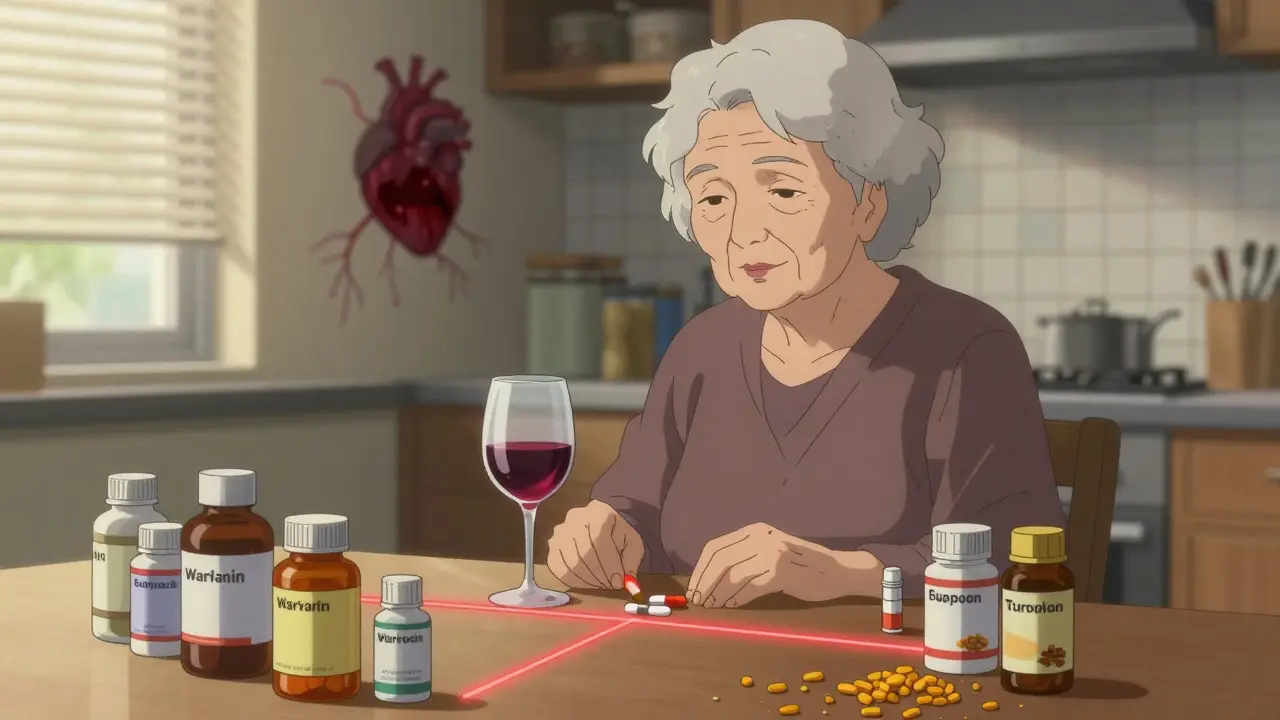
More than half of adults over 65 in Australia are taking five or more prescription drugs a week. Many of them are on heart medications-blood thinners, blood pressure pills, cholesterol drugs, or heart rhythm controllers. It’s not unusual. But what’s dangerous is when these meds are mixed without knowing how they react together. A single over-the-counter painkiller, a herbal supplement, or even a glass of wine can turn a safe routine into a life-threatening situation.
Why Some Heart Medications Don’t Play Nice
Your heart relies on a delicate balance. Medications like warfarin, lisinopril, or digoxin keep that balance in check. But when you add another drug-especially one that affects the same system-it can throw everything off. Some interactions are obvious. Others? Not so much. You might not feel anything at first. Then, suddenly, you’re in the hospital with a bleed, a heart rhythm crash, or kidney failure.The biggest culprits? Over-the-counter painkillers, supplements, and alcohol. These aren’t always seen as “real medicine,” but they’re just as powerful when mixed with heart drugs. A 2023 study from the USC Schaeffer Center found that taking just two heart-affecting medications together doubled the risk of heart attack or stroke. With three? The risk jumped by more than 200%.
The Seven Most Dangerous Combinations
These are not hypothetical risks. These are real, documented, and deadly combinations that have sent people to the ER-and sometimes to their graves.- Warfarin and ibuprofen: Warfarin keeps your blood from clotting. Ibuprofen irritates your stomach lining and blocks platelet function. Together, they raise your risk of internal bleeding by 300%. People have bled out after dental work or even a minor fall because they took Advil for a headache.
- Warfarin and acetaminophen: Even Tylenol, which many think is “safe,” can raise your INR (a measure of blood thinning) by 2-3 points with regular use. That’s enough to turn a controlled dose into a dangerous one.
- PDE-5 inhibitors (like Viagra) and nitrates: If you’re on nitroglycerin for angina, never take erectile dysfunction pills. Together, they can crash your blood pressure below 70 mmHg. That’s not just dizziness. That’s fainting, heart attack, or sudden death.
- Statins and amiodarone: Amiodarone is used for irregular heartbeats. Statins lower cholesterol. But when combined, they increase the risk of muscle breakdown (rhabdomyolysis) by 400-500%. This can lead to kidney failure.
- ACE inhibitors and potassium supplements: ACE inhibitors like lisinopril help your heart by relaxing blood vessels. But they also cause your body to hold onto potassium. Add a potassium pill or salt substitute, and your levels can spike above 5.5 mEq/L. That’s enough to stop your heart. One 2021 study found 18.7% of patients on this combo had dangerously high potassium-compared to just 4.2% on ACE inhibitors alone.
- Digoxin and verapamil: Digoxin controls heart rate. Verapamil is a calcium channel blocker used for high blood pressure or arrhythmias. Together, they can increase digoxin levels in your blood by 60-75%. That’s like taking a double dose without knowing it. Symptoms? Nausea, blurry vision, confusion, and irregular heartbeat.
- NSAIDs and diuretics or blood pressure meds: Diclofenac, naproxen, or even low-dose aspirin can reduce the effect of your blood pressure pills by 25-30%. They also cause your body to hold onto fluid, making heart failure worse. A 2022 survey found 28% of heart patients had taken NSAIDs with their BP meds-often without realizing it.
What You Might Not Realize Is Dangerous
It’s not just prescription drugs. Supplements and natural remedies are just as risky.St. John’s wort, often taken for low mood, can reduce the effectiveness of warfarin by up to 50%. That means your blood gets thicker, and your risk of clotting skyrockets. Turmeric, ginger, and garlic supplements also thin the blood. People think “natural” means “safe.” It doesn’t. One Reddit user from Sydney shared how he took turmeric capsules for joint pain and ended up with an INR of 8.2-over twice the safe range. He bled internally and spent a week in hospital.
Alcohol is another silent killer. Even moderate drinking with beta blockers can cause your blood pressure to drop too low. With diuretics, it can trigger dangerous electrolyte imbalances. And if you’re on opioids for pain? Alcohol can slow your breathing to a dangerous level-sometimes below 8 breaths per minute.
What’s Actually Safe (and Helpful)
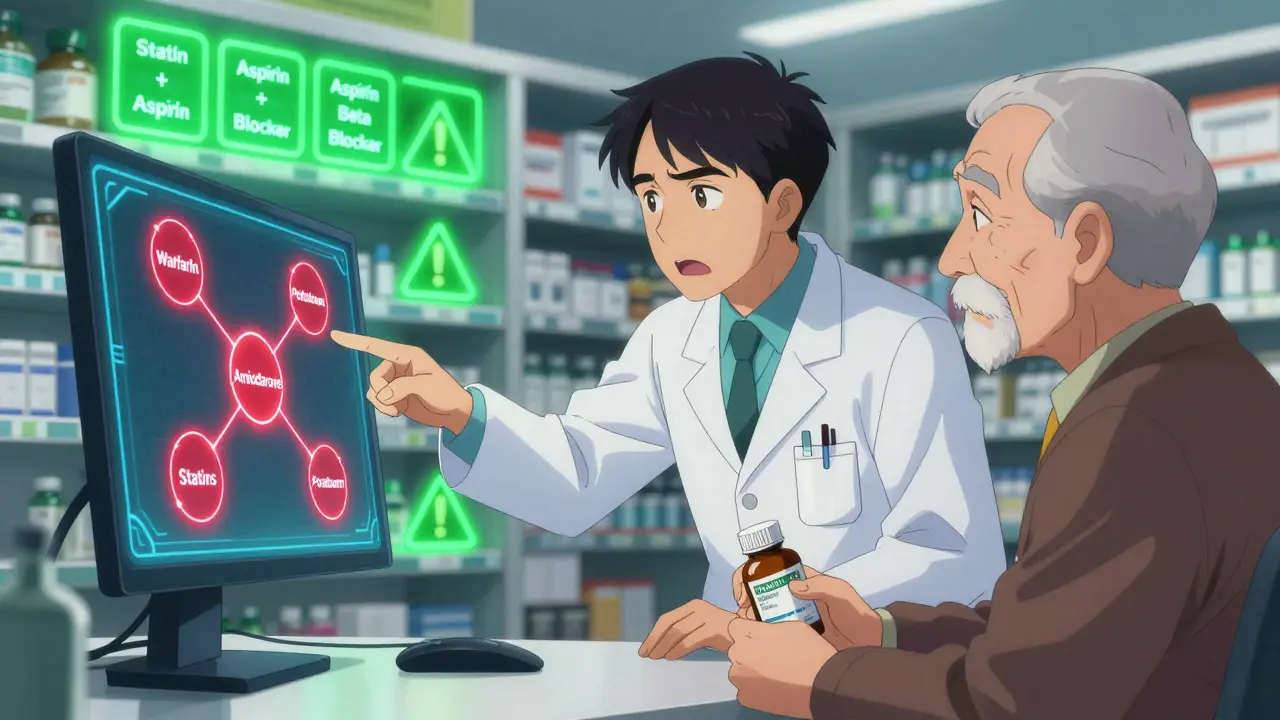
Not all combinations are bad. Some are life-saving.Statins, aspirin, and beta blockers together have been shown to improve survival in high-risk patients by 25-30%. Newer drugs like SGLT2 inhibitors (dapagliflozin) reduce heart failure events by 14% when added to standard therapy. AstraZeneca’s 2024 fixed-dose pill combining dapagliflozin, sacubitril, and valsartan was designed to simplify treatment and reduce interaction risks.
These aren’t random. They’re backed by years of clinical trials. The difference? These combinations were studied together. They were designed to work as a team.
How to Protect Yourself
You don’t need to be a doctor to avoid these traps. Here’s what actually works:- Keep a written list: Write down every pill, supplement, and OTC med you take-including doses and times. Don’t say “blood pressure pill.” Say “lisinopril 10 mg, taken every morning.”
- Use one pharmacy: All your prescriptions should come from the same pharmacy. Pharmacists have software that flags dangerous combinations. But only if they see all your meds.
- Ask every time: When a new prescription comes in, ask: “Will this interact with anything I’m already taking?” Don’t assume your doctor knows your full list.
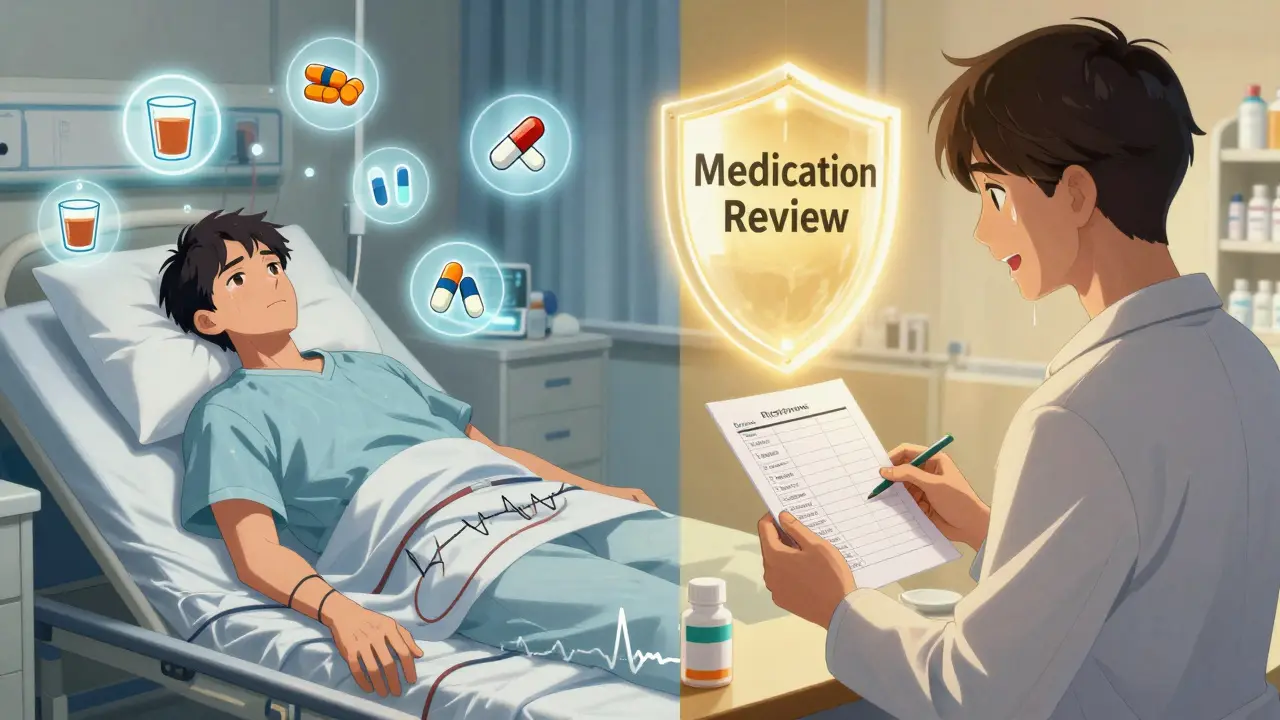
- Review with your pharmacist: Medicare Part D covers free 20-30 minute medication reviews. Use them. Ask them to go through every item on your list.
- Check supplements: If you’re taking anything labeled “natural,” “herbal,” or “immune booster,” ask your doctor or pharmacist if it’s safe with your heart meds. Many don’t even know these exist on your list.
What Doctors and Pharmacies Are Doing (and What They’re Not)
Electronic systems can flag dangerous combinations with 85-92% accuracy. But only if the data is complete. A 2023 report found only 37% of GPs routinely screen for interactions during medication reviews.Many patients don’t tell their doctors about OTC meds or supplements. Why? They don’t think it matters. Or they forget. Or they assume their doctor already knows. The American Heart Association’s 2022 survey found 62% of heart patients were never warned about dangerous combinations-even when they were taking NSAIDs with blood thinners.
Medicare’s Hospital Readmissions Reduction Program now penalizes hospitals if patients come back because of medication errors. That’s pushing hospitals to do better. But it’s still falling short.
What You Can Do Today
Right now, pull out your medicine cabinet. Write down every pill, capsule, and bottle you take. Include the ones you only take “when needed.” Then, call your pharmacist. Say: “I’m on heart medication. Can you check if any of these interact?”Don’t wait for a bad reaction. Don’t assume your doctor knows everything. You’re the only one who knows what you’re really taking. And you’re the only one who can protect yourself.
Heart medications save lives. But only if they’re used correctly. The biggest threat isn’t the drug itself-it’s what you mix it with.
Can I take ibuprofen with my blood thinner?
No. Combining ibuprofen with warfarin or other blood thinners increases your risk of serious internal bleeding by 300%. Even low doses can be dangerous. Use acetaminophen (Tylenol) instead-but only if your doctor approves it. Always check with your pharmacist before taking any painkiller.
Is it safe to drink alcohol with heart medications?
It depends. With beta blockers, alcohol can cause your blood pressure to drop too low. With diuretics, it can trigger dehydration and electrolyte imbalances. If you’re on opioids or sedatives for heart-related pain, alcohol can slow your breathing to dangerous levels. The safest answer? Avoid alcohol entirely unless your doctor says otherwise.
Do herbal supplements interact with heart drugs?
Yes, and often dangerously. St. John’s wort can make warfarin ineffective, increasing clot risk. Turmeric, garlic, and ginger can thin your blood. Ginseng can interfere with blood pressure meds. Even fish oil in high doses can increase bleeding risk. Always tell your doctor or pharmacist about every supplement you take-even if you think it’s harmless.
What should I do if I accidentally took a dangerous combination?
Stop taking the combination immediately. Call your pharmacist or doctor. If you feel dizzy, have chest pain, notice unusual bruising or bleeding, or feel confused, go to the nearest emergency department. Don’t wait. Some interactions cause damage within hours.
How often should I review my heart medications?
Every time you get a new prescription, or every 6 months-whichever comes first. Even if you feel fine, your body’s response to meds can change. Medicare Part D offers free medication reviews with pharmacists. Use them. It takes 20 minutes and could save your life.
Are there any heart meds that are safe to combine?
Yes. Statins, low-dose aspirin, and beta blockers are often prescribed together and have been shown to improve survival by 25-30%. Newer fixed-dose pills, like those combining dapagliflozin, sacubitril, and valsartan, are designed to reduce interaction risks. But these are carefully studied combinations. Never assume your own mix is safe-always check.