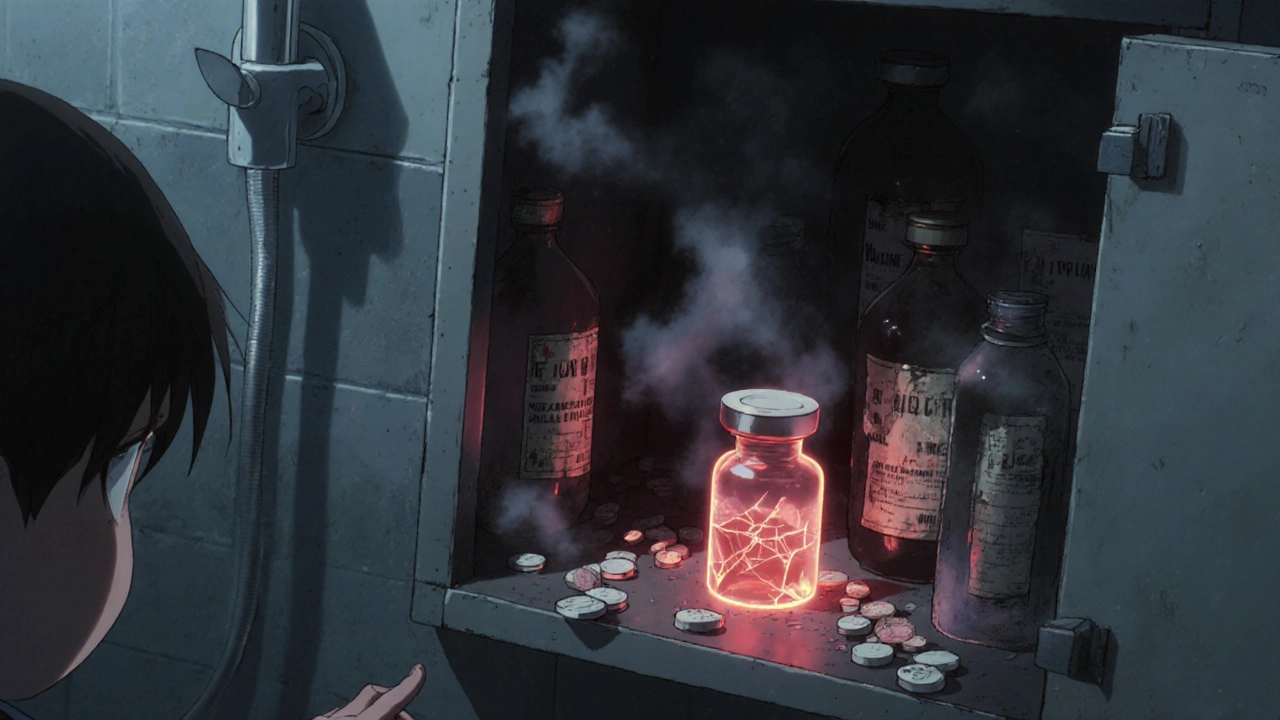
Most people don’t think about their medicine cabinet until they need something-and by then, it’s often too late. You reach for that old painkiller, cough syrup, or antibiotic, only to realize it’s been sitting there for years. Maybe it’s faded. Maybe it smells weird. Maybe you can’t even remember why you bought it. Expired medications aren’t just useless-they can be dangerous.
Why Expired Medications Are a Real Risk
The expiration date on your medicine isn’t just a suggestion. It’s the last day the manufacturer guarantees the drug is fully potent and safe. After that, things start to break down. Some pills lose strength. Others change chemically. And in rare but serious cases, like with tetracycline antibiotics, expired drugs can become toxic. The FDA warns that using expired medical products is risky and possibly harmful. A study from Yale New Haven Health found that humidity in bathroom cabinets can reduce a drug’s potency by 15-25% in just six months. That means your allergy pill might only be working at 70% strength when you need it most. And it’s not just about effectiveness. Cluttered cabinets increase the chance of accidental poisonings-especially in homes with kids. In 2022 alone, poison control centers handled over 67,500 cases of children ingesting medications from home cabinets. Older adults are at risk too. One in three people over 65 take five or more medications. In a messy cabinet, grabbing the wrong pill can lead to dangerous interactions.What to Check: The Medicine Cabinet Inspection List
You don’t need a degree in pharmacology to do a safety check. Just follow this simple list twice a year-ideally in spring and fall, when you change your smoke detector batteries.- All prescription pills and liquids-Check the label for the expiration date. If it’s past that date, toss it. Even if it looks fine.
- Over-the-counter meds-Pain relievers, antacids, cold medicine. Same rule applies. If it’s expired, it’s not worth keeping.
- Supplements and vitamins-They don’t expire like drugs, but they lose potency. If they’re more than two years old, replace them.
- Liquid medications-Insulin, antibiotics, eye drops, nitroglycerin. These are especially sensitive. If they’re cloudy, discolored, or smell odd, throw them out-even if the date hasn’t passed.
- Unlabeled containers-If you can’t read what’s inside, you don’t know what you’re holding. Don’t guess. Toss it.
- Topical creams and ointments-If they’ve separated, changed color, or smell rancid, they’re no longer safe.
- Sharps-Used insulin needles, lancets, syringes. These go in a hard plastic container, like a 2-liter soda bottle with the cap taped shut.
Where You Store Your Medicine Matters
Your bathroom cabinet is the worst place for medications. Steam from showers, heat from the dryer, and humidity from the sink all degrade pills and liquids faster than you think. The National Kidney Foundation and Yale New Haven Health both recommend moving everything to a dry, cool spot-like a kitchen cabinet away from the stove or sink. Keep medications out of direct sunlight. Don’t leave them in a car or near a window. Heat and light are just as damaging as moisture. For families with kids, lock the cabinet or use childproof latches. Some medications come in bright colors and sweet flavors-perfect for tempting curious hands.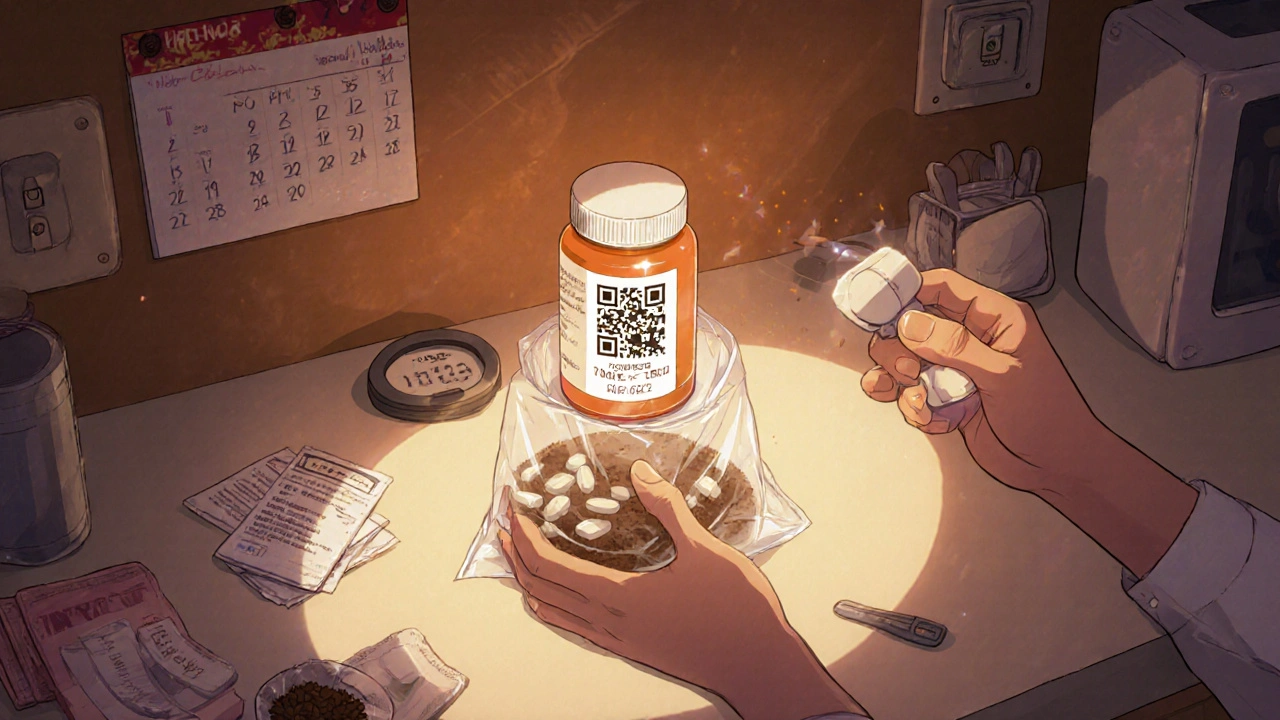
How to Dispose of Expired Medications Safely
Never flush pills down the toilet or toss them loose in the trash. That’s how drugs end up in water supplies and landfills-and how kids or pets get into them. The safest way? Use a drug take-back program. The DEA runs National Prescription Drug Take Back Days twice a year, and there are over 14,600 permanent collection sites across the U.S.-mostly at pharmacies, hospitals, and police stations. You can find your nearest one at deas.gov/takebackday. If you can’t get to a drop-off site, here’s the FDA-approved home method:- Take pills out of their original bottles.
- Mix them with something unappetizing-used coffee grounds, cat litter, or dirt. Use at least two parts filler to one part medication.
- Put the mixture in a sealed plastic bag or container.
- Scratch out your name and prescription info from the empty bottle.
- Throw the container in the trash.
What You Should Always Keep in Your Cabinet
A well-stocked medicine cabinet isn’t just about pills-it’s about being ready for emergencies. Here’s what experts recommend keeping on hand:- Adhesive bandages (20+ of assorted sizes)
- Gauze pads (at least 10)
- Medical tape
- Digital thermometer (no mercury)
- Alcohol wipes (10+)
- Hydrogen peroxide (for cleaning minor cuts)
- Petroleum jelly
- Scissors and tweezers
Special Cases: Medications That Are Never Safe After Expiration
Some drugs are too dangerous to risk. Never use these past their expiration date:- Insulin-Loses effectiveness quickly. Using weak insulin can lead to dangerous blood sugar spikes.
- Nitroglycerin-Used for heart attacks. If it doesn’t work, you could die.
- Liquid antibiotics-They break down fast. Taking a weak dose can cause antibiotic resistance.
- Epinephrine auto-injectors-Used for severe allergic reactions. If it doesn’t work, it’s life or death.
- Tetracycline antibiotics-Can become toxic and damage kidneys.
Make It a Habit
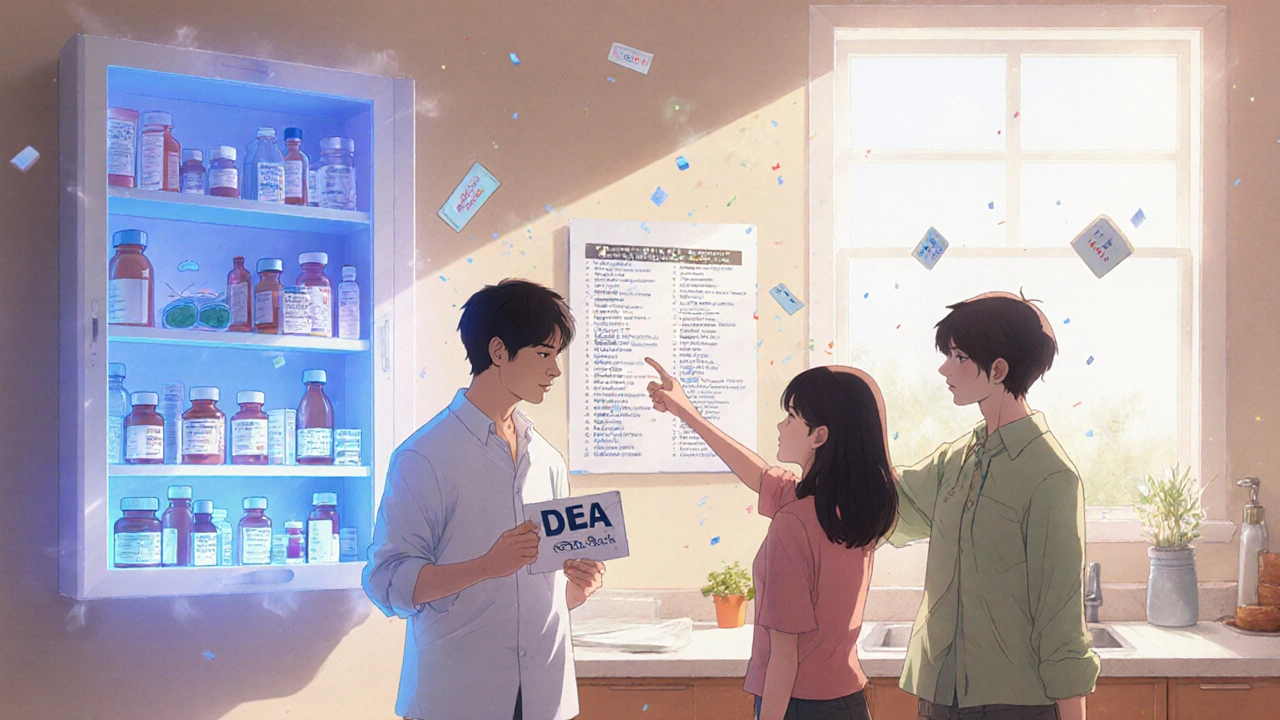
The hardest part? Making it routine. That’s why so many doctors and pharmacists suggest tying your medicine cabinet check to daylight saving time. Spring forward, fall back-flip your smoke detector batteries, check your meds. A 2023 survey by CenterWell Pharmacy found that 92% of people who linked their medicine checks to this seasonal change stuck with it for over a year. It’s simple. It’s visual. It works. And don’t forget: a clean cabinet isn’t just about safety-it’s about peace of mind. Knowing your meds are fresh, properly stored, and ready to work when you need them makes all the difference.What’s New in Medicine Cabinet Safety
Technology is catching up. Since early 2024, CVS and Walgreens have been offering free prepaid mail-back envelopes for expired meds-just drop your pills in, seal, and mail. No trip to the pharmacy needed. Some hospitals are testing QR code labels on medicine bottles. Scan it with your phone, and it shows you the expiration date and storage tips. One pilot program in Connecticut saw an 89% increase in people checking their meds regularly. By 2025, smart medicine cabinets with built-in humidity sensors will start appearing. These will alert you if your meds are getting too damp or hot-before they go bad.Final Thought: Your Cabinet Is Part of Your Health
You wouldn’t let your car sit for years without checking the oil. You wouldn’t ignore a smoke detector that’s beeping. So why treat your medicine cabinet any differently? Medications are powerful tools. But like any tool, they need care, storage, and timely replacement. A quick 10-minute check twice a year can prevent accidents, save lives, and keep your family safe.Can I still take medicine after the expiration date?
Some pills may still be safe after expiration, but you can’t be sure. The FDA says expired drugs may lose strength or change chemically. For critical meds like insulin, antibiotics, or epinephrine, never take them past the date. When in doubt, throw it out.
Where’s the best place to store medicine?
Keep medicine in a cool, dry place away from humidity and sunlight. A kitchen cabinet, far from the sink or stove, is ideal. Avoid the bathroom-steam and heat degrade pills and liquids quickly.
How do I dispose of expired pills safely?
Use a drug take-back program if possible-there are over 14,600 locations nationwide. If not, mix pills with coffee grounds or cat litter, seal them in a container, and throw them in the trash. Never flush them or toss them loose.
Should I keep old prescriptions just in case?
No. Old prescriptions can be dangerous. They might not work, could interact with new meds, or be taken by someone else. The National Kidney Foundation recommends discarding any prescription older than one year, even if the date hasn’t passed.
What if I find a pill I don’t recognize?
If you can’t read the label or remember what it is, don’t guess. Throw it out. Unlabeled pills are a major cause of accidental poisonings. When in doubt, call your pharmacist or poison control at 1-800-222-1222.
Do supplements expire?
They don’t become dangerous like prescription drugs, but they lose potency over time. Most vitamins and supplements are good for 2-3 years after manufacture. If they’re older than that, replace them.
Can expired medicine cause antibiotic resistance?
Yes. Taking a weakened antibiotic doesn’t kill all the bacteria-it lets the strongest ones survive. That’s how resistant strains form. The FDA links expired antibiotics to a 12-15% increase in resistant infections from home use.
Is it safe to use expired epinephrine?
No. Epinephrine auto-injectors (like EpiPens) degrade quickly. If you’re having a severe allergic reaction and your EpiPen is expired, use it anyway-but get emergency help immediately. Never rely on an expired one as your primary treatment.


jobin joshua
November 29, 2025 AT 19:35Diana Askew
November 30, 2025 AT 05:14King Property
November 30, 2025 AT 16:59Yash Hemrajani
December 2, 2025 AT 09:07Pawittar Singh
December 3, 2025 AT 04:58Josh Evans
December 4, 2025 AT 15:22Allison Reed
December 6, 2025 AT 01:47