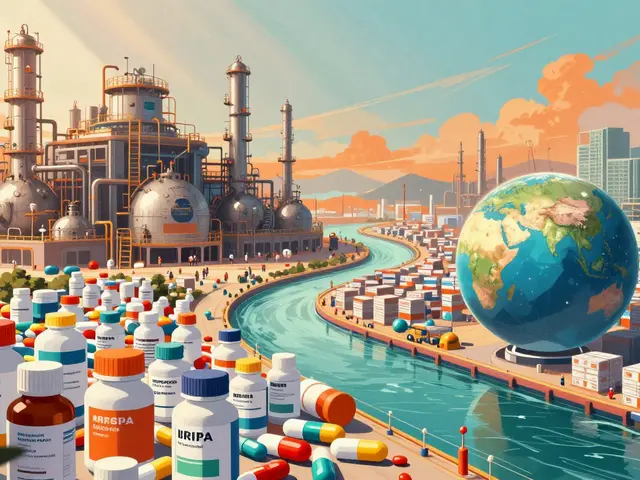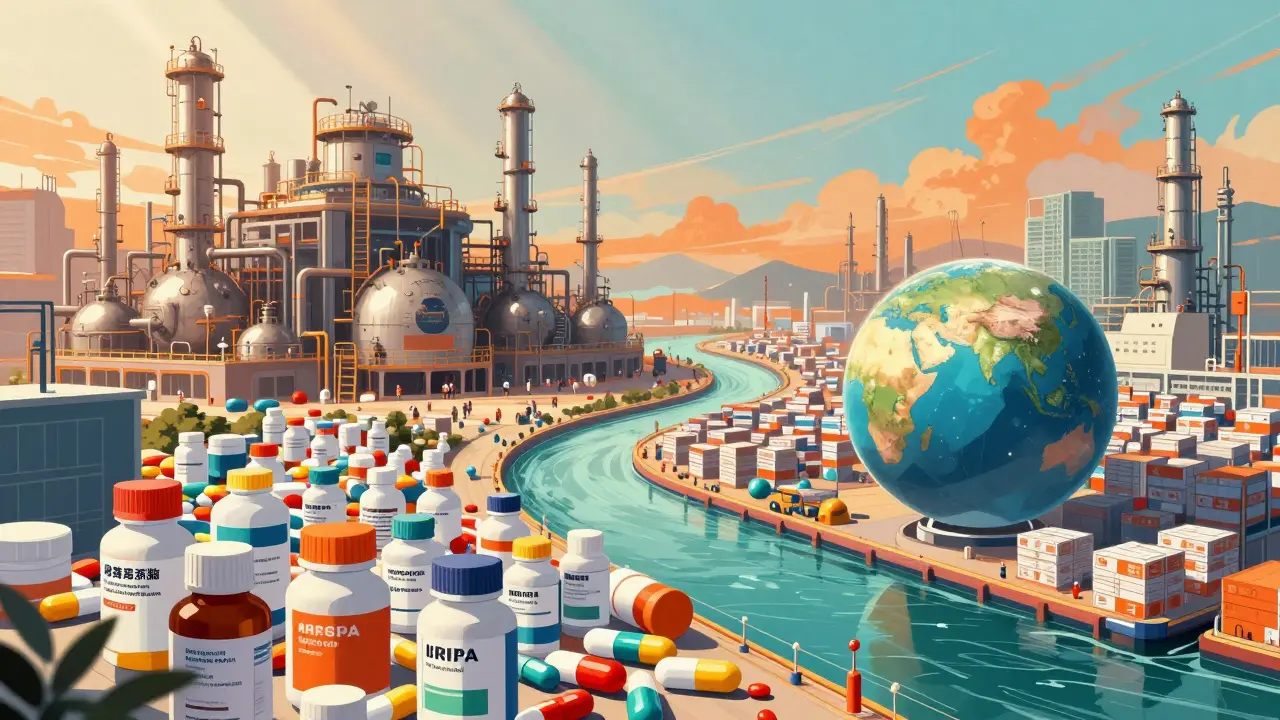
To get a grip on this, we first need to define the core of the industry. Generic Pharmaceuticals is the production of medication that is chemically identical to a brand-name drug after its patent has expired. These drugs are the backbone of affordable healthcare. In Asia, this market isn't just about copying formulas; it's about massive industrial scale and a strategic race to move up the value chain from basic pills to complex biologics.
The Big Two: India vs. China
If you look at the map of global medicine, India and China are the two giants, but they play entirely different games. India is the king of volume. It ranks 3rd globally by production volume, specializing in small-molecule generics and complex oncology drugs. On the other hand, China is the master of the ingredients. Active Pharmaceutical Ingredients (or API) are the biologically active components of a drug that produce the intended health effect. China controls roughly 70% of the global API market. This means that even when a drug is "Made in India," the raw chemicals often started in a Chinese factory.
The financial gap is telling. India's pharmaceutical market hit about $61.36 billion in 2024, while China's reached $80.4 billion. While India grows faster in terms of percentage (around 9.9% CAGR recently), China's growth is built on higher-margin, high-value products. India's challenge? Only about 1.2% of its exports are novel, innovative drugs. Compare that to China, where 8.5% of exports are innovative, and the difference in "value leadership" becomes clear.
| Feature | India | China |
|---|---|---|
| Global Production Volume Rank | 3rd | 1st/2nd |
| API Market Share | Low (Depends on imports) | ~70% Global Share |
| Innovation Rate (% of exports) | 1.2% | 8.5% |
| FDA Approval Timeline | Longer / Fragmented | 9 months (average 2024) |
| Core Strength | Volume & Complex Generics | Value & Raw Materials |
The Shift Toward Biologics and Biosimilars
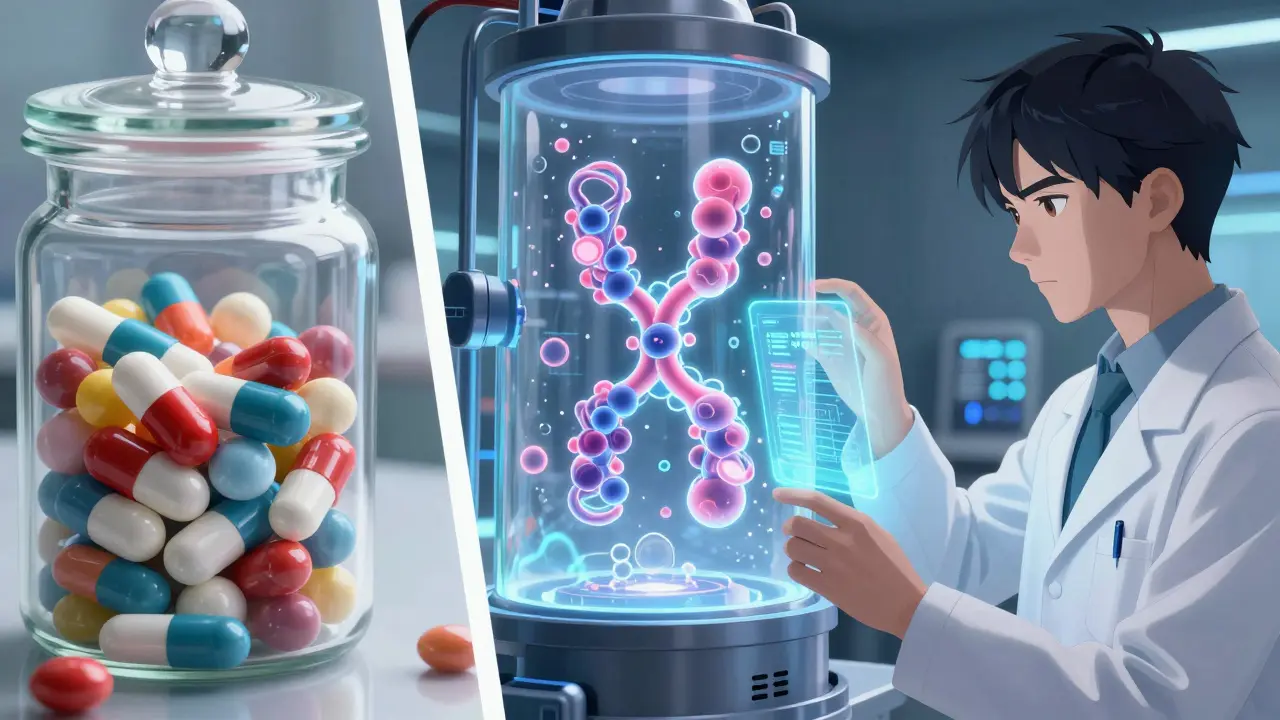
The industry is currently moving away from "simple" generics-the kind of pills you can pop from a bottle-toward something much more complex. This is the world of Biosimilars, which are almost identical copies of biologic medicines derived from living organisms, such as proteins or antibodies. Unlike traditional generics, which are exact chemical copies, biosimilars are "highly similar," making them much harder and more expensive to produce.
China is betting big here. Through its "Healthy China 2030" plan, it has funneled billions into biologics R&D, with 45% of new facilities built between 2020 and 2024 dedicated to this tech. India isn't sitting still, though. With a massive population under 35 and a $2.8 billion investment in digital health, India is leveraging its demographic dividend to close the gap. The goal for both is to stop being just "the world's factory" and start being "the world's lab." If you're watching this space, the transition to biologics is where the real money and medical breakthroughs will happen over the next decade.
Emerging Players: Vietnam and Cambodia
While the giants fight, smaller emerging economies are carving out their own niches. You won't see Vietnam trying to out-produce China, but they are winning in specialized areas. Vietnam's pharmaceutical market has been growing at a staggering 12.3% CAGR, specifically focusing on antibiotic intermediates. They've found a way to be the "reliable middleman" in the supply chain.
Cambodia is taking a different route entirely. Instead of complex chemistry, they are focusing on low-cost medical device assembly. With 18% annual growth in that segment, they are utilizing ASEAN trade preferences to become a hub for the physical hardware of healthcare. For a procurement manager, these countries offer a way to diversify risk. If a geopolitical spat hits China or a regulatory crackdown hits India, having a source in Vietnam can be a lifesaver.
The Quality and Regulatory Struggle
It's not all growth and profit. There's a persistent problem with quality control. The U.S. FDA is the federal agency responsible for protecting public health by ensuring the safety and efficacy of drugs. and they've been cracking down. In 2024, Chinese manufacturers received 142 warning letters, while Indian firms received 87. This highlights a recurring theme: China's centralized system is fast, but India's fragmented, state-level system often leads to inconsistent enforcement.
From a practical standpoint, sourcing from these markets is a trade-off. Sourcing antibiotics from India can save you 35-40% compared to European suppliers, but you'll likely deal with longer lead times and the need for more rigorous batch testing. On the flip side, Chinese APIs are often 20% cheaper, but the risk of a regulatory "warning letter" can force companies into costly dual-sourcing strategies, which can actually increase overall supply chain costs by nearly 20%.
Navigating Market Entry and Logistics
If you're looking to enter these markets, the hurdles are very different. In India, you have to deal with a maze of 17 different regulatory bodies across federal and state levels. It's a bureaucratic headache that can take up to 24 months to clear. However, the rewards are there-tax holidays of up to 10 years in Special Economic Zones like the Visakhapatnam Pharma City can make the wait worth it.
China is more streamlined, with only 8 national agencies to satisfy and a faster approval window (12-18 months). The catch? You usually need 51% local ownership for distribution companies. It's a choice between India's regulatory fragmentation and China's ownership restrictions. Furthermore, logistics in India can add 12-15% to your costs due to fragmented infrastructure, whereas China's integrated systems are much more efficient.
The Future: Self-Sufficiency and Volatility
Right now, both nations are obsessed with "self-sufficiency." India's "Pharma 2047" initiative wants to slash its dependence on Chinese APIs from 68% down to 30% by 2030. China is similarly redirecting funds to ensure it doesn't rely on external innovation. While this sounds good for national security, it's a recipe for market volatility.
Analysts warn that if both countries successfully build massive overcapacity in API production, we could see a price crash of 15-20% in 2026 or 2027. This sounds like a win for buyers, but it often leads to a race to the bottom in quality. As the WHO (World Health Organization) reported a 27% increase in inspection failures at Asian facilities in 2024, the real question isn't who can make the drug the cheapest, but who can make it safely.
Why is India called the "pharmacy of the world"?
India earned this reputation starting in the 1970s by changing its laws to allow process patenting. This let them produce high-quality, low-cost generic versions of drugs that were patented elsewhere, making them a global leader in volume and affordability.
What is the main difference between a generic drug and a biosimilar?
Generics are exact chemical copies of small-molecule drugs. Biosimilars are copies of large, complex proteins made in living cells. Because they are grown, not just mixed in a lab, biosimilars aren't exact copies but are "highly similar" in their effect.
How dependent is India on China for medicine?
Extremely. Despite its huge export volume, India relies on China for about 68% of its Active Pharmaceutical Ingredients (APIs). This is a strategic vulnerability that the Indian government is trying to fix through the "Pharma 2047" initiative.
Are medicines from Asian generic markets safe?
Generally yes, but quality varies. Many facilities are WHO-GMP certified, but the FDA has issued numerous warning letters to both Indian and Chinese firms. This is why many Western companies now use "dual-sourcing" and extra batch testing to ensure safety.
Which emerging Asian countries are becoming pharma hubs?
Vietnam is growing rapidly in antibiotic intermediates, while Cambodia is specializing in the assembly of low-cost medical devices. Both are leveraging trade agreements within ASEAN to attract investment.
Next Steps for Procurement and Investment
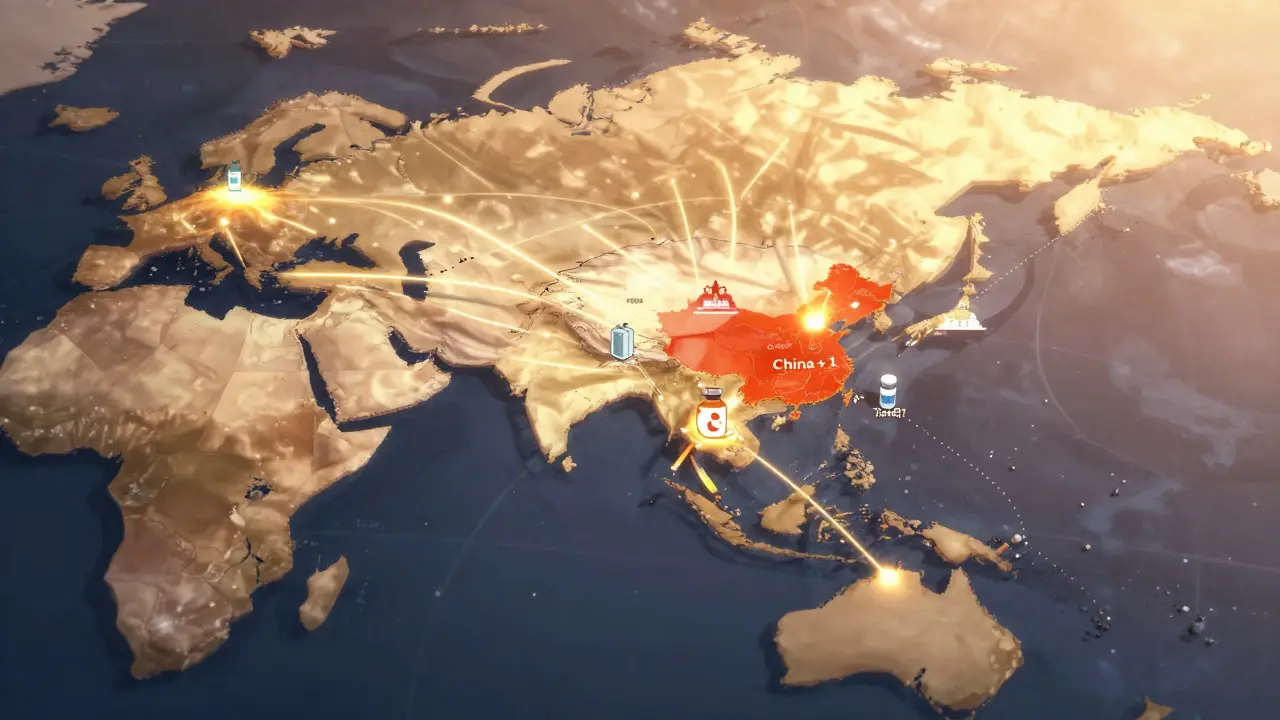
If you're a business owner or a procurement specialist, don't put all your eggs in one basket. The current trend is "China + 1" or "India + 1." This means maintaining a primary source in one of the giants but establishing a secondary line in a place like Vietnam to avoid total shutdown if a geopolitical crisis hits.
For those investing in the sector, watch the biologics shift. Companies that are successfully transitioning from simple generics to biosimilars will be the ones capturing the high-margin growth of the next decade. Keep an eye on the 2026-2027 window-if the predicted API price correction happens, it will be a volatile time for raw material costs, but a potential opportunity for those with stable, high-quality supply chains.